Dog Bowl Area: Transform Your Pet’s Messy Corner Into an Elegant Feeding Station

Dog food bowls scattered across your kitchen floor don’t have to ruin your home’s look anymore. A well-designed dog feeding station keeps your pet’s eating area tidy while adding a stylish touch to your space that blends seamlessly with your home decor.
I’ve seen too many pet owners hide their dog’s bowls in corners or apologize to guests about the mess.
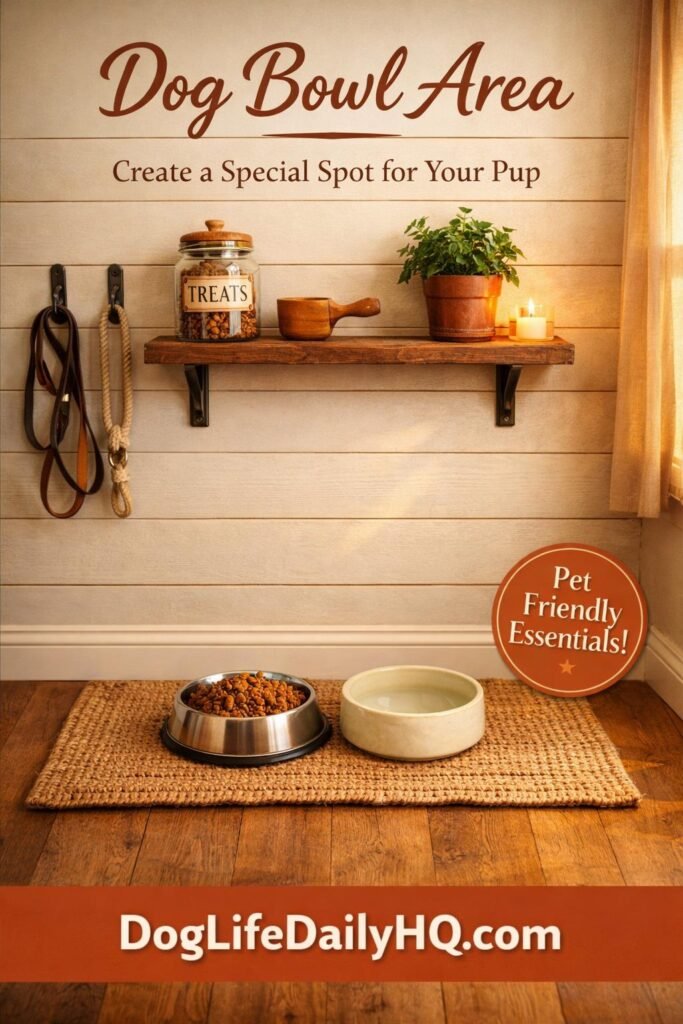
The good news is that creating a dog feeding station doesn’t require a major renovation or expensive materials. With some simple planning and the right setup, you can turn that chaotic feeding corner into an organized spot that serves your dog’s needs and looks great.
Your guests might even ask where you got the idea. I’ll walk you through everything from picking the right location to choosing bowls that match your style.
You’ll learn how to keep the area clean, add decorative touches, and maintain a feeding station that works for both you and your furry friend.
Key Takeaways
- Pick a low-traffic spot in your kitchen or dining area where your dog can eat without being disturbed
- Use raised bowls or built-in stations to reduce spills and improve your dog’s posture during meals
- Add storage solutions like drawers or baskets underneath to keep food, treats, and supplies organized in one place
Choosing the Perfect Location for Your Dog Bowl Area
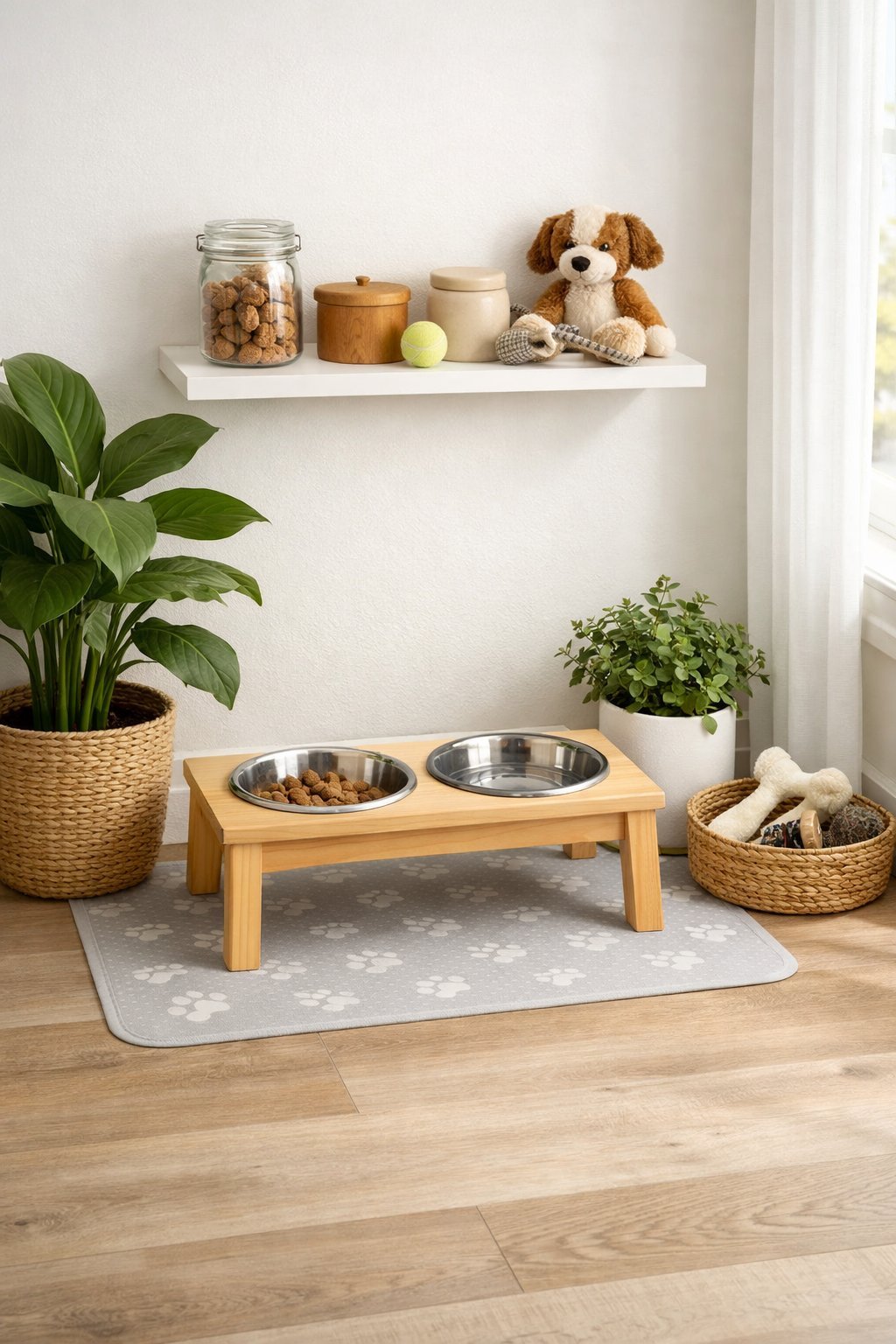
The right spot for your dog’s feeding area makes a big difference in keeping your home clean and your pet comfortable. Thinking about traffic patterns, space needs, and how the station fits with your decor helps create a setup that works for everyone.
Assessing High-Traffic vs. Quiet Zones
I always recommend placing dog bowls in a quiet corner away from high-traffic areas to help your pet eat without distractions. Dogs need a calm space to focus on their meals.
Busy hallways and main walkways aren’t ideal because people constantly walking by can stress your dog during mealtime. This can lead to rushed eating or guarding behavior.
Instead, look for spots that feel tucked away but are still accessible. A corner of the kitchen works well since it’s convenient for refilling bowls but doesn’t get constant foot traffic.
Placing dog bowls near high-traffic areas can also increase the chance of spills and trips. I’ve seen too many situations where someone accidentally kicked a water bowl walking through a busy space.
The feeding station needs enough room so family members can move around it comfortably. I measure the area to make sure there’s at least two feet of clearance on the sides where people walk most often.
Maximizing Space for Multiple Pets
When I set up feeding areas for multiple dogs, I create separate zones for each pet to prevent competition and stress. Each dog needs their own defined space with individual bowls.
I space the stations at least three to four feet apart if possible. This distance helps reduce resource guarding and gives each dog a sense of security during meals.
For homes with limited floor space, I use different rooms or opposite corners of the same room. Raised platforms or built-in stations work great for organizing multiple bowl sets.
I stack or tier the feeding areas vertically when floor space is tight, putting smaller dogs’ bowls on lower levels and larger dogs on elevated platforms.
Integrating the Feeding Station With Home Decor
I choose feeding stations that match my existing furniture and color scheme so they blend naturally into the room. Modern homes benefit from sleek metal or wood designs that look intentional rather than like an afterthought.
Design-friendly dog feeding station ideas include built-in nooks and custom cabinetry that hide bowls when not in use. These options work especially well in kitchens and mudrooms.
I also consider materials that are easy to clean and maintain. Ceramic bowls in neutral colors or stainless steel complement most decor styles while being practical.
Adding a decorative mat underneath the bowls protects floors and adds a design element. I pick patterns and textures that tie into the room’s overall aesthetic without looking too busy or out of place.
Selecting Stylish and Functional Dog Bowls
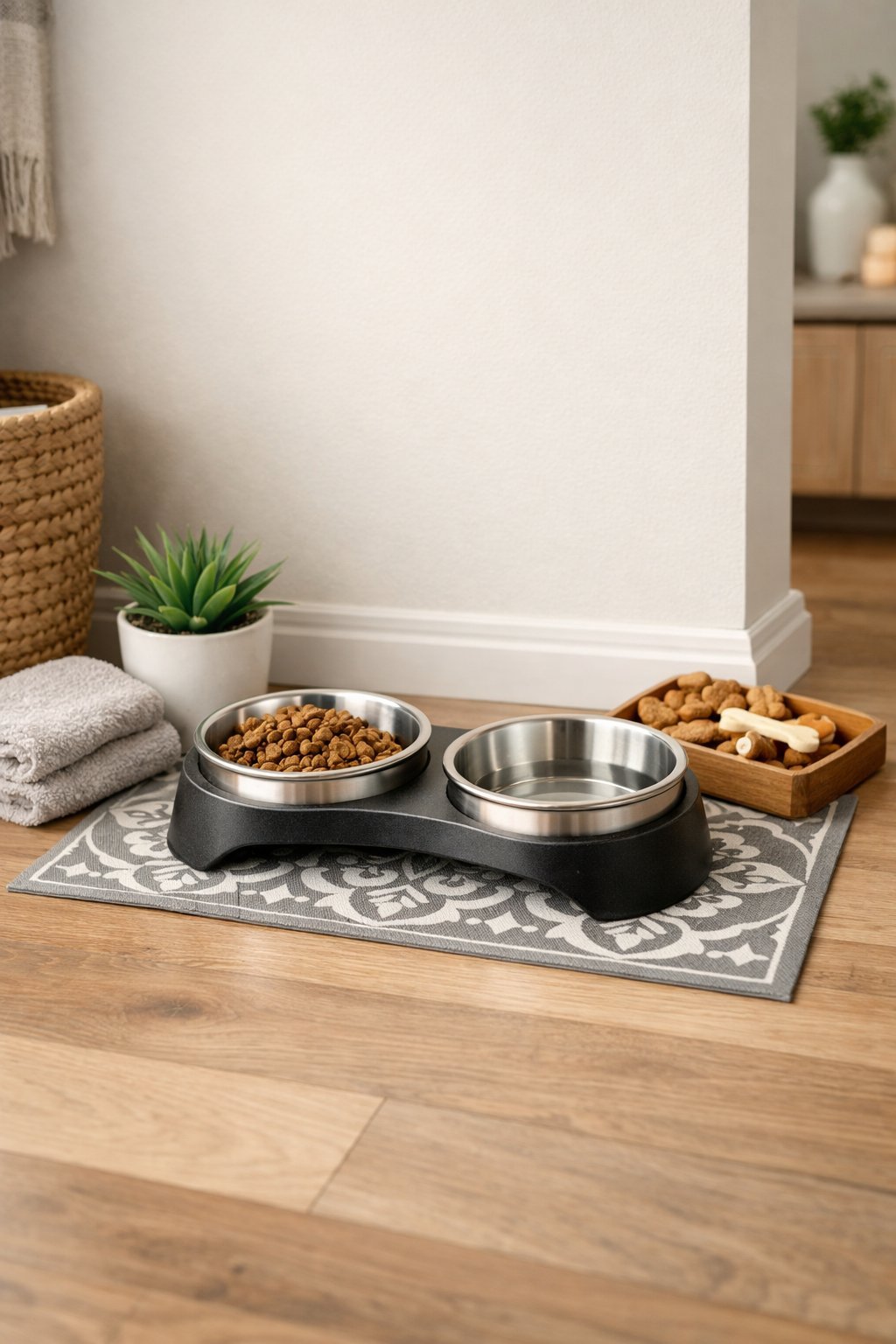
The right dog bowls blend durability with design. Look for materials that resist bacteria while complementing your decor, bases that stay put during meals, and colors or patterns that enhance your space.
Material Options: Ceramic, Stainless Steel, and More
I’ve found that stainless steel bowls are the most practical choice for most dog owners. They resist rust, don’t harbor bacteria in scratches, and last for years without chipping.
These bowls are dishwasher-safe and won’t retain odors or stains. Ceramic bowls bring charm to your feeding station with hand-painted designs and glazed finishes.
They’re heavier than other options, which helps prevent sliding. However, ceramic can crack if dropped, and damaged bowls can develop bacteria in the cracks.
Plastic bowls are budget-friendly but scratch easily, creating spaces where bacteria grow. Some dogs also develop chin acne from plastic bowls.
Bamboo fiber bowls offer an eco-friendly middle ground. They’re lighter than ceramic but sturdier than plastic, though they require hand washing to maintain their finish.
Non-Slip Designs for Mess-Free Meals
I recommend looking for bowls with rubber or silicone bases that grip your floor surface. These non-slip designs prevent tipping and sliding during enthusiastic eating sessions.
Weighted bowls work well for large dogs who tend to push their dishes around. The extra weight in the base keeps everything in place without requiring a separate mat.
Elevated feeders with non-slip feet combine height benefits with stability. The raised design reduces neck strain for larger breeds while keeping the station firmly planted.
Some bowls feature removable silicone rings around the bottom edge. I like this option because you can replace just the grip component if it wears out, extending the life of your bowls.
Matching Bowls to Your Home’s Aesthetic
Modern homes benefit from sleek stainless steel or minimalist ceramic designs in neutral tones like white, gray, or matte black. These choices blend seamlessly with contemporary decor.
Farmhouse-style spaces pair beautifully with distressed ceramic bowls or vintage-inspired enamelware. Look for cream colors, soft pastels, or bowls with rustic patterns that echo your kitchen’s character.
I’ve seen bold, colorful bowls work wonderfully in eclectic spaces where personality matters more than matching. Geometric patterns, bright solids, or hand-painted designs can become intentional accent pieces.
Consider these coordination tips:
- Match bowl colors to existing kitchen accessories like tea towels or canisters
- Choose finishes that mirror your cabinet hardware (brushed metal, matte, glossy)
- Select patterns that complement rather than compete with nearby rugs or mats
Creating a Clean and Organized Feeding Station
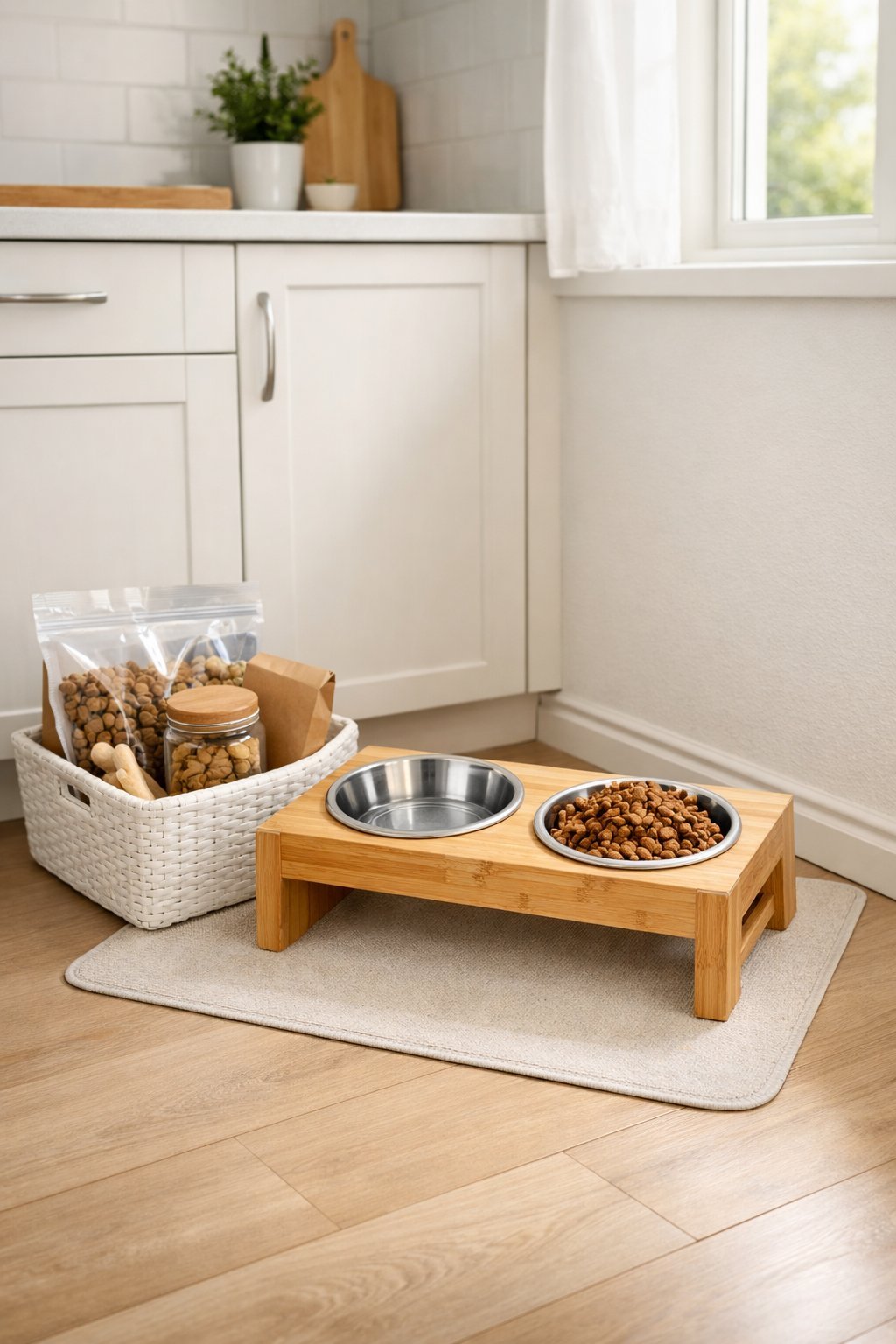
A tidy dog bowl area comes down to three main elements: protective surfaces that catch messes, smart storage that keeps supplies within reach, and a solid plan for handling water spills.
Easy-to-Clean Mats and Trays
I always recommend using a feeding mat to catch spills before they reach your floors. Silicone mats work best in my experience because you can wipe them down or toss them in the dishwasher.
Look for mats with raised edges that contain water and kibble. I prefer ones that are at least 18 inches wide to accommodate both food and water bowls with extra room for splashing.
Best mat materials include:
- Silicone (dishwasher safe and durable)
- Rubber (stays in place and easy to clean)
- Waterproof fabric (softer but needs more frequent washing)
Trays with low sides also work well. I use shallow baking trays under my dog’s bowls because they’re affordable and simple to clean.
Just make sure whatever you choose doesn’t slide around when your dog eats.
Storage Solutions for Food and Treats
I keep my dog’s food in airtight containers near the feeding station. This keeps kibble fresh and makes it easy to scoop out meals without walking across the kitchen.
Wall-mounted shelves above the feeding area work great for storing treats and supplements. I installed a small floating shelf that holds my dog’s vitamins and training treats.
Dog feeding stations with built-in storage reduce clutter even more.
Storage options I recommend:
- Sealed plastic bins for dry food
- Small baskets for treats and toys
- Hooks for leashes and feeding tools
- Drawer inserts for measuring cups
Keep cleaning supplies nearby too. I store a small spray bottle and paper towels in a cabinet next to the feeding area for quick cleanups.
Managing Water Spills Effectively
Water bowls create the biggest mess in my dog’s feeding area. I switched to a no-spill water bowl with a floating disk that limits how much water my dog can access at once.
Place the water bowl on a separate, smaller mat if your dog is a messy drinker. I use a highly absorbent microfiber mat under the water bowl that soaks up drips and splashes.
Tips for reducing water mess:
- Choose bowls with weighted bottoms
- Use elevated feeders to reduce tipping
- Keep a small towel dedicated to drying your dog’s chin after drinking
- Replace water bowls that crack or develop rough edges
I also position the water bowl slightly away from the food bowl. This gives my dog room to move between eating and drinking without knocking things over.
Decor Tips to Elevate Your Pet’s Feeding Area
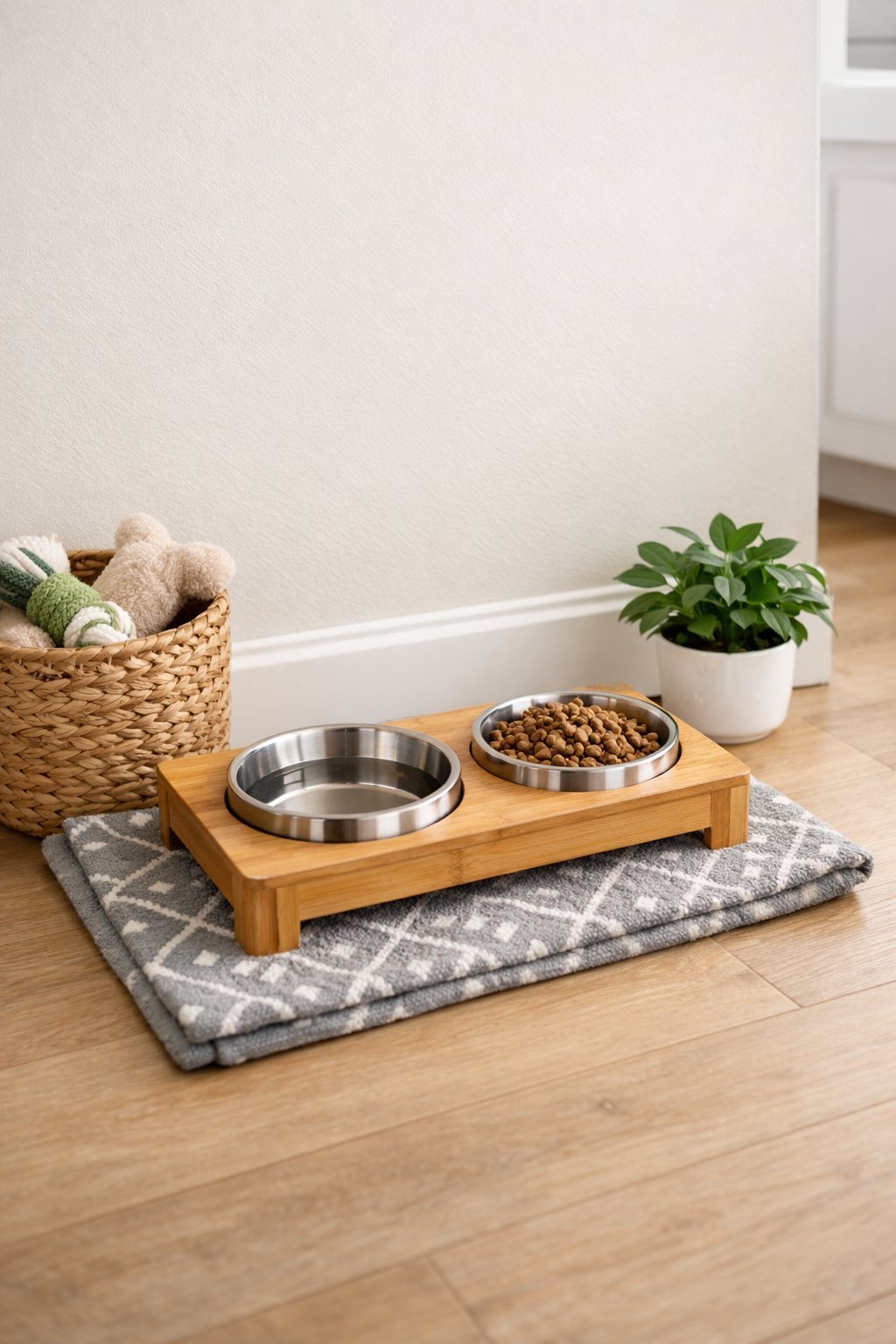
Adding thoughtful decor elements transforms a basic feeding spot into a space that looks intentional and polished. Small touches like backsplashes, personalized signs, and coordinated colors make the area feel like part of your home design.
Incorporating Stylish Backsplashes
I recommend adding a backsplash behind your dog’s bowls to protect your walls from food splatter and water stains. Peel-and-stick tiles work great because they’re easy to install and come in hundreds of patterns.
You can choose subway tiles for a classic kitchen look or geometric patterns for something more modern. I’ve seen dog bowl stands with built-in backsplashes that create a complete feeding station in one piece.
Washable wallpaper is another option I like. It gives you the look of a backsplash without permanent installation.
Metal sheets or acrylic panels also work well and wipe clean in seconds. The backsplash doesn’t need to be large—just enough to cover the wall behind the bowls.
Personalized Accessories and Signs
I add personality to feeding areas with custom signs that include my dog’s name. Wooden signs with phrases like “Bella’s Bistro” or metal plaques make the space feel special.
Storage containers with labels keep kibble fresh while looking organized. I use ceramic canisters or metal bins that match my kitchen style.
Mat choices matter too—I pick washable mats with fun patterns instead of plain rubber ones. Small decorative touches work well.
I’ve added a small shelf above the feeding area to display a framed photo of my dog or hold treats in a nice jar. Wall hooks nearby can hold leashes and make your pet’s feeding area reflect both style and personality.
Coordinating Colors With Your Interior Design
I match my dog’s feeding station to my home’s color scheme so it blends in nicely. If my kitchen has white cabinets and gray counters, I go for a feeding station in those tones.
Wood finishes should line up with other furniture in the room. A dark walnut stand looks best with similar wood tones, while light oak works well with lighter furniture.
I pay attention to bowl colors too. Ceramic bowls come in tons of colors and can either match or add a fun accent.
The food mat color matters as well. I pick patterns or solid colors that go with my flooring.
Metal finishes like brass, copper, or matte black should coordinate with cabinet hardware and light fixtures. This makes the feeding area feel like it was always part of your design.
Maintenance and Hygiene for a Welcoming Dog Bowl Area
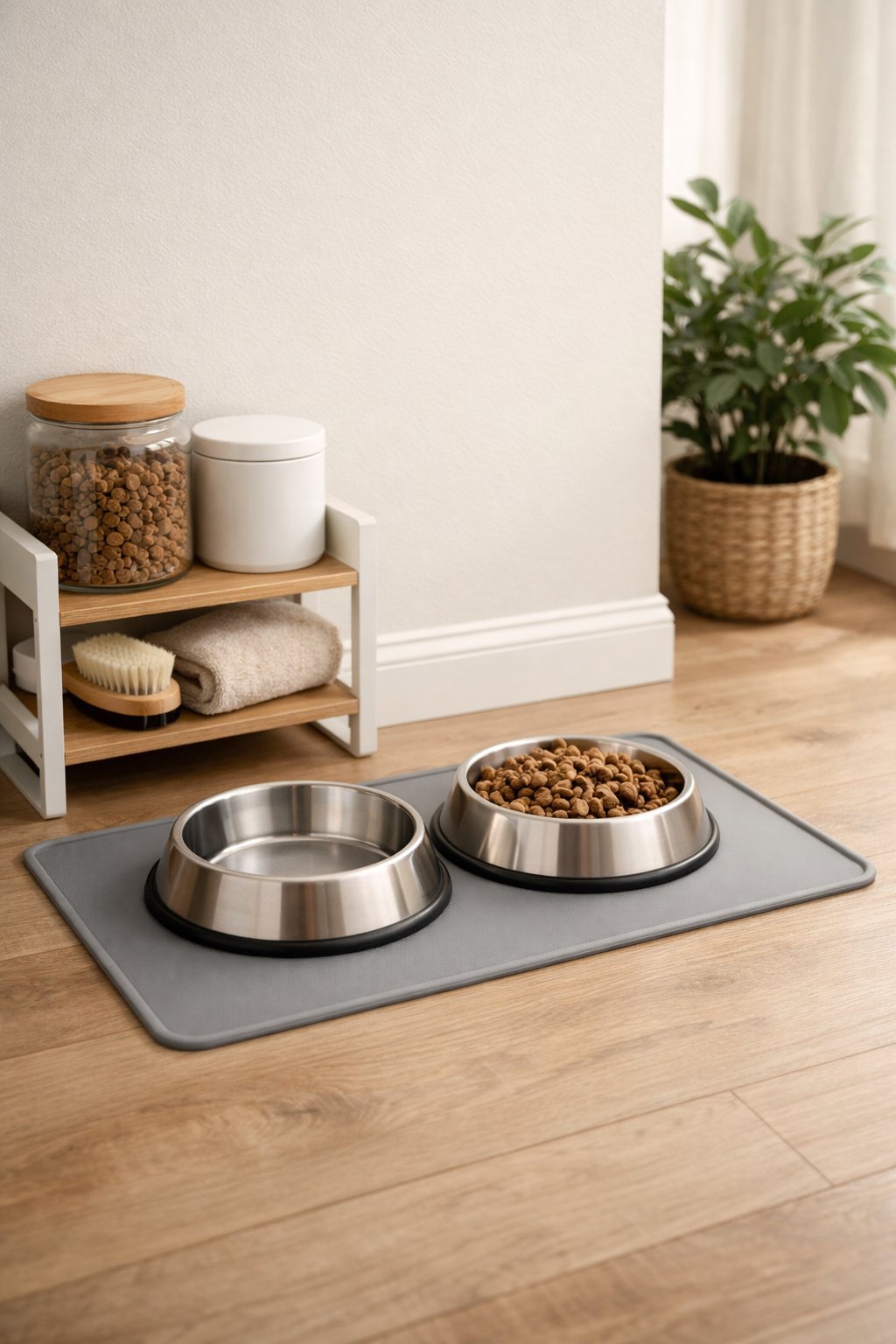
Keeping my dog’s feeding area clean helps prevent bacteria and keeps my home looking fresh. A tidy bowl area also stops any weird smells that could make guests uncomfortable.
Regular Cleaning Routines
I wash my dog’s food bowl after every meal and rinse the water bowl daily. Veterinarians recommend washing dog bowls to stop harmful bacteria from growing.
For my daily routine, I use hot soapy water and scrub both bowls, especially in any crevices. Once a week, I run the bowls through the dishwasher for a deeper clean.
I wipe down the mat or tray under the bowls every day. Food crumbs and water splashes can attract bugs and get sticky fast.
I keep a dedicated cleaning cloth near the feeding station for quick cleanups. The floor around the area needs attention too.
I sweep or vacuum daily to pick up scattered kibble. Every few days, I mop the spot with a pet-safe cleaner to keep things fresh.
Preventing Odors and Stains
I place a waterproof mat under my dog’s bowls to catch spills before they hit the floor. These mats are easy to rinse off and protect hardwood or carpet.
Stainless steel bowls work best for me because they don’t hold odors like plastic can. Plastic bowls can get scratched and trap smells over time.
If there’s any lingering odor, I soak the bowls in a mix of white vinegar and water for about 15 minutes. I also empty and refill the water bowl at least once a day.
Standing water can get slimy and gross, so fresh water is key. For tough stains on mats or the floor, I use a baking soda paste and let it sit before scrubbing and rinsing.
Frequently Asked Questions
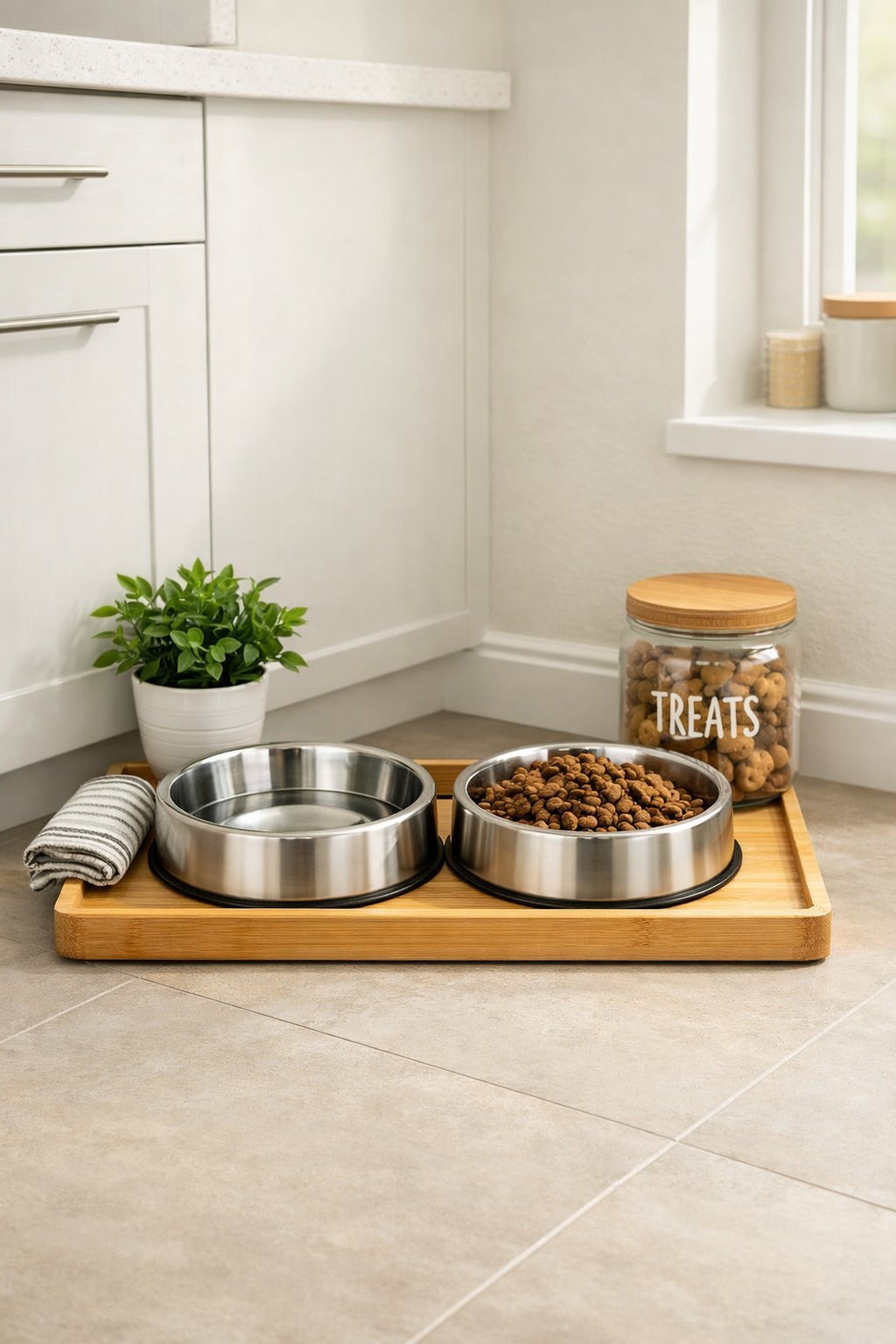
A well-designed dog feeding area brings up lots of questions about materials, placement, and style that fit your home and lifestyle.
What are some stylish ways to contain a dog’s water and food bowls?
Using a quality pet bowl mat is an easy way to upgrade any feeding area. Silicone mats are great because they catch spills and stay put while looking sleek.
Built-in feeding stations are a cool custom option that can match your cabinetry. These built-ins hide bowls when not in use and keep everything organized.
Elevated feeders with matching stands create a pulled-together look. I like choosing materials that fit with my furniture, like wood tones or metal finishes.
How can I create a pet feeding station that’s both functional and attractive?
Start by picking a quiet corner away from heavy foot traffic. A less busy area like a hallway nook or unused dining room space works better than a crowded kitchen.
Choose bowls and containers that match your home’s vibe. Ceramic bowls in neutral colors blend in, while stainless steel offers a modern touch.
Add storage underneath or nearby for food and treats. Small baskets or drawers keep things tidy and easy to reach.
What materials work best for a durable yet aesthetic dog feeding area?
Silicone mats are super durable, resist stains and odors, and are easy to clean. They also come in lots of colors.
Stainless steel bowls last longer than plastic and don’t harbor bacteria. They also keep looking good over time.
Wood feeding stations add warmth but need to be sealed well to resist water damage. Hardwoods with waterproof finishes are your best bet.
Ceramic and stoneware bowls are heavy so they don’t tip easily. They also look great in visible spots in your home.
Are there any pet-friendly design tips for incorporating a feeding station into my living area?
I always suggest putting the feeding station where it won’t block main walking paths. This helps avoid accidents and gives your dog a calm place to eat.
Use furniture or a partial wall to create a subtle boundary around the feeding area. This defines the space without much fuss.
Match the feeding station’s colors to your room. Neutral tones help it blend in, while accent colors can make it pop.
Keep cleaning supplies close by in a decorative container. Quick access to wipes or towels makes cleanup easy and keeps your space looking good.
Can you suggest space-saving solutions for a dog bowl setup in a small apartment?
Wall-mounted bowls save floor space and are great for narrow kitchens or hallways. Corner feeding stations make use of spots that usually go unused.
I’ve seen some clever DIY designs that fit perfectly into corners without getting in the way. Collapsible or stackable bowls are handy when you need to move things for cleaning or guests.
Under-counter pull-out drawers can hide a complete feeding station. This keeps everything tucked away until mealtime and uses cabinet space efficiently.
What accessories can I add to my dog’s feeding area to make it stand out to guests?
A personalized name sign or plaque adds character to the feeding station. You can match the font and finish to your home’s style for a cohesive look.
Decorative storage containers for treats and food turn functional items into display pieces. Glass jars with chalkboard labels or ceramic canisters can really elevate the overall presentation.
Small potted plants or succulents near the feeding area bring life to the space. Just make sure any plants you choose are safe for dogs in case they get curious.
Custom artwork or framed prints related to your dog’s breed can create a gallery-like vibe. This turns a practical spot into a cool design moment in your home.
