
Easy Homemade Dog Food: A Simple Recipe Your Pup Will Love

Easy Homemade Dog Food – Making your own dog food at home is easier than you think. It can be healthier and more affordable than store-bought kibble.
You can prepare fresh, nutritious meals for your dog in about 30 minutes using simple ingredients like lean meat, rice, and vegetables. Many dogs with sensitive stomachs or picky eating habits do better on homemade food because you control exactly what goes into their bowl.
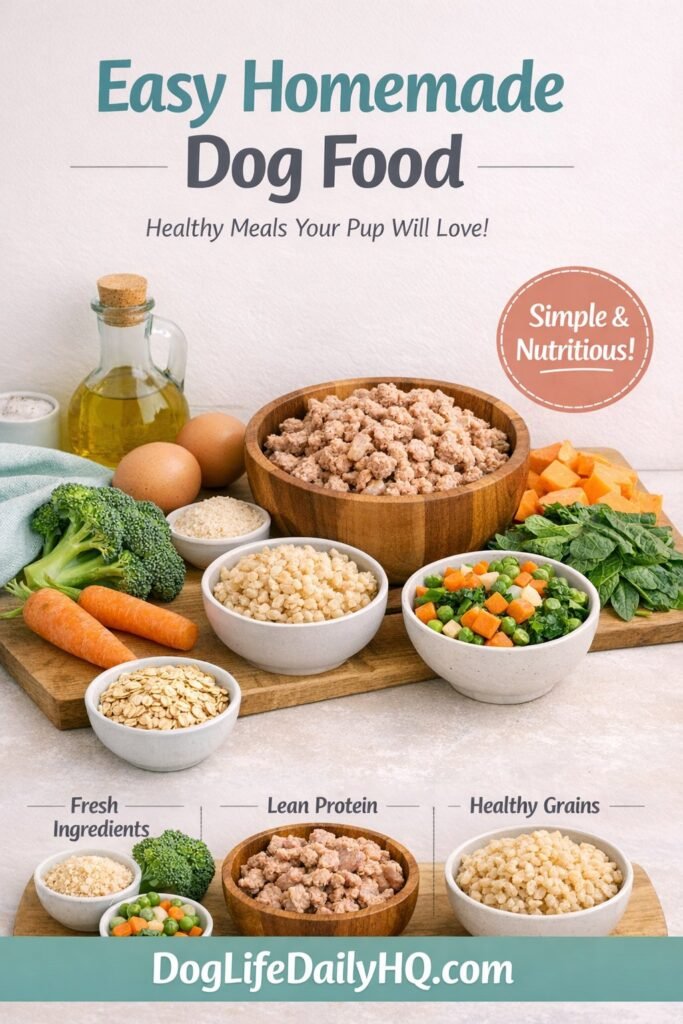
I started making homemade dog food after noticing my dog wasn’t excited about meals anymore. The difference was immediate—my pup had more energy, a shinier coat, and actually got excited at dinnertime again.
The best part is that making homemade dog food doesn’t require fancy equipment or hard-to-find ingredients. Whether you want to completely replace commercial kibble or just mix in some fresh food, homemade dog food gives you control over your dog’s nutrition.
I’ll show you how to get started with an easy recipe that works for most dogs. Plus, I’ll share tips for storing meals and adjusting ingredients based on your dog’s needs.
Key Takeaways
- Homemade dog food can be prepared in 30 minutes with basic ingredients like meat, rice, and vegetables.
- Fresh homemade meals often improve your dog’s energy levels, coat quality, and appetite.
- You can customize recipes to fit your dog’s dietary needs and mix them with kibble or serve them alone.
Why Make Homemade Dog Food?
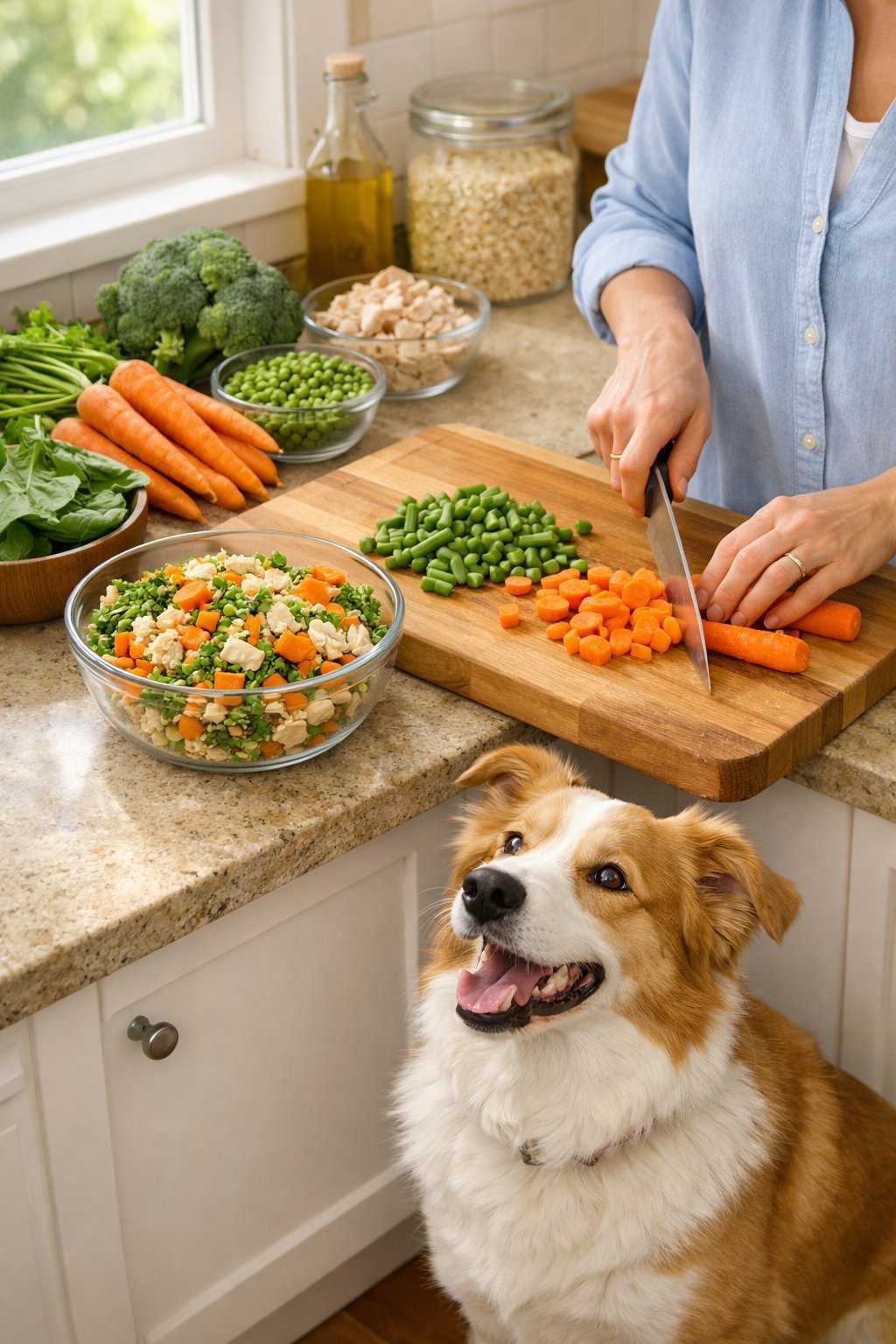
Making dog food at home gives you complete control over what goes into your pet’s bowl. It saves money in the long run and provides meals made with ingredients you can actually recognize and trust.
Benefits for Your Dog’s Health
When done correctly, feeding your pet homemade dog food can improve their overall health and well-being. I’ve seen dogs with better coat shine, more energy, and fewer digestive issues after switching to home-cooked meals.
Commercial dog food often contains fillers, artificial preservatives, and mystery meat by-products. When I make food at home, I use real chicken, beef, or turkey along with fresh vegetables and grains.
Dogs with food allergies or sensitive stomachs benefit especially well from homemade meals. I can remove ingredients that cause problems and add ones that work for my dog’s specific needs.
The recipe focuses on lean protein, healthy fats, and essential nutrients that keep dogs active and thriving. Fresh ingredients provide vitamins and minerals that may break down during the high-heat processing used to make kibble.
Freshness and Quality Control
I know exactly what goes into every batch of food I make. There’s no guessing about meat quality, where vegetables came from, or what “natural flavoring” actually means.
Store-bought dog food sits on shelves for months before my dog eats it. The food I make goes straight from my kitchen to their bowl within days.
Pet food recalls happen regularly, but making homemade dog food removes that worry entirely. I control the sourcing, preparation, and storage of every ingredient.
Fresh food also tastes better. Even picky eaters get excited about meals made with real meat and vegetables they can smell.
Cost Savings Over Store-Bought Dog Food
Premium commercial dog food costs a lot, especially the brands with quality ingredients similar to what I use at home. Making homemade dog food is way cheaper than gourmet kibble brands.
I buy ingredients in bulk and prepare large batches that I freeze in portions. Ground beef, rice, and vegetables cost less per serving than high-end dog food.
The savings add up fast for larger dogs that eat more food each day. My upfront time investment pays off in lower monthly feeding costs.
Essential Ingredients for Easy Homemade Dog Food
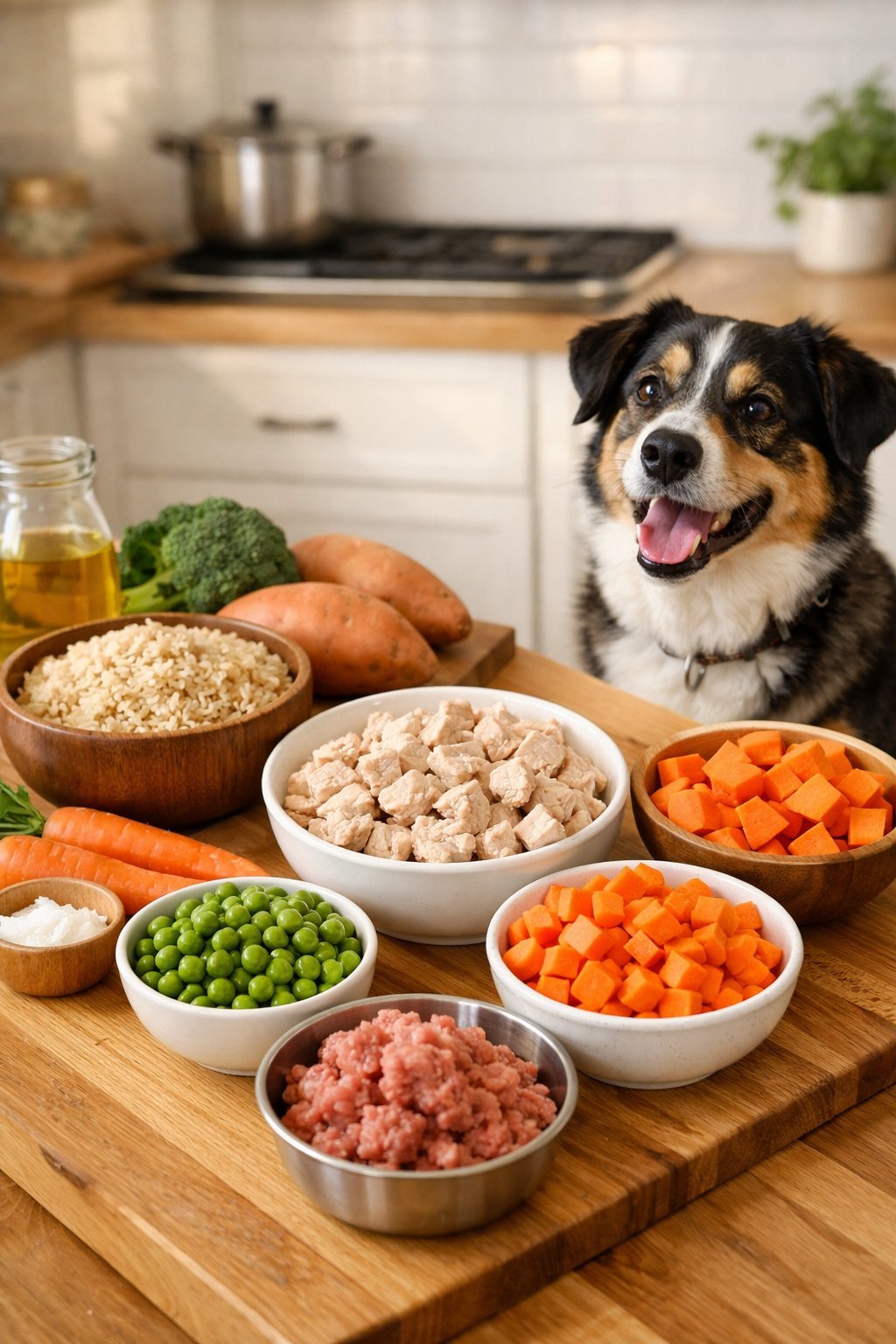
Making your own dog food starts with understanding which ingredients provide the nutrients your pup needs. I’ve found that focusing on quality proteins, digestible grains, safe vegetables, and avoiding toxic foods creates balanced meals dogs actually enjoy.
Choosing the Right Proteins
Protein forms the foundation of any good dog food recipe. I always start with lean meats like chicken, turkey, or ground beef since they’re affordable and easy to cook in bulk.
Fish like salmon provides omega-3 fatty acids that support healthy skin and coats. Eggs work great as an additional protein source and contain essential amino acids dogs need.
When selecting proteins, I aim for options with less fat. Ground beef should be at least 85% lean to avoid excess grease. Boneless, skinless chicken thighs or breasts work perfectly.
I rotate between different protein sources throughout the week. This gives my dog variety and ensures she gets different nutrients from each meat type.
Healthy Grains and Alternatives
Grains provide energy through carbohydrates and help dogs feel full after meals. Brown rice is my go-to choice because it’s gentle on digestion and cooks easily.
Oatmeal works well for dogs with sensitive stomachs. It contains fiber that supports healthy digestion and bowel movements.
Quinoa serves as a protein-rich grain alternative. Sweet potatoes offer another option that’s packed with vitamins and fiber.
For dogs with grain sensitivities, I skip traditional grains entirely. White potatoes (cooked and peeled) or additional sweet potatoes replace the carbohydrate portion.
I cook grains separately and mix them with proteins and vegetables. This makes portion control easier and lets me adjust ratios based on my dog’s needs.
Vegetables and Fruits Dogs Love
Vegetables add vitamins, minerals, and fiber to homemade meals. Carrots are my most-used veggie since they’re cheap and dogs enjoy the slight sweetness.
Green beans provide low-calorie bulk that helps dogs maintain healthy weights. Peas contain protein and essential vitamins.
Spinach and kale offer iron and antioxidants, though I use them in smaller amounts. Broccoli florets (in moderation) add vitamin C and fiber.
For fruits, blueberries make excellent training treats and meal toppers. Apples (without seeds or cores) provide crunch and nutrients. Pumpkin puree helps with both diarrhea and constipation.
I chop or steam vegetables before adding them to meals. Dogs can’t digest raw veggies as well as humans can, so cooking makes nutrients more available.
Avoiding Harmful Foods
Several common foods are dangerous or deadly for dogs. Onions and garlic damage red blood cells and can cause serious illness even in small amounts.
Grapes and raisins cause kidney failure in some dogs. I never include these or foods containing them.
Chocolate contains compounds toxic to dogs. Avocados have persin, which causes digestive upset.
Xylitol, an artificial sweetener in many products, causes rapid insulin release and liver failure. Macadamia nuts trigger weakness and vomiting.
Raw yeast dough expands in the stomach and produces alcohol as it ferments. Cooked bones splinter and create choking hazards or intestinal damage.
I keep these foods completely out of my dog’s meals and store them where she can’t reach them. Reading ingredient labels carefully prevents accidental exposure to harmful substances.
Step-By-Step Easy Homemade Dog Food Recipe
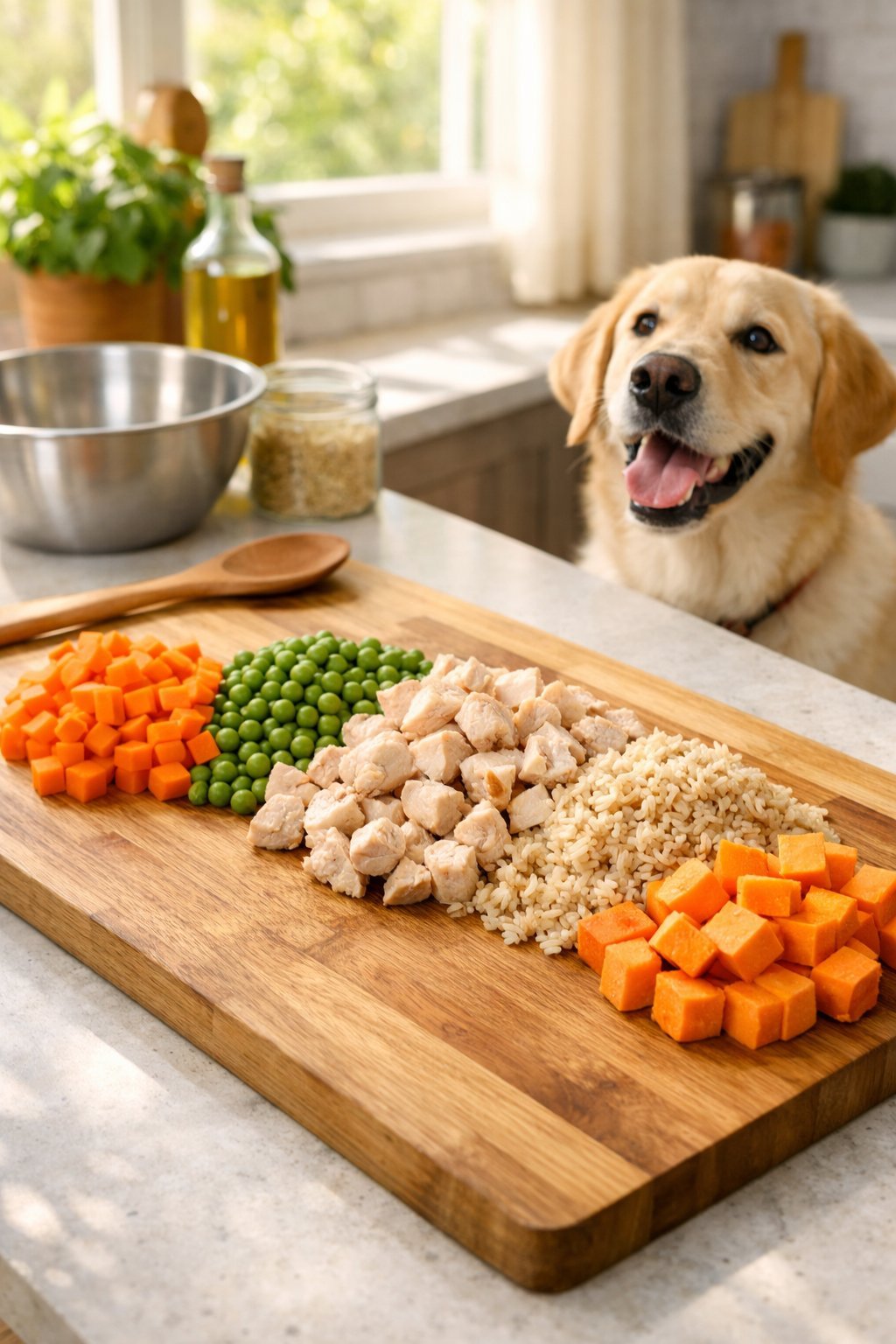
Making dog food at home involves prepping your ingredients safely, cooking them the right way to keep nutrients intact, and following a simple recipe from start to finish.
Ingredient Preparation and Safety
I always start by washing my hands and cleaning all surfaces before I handle any ingredients. Fresh vegetables need a thorough rinse under cold water, and I trim away any spoiled spots or stems that could upset my dog’s stomach.
Raw meat requires extra care. I keep it separate from other ingredients until I’m ready to cook, and I never use the same cutting board for meat and vegetables without washing it first.
Ground turkey, beef, or chicken work well, but I make sure to check the expiration date and smell the meat to confirm it’s fresh. I measure everything before I start cooking to make the process faster and avoid mistakes.
For vegetables like carrots or sweet potatoes, I peel and dice them into small, bite-sized pieces that cook evenly and are easy for my dog to chew. Certain foods are toxic to dogs, so I never include onions, garlic, grapes, raisins, or chocolate in any recipe.
I also avoid using salt, butter, or heavy seasonings that can harm my pet.
Cooking Methods for Maximum Nutrition
Boiling is my go-to method because it’s simple and keeps meals packed with protein and essential nutrients. I fill a large pot with water, bring it to a boil, then add the meat first since it takes longest to cook.
Once the meat is fully cooked through with no pink remaining, I add harder vegetables like carrots and cook for another 10 minutes. Steaming vegetables instead of boiling them preserves more vitamins.
I use a steamer basket over boiling water and cook veggies until they’re soft enough to mash with a fork. For quick stovetop meals that take just 30 minutes, I brown ground meat in a large skillet, then add pre-cooked rice or oats along with chopped vegetables.
I stir everything together and let it simmer until the veggies are tender. I never feed my dog raw meat because it can contain harmful bacteria—everything gets cooked to a safe internal temperature: 165°F for poultry and 160°F for ground beef.
Sample Recipe Walkthrough
I use this basic recipe that makes about five days of food for a medium-sized dog:
Ingredients:
- 2 pounds ground turkey
- 2 cups cooked brown rice
- 1 cup chopped carrots
- 1 cup chopped green beans
- 2 tablespoons olive oil
First, I cook the brown rice according to package directions and set it aside. In a large pot, I add the ground turkey and break it into small pieces as it cooks over medium heat for about 8 minutes until no pink remains.
Next, I add the chopped carrots and green beans to the pot with the cooked turkey. I pour in 2 cups of water and let everything simmer for 15 minutes until the vegetables are soft.
I stir occasionally to prevent sticking. Once the vegetables are tender, I drain any excess water and mix in the cooked brown rice and olive oil.
I let the mixture cool completely before serving. My dog gets about 2 cups per meal depending on her size and activity level.
I store leftovers in airtight containers in the refrigerator for up to five days. I also freeze portions in individual servings for up to three months.
How to Store and Serve Homemade Dog Food
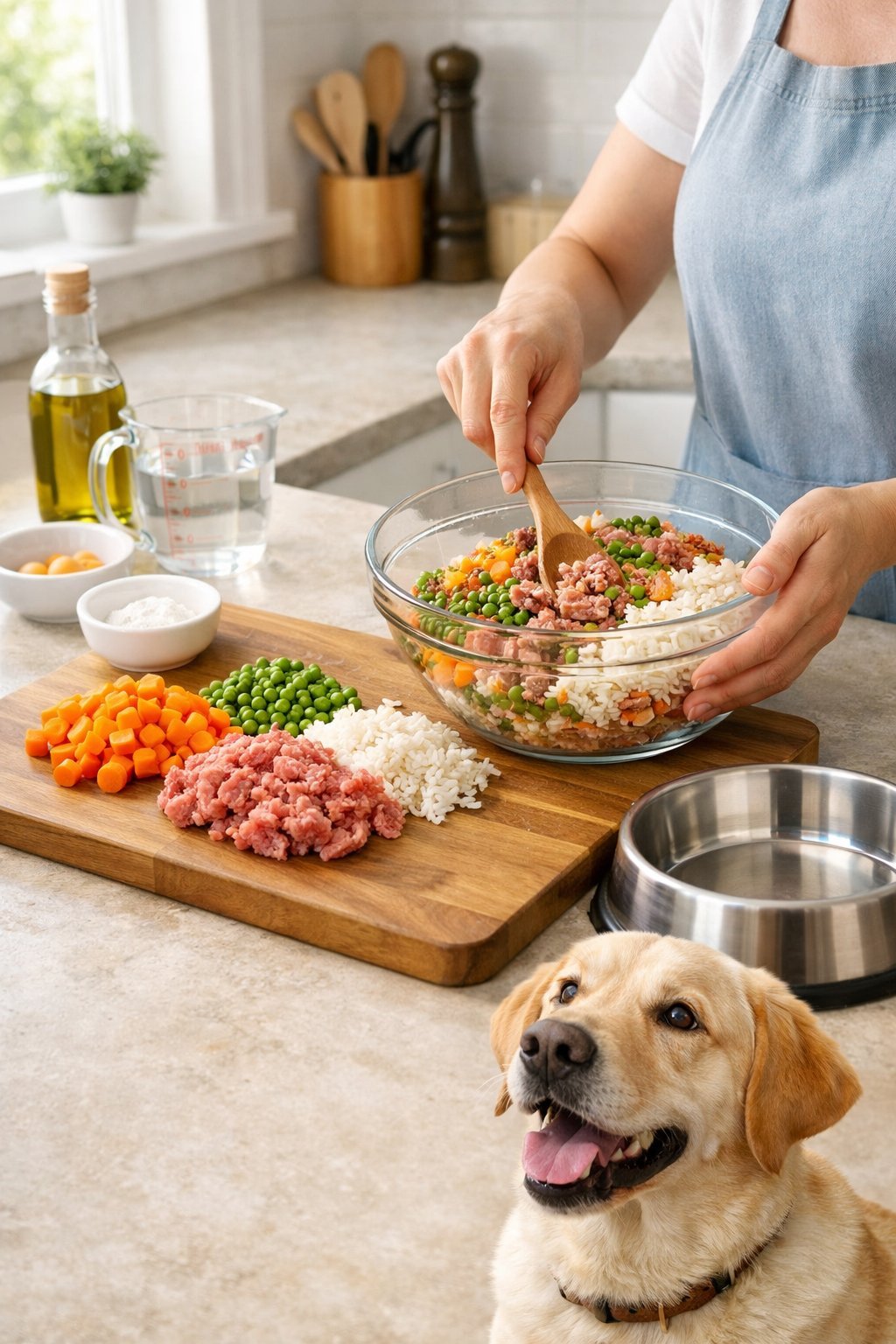
Making your own dog food is just the first step. You need to store it correctly to keep it fresh and safe, figure out how much to feed your pup, and help them adjust to their new diet without stomach upset.
Proper Storage Techniques
I always cool freshly cooked dog food completely before storing it. Hot food creates condensation in containers, which leads to bacteria growth.
For short-term storage, I keep homemade dog food in the fridge for up to 3-4 days. I use airtight glass or BPA-free plastic containers to prevent odors from spreading.
Proper storage techniques help maintain freshness and nutritional value. When I make larger batches, I freeze portions in meal-sized containers.
Frozen homemade dog food stays good for 2-3 months. I label each container with the date and contents so I can use the oldest food first.
I thaw frozen meals in the refrigerator overnight, never on the counter. If I’m in a hurry, I run the sealed container under cold water.
Once thawed, I serve the food within 24 hours and never refreeze it.
Portion Sizing and Feeding Tips
I calculate portions based on my dog’s weight, activity level, and age. A general rule is to feed about 2-3% of your dog’s ideal body weight per day for adult dogs.
Here’s a simple guide I follow:
- Small dogs (10-20 lbs): 1/2 to 1 cup per day
- Medium dogs (20-50 lbs): 1 to 2.5 cups per day
- Large dogs (50-100 lbs): 2.5 to 4 cups per day
I split the daily amount into two meals to help prevent bloating. Active dogs need more food, while senior or less active dogs need less.
I like to warm refrigerated food slightly before serving, since most dogs prefer it at room temperature. I also keep an eye on my dog’s body condition and adjust portions as needed.
I make sure I can feel their ribs easily but not see them prominently when they’re at a healthy weight.
Transitioning Your Dog to Homemade Meals
I never switch my dog’s food overnight. A gradual transition helps avoid digestive issues like diarrhea or vomiting.
Here’s the 7-10 day schedule I use:
- Days 1-2: 25% homemade food, 75% old food
- Days 3-4: 50% homemade food, 50% old food
- Days 5-6: 75% homemade food, 25% old food
- Days 7+: 100% homemade food
I keep an eye out for any digestive upset during the transition. If my dog gets loose stools, I slow down and stick with the current ratio for a few more days.
Some dogs adjust quickly, while others need extra time. I just stay patient and let my dog’s system adapt at its own pace.
Customizing Recipes for Special Dietary Needs
Not all dogs can eat the same foods, and that’s totally fine. Some need protein swaps due to allergies, while others need adjusted portions or softer textures based on age or health.
Allergies and Sensitivities
Chicken and beef are two of the most common allergens for dogs. If your pup has itchy skin, ear infections, or digestive issues, these proteins might be the problem.
Safe protein alternatives include:
- Turkey
- Duck
- Lamb
- Fish (salmon or whitefish)
- Venison
For dogs with grain sensitivities, I swap out rice for sweet potatoes, quinoa, or oats. Some dogs do better on completely grain-free recipes.
When dealing with specific health problems like kidney disease or cancer recovery, ingredients need to be chosen carefully.
I usually test one new ingredient at a time over three to five days. This way, I can spot any negative reactions quickly.
Puppies, Seniors, and Special Diets
Puppies need more calories and calcium than adult dogs because they’re still growing. I bump up the protein content to about 30% and add ground eggshells for extra calcium.
Senior dogs need the opposite approach. I reduce their portions by 20-30% since they move less and burn fewer calories.
I also cook their food longer to make it softer for aging teeth.
Age-specific adjustments:
- Puppies: Higher fat content, smaller kibble size, more frequent meals
- Seniors: Lower calories, softer textures, joint-supporting ingredients like fish oil
- Overweight dogs: More vegetables, lean proteins, controlled portions
I blend or mash food for dogs with dental problems. For picky eaters, I warm the food a bit to bring out the aroma.
Frequently Asked Questions
Making dog food at home brings up lots of questions about safety and nutrition. Here are answers to some of the most common concerns pet owners have.
What are some vet-approved recipes for homemade dog food?
Look for recipes that include a protein source, carbohydrate, vegetables, and healthy fats in balanced amounts. Vet-approved choices usually combine lean meats like chicken, turkey, or beef with brown rice or sweet potatoes and veggies like carrots and green beans.
A basic formula is one pound of protein, one cup of cooked grains, and one cup of mixed vegetables. Don’t forget to add calcium through bone meal or crushed eggshells.
Many vets suggest consulting with a canine nutritionist before making the switch. They can review recipes to make sure they meet your dog’s specific needs.
Can you suggest a few nutritionally complete homemade dog food recipes?
A turkey-based recipe with rice and veggies is a complete meal dogs love. Mix ground turkey, brown rice, chopped carrots, peas, and a tablespoon of fish oil for omega-3s.
I also like a beef and sweet potato combo. Cook ground beef with diced sweet potatoes, spinach, and add a crushed calcium supplement.
A chicken recipe works well too. Combine cooked chicken breast, quinoa, broccoli, and a bit of coconut oil.
Each of these should include proper calcium supplementation to match what dogs get from commercial food.
Where can I find a reliable PDF guide for making balanced homemade dog food?
The Canine Nutritionist website has detailed guides and answers to common homemade dog food questions. Many certified canine nutritionists offer downloadable guides on their sites.
Check with veterinary schools and animal nutrition organizations for free PDF resources. These guides usually include recipes, portion charts, and supplement suggestions.
Your own vet might have handouts or can point you to trusted resources. Some veterinary associations also publish guidelines for making balanced homemade meals.
Which homemade dog food recipes are considered the best by canine nutritionists?
Nutritionists like recipes that mirror what dogs get from commercial food. The best ones include multiple protein sources, digestible carbs, and a variety of veggies.
Easy homemade dog food recipes recommended by nutritionists use whole food ingredients and skip processed stuff. They focus on lean proteins like chicken, turkey, or fish with nutrient-rich veggies.
Top-rated recipes always include proper calcium and other mineral supplements. Without these, homemade food can miss essential nutrients that dogs need.
How can I adapt homemade dog food recipes for my large breed dog?
Large breed dogs need recipes with controlled calcium and phosphorus to protect their joints. I adjust portions based on my dog’s weight, usually about 2-3% of their body weight in food daily.
For a 70-pound dog, that’s about 1.5 to 2 pounds of food per day. Large breeds also benefit from added glucosamine for joint health.
I use larger cuts of meat and veggies for big dogs since they can handle bigger pieces. Extra fish oil is great for their joints and coat health too.
Are there any specialty homemade dog food recipes for dogs with specific health problems?
Dogs with sensitive stomachs do well on simple recipes using single protein sources like turkey or lamb. I keep these recipes plain with easily digestible carbs like white rice or oatmeal.
For dogs with kidney issues, lower protein recipes work better. Use lean proteins in smaller amounts and focus more on vegetables and grains.
Dogs with allergies need recipes that avoid their trigger ingredients. I stick to novel proteins like venison or duck that my dog hasn’t eaten before.
Grain-free options using sweet potatoes instead of rice help dogs with grain sensitivities.

