
DIY Insulated Dog House: Simple Plans to Build a Cozy Winter Shelter for Your Pup

When temperatures drop, it’s super important to keep our furry friends safe and comfortable outdoors. Dogs can suffer from hypothermia and frostbite in cold weather if they don’t have proper shelter.
Building a DIY insulated dog house is a great way to protect your pup from winter’s harsh conditions and give them a cozy retreat.

Keeping your dog’s house warm in winter doesn’t have to be complicated or expensive. With some basic materials and a weekend of work, you can create a warm, draft-free shelter that keeps your dog comfy even when it’s freezing.
The key is proper insulation, the right size for your dog, and smart design choices that trap heat. In this guide, I’ll walk you through everything you need to know, from choosing materials to step-by-step construction and finishing touches.
You’ll have all the info you need to create a winter-ready home your dog will love.
Key Takeaways
- Proper insulation and sizing are essential for keeping your dog warm and preventing heat loss in winter.
- You can build an effective insulated dog house using affordable materials like foam board and plywood.
- Regular maintenance and smart positioning help maximize warmth and comfort throughout the cold months.
Why Your Dog Needs an Insulated Dog House
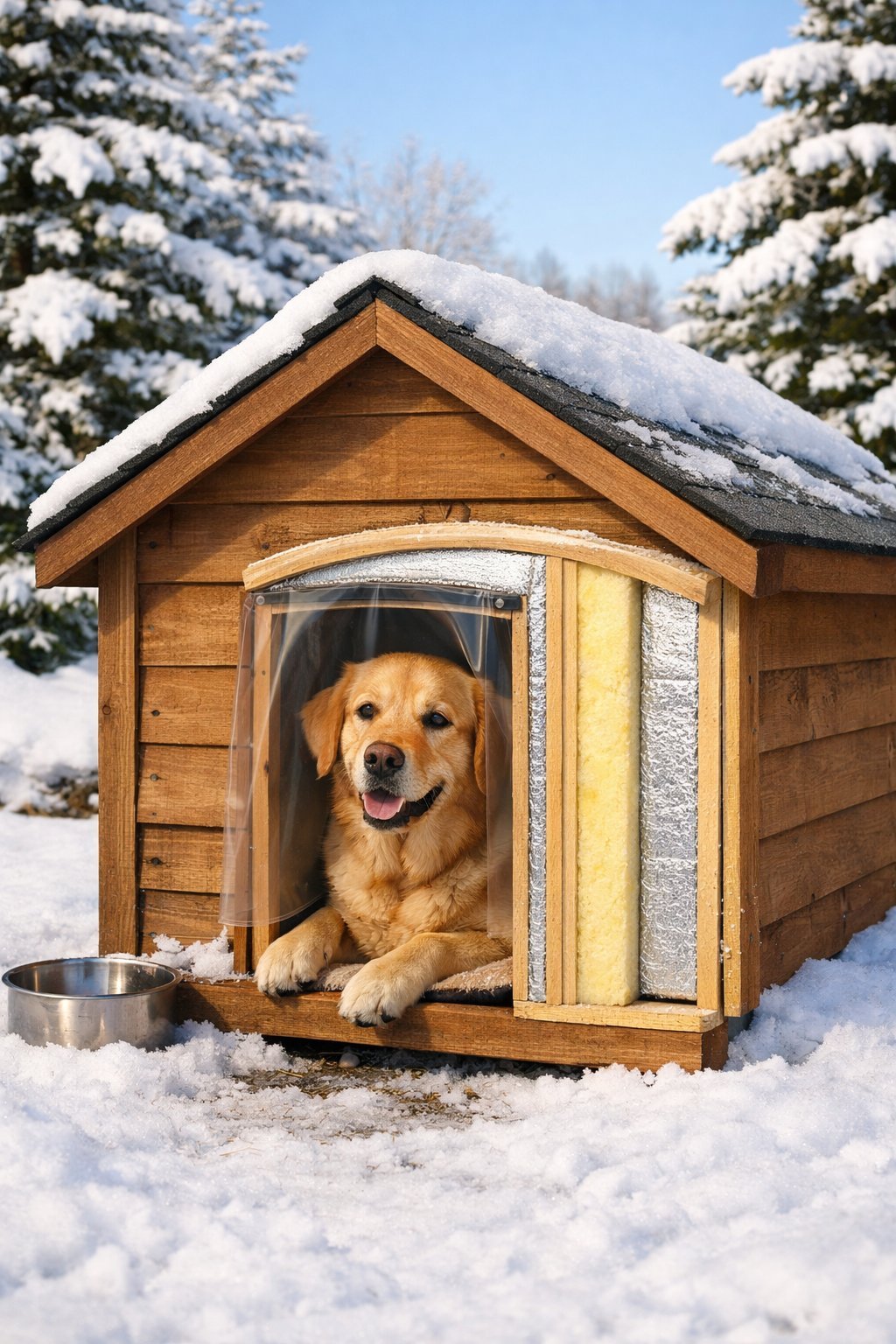
Dogs can suffer from hypothermia and frostbite when exposed to extreme cold temperatures. An insulated dog house helps by maintaining a stable temperature and blocking harsh weather.
Dangers of Cold Weather for Dogs
Cold weather poses serious health risks to dogs, especially those who spend a lot of time outdoors. Dogs can develop hypothermia when their body temperature drops too low, which causes shivering, lethargy, and can even be life-threatening.
Frostbite is another big concern during winter. It usually affects a dog’s ears, paws, and tail, where blood circulation is weakest, and can cause permanent damage if not treated quickly.
Smaller dogs and those with short coats are especially at risk for cold-related injuries. Puppies and senior dogs also have a harder time regulating their body temperature.
Even breeds with thick fur can get into trouble when temperatures drop a lot or when it’s windy and wet.
Benefits of Insulation in Winter
Insulation traps your dog’s body heat inside the house and blocks cold air from getting in. This keeps the indoor temperature steady so your pet stays comfortable, even when it’s freezing outside.
Materials like foam board also help keep out moisture, which is important because wet conditions make dogs lose body heat faster. A dry shelter is a warm shelter.
An insulated house means your dog doesn’t have to burn extra energy just to stay warm. The weather-resistant barrier also protects against wind chill.
Signs Your Dog Needs Extra Warmth
Some clear signs show when your dog isn’t staying warm enough. Excessive shivering or trembling is the most obvious.
If your dog curls up tightly or tucks their tail and paws close to their body, they’re trying to conserve heat. Reluctance to go outside or wanting to come back in quickly is another sign they’re uncomfortable with the cold.
Physical clues include cold ears, a cold body to the touch, and slower movements. If your dog seems low on energy or drowsy, they might need a better shelter with proper insulation.
Planning Your DIY Insulated Dog House
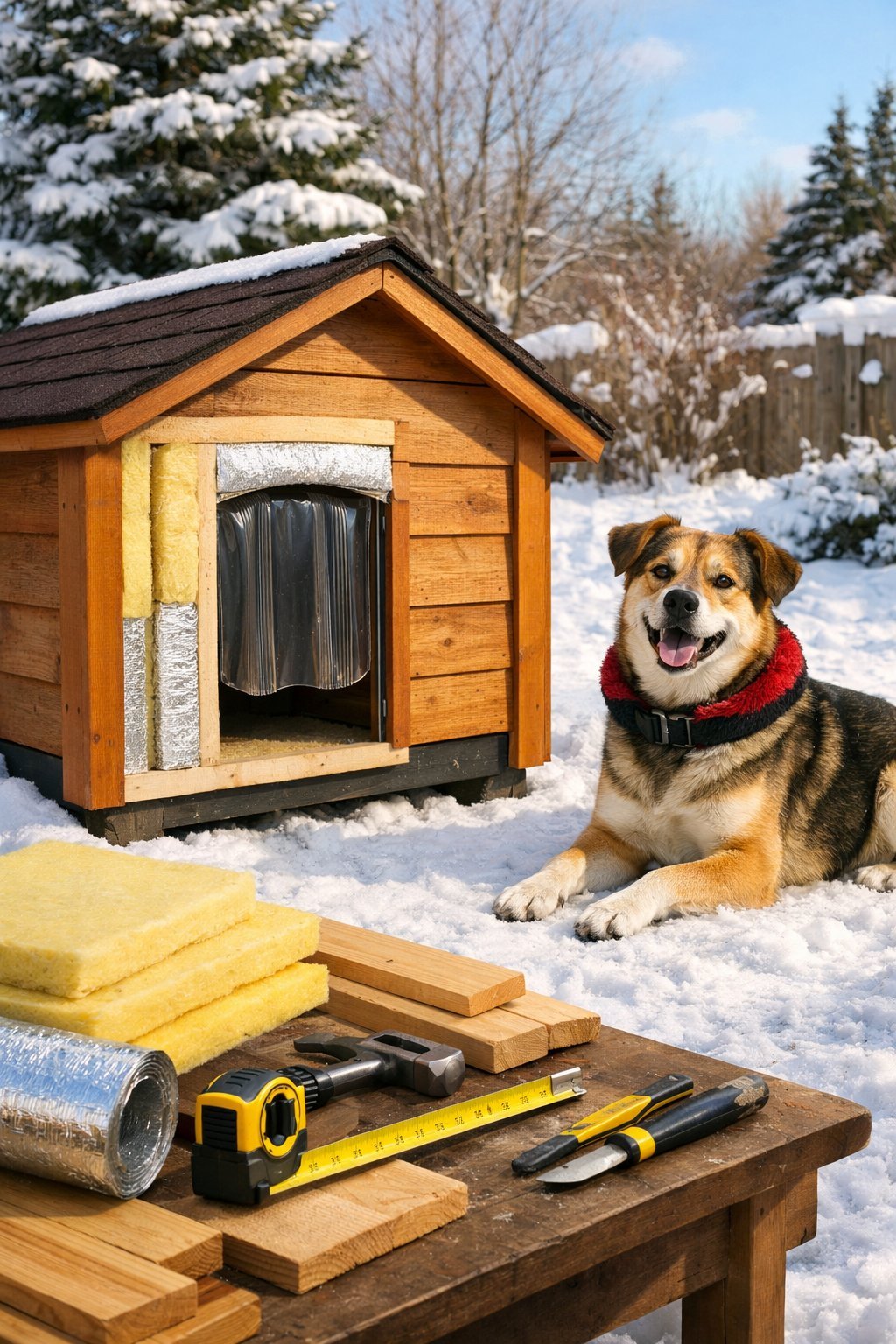
Getting the size right and picking good insulation materials will help your dog stay comfy when it’s cold. Here’s what to think about when it comes to dimensions, placement, insulation, and the basic tools you’ll need.
Choosing the Right Size and Location
The dog house should be big enough for your dog to stand up, turn around, and lie down comfortably. I measure my dog’s height from the ground to the top of the head, then add 2 to 4 inches for the interior height.
For length and width, I add 6 to 12 inches to my dog’s length when stretched out. A house that’s too big is harder to keep warm, so a snug fit is better than a giant space.
For location, pick a spot that’s protected from wind and rain. Avoid low areas where water might collect.
Face the entrance away from the wind, and raise the house on a platform or blocks to keep the floor dry and help with insulation.
Selecting Safe and Effective Insulation Materials
Foam board insulation is great for dog houses because it’s easy to cut and install, and it keeps the cold out. I use rigid foam panels at least 1 inch thick for the walls, floor, and roof.
Reflective foil insulation is another good option and can be combined with foam board for extra protection in really cold climates.
I avoid fiberglass insulation since dogs might chew on it and it’s not safe for them to breathe in. Any insulation I use gets covered with plywood or another solid material so my dog can’t get to it.
For the floor, I like to add straw or cedar shavings on top of the insulated base. These natural materials add extra warmth and are safe if your dog chews on them.
Tools and Supplies You’ll Need
Here’s what I gather before starting:
Basic Tools:
- Circular saw or hand saw
- Drill with bits
- Measuring tape
- Carpenter’s square
- Pencil
- Sandpaper
Materials:
- Exterior-grade plywood (3/4 inch)
- 2×4 lumber for framing
- Foam board insulation (1 to 2 inches thick)
- Exterior wood screws
- Wood glue
- Roofing shingles or metal roofing
- Exterior paint or stain
Make sure all wood and materials are safe for pets and rated for outdoor use. Building an insulated structure takes weather-resistant materials that can stand up to rain and snow.
Step-By-Step Guide to Building an Insulated Dog House
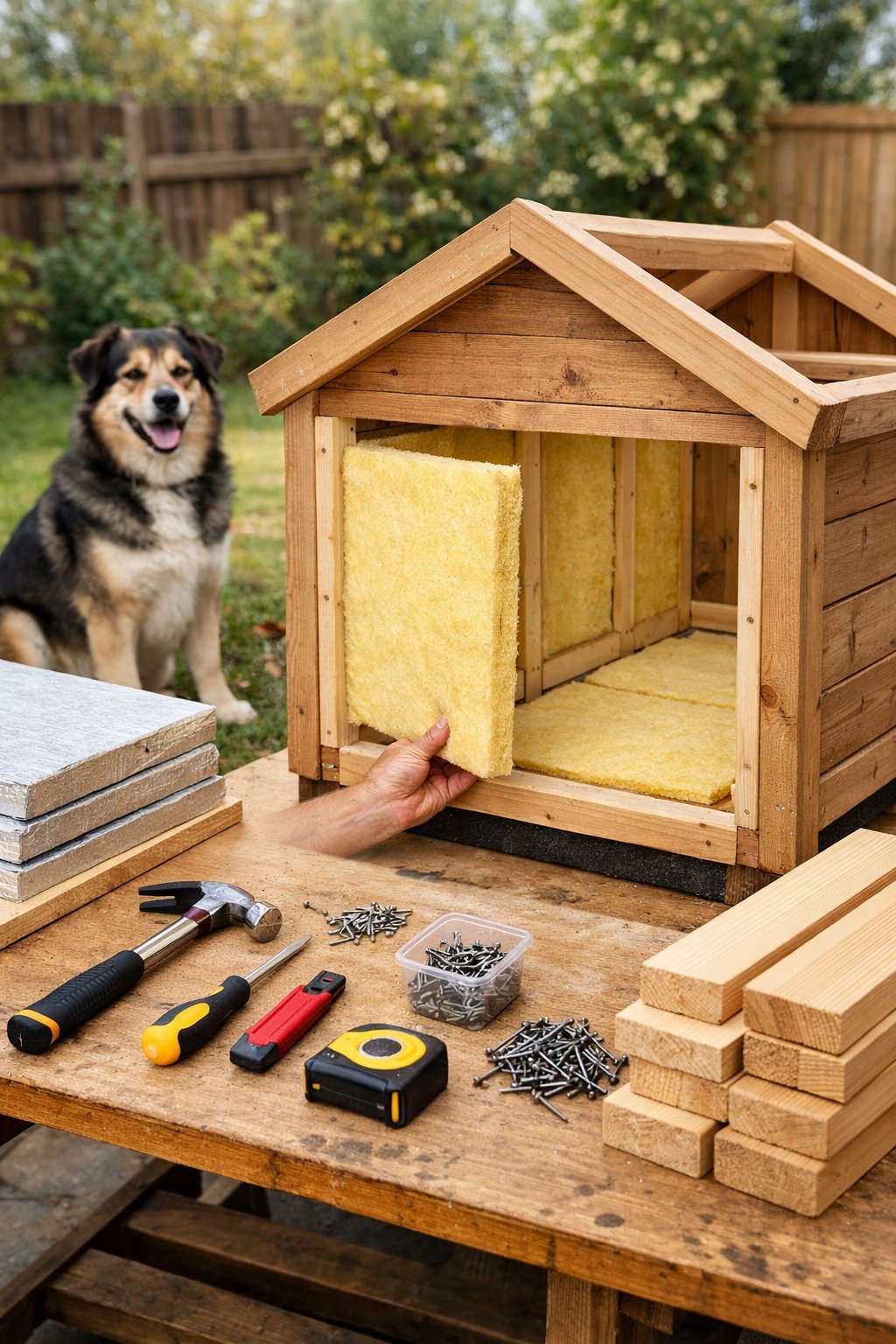
Building an insulated dog house means focusing on the foundation, walls, and insulation placement to make a warm shelter that keeps your pup safe from the cold.
Preparing the Base and Foundation
Start by picking a level, dry spot that drains well. The location should be a little elevated to keep water from pooling around the house.
Cut a piece of plywood that’s at least 6 inches bigger than the house walls on all sides. This overhang helps keep rain and snow away from the structure.
Treat the plywood with weatherproof sealant to prevent rot. Attach four pressure-treated 2×4 boards underneath as runners to lift the floor about 3 inches off the ground.
This air gap helps keep the floor dry and adds insulation. Place rigid foam insulation board between the runners and cover it with another layer of plywood to make a sandwich.
This double-floor design stops cold from seeping up from the ground.
Constructing Walls and Roof for Optimal Warmth
Frame the walls with 2×4 lumber, making a simple rectangle that’s just big enough for your dog. A smaller house is easier to keep warm.
The door opening should face away from the wind and be just big enough for your dog to get in comfortably. I make mine about 75% of my dog’s shoulder height.
Use exterior-grade plywood for the outside of the walls. Before attaching the inner wall panels, fill the wall cavities with foam board insulation cut to fit snugly.
The roof should have a slight slope so rain and snow slide off. Build it at a 15-degree angle using 2×4 rafters.
Sandwich insulation between an outer plywood layer and an inner plywood ceiling. Cover the exterior roof with shingles or metal roofing to make it weather-resistant and durable.
I like to attach the roof with hinges on one side so it can be lifted for easy cleaning.
Installing Insulation Correctly
The type and installation of insulation matter a lot. I like rigid foam board because it doesn’t absorb moisture and keeps its insulating value even when damp.
Measure and cut foam board to fit each wall cavity, floor section, and roof space. Fill any small gaps with expanding foam spray to create an airtight barrier.
Key insulation zones:
- Floor: 1-2 inches of foam board between plywood layers
- Walls: 1-1.5 inches of foam board between studs
- Roof: 1-2 inches of foam board between ceiling and exterior roof
Never leave insulation exposed inside the dog house. Dogs might chew or scratch at it, which isn’t safe.
Always cover insulation with plywood or another solid layer. Around the door, seal carefully—add weatherstripping and hang a rubber or vinyl flap over the entrance.
In really cold climates, use a double-flap system with a small air pocket between the two flaps for extra protection.
Enhancing Warmth and Comfort
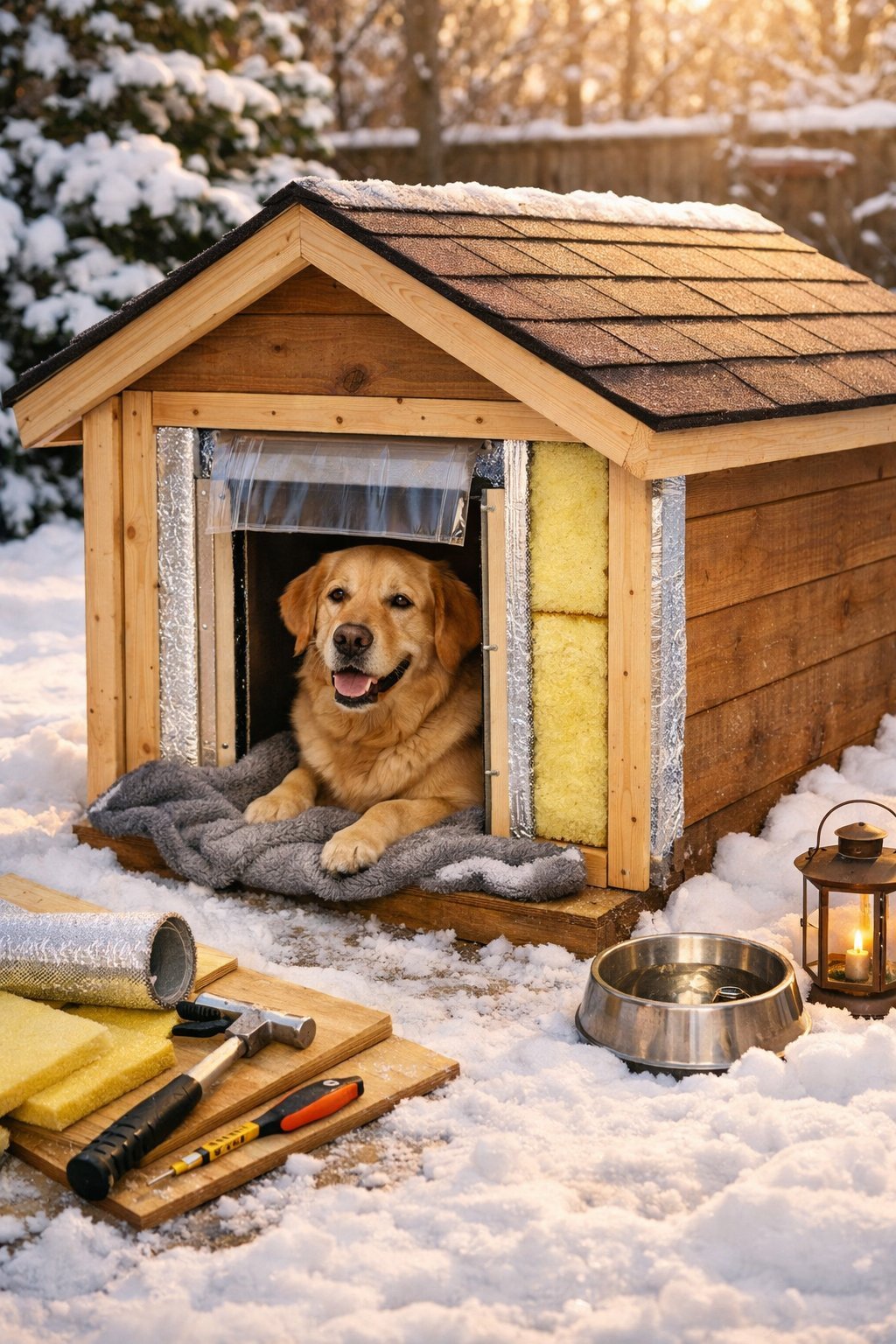
Once your insulated dog house is built, a few simple upgrades can make it even warmer. Proper weatherproofing keeps cold air out, and the right bedding and heating options add extra coziness.
Weatherproofing Decks and Doors
I always start by checking the entrance for gaps where cold air can sneak in. A door flap made from heavy-duty vinyl or rubber helps block wind and rain while still letting your dog come and go easily.
You can buy these at most pet stores or make one yourself from a thick plastic mat. The deck or raised floor also needs protection.
I recommend sealing any cracks between boards with outdoor caulk to stop drafts from below. Adding a waterproof sealant to the wood keeps moisture from soaking through during snow or rain.
Weather stripping around the door frame creates an extra barrier against the cold. I use adhesive foam strips that stick right to the edges.
This simple step can prevent heat loss and keep moisture out.
Adding Cozy Bedding and Heated Options
The right bedding materials make a huge difference in keeping your dog warm. I prefer materials that trap heat like straw or cedar shavings because they provide natural insulation and smell fresh.
Straw works better than hay since it doesn’t absorb moisture as easily. You can also layer blankets or use a dog bed designed for cold weather.
I avoid thin materials that compress easily since they lose their insulating properties quickly. For extra cold climates, heated pet mats offer safe warmth.
These plug-in pads are designed specifically for pets and stay at a comfortable temperature. Place them under a blanket or bed for best results.
Just make sure any electrical cords are protected and run safely into the house.
Ventilation Without Losing Heat
I always include small vents near the roof peak to let moisture escape. Dogs breathe out humid air that can make the inside damp and actually colder if it has nowhere to go.
I drill a few small holes about one inch wide near the top of the walls. These should be on opposite sides to create cross-ventilation.
The key is keeping them small and high up so warm air stays low where your dog sleeps. You can cover these vents with mesh to keep bugs and rain out.
I adjust the vent size based on my dog’s size. Bigger dogs need slightly more ventilation since they produce more moisture when breathing.
Maintenance and Winter Care Tips
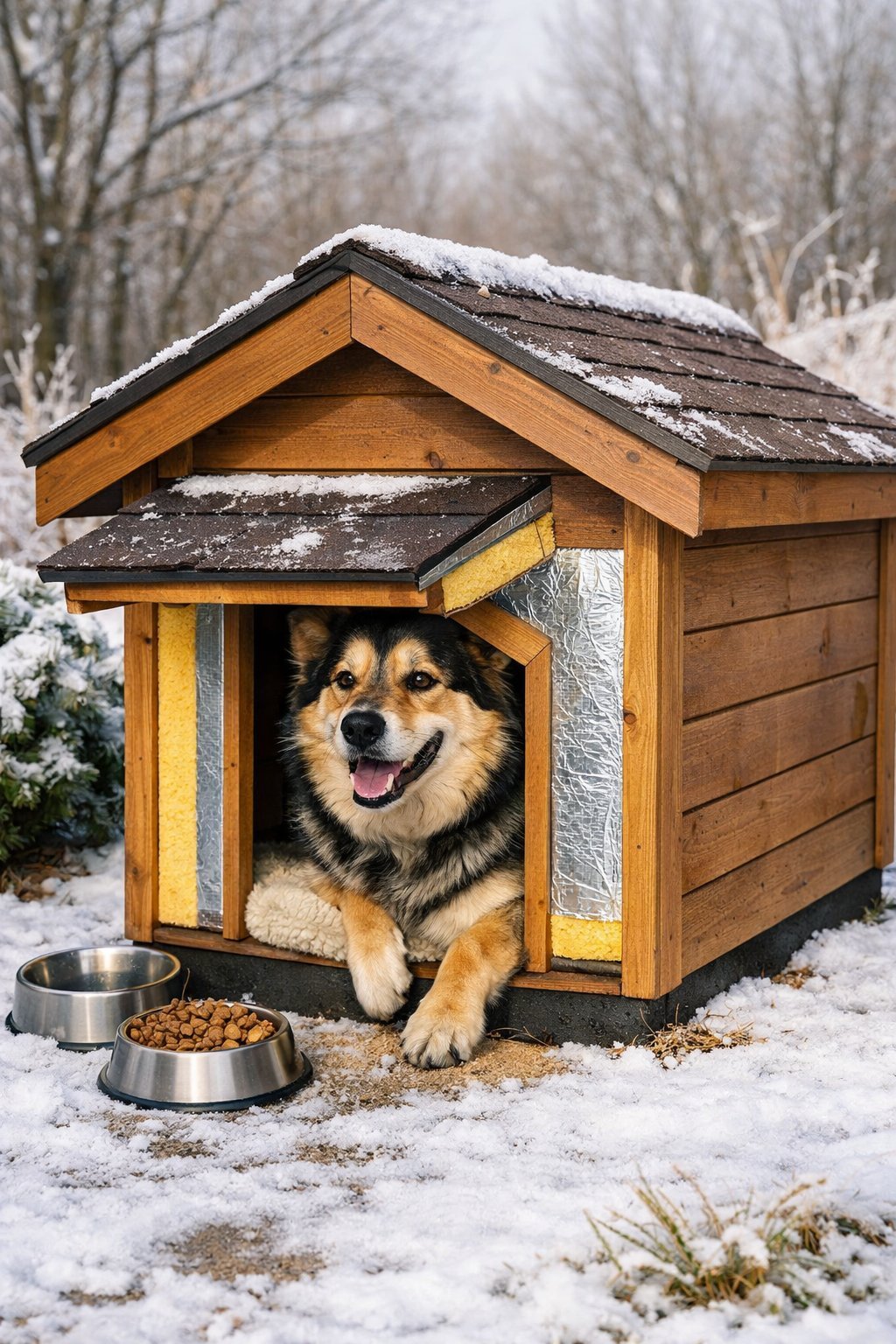
Regular upkeep of your dog’s insulated house prevents heat loss and protects your pet’s health. I focus on checking for damage, maintaining cleanliness, and monitoring my dog’s comfort throughout the cold months.
Checking for Drafts and Repairs
I inspect my dog’s house at least once a week during winter to find any cracks or gaps that let cold air inside. I run my hand along all seams, corners, and the door frame to feel for air movement.
The most common problem areas are where the walls meet the floor and around the entrance. When I find drafts, I seal them right away with weatherstripping or caulk.
I check the roof for leaks after every snowfall or rainstorm. Water damage ruins insulation quickly and makes the house much colder.
I also look at the structural parts of the house. Loose boards, damaged hinges, or warped panels need immediate fixing.
Routine checking and cleaning helps stop mold and bacteria from growing in the winter months.
Cleaning and Hygiene Best Practices
I remove all bedding and sweep out the dog house every two weeks minimum. Dirt, moisture, and debris reduce how well the insulation works.
I use a pet-safe cleaner and let everything dry completely before putting bedding back inside. I wash my dog’s blankets and bedding in hot water weekly.
Wet or damp bedding makes my dog cold and can cause skin problems. I always have backup bedding ready so my dog has a warm place while I’m washing the dirty set.
During winter, I check daily for ice buildup near the entrance. I clear snow away from the doorway and around the base of the house.
This keeps moisture from seeping into the structure and prevents my dog from tracking excess snow inside.
Ensuring Your Dog’s Safety During Winter
I monitor my dog closely for signs of being too cold, including shivering, lethargy, or curling up tightly. I bring my dog inside if temperatures drop below what’s safe for their breed and size.
Small dogs and those with short coats can’t handle extreme cold even with an insulated house. I make sure fresh, unfrozen water is always available.
I use a heated water bowl or change the water several times daily. Dehydration happens in winter just like in summer.
I never use space heaters or heat lamps without proper safety features. These can cause fires or burns.
If I add heating elements, I ensure all cords are chew-proof and the heat source has an automatic shutoff. I position my dog’s house in a sheltered spot away from wind and direct precipitation for extra protection.
Frequently Asked Questions
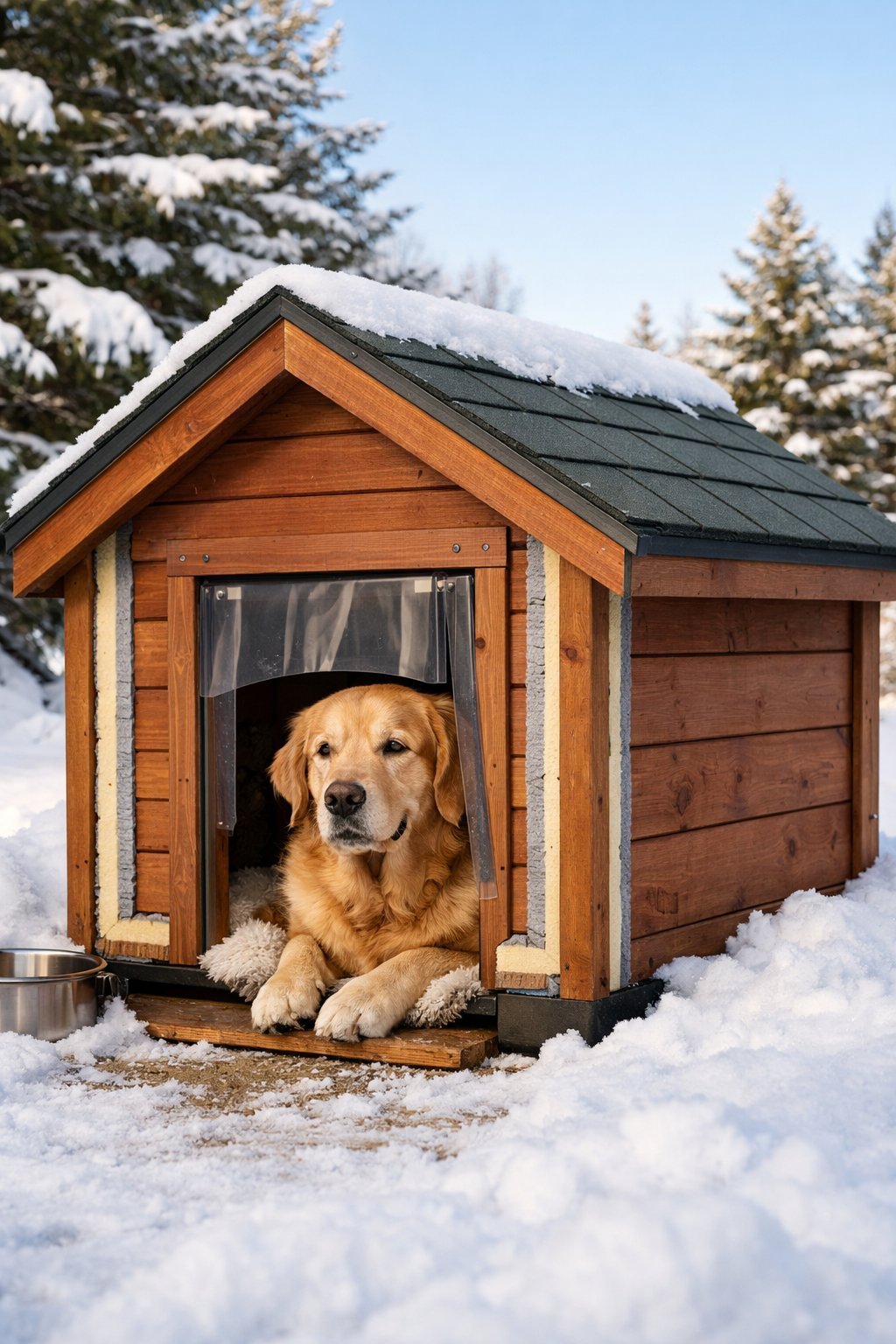
Building an insulated dog house requires basic materials like plywood, foam insulation, and weatherproof sealant. Keeping your dog warm involves proper sizing, bedding choices, and sometimes safe heating options.
What materials do I need to build an insulated dog house for my pet?
I recommend starting with exterior-grade plywood for the walls, floor, and roof. You’ll need rigid foam board insulation with at least an R-5 rating to line the interior surfaces.
Wood screws, weatherproof wood glue, and outdoor sealant or paint will help protect the structure from moisture. I suggest getting a vinyl door flap or heavy-duty plastic to cover the entrance and keep cold air out.
For the roof, I use shingles or metal roofing to prevent leaks. Don’t forget raised feet or a platform base to keep the floor off the ground and away from snow and moisture.
Can you provide step-by-step instructions to construct a cost-effective, warm dog house?
I start by measuring my dog while they’re standing and lying down to determine the right size. The house should be tall enough for my dog to stand comfortably and wide enough to turn around.
I cut the plywood pieces for the floor, walls, and roof according to my measurements. Next, I attach the foam insulation to the inside of each wall panel using adhesive or screws with washers.
I assemble the floor first, then attach the walls one at a time. The entrance should face away from prevailing winds in my area.
I add the roof at a slight angle for water runoff. Finally, I seal all gaps with caulk and apply weatherproof paint or sealant to the exterior.
What are some effective dog house designs for outdoor weather protection?
I prefer an A-frame or peaked roof design because it sheds snow and rain more effectively than a flat roof. The entrance should be offset to one side rather than centered, which creates a windbreak area inside.
Adding a small vestibule or covered porch area gives my dog extra protection from blowing snow and rain. I make sure the door opening is just large enough for my dog to enter comfortably without being oversized.
Elevated designs that sit 4 to 6 inches off the ground prevent moisture from seeping in from below. I also recommend orienting the entrance away from the direction winter winds typically blow in my location.
For two large dogs, how can I ensure adequate space and insulation in their dog house?
I calculate space by adding the lengths of both dogs lying down, plus an extra foot for movement. The width should allow both dogs to comfortably turn around without bumping into each other.
For large dogs, I use thicker insulation panels of at least 1 to 2 inches on all interior surfaces. I create a divider wall in the middle with its own insulation if my dogs prefer separate sleeping areas.
The entrance needs to be tall and wide enough for my largest dog to enter without crouching too much. I provide separate bedding areas for each dog so they can choose their own spot.
What are some ways to maintain warmth inside a dog house throughout the winter season?
I use straw bedding because it provides excellent insulation and doesn’t retain moisture like blankets can. I replace the straw every few weeks to keep it fresh and dry.
Adding a vinyl door flap helps retain heat by blocking cold air and wind from entering. I position the dog house in a sheltered location away from direct wind exposure.
I check regularly for gaps or cracks in the walls and seal them immediately. Fresh bedding such as straw or warm blankets keeps my dog comfortable and adds an extra layer of warmth.
I avoid placing the house directly on frozen ground by using a raised platform or wooden pallets underneath.
Is it possible to equip an insulated dog house with heating, and what are the safest options?
You can definitely add heating to a dog house, but safety should always come first.
Pet-safe heated pads made for outdoor use are a great choice since they keep a low temperature and usually have chew-resistant cords.
Avoid using space heaters, heat lamps, or electric blankets meant for people, as they can be fire or burn hazards.
Look for heating products with automatic shut-off features and weatherproof designs.
Solar-powered heating panels are a nice cord-free option that cuts down on electrical risks.
Always make sure any electrical parts are rated for outdoor use and protected from moisture.
Microwavable heating discs are another option for temporary warmth, though you’ll need to reheat them often.
Pairing solid insulation with minimal heating is usually the safest bet, especially when it gets really cold.
