Puppy Potty Training Tips: 9 Reasons Your Puppy Keeps Peeing in the House

You took your puppy outside. You waited. Nothing happened. You came back in, and thirty seconds later there’s a puddle on the rug. If that sounds familiar, you’re in very good company. A puppy peeing in the house is the number one frustration for new owners, and it’s almost always fixable once you know what’s causing it.
These potty training tips cover the most common reasons puppies keep having accidents inside, and the routine that turns things around.
This post contains affiliate links. As an Amazon Associate I earn from qualifying purchases.
Products mentioned in this article:
enzyme cleaner for pet urine, UV urine detector flashlight, potty training bells, indoor puppy playpen, small training treats.
First, a reality check on puppy bladders
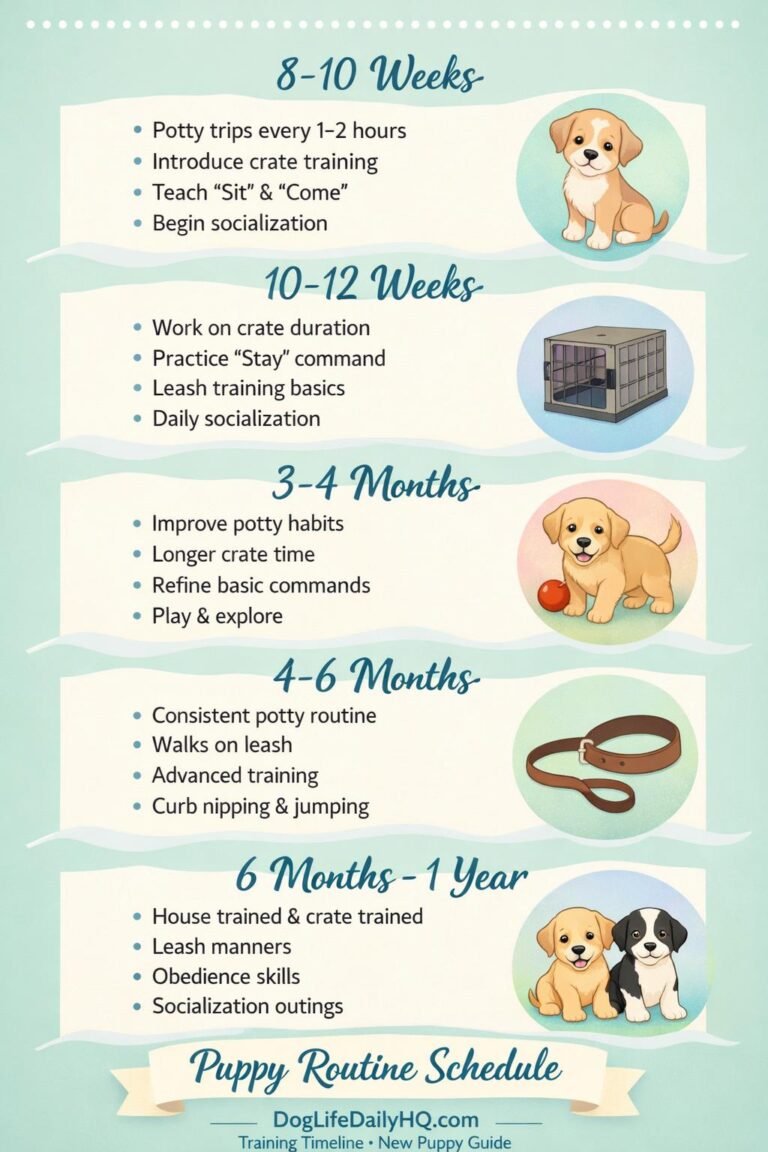
Puppies aren’t being sneaky or spiteful. Their bladders are small and their control is still developing. A common rule of thumb is that a puppy can hold it about one hour per month of age, so a 2-month-old might need to go every two hours while awake, and much sooner after eating, drinking, playing, or waking up. Many puppies aren’t fully reliable until somewhere between 4 and 6 months, and some take longer.
9 reasons your puppy keeps peeing in the house
1. They’re getting too much freedom too soon
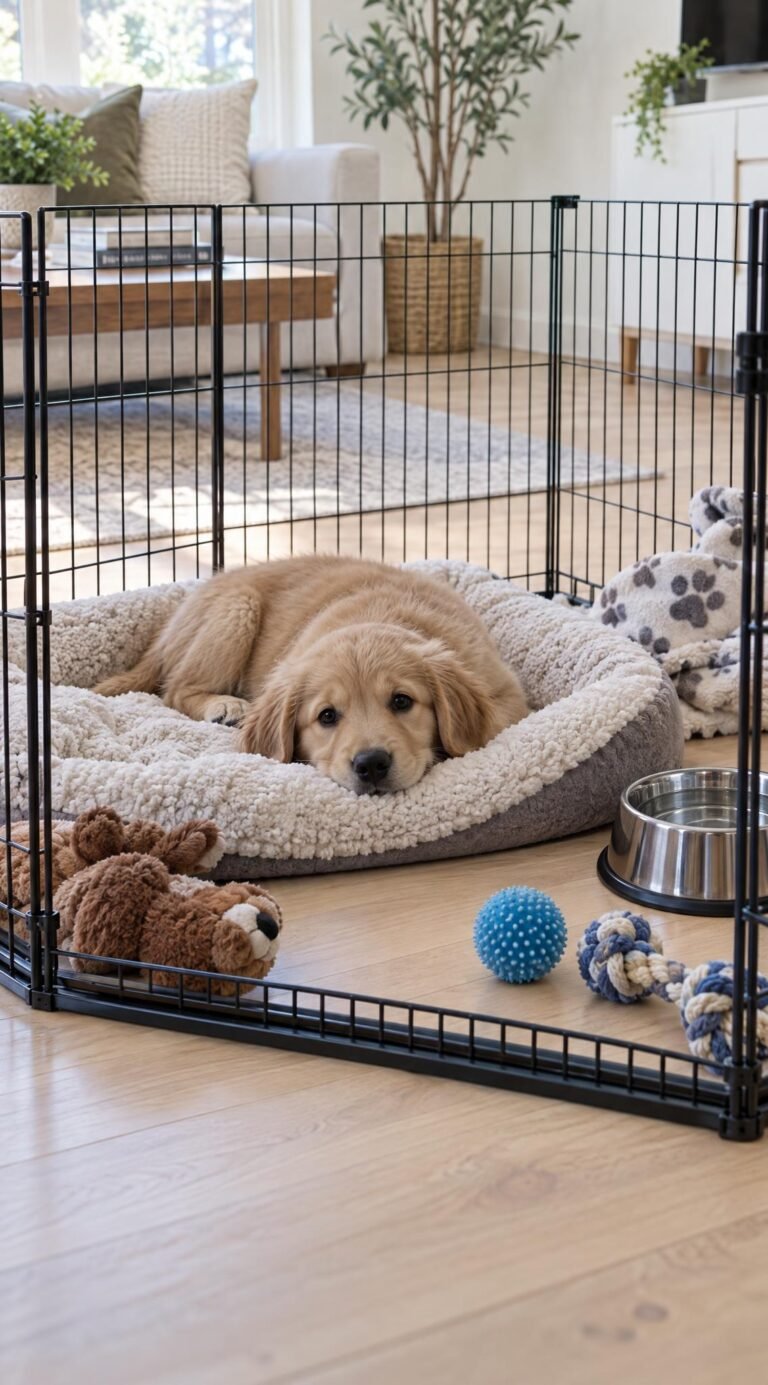
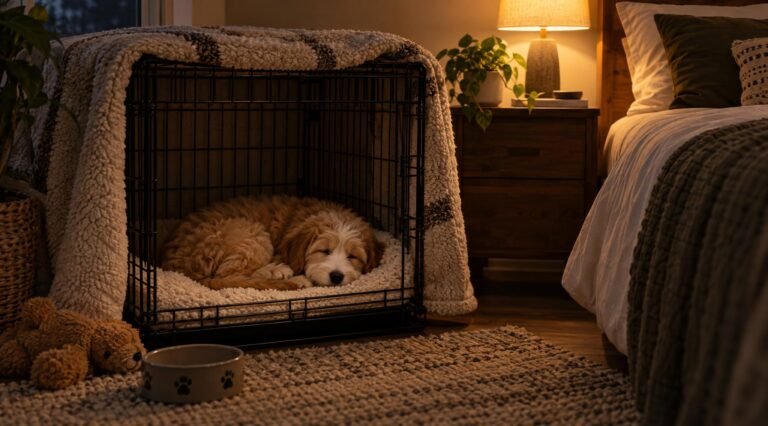
This is the biggest one. A puppy with the run of the house can wander into another room, pee quietly, and wander back before you notice. Every unnoticed accident is practice at peeing indoors. Limit their space with baby gates, a puppy playpen, or a leash clipped to your belt, and earn more room as they stay dry.
2. Potty breaks aren’t frequent enough
If you’re waiting for your puppy to ask, you’re probably waiting too long. Puppies need to go out on a schedule, not when they finally signal. Our puppy potty training schedule has a full day mapped out by age.
3. You’re missing the “trigger” moments
Take your puppy out right after they wake up (including naps), within 5 to 15 minutes after eating, after drinking a lot, during and after play, and after any exciting event like visitors arriving. These moments cause most accidents.
4. Outside is too exciting to focus
The “went out, came in, peed on the rug” problem usually means your puppy got distracted outside and never actually emptied their bladder. Go to the same boring spot every time, on leash, and stand still. Skip play until after they go. If nothing happens in 5 minutes, come inside, put them in the crate or on leash next to you for 10 to 15 minutes, then try again.
5. Old accident spots still smell like a bathroom
If your puppy keeps peeing in the same corner, it probably still smells like pee to their nose even if it looks clean to you. Regular cleaners often don’t break down urine odor. An enzyme cleaner made for pet urine does. A UV flashlight can show you old spots you didn’t know about. Avoid ammonia-based cleaners, since urine contains ammonia and the smell can draw them back.
6. They’re not being rewarded at the right moment
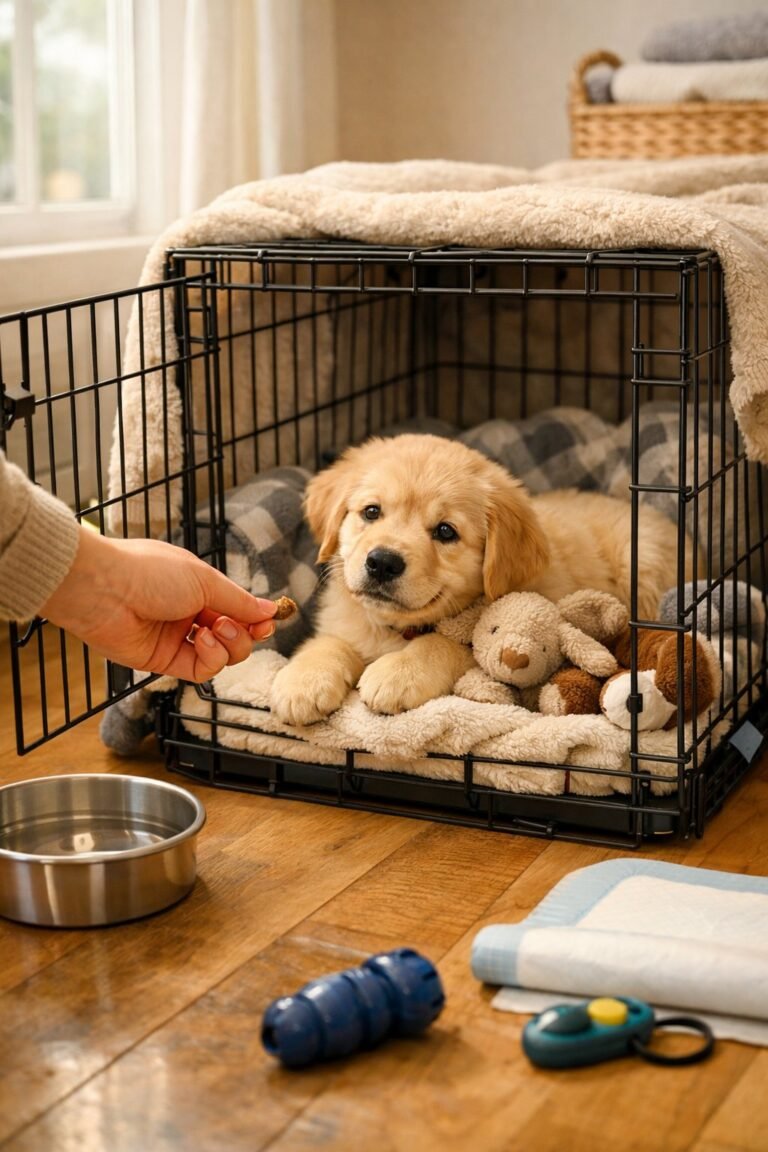
Praise and a treat need to happen the second your puppy finishes peeing outside, not when you get back to the door. Keep small training treats in your pocket so you’re ready. Your puppy should be crystal clear that peeing out here is the best thing that’s happened all day.
7. They’ve learned to hide from you
If your puppy has been scolded for accidents, they may decide the lesson is “don’t pee in front of my human,” and start sneaking off. Never punish an accident, especially one you find after the fact. Your puppy can’t connect a scolding to something they did minutes ago.
8. Excitement or submissive peeing
Some puppies dribble when greeting people or when they’re nervous. This isn’t a house training problem. Keep greetings calm and low-key, greet them outside when you can, and avoid looming over them. Most puppies grow out of it.
9. There could be a medical reason
If your puppy is peeing very often in small amounts, straining, having accidents after being reliably trained, drinking much more than usual, or the urine looks bloody or smells unusually strong, call your vet. Urinary tract infections are common in puppies and are a medical issue, not a training failure.
The simple routine that stops accidents
- Supervise or confine. If you can’t watch your puppy, they’re in their crate, playpen, or tethered to you.
- Go out on a schedule plus every trigger moment, even if they don’t seem to need it.
- Same spot, on leash, boring. Use a cue word like “go potty” just as they start to go.
- Reward instantly with a treat and happy praise, then a little play or sniff time as a bonus.
- No pee, no freedom. If they don’t go, back to the crate or on leash for a short wait, then try again.
- Interrupt, don’t punish. If you catch them mid-pee inside, calmly say “oops,” scoop them up, and take them outside to finish. Praise if they finish out there.
- Clean every accident with an enzyme cleaner.
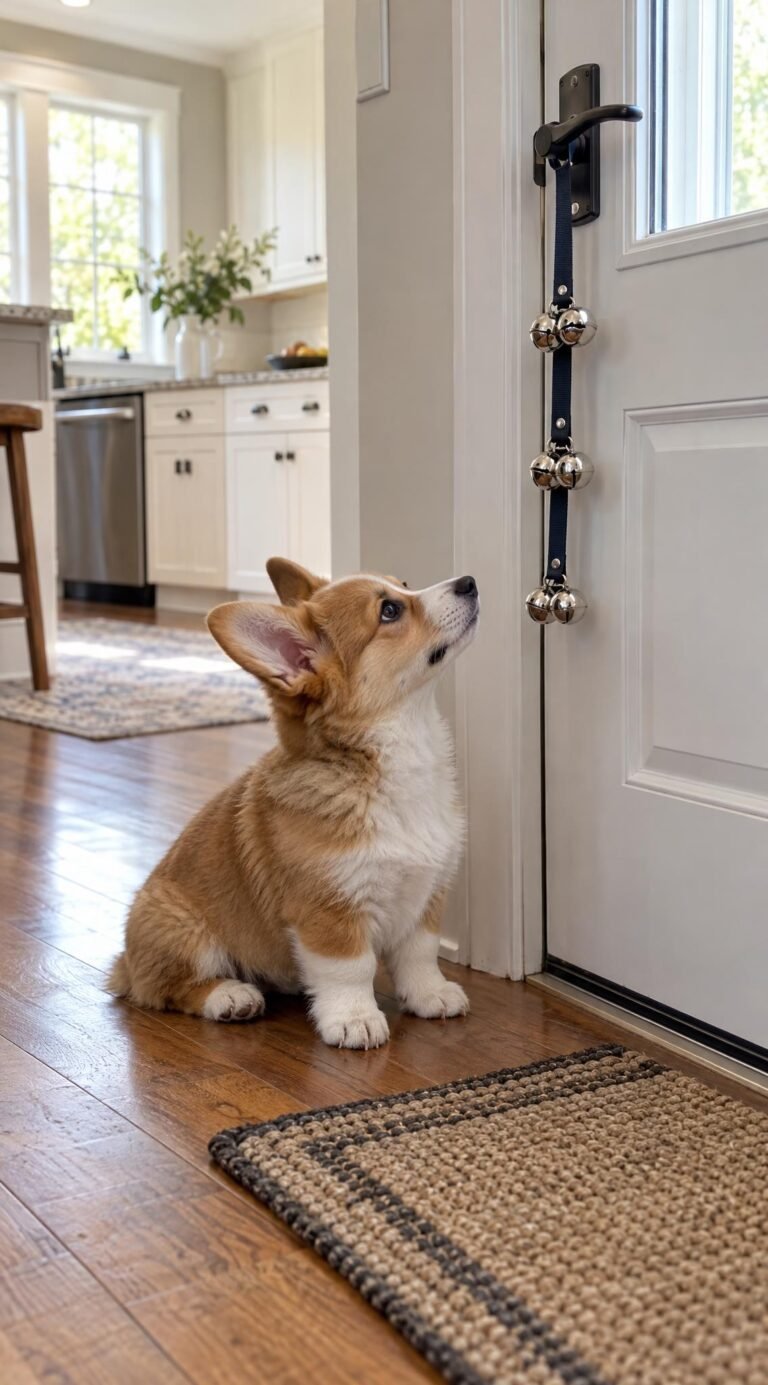
Want your puppy to tell you when they need out? Hanging potty bells on the door and ringing them every time you head out teaches many puppies to ring them on their own within a few weeks.
House training takes a few weeks of steady practice
The routine above works, but only if you stick to it every day while juggling crate time, biting, and everything else. Our 28-Day Puppy Training Plan puts potty training and the other first-month skills into one day-by-day schedule, so you always know what to do next. Week 1 is free.
What about puppy pads?
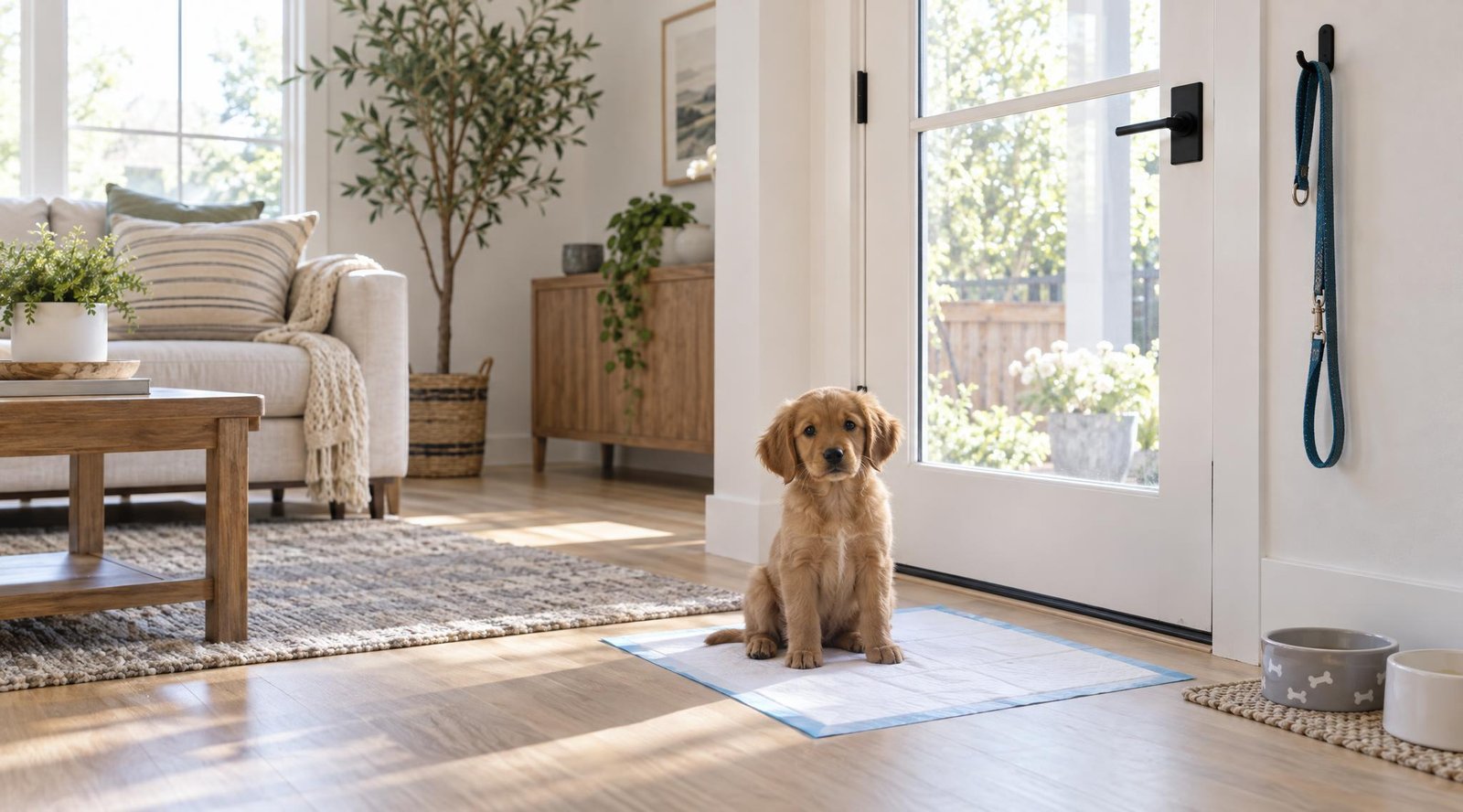
Pads can be useful for very young puppies, apartment living, or long workdays. The downside is that they teach your puppy it’s okay to pee indoors on something soft, which can carry over to rugs and bath mats. If your goal is outdoor potty training, use pads as a backup in the playpen only, and move toward outside as quickly as you can. If you need a long-term indoor option, see our guide to DIY indoor dog potties.
Frequently Asked Questions
Why does my puppy pee inside right after being outside?
Usually because they got distracted outside and never fully emptied their bladder. Stay out longer in a boring spot on leash, and don’t come back in until they’ve gone, or come in and keep them confined for a few minutes before trying again.
At what age should a puppy stop having accidents?
Many puppies are mostly reliable between 4 and 6 months, but it varies by puppy, breed size, and how consistent the routine has been. Small breeds often take longer.
Should I rub my puppy’s nose in it?
No. It doesn’t teach anything useful and can make your puppy afraid to pee in front of you, which makes house training harder.
How often should I take my puppy outside?
For young puppies, roughly every one to two hours while awake, plus after waking, eating, drinking, and playing. Stretch the time between trips as your puppy stays dry.
Why is my puppy peeing in their crate?
The crate may be too big, they may be left in it longer than they can hold it, or there could be a medical issue. Shrink the space with a divider, shorten crate stretches, and check with your vet if it keeps happening.
Final thoughts
Puppy accidents feel personal, but they’re just a sign that your puppy has more freedom than their bladder can handle right now. Tighten up supervision, go out more often than you think you need to, reward fast, and clean with an enzyme cleaner. Most owners see a real difference within a week or two of getting consistent.