
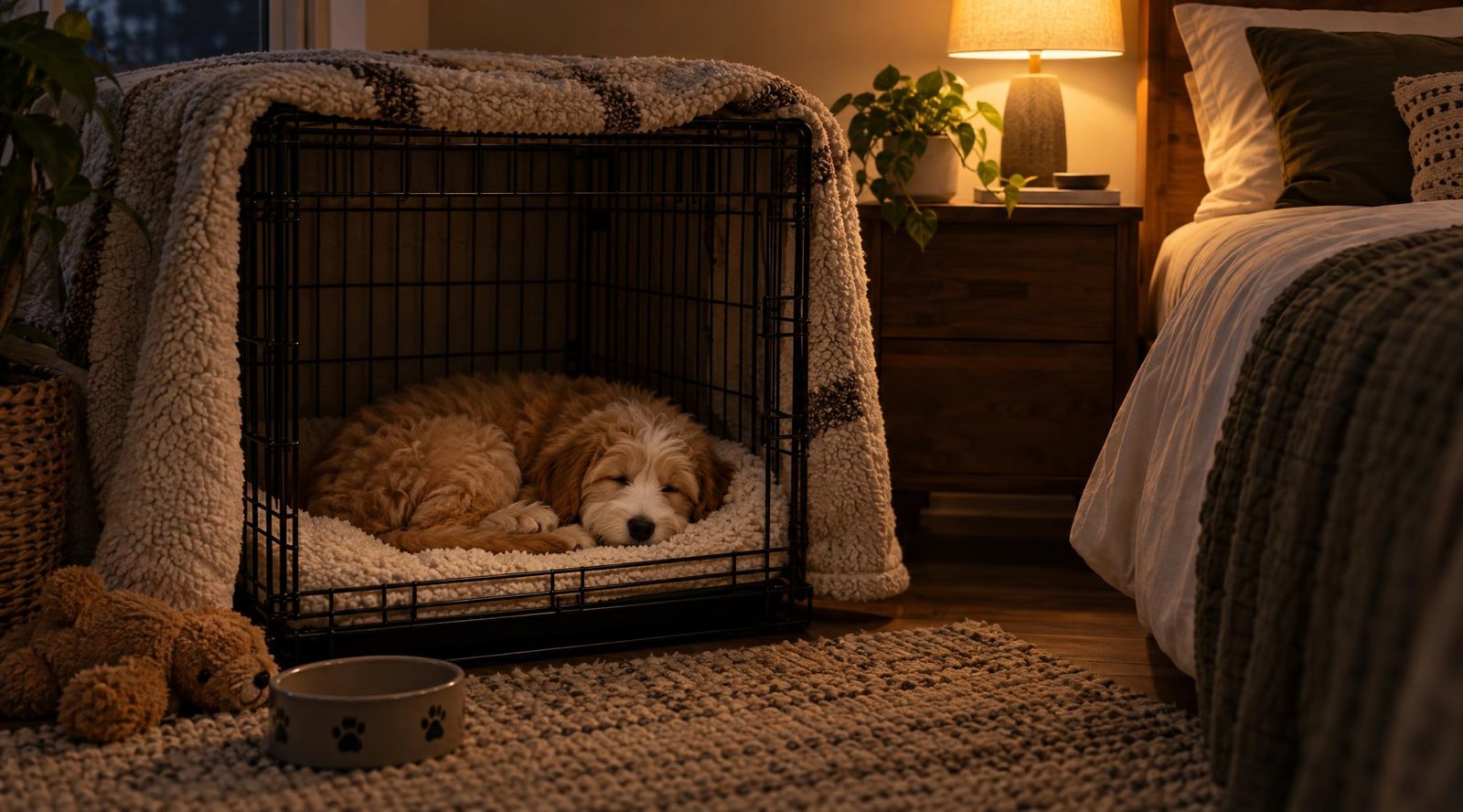
Crate Training a Puppy at Night: How to Stop the Crying

It’s 2 a.m., the house is dark, and the tiny new member of your family is crying like the world is ending. If your puppy cries in the crate at night, you’re not doing anything wrong, and your puppy isn’t broken. Almost every puppy goes through this. The good news is that most puppies settle within one to two weeks when you handle the nights the right way.
Crate training a puppy at night is mostly about this crying stage. This guide walks you through why puppies cry in the crate, how to tell what the cry actually means, and the bedtime setup that gets everyone sleeping again.
This post contains affiliate links. As an Amazon Associate I earn from qualifying purchases.
Products mentioned in this article:
wire crate with divider panel, crate cover, heartbeat snuggle toy, white noise machine, washable crate pad.
Why puppies cry in the crate at night
Until a few days ago, your puppy slept in a warm pile of littermates with mom nearby. Now they’re alone in a new place that smells strange. Crying is how a baby animal says “I’m lost, come find me.” It’s instinct, not stubbornness.
There are usually four reasons behind the noise:
- They need to potty. Young puppies physically can’t hold it all night. A common rule of thumb is about one hour per month of age, plus one, so an 8-week-old may only last two to three hours.
- They’re lonely. Being separated from you is the hardest part of crate time for a new puppy.
- They’re uncomfortable. Too hot, too cold, a crate that’s too big, or a hard floor can all keep a puppy awake.
- They’ve learned crying works. If crying has gotten them let out to play, they’ll keep trying it.
Potty cry or protest cry? How to tell
This is the single most useful skill for the first two weeks. You don’t want to ignore a puppy who truly needs to go, and you don’t want to reward a puppy who’s just testing you.
A potty cry usually starts after your puppy has been asleep for a while, often a couple of hours in. It comes with restlessness: circling, scratching at the door, sniffing the floor. It gets more urgent rather than fading.
A protest cry usually starts right after you leave the room or turn off the light. It often comes in bursts with pauses, as if your puppy is listening for you. It tends to fade within 10 to 20 minutes if nothing happens.
When in doubt, take them out. An accident in the crate sets crate training back more than one extra trip outside.
The calm bedtime setup that works
1. Put the crate next to your bed
This one change fixes more crying than anything else. Your puppy can smell you, hear you breathing, and know they haven’t been abandoned. You can also hear the difference between a potty cry and a protest cry. Once your puppy is sleeping well, you can move the crate a little farther away every few nights if you want it out of the bedroom.
2. Get the crate size right
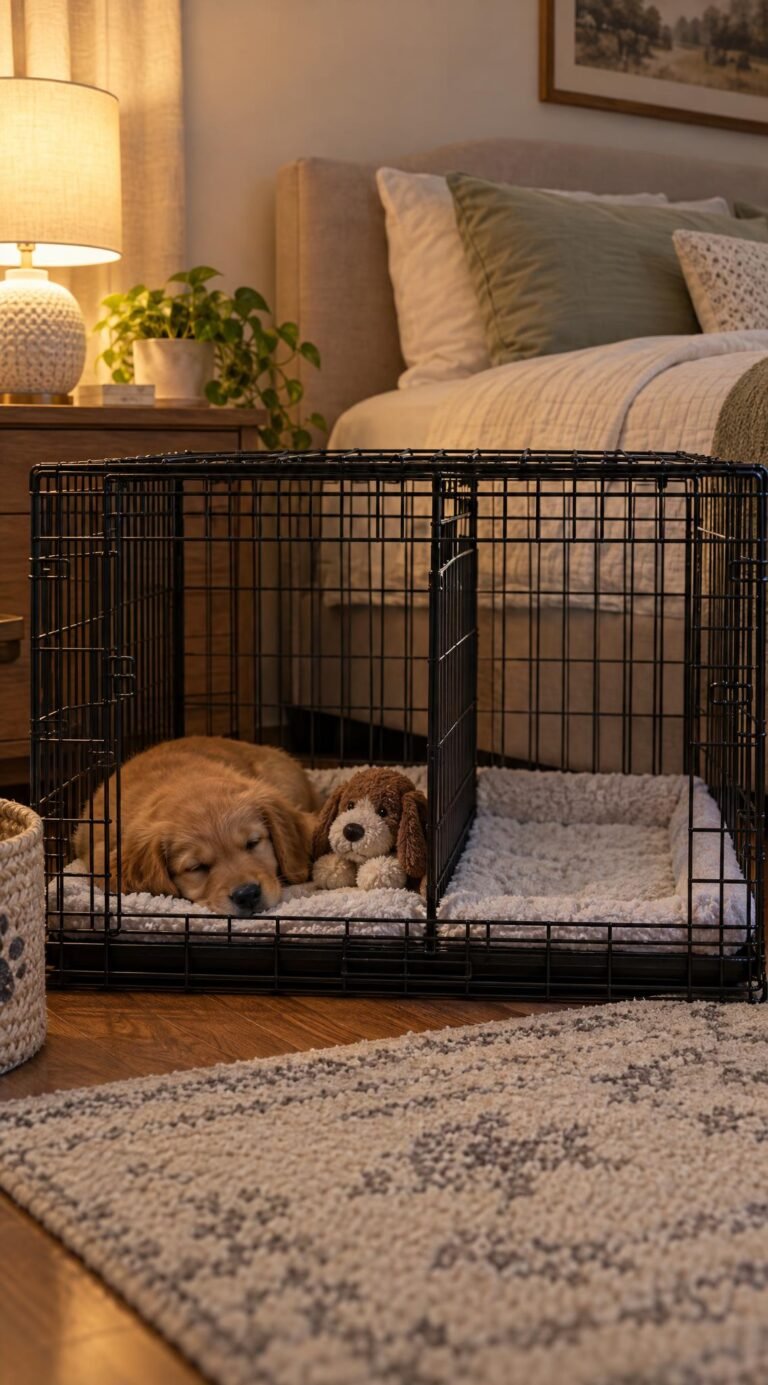
The crate should be just big enough to stand up, turn around, and lie down. Too much space lets a puppy potty in one corner and sleep in the other. A wire crate with a divider panel lets you start small and give more room as they grow, so you only buy one crate.
3. Make it cozy and den-like
Drape a crate cover or blanket over the top and three sides so it feels like a den. Add a soft, washable crate pad, but skip the fluffy bed for now if your puppy is a chewer. Many owners like a heartbeat snuggle toy, which mimics the warmth and rhythm of a littermate. A white noise machine can also help cover household sounds that wake a light sleeper.
4. Tire them out before bed (gently)
Plan a short play session and a sniffy walk or yard time about an hour before bed, then let things wind down. A puppy who has burned off energy and then had time to relax falls asleep faster than one who goes straight from zoomies to the crate.
5. Stop water and run a last potty trip
Pick up the water bowl about two hours before bedtime (keep water available during the day, of course). Right before the crate, take your puppy outside to their potty spot, wait, and praise calmly when they go.
6. Set an alarm instead of waiting for crying
For the first week or two, set an alarm for a middle-of-the-night potty break that fits your puppy’s age. Taking them out before they cry teaches them that crying isn’t what gets the door opened. As they get older and start staying dry, push the alarm later by 15 to 30 minutes every few nights until it’s gone.
How to handle night potty trips
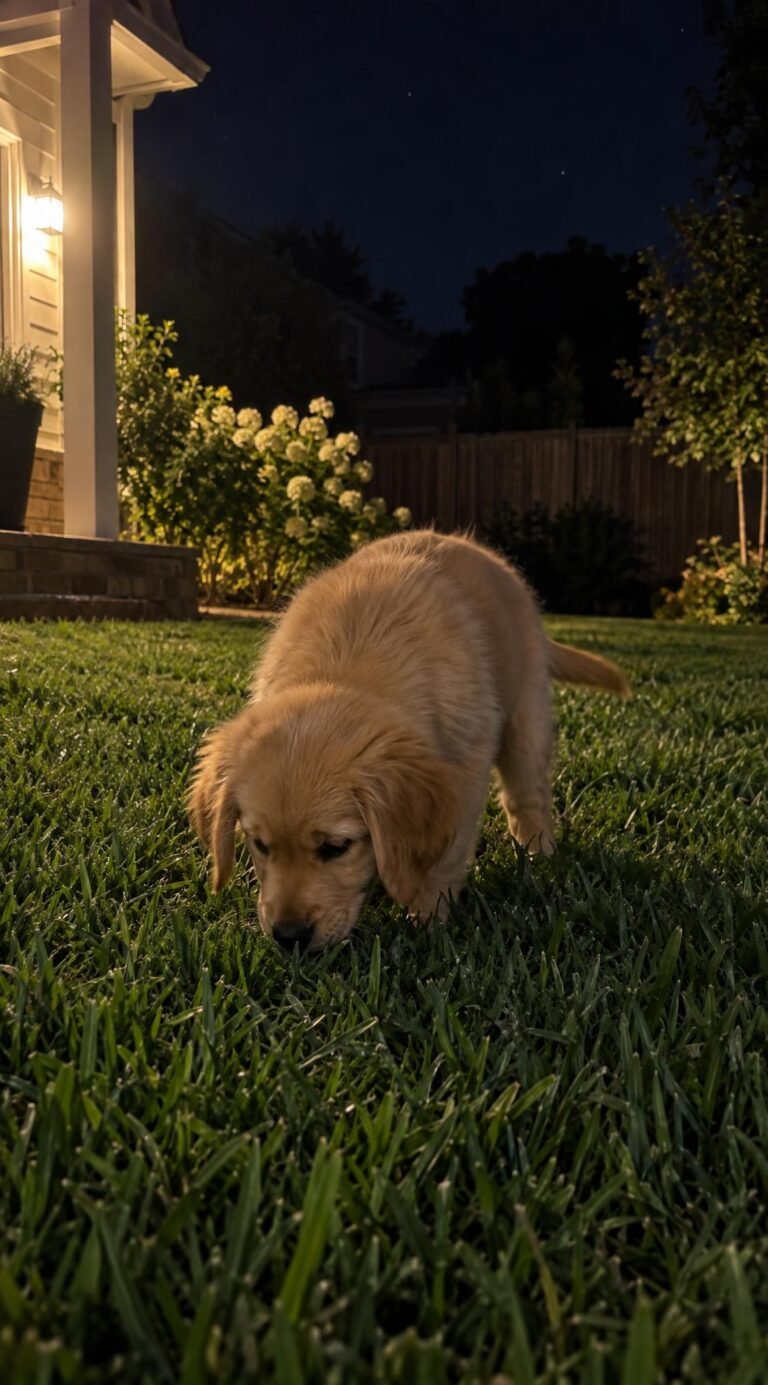
Night trips should be the most boring part of your puppy’s day. Carry or leash them straight to the potty spot. Keep the lights low and your voice quiet. No play, no cuddling session, no treats beyond a calm “good.” Then straight back to the crate. If night trips are fun, your puppy will start waking up for them.
For more on building the whole potty routine, see our puppy potty training schedule.
What to do when they cry anyway
If you’ve just taken them out and you’re sure they don’t need to go:
- Wait for a pause in the crying, even a few seconds, before you respond. You want quiet to be what gets your attention.
- Rest your fingers against the crate door or say a soft, boring “shh, bedtime.” Don’t open the door.
- Give it 10 to 15 minutes. Many protest cries burn out in that window.
- If crying is still going strong after that, take one more quick, boring potty trip. Some puppies just need it.
Mistakes that make crate crying worse
- Letting them out to play when they cry. This teaches the exact habit you’re trying to break.
- Yelling or banging on the crate. It adds fear, and fear makes crying louder and the crate scarier.
- Using the crate only at night. Short, happy daytime crate sessions with a chew or a meal make nighttime feel normal. Our crate training guide walks through daytime practice step by step.
- Giving up after two nights. Nights three to five are often the hardest before things get better. Consistency is what wins.
Tired of figuring this out one night at a time?
Crate crying usually overlaps with potty training, biting, and a dozen other first-month problems. Our 28-Day Puppy Training Plan lays out what to work on each day, in order, so you’re not piecing it together from articles at 2 a.m. Start with Week 1 free and see if it fits your puppy.
When to call your vet
Most crate crying is normal adjustment. Check in with your vet if your puppy is peeing far more often than usual, straining, crying when they go, has diarrhea, or seems in pain. Those can point to a medical issue like a urinary tract infection rather than a training problem.
Frequently Asked Questions
How long will my puppy cry in the crate at night?
Most puppies improve noticeably within one to two weeks with a consistent routine. The first three to five nights are usually the loudest.
Should I ignore my puppy crying in the crate?
Not completely. Rule out potty needs first. If you’re confident they’ve just been out, wait for a pause in the crying before you respond, and respond in a calm, boring way without opening the door.
Should I cover my puppy’s crate at night?
Many puppies settle better with a cover over the top and three sides, because it feels like a den. Leave the front open enough for airflow and make sure your puppy can’t pull the fabric inside and chew it.
Is it okay to put the crate in my bedroom?
Yes, and for a new puppy it’s usually the best spot. Being close to you is often what stops the crying. You can move it gradually later.
Should I put water in the crate overnight?
For most healthy puppies, no. Pick up water about two hours before bed so they can make it to the next potty break. Follow your vet’s advice if your puppy has a health condition or it’s very hot.
Final thoughts
A crying puppy at night feels endless when you’re in it, but it’s one of the shortest phases of puppyhood. Keep the crate close, take boring potty trips on a schedule, and reward quiet instead of noise. Within a couple of weeks, most puppies are curling up in their crate on their own, and you’re sleeping again too.