
Bernese Mountain Dog: A Gentle Giant Perfect for Active Families

The Bernese Mountain Dog is a large, gentle breed from Switzerland that was originally bred to work on farms pulling carts and herding cattle. These dogs are known for their striking black, white, and rust-colored coats and their calm, loyal personalities.
I’ve always been drawn to how these gentle giants combine impressive size with a sweet temperament that makes them wonderful family companions.

Bernese Mountain Dogs are dependable, loyal dogs that excel as both working animals and beloved family pets, though they require regular grooming and have specific health considerations due to their large size. The breed has roots dating back more than 2,000 years when Romans brought their ancestors to Switzerland.
Today, these dogs maintain their hardworking nature while adapting beautifully to modern family life.
If you’re thinking about bringing a Berner into your home, I want to share everything you need to know about this remarkable breed. From their exercise needs to their friendly nature with kids and other pets, understanding what makes these dogs special will help you decide if a Bernese Mountain Dog is right for you.
Key Takeaways
- Bernese Mountain Dogs are large, gentle dogs with tri-colored coats that were originally bred for farm work in Switzerland
- These dogs are calm and loyal companions that do well with families but need regular grooming and exercise
- Berners have specific health concerns related to their size and may have shorter lifespans than smaller breeds
Bernese Mountain Dog Overview
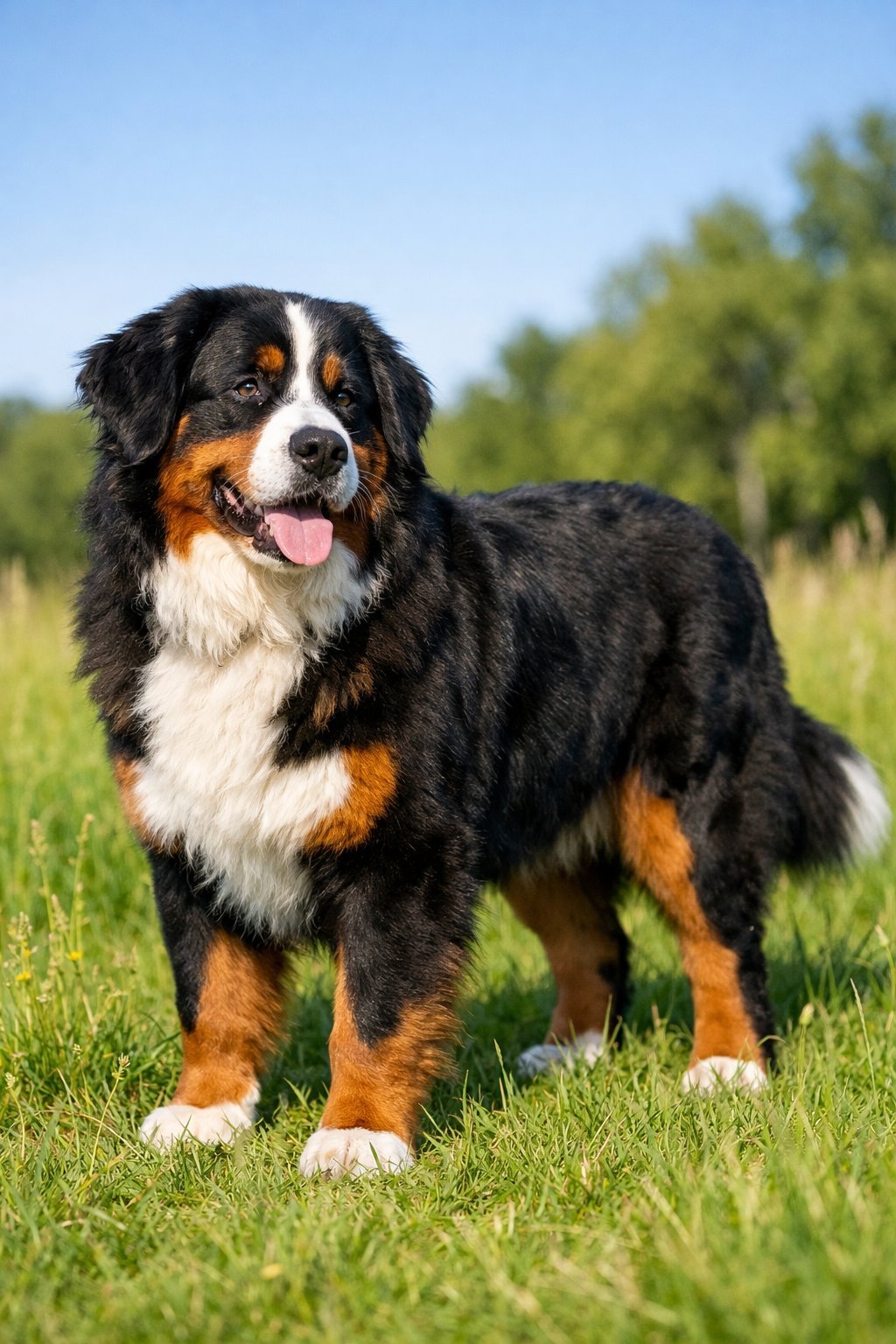
The Bernese Mountain Dog is a large working breed from Switzerland with a beautiful tri-colored coat and a gentle, loyal nature. These dogs were originally bred for farm work in the Swiss Alps and have become beloved family companions around the world.
Breed Origin and History
The Bernese Mountain Dog comes from the canton of Bern in Switzerland and the Swiss Alps region. I find it fascinating that this breed has ancestral roots in Roman mastiffs, brought to Switzerland over 2,000 years ago by invading Romans.
These dogs are one of four Sennenhund-type breeds from the alpine regions. Farmers and herders originally used them for heavy-duty farm work in the mountains.
The breed was widely used to pull carts and drive cattle to and from their pastures. They also protected farms from predators, making them valuable working dogs for Swiss farmers.
The breed’s strength and endurance made them perfect for the demanding work required in mountainous terrain.
Physical Characteristics
I can tell you that Bernese Mountain Dogs are large, sturdy dogs built for work in cold weather. They have a striking tri-colored coat with black, white, and rust markings that makes them easy to recognize.
Their physical features include:
- Broad chest
- Hanging V-shaped ears
- Long, silky coat
- Large, muscular build
The tri-colored coat is one of their most distinctive features, combining black as the base color with white chest markings and rust-colored accents on the legs and face. Their thick, double coat helped them work in the cold Swiss Alps climate.
Temperament and Personality
I love that Bernese Mountain Dogs are known for being calm, loyal, and great with kids and pets. Despite their large size, they have a gentle nature that makes them excellent family companions.
These dogs are affectionate and form strong bonds with their families. Their easygoing temperament means they typically get along well with children and other animals in the household.
Berners are noted for their hardiness and friendly nature. They enjoy being around people and don’t like being left alone for long periods.
I’ve noticed they’re patient and gentle, which is why so many families choose them as pets today.
Living With a Bernese Mountain Dog

I’ve found that Bernese Mountain Dogs need plenty of space to stretch out, consistent daily routines to feel secure, and lots of quality time with their families to stay happy and healthy.
Daily Life and Routine
I recommend establishing a consistent schedule for my Bernese Mountain Dog right from the start. These dogs do best with regular meal times, walks, and bedtime routines.
My typical day includes feeding twice daily, usually in the morning and evening. I make sure to wait at least an hour after meals before any vigorous exercise to prevent bloating, which can be dangerous for large breeds.
Grooming is part of my daily routine too. I spend about 10-15 minutes brushing my Berner’s coat to prevent mats and tangles.
This breed sheds year-round, with heavier shedding twice a year.
I also set aside time each day for training and mental stimulation. Bernese Mountain Dogs thrive on attention and care, so I include puzzle toys, short training sessions, or simple games to keep my dog’s mind active.
Space and Exercise Needs
I need to provide my Bernese Mountain Dog with adequate space both indoors and outdoors. These are large dogs that can weigh 70-115 pounds, so they need room to move comfortably.
Bernese Mountain Dogs were bred for farm life in Switzerland’s mountainous regions, which means they need regular exercise. I aim for at least 30-60 minutes of moderate activity daily, split into multiple sessions.
My exercise routine includes:
- Morning walks of 20-30 minutes
- Playtime in a fenced yard
- Hiking or longer walks on weekends
- Light activities during hot weather
I’m careful not to over-exercise my Berner, especially during the first two years while bones and joints are still developing. I also avoid intense exercise in warm weather since their thick double coat makes them prone to overheating.
Indoor space matters too. I make sure my dog has a cool, comfortable spot to rest, preferably on the ground floor to minimize stair climbing, which can stress their joints.
Socialization With Family and Pets
I’ve learned that Bernese Mountain Dogs are social animals who want to be near their family members as much as possible. My Berner follows me from room to room and prefers to be wherever I am.
These dogs are known for their gentle and calm nature, making them excellent with children. I supervise interactions with young kids simply because of my dog’s large size, but my Berner is patient and tolerant.
When introducing my Bernese Mountain Dog to other pets, I do it gradually and in controlled settings. They generally get along well with other dogs and even cats, especially when socialized early.
I started socialization when my dog was a puppy to ensure positive interactions. I make sure my Berner gets regular interaction with family members and other dogs.
Leaving them alone for long periods isn’t ideal since they can develop separation anxiety. I try to limit alone time to no more than 4-6 hours when possible.
Training and Intelligence

Bernese Mountain Dogs were originally bred as working dogs in Switzerland, helping with farm work and pulling carts. Their intelligence shows through problem-solving skills and the ability to learn from experience, though they respond best to patient training methods.
Basic Obedience Tips
I recommend starting training when your Bernese Mountain Dog is still a puppy. Early socialization helps them become well-adjusted adults.
Keep training sessions short, around 10 to 15 minutes at a time. These dogs are smart but can lose focus during long sessions.
Essential commands to teach first:
- Sit
- Stay
- Come
- Down
- Leave it
I find that consistency matters more than anything else. Everyone in your household should use the same commands and rules.
Practice commands in different locations once your dog masters them at home. This helps them learn to listen in various environments.
Positive Reinforcement Methods
Bernese Mountain Dogs are intelligent but sensitive, so harsh corrections don’t work well with this breed. I always use rewards-based training instead.
Effective rewards include:
- Small, tasty treats
- Verbal praise in an excited voice
- Petting and physical affection
- Favorite toys or playtime
Timing is crucial when I give rewards. I make sure to reward within 2 to 3 seconds of the desired behavior so my dog makes the connection.
These dogs have remarkable emotional intelligence and can sense your mood. I stay calm and patient during training sessions, as frustration on my part affects their learning.
Challenges and Solutions
One challenge I face is their slower maturity rate. Bernese Mountain Dogs can act puppyish until they’re 2 or 3 years old, which requires extra patience.
Their size makes jumping and pulling on leash serious issues to address early. I work on “four paws on the floor” from day one and use a front-clip harness to manage pulling.
Some Bernese Mountain Dogs can be stubborn during training. When this happens, I switch up the activity or take a break rather than pushing harder.
Common solutions that work for me:
| Challenge | Solution |
|---|---|
| Short attention span | Keep sessions under 15 minutes |
| Food motivation drops | Train before meals when hungry |
| Distraction outdoors | Start in quiet areas, gradually add distractions |
I make sure to provide mental stimulation through puzzle toys and varied activities. A bored Bernese can develop unwanted behaviors.
Health and Wellness

Bernese Mountain Dogs face several breed-specific health challenges that require attention throughout their lives. Understanding these conditions and maintaining regular veterinary care helps ensure your Berner stays as healthy as possible for as long as possible.
Common Health Concerns
I’ve learned that Bernese Mountain Dogs are prone to certain health issues that owners need to watch for. Hip and elbow dysplasia are among the most frequent problems, causing joint pain and mobility issues as dogs age.
Cancer is a serious concern in this breed. Bernese Mountain Dogs have higher cancer rates than many other breeds, with histiocytic sarcoma being particularly common.
Early detection through regular vet visits is critical. Bloat, or gastric dilatation-volvulus, is a life-threatening emergency where the stomach twists.
This large, deep-chested breed is at higher risk for this condition. I recommend feeding smaller meals throughout the day and avoiding exercise right after eating.
Progressive retinal atrophy can lead to vision loss, while von Willebrand’s disease affects blood clotting. Health screening tests help identify carriers of genetic conditions before breeding.
Lifespan and Aging
Bernese Mountain Dogs have a shorter lifespan than many other breeds, typically living 7 to 10 years. This relatively brief life expectancy is one of the breed’s most heartbreaking realities.
Several factors influence how long my Berner might live. Genetics play a major role, so choosing a puppy from health-tested parents matters.
Maintaining a healthy weight reduces stress on joints and organs. Senior Berners need adjusted care as they age.
I watch for signs of arthritis, decreased mobility, and changes in appetite or behavior. Regular check-ups become even more important after age 6 or 7 to catch age-related issues early.
Preventative Care
Regular veterinary visits form the foundation of keeping your Bernese Mountain Dog healthy.
I schedule wellness exams at least twice yearly, especially as my dog gets older.
Essential preventative measures include:
- Annual or bi-annual blood work to monitor organ function
- Hip and elbow evaluations for dysplasia
- Eye examinations by a veterinary ophthalmologist
- Heart screenings to detect abnormalities
- Maintaining current vaccinations and parasite prevention
Proper nutrition supports overall health and helps maintain an ideal weight.
Obesity puts extra strain on joints that are already vulnerable to dysplasia.
I also keep my Berner’s teeth clean through regular brushing and dental cleanings to prevent infections that can affect other organs.
Diet and Nutrition
Bernese Mountain Dogs need a carefully planned diet that changes as they grow from puppies to adults and then seniors.
The right balance of protein, fat, and calories helps prevent health issues and supports their large frame and active lifestyle.
Recommended Diet
I recommend feeding your Bernese Mountain Dog high-quality food with at least 22-26% protein for puppies and 18-22% protein for adults.
These big dogs need protein to build and maintain their muscle mass.
Fat content should be around 12-16% for adults and slightly higher for puppies.
Look for foods with whole meat sources like chicken, beef, or fish listed as the first ingredient.
Puppies need nutrient-dense food to support rapid growth.
Adult dogs need balanced meals to maintain their weight.
Avoid foods with too many fillers like corn or wheat.
Choose options with vegetables, fruits, and healthy grains like brown rice or oats.
Omega-3 fatty acids from fish oil support joint health, which is important for this large breed.
Feeding Schedules
Puppies under six months old need three to four meals per day to fuel their growth.
I space these meals evenly throughout the day to keep their energy levels stable.
Once your Bernese reaches six months, you can switch to two meals per day.
This schedule works well for adult dogs too and helps prevent bloat, a serious condition that affects large breeds.
Adults typically eat 4-6 cups of food daily, split between morning and evening meals.
The exact amount depends on your dog’s weight, age, and activity level.
Active dogs need more calories than less active ones.
Always provide fresh water throughout the day.
Treats and Supplements
I keep treats to less than 10% of my Bernese’s daily calories. Healthy options include small pieces of lean meat, carrots, or apple slices without seeds.
Glucosamine and chondroitin supplements can support joint health as your dog ages. Fish oil supplements provide omega-3 fatty acids that reduce inflammation and promote a shiny coat.
Check with your veterinarian before adding supplements to your dog’s diet.
Avoid giving your Bernese chocolate, grapes, onions, or other toxic foods. Training treats should be small and low-calorie so you don’t overfeed during practice sessions.