
Crate Training Puppy: Simple Steps to Create a Cozy Den Your Dog Will Love

A crate might look like just a box to you, but to your puppy, it can become their favorite spot in the house. Many new dog owners worry that crating feels like punishment, but crate training creates a safe environment that teaches puppies responsibility and independence.
The key to successful crate training is making the crate a calm, positive space where your puppy chooses to relax, not a place they’re forced to stay.
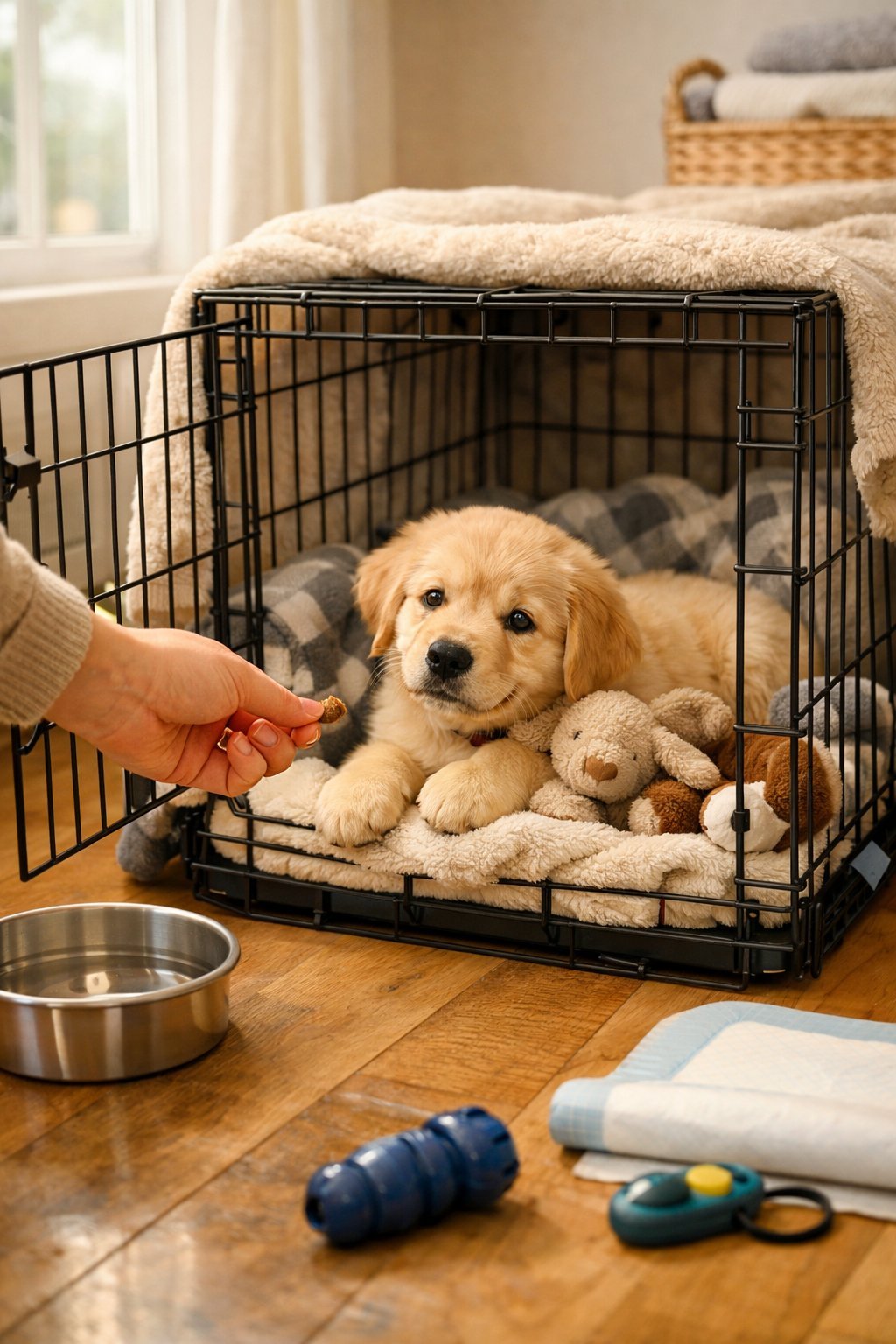
I’ve helped many puppy owners turn crate training from a daily struggle into a smooth routine. Crate training takes advantage of a dog’s natural instincts to seek out a comfortable and safe place when things get overwhelming.
When done right, your puppy will walk into their crate on their own because it feels like their personal den. The process doesn’t have to be stressful or take weeks of effort.
With the right approach, most puppies learn to love their crate in just a few days. I’ll walk you through each step to help your puppy see their crate as a happy place where good things happen.
Key Takeaways
- Crate training works best when you introduce the crate slowly and make it a positive space with treats and comfort
- Choose a crate size that gives your puppy enough room to stand, turn around, and lie down comfortably
- Building positive associations through patience and consistency helps your puppy see the crate as their safe den
What Is Crate Training?
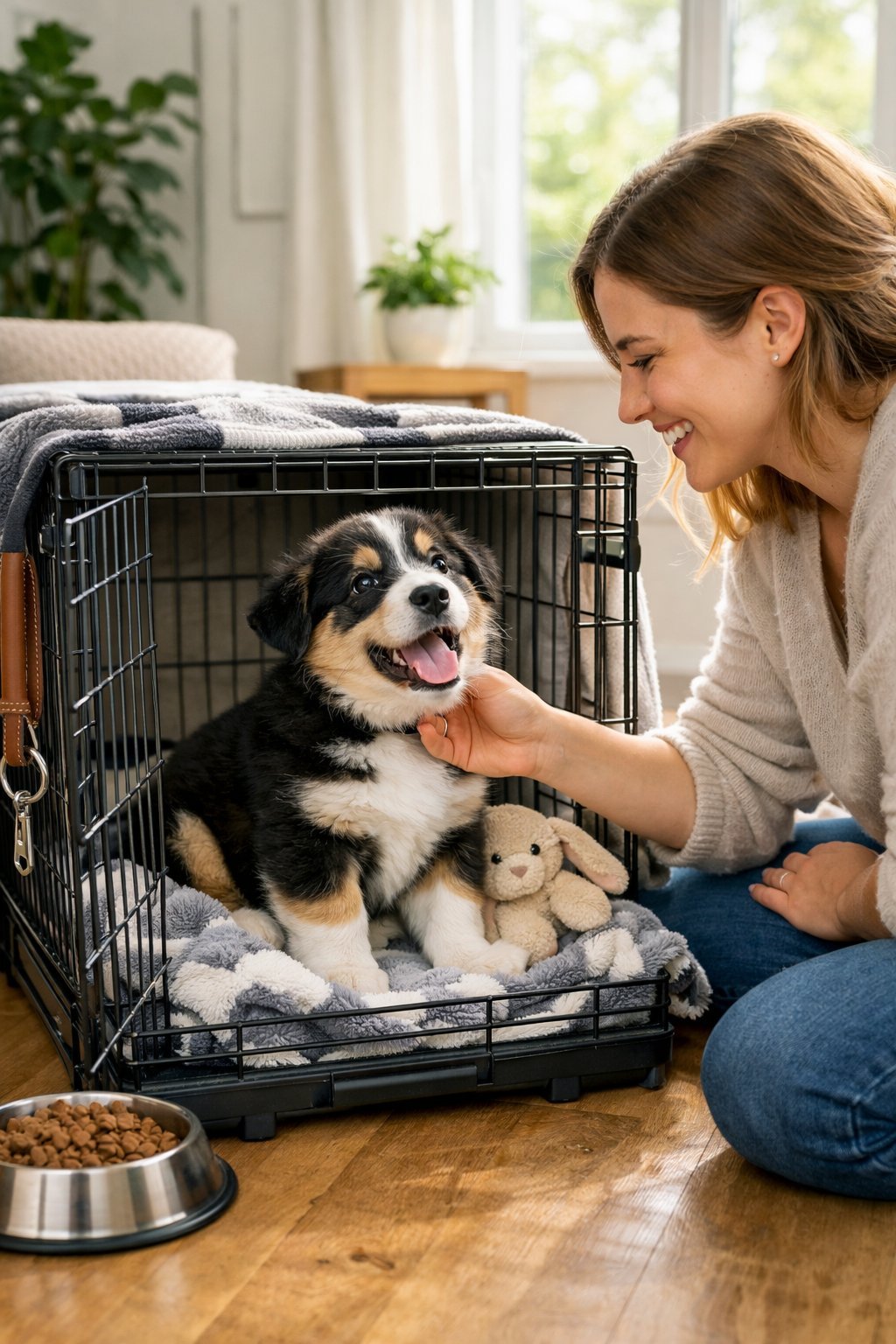
Crate training teaches your puppy to view a crate as a safe, comfortable space where they can rest and relax. Dogs naturally avoid soiling their sleeping areas, which makes crates useful tools for house training and giving your pup a secure spot of their own.
Benefits of Crate Training for Puppies
Crate training helps with potty training because most puppies won’t go to the bathroom where they sleep. This natural instinct makes house training faster and easier for both of us.
A crate gives my puppy a safe spot when I can’t watch them closely. This prevents unwanted chewing on furniture, shoes, or other household items.
Crates make car travel safer for my puppy. They prevent distractions while I’m driving and protect my pup if I need to brake suddenly.
A properly introduced crate helps puppies learn to be alone without stress. This builds independence and reduces separation anxiety as they grow.
How Crates Mimic Natural Behaviors
Dogs have a natural desire for den-like spaces where they feel protected. In the wild, dogs seek out small, enclosed areas to rest and sleep.
A crate taps into this instinct by providing a cozy, enclosed environment. Dogs want to keep their den clean, which is why puppies avoid eliminating in their crates.
This behavior helps me teach my pup where it’s appropriate to go potty. When the world gets too loud or busy, my puppy needs a quiet retreat.
A crate becomes that calm space where they can escape from household activity, visitors, or other pets. It’s like having their own bedroom.
Common Myths About Crate Training
Some people think crates are cruel or like cages. When introduced properly, crates are actually comforting spaces that dogs choose to use on their own.
My goal is to make the crate a positive place, never a punishment. Another myth is that crating a puppy for any amount of time is harmful.
The truth is that age-appropriate crating helps puppies feel secure. I just need to limit crate time based on my puppy’s age and needs.
Some believe dogs will hate their crates no matter what. When I incorporate the crate into fun games and let my puppy explore it freely, they learn to love it.
Patience and positive associations make all the difference.
Choosing the Right Crate
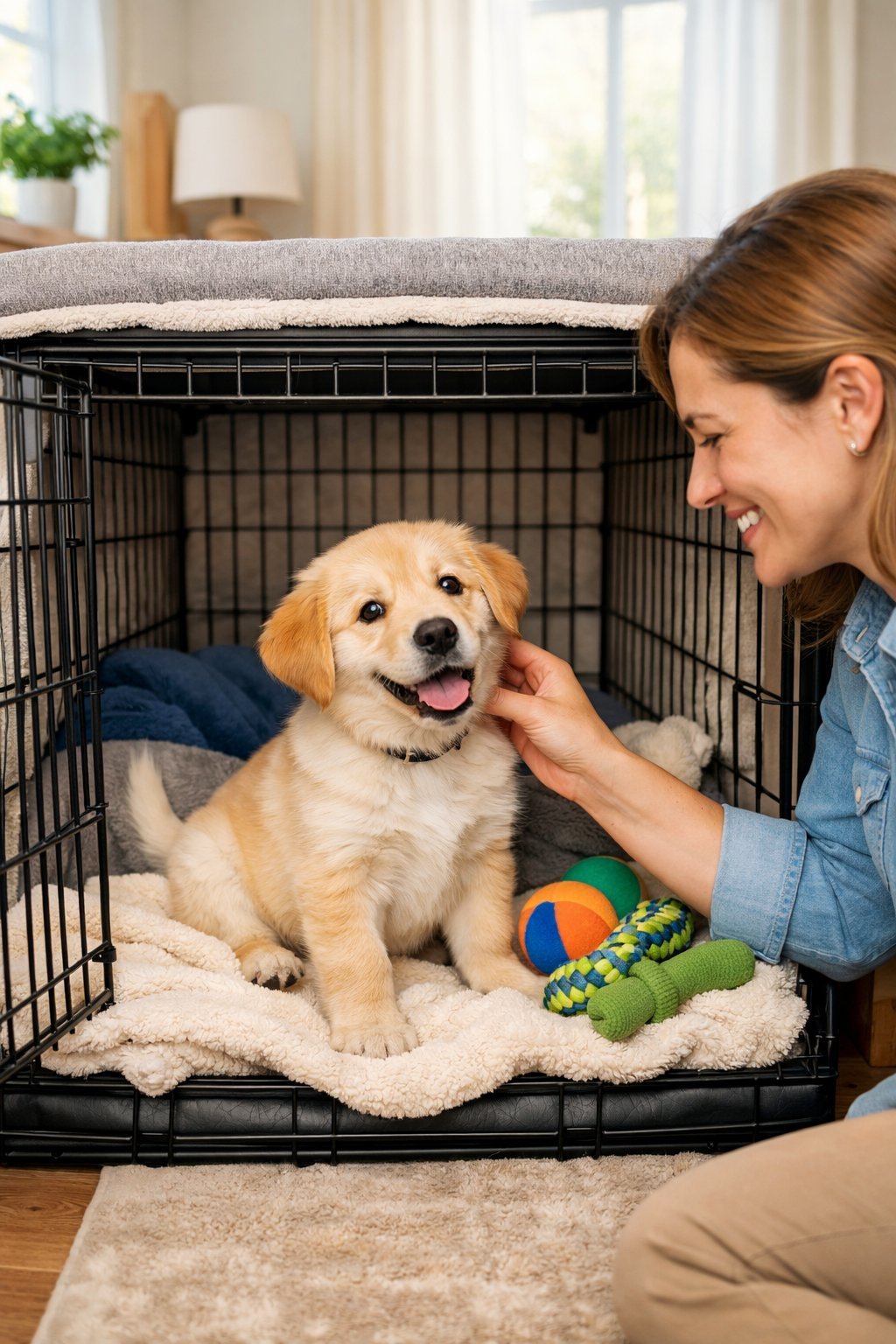
The crate you pick affects how quickly your puppy learns to love their space. I’ll help you understand the main crate types, figure out the right size for your growing pup, and make it cozy enough that they’ll want to spend time there.
Types of Dog Crates
I’ve found that most pet owners choose between three main crate styles. Wire crates are the most popular because they offer great airflow and visibility.
Your puppy can see what’s happening around them, which helps reduce anxiety. Plastic crates are sturdier and create a more den-like feel.
Airlines approve these for travel, so they’re a good choice if you plan to fly with your dog. They’re also easier to clean than fabric options.
Soft-sided crates work well for small dogs and temporary use. I don’t recommend them for puppies who like to chew or scratch.
They’re lightweight and fold flat for storage, but they won’t last long with an active puppy. Some wire crates include dividers that let you adjust the space as your puppy grows.
This saves money since you won’t need to buy multiple crates.
Selecting the Perfect Size
Getting the size right is critical for successful crate training. I measure my puppy while they’re standing, then add 2-4 inches to their height and length.
Your puppy should be able to stand up, turn around, and lie down comfortably. A crate that’s too large defeats the purpose of house training.
Puppies won’t soil their sleeping area, but if there’s extra room, they might use one end as a bathroom. That’s why adjustable dividers are so helpful.
For growing breeds, I buy a crate that fits their adult size. I use the divider to create a smaller space initially, then expand it as they grow.
Most puppy crate training guides recommend this approach. If you’re not sure about adult size, ask your vet or breeder for weight estimates.
Small breeds need crates around 24 inches long, medium breeds need 30-36 inches, and large breeds need 42-48 inches.
Creating a Comfortable Crate Environment
I always put a soft mat or blanket in the crate for comfort. The bedding should fit snugly so your puppy can’t bunch it up or chew it.
Machine-washable options make cleanup much easier. Location matters just as much as what’s inside.
I place the crate in a room where my family spends time, like the living room or kitchen. Your puppy wants to be near you, and isolation can make them anxious.
Avoid putting the crate in direct sunlight or near heating vents. Temperature control helps your puppy sleep better.
I also keep the crate away from loud appliances that might startle them. Add a safe chew toy or two to keep your puppy occupied.
I avoid anything with small parts they could swallow. Creating a secure environment helps your puppy see the crate as their personal safe space rather than a punishment.
Step-by-Step Guide to Crate Training Your Puppy

I’ll walk you through the process of turning the crate into a space your puppy loves, starting with short introductions and building up to longer stays using treats and praise to create positive experiences.
Getting Your Puppy Used to the Crate
I recommend starting by placing the crate in a room where your family spends time. Your puppy shouldn’t feel isolated from the household.
Leave the crate door open and put a soft blanket or bed inside. I like to toss a few small treats near the crate, then just inside the doorway, and finally at the back of the crate.
Let your puppy explore at their own pace without forcing them inside. Once your puppy enters willingly, give lots of praise.
You can also place their favorite toy inside to make it more appealing. Feed your puppy their meals near the crate at first, then gradually move the bowl inside.
The goal is to create a safe environment where your puppy feels comfortable. I never close the door during these first sessions.
This prevents any anxiety from developing early on.
Positive Reinforcement Tips
I always use high-value treats when crate training. Small pieces of chicken, cheese, or special training treats work better than regular kibble.
Reward timing matters:
- Give treats immediately when your puppy enters the crate
- Praise with an excited voice while they’re inside
Offer a special toy that only appears during crate time. Never pull your puppy out as punishment.
I create positive associations by giving treats through the crate bars while the door is closed. Your puppy learns that being inside with the door shut means good things happen.
When implementing positive reinforcement techniques, I make sure my puppy is calm before rewarding. If they’re whining or pawing at the door, I wait for a quiet moment before giving attention or treats.
This teaches them that calm behavior gets rewarded. I also use a cue word like “crate” or “bed” paired with a treat.
Eventually, your puppy will go in on command.
Addressing Whining or Barking
I know it’s hard to ignore puppy cries, but responding to whining teaches your puppy that making noise gets them out. Wait for a few seconds of quiet before opening the door.
Common reasons puppies whine:
- Need to go potty (especially young puppies)
- Crate is too big or too small
- Uncomfortable bedding
- Separation anxiety
- Testing boundaries
I take my puppy outside for a bathroom break if they’ve been crated for a while. Puppies under 12 weeks can only hold their bladder for a few hours.
After the potty break, I put them right back in without extra play or attention. If your puppy whines right after going outside, they’re likely testing you.
I stay nearby but don’t make eye contact or talk to them. The moment they settle down, I reward the quiet behavior.
For avoiding crying issues, I never use the crate as punishment. Your puppy should see it as their safe den, not a timeout spot.
Gradually Increasing Crate Time
I start with just 5-10 minutes when my puppy is tired. After a play session or walk, they’re more likely to settle down and rest.
Week 1: Close the door for 5-10 minutes while you’re in the room
Week 2: Extend to 15-30 minutes, step out briefly
Week 3: Leave for 30-60 minutes
Week 4: Build up to 2-3 hours (age dependent)
I never leave young puppies crated longer than they can hold their bladder. The general rule is one hour per month of age, plus one.
A three-month-old puppy can manage about four hours maximum. When I’m working on gradually increasing independence, I practice short departures throughout the day.
I grab my keys, put on my shoes, and walk to the door without actually leaving. This prevents your puppy from getting anxious about your departure routine.
At night, I keep the crate near my bed initially. Young puppies need middle-of-the-night bathroom breaks.
As they mature, I can move the crate to its permanent location.
Building a Positive Association With the Crate
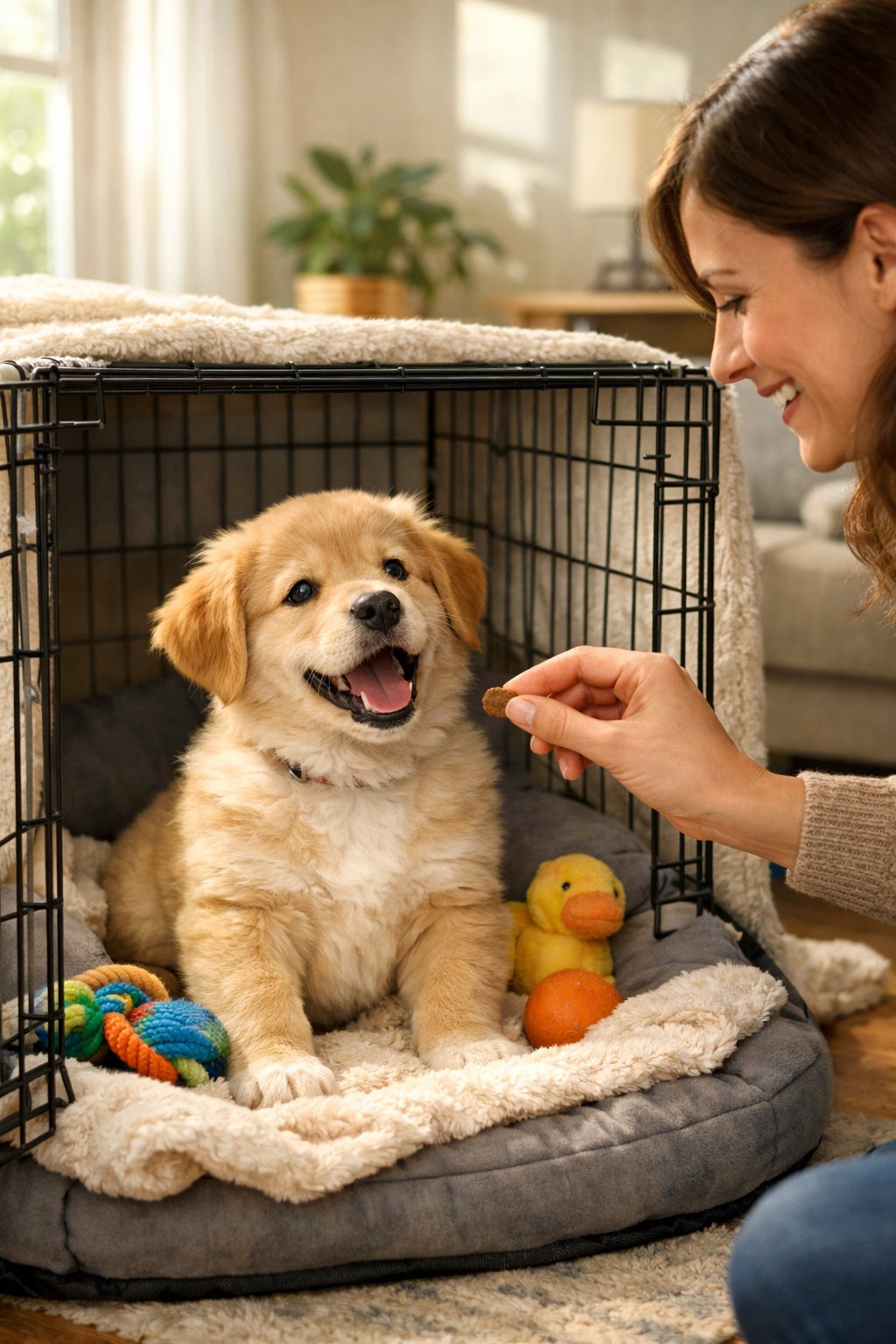
Your puppy should see the crate as a safe and cozy spot, not a place for punishment. Use rewards, comfort items, and consistent routines to make your pup actually want to spend time there.
Making the Crate Inviting
I always start by putting the crate in a common area where my puppy can see and hear me. This way, they feel included instead of left out.
Inside the crate, I add a soft blanket or bed that fits snugly. My puppy needs enough room to stand up, turn around, and lie down comfortably.
I keep the crate door open at first so my puppy can explore it on their own. Letting them investigate builds curiosity and confidence.
Where you put the crate matters too. I avoid direct sunlight, heating vents, or drafty spots so the crate stays comfy.
Using Toys and Treats Effectively
I toss treats near the crate opening to start building a positive connection. Once my puppy is comfortable, I place treats just inside, then a little further back each time.
Special toys that my puppy only gets during crate time make it more appealing. Puzzle toys stuffed with peanut butter or frozen treats keep them busy and happy inside.
Making the crate part of fun games helps my puppy go in and out at their own pace. I never close the door during these early games.
I praise my puppy the moment they step inside, even if it’s just one paw. Quick rewards help them understand exactly what I want.
Establishing a Comforting Routine
I feed my puppy their meals inside the crate with the door open. This makes the crate a place for good things.
A consistent schedule helps my puppy know what to expect. I use the crate at the same times each day for naps, quiet time, and overnight sleep.
I put a piece of my worn clothing in the crate so my scent provides comfort when I’m not nearby. This simple trick helps my puppy feel secure.
Short sessions work best at first. I start with just a few minutes and slowly increase the time as my puppy gets more comfortable.
Troubleshooting Common Crate Training Challenges
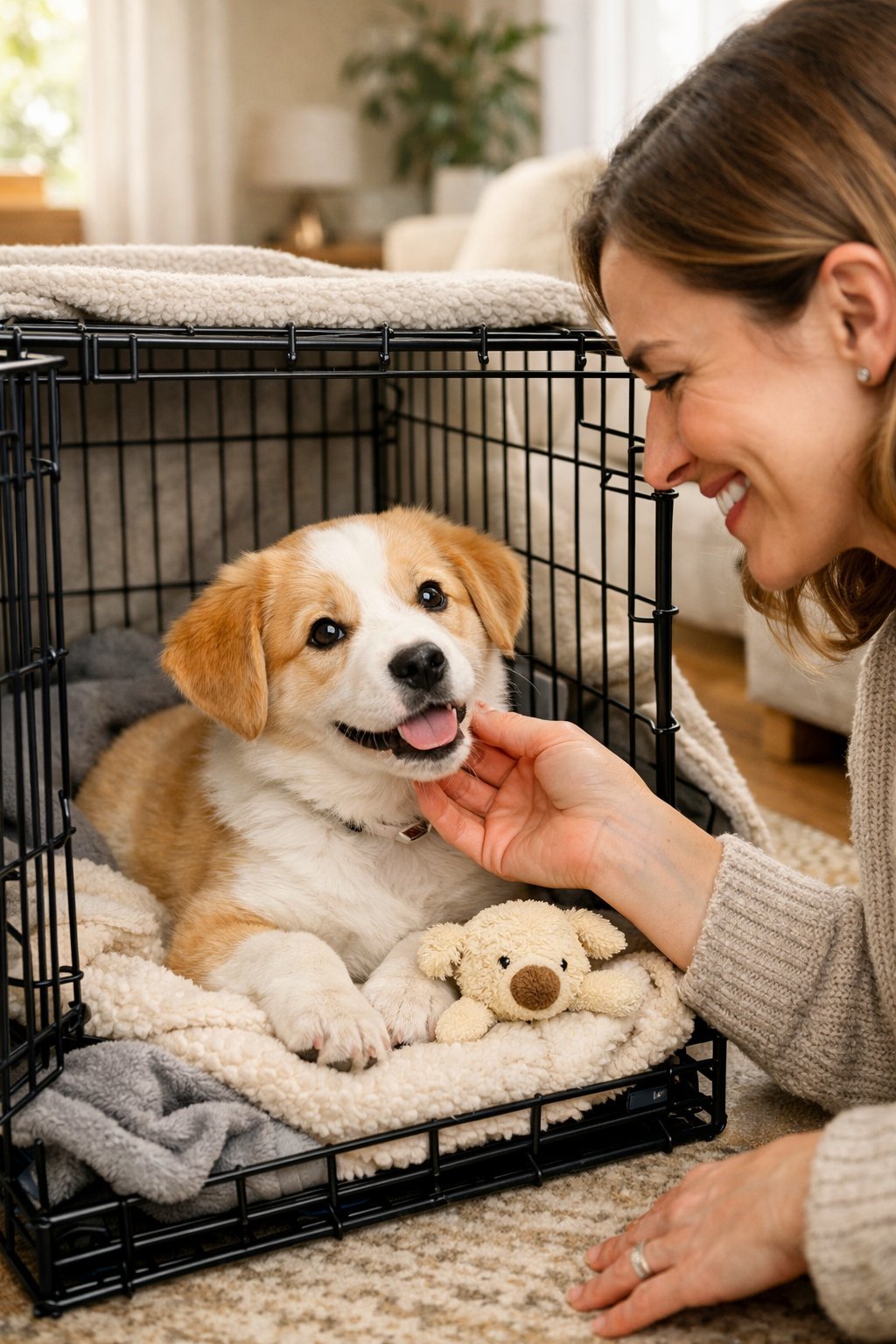
Even with the best approach, puppies sometimes struggle with crate training. Here are practical solutions for separation anxiety, avoiding negative associations, and handling accidents.
Separation Anxiety in Puppies
Separation anxiety shows up as whining, barking, drooling, or destructive behavior when your puppy is left alone in the crate. Puppies are naturally social and can fear being separated from their family.
I make crate time less stressful by starting slow. Stay near the crate at first, then gradually increase the distance as your puppy gets more comfortable.
Practice leaving for just 30 seconds, then return before any crying starts. This helps your puppy learn that you always come back.
Helpful strategies:
- Leave a worn t-shirt with your scent in the crate
- Use calming music or white noise
- Give high-value treats or puzzle toys only during crate time
- Avoid dramatic goodbyes
I never use the crate as punishment. If your puppy shows severe distress, like frantic escape attempts or heavy panting, slow down the training process.
Avoiding Crate Aversion
Crate aversion happens when puppies see their crate as a scary place. This usually comes from forcing them inside too quickly or using it for punishment.
I make the crate inviting by feeding meals inside with the door open. Toss treats in randomly so your puppy thinks good things happen in the crate.
Never drag or force your puppy into the crate. If your puppy already dislikes the crate, try moving it to a different spot or using a different style.
Warning signs of crate aversion:
- Refusing to enter even with treats
- Backing away from the crate
- Trembling or cowering nearby
- Excessive panting or drooling inside
Build positive associations slowly by playing games near the crate before asking your puppy to go inside. I balance crate time with freedom so it just becomes a normal part of the day.
Dealing With Accidents in the Crate
Accidents in the crate are common, especially with young puppies who can’t hold it for long. Puppies under 12 weeks often need bathroom breaks every 1-2 hours.
I clean accidents thoroughly with an enzyme cleaner to remove all odors. Regular cleaners won’t break down the smell that encourages repeat accidents.
Never punish accidents after they happen. Your puppy won’t understand the connection.
Accident prevention checklist:
- Take your puppy out right before crating
- Limit water 1-2 hours before bedtime
- Use a properly sized crate (too much space encourages accidents)
- Set alarms for regular nighttime bathroom breaks
If accidents keep happening, check for house soiling issues or medical problems. Some puppies need dividers in larger crates to prevent using one end as a bathroom.
Frequently Asked Questions
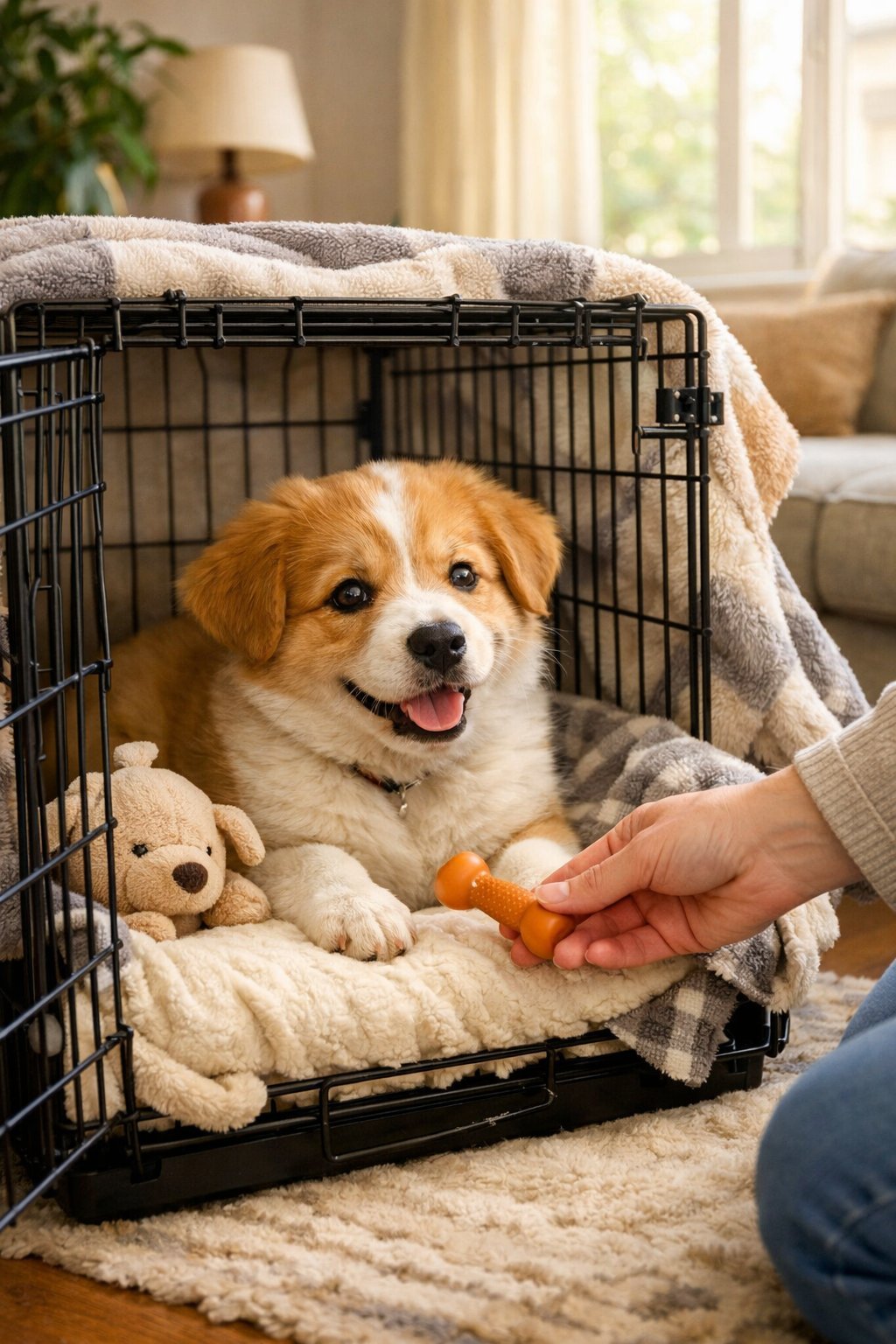
Many puppy owners wonder how quickly they can crate train their dogs and if it’s normal for puppies to cry during the process. The timeline is different for every puppy, but most adapt within a few days to a few weeks with the right approach.
How can I crate train my puppy in just 3 days?
Start with short sessions and build up gradually over three days. On day one, place treats and toys inside the crate with the door open so your puppy can explore.
On day two, feed meals inside the crate and close the door for a few minutes while your puppy eats. Stay nearby so they don’t feel abandoned.
By day three, try extending the time with the door closed to 10-15 minutes while you’re in the room. Quick crate training methods work best when you stay patient and keep each experience positive.
If your puppy shows signs of stress, don’t rush the process. Some puppies need more than three days, and that’s totally normal.
What are the best practices for crate training a puppy during the night?
Always take your puppy out for a bathroom break right before bedtime. This helps prevent nighttime accidents.
Keep the crate in your bedroom so your puppy can see and hear you. This helps reduce anxiety and makes your puppy feel safe.
Avoid giving water two hours before bed to minimize bathroom needs. For young puppies under four months, expect to wake up once or twice for potty breaks.
Keep nighttime interactions quiet and boring. When your puppy needs to go out, take them straight outside and then right back to the crate.
What tips can you share to make a crate comfortable and cozy for my pup?
Pick a crate that lets your puppy stand up, turn around, and lie down comfortably. The crate should feel like a den, not a prison.
Add soft bedding or a blanket to make it cozy. For puppies who chew, use materials that are safe if swallowed.
Place a few favorite toys inside to build positive associations. A treat-dispensing toy can keep your puppy occupied.
Cover three sides of the crate with a blanket for a den-like feel. This helps your puppy feel more secure and protected.
Never use the crate as punishment. The goal is for your puppy to see it as their personal safe space.
At what age should I start crate training my new puppy?
Start crate training as soon as you bring your puppy home, usually around eight weeks old. Young puppies adapt to crates more easily than older dogs.
Puppies have a natural instinct to seek out small, enclosed spaces for security. Take advantage of this by introducing the crate early.
Keep initial sessions very short with young puppies. Their attention spans are limited, so work in five-minute increments at first.
How much time will it typically take for my puppy to be fully crate trained?
Most puppies get comfortable with their crate within two to four weeks of consistent training. Every puppy is different, though.
Some puppies adjust in just a few days, while others need several weeks. Don’t compare your puppy’s progress to others—they all learn at their own pace.
You’ll know your puppy is fully crate trained when they enter willingly and stay calm when the door closes. They should also sleep through most of the night without distress.
Consistency is key. Practice daily and keep a regular schedule for meals, potty breaks, and crate time.
During crate training, is it okay to let my puppy cry, or should I comfort them?
I assess why my puppy is crying before deciding how to respond. If my puppy has been fed, exercised, and taken outside, some whining is normal at first.
I wait for a brief pause in the crying before letting my puppy out. This helps teach them that being quiet gets them what they want, not crying.
I never ignore frantic or panicked crying that lasts more than a few minutes. This could mean my puppy is genuinely distressed or needs to go potty.
When I let my puppy out, I avoid making a big fuss. I stay calm and quiet so I don’t accidentally reinforce crying with too much attention.
For young puppies, I expect an adjustment period. Building positive associations with the crate takes time and patience.

