
Crockpot Dog Food Recipes Vet Approved: Easy Homemade Meals Your Pup Will Love

Crockpot Dog Food Recipes Vet Approved – Making your own dog food at home doesn’t have to be complicated or time-consuming.
You can use a crockpot to prepare vet-approved homemade dog food recipes that provide balanced nutrition while saving you time in the kitchen.
I’ve discovered that slow cooker meals for dogs are perfect for busy pet parents who want to know exactly what goes into their furry friend’s bowl.
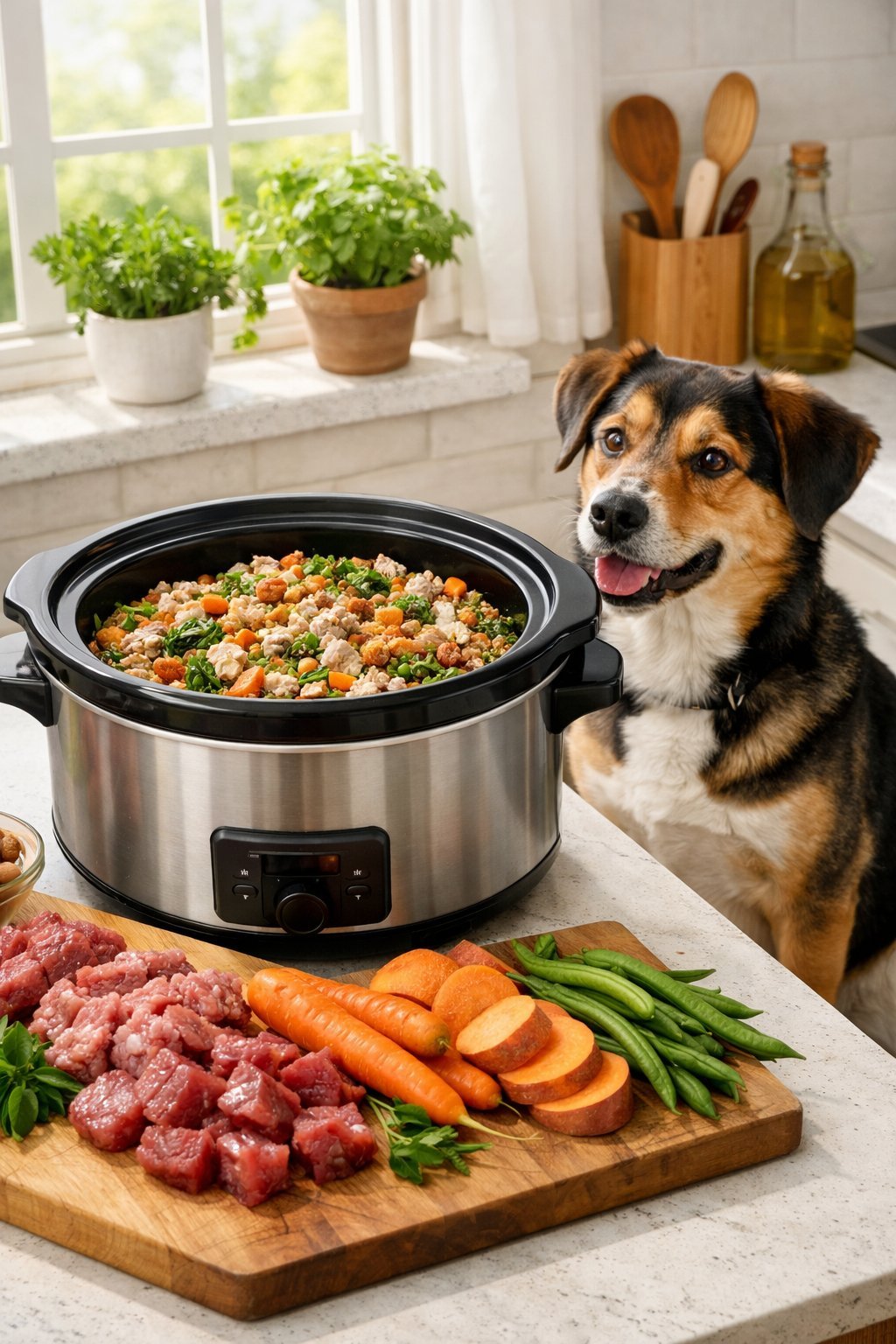
The beauty of crockpot dog food is that you simply add the ingredients and let the slow cooker do all the work.
While you’re at work or running errands, your dog’s meal cooks slowly, which helps preserve important nutrients.
I’ll share easy crockpot vet-approved dog meals that include the right mix of protein, vegetables, and grains your pup needs.
Before you start cooking, it’s important to talk with your vet about your dog’s specific needs.
Every dog is different based on their age, size, and health conditions.
I’ll walk you through simple recipes and tips to help you transition your dog to homemade meals safely.
Key Takeaways
- Crockpot dog food recipes let you make nutritious meals with minimal effort while the slow cooker does the work
- Homemade dog food gives you control over ingredients and provides balanced nutrition when recipes are properly formulated
- Always consult your veterinarian before switching to homemade meals to ensure the recipes meet your dog’s specific dietary needs
Benefits of Crockpot Dog Food Recipes
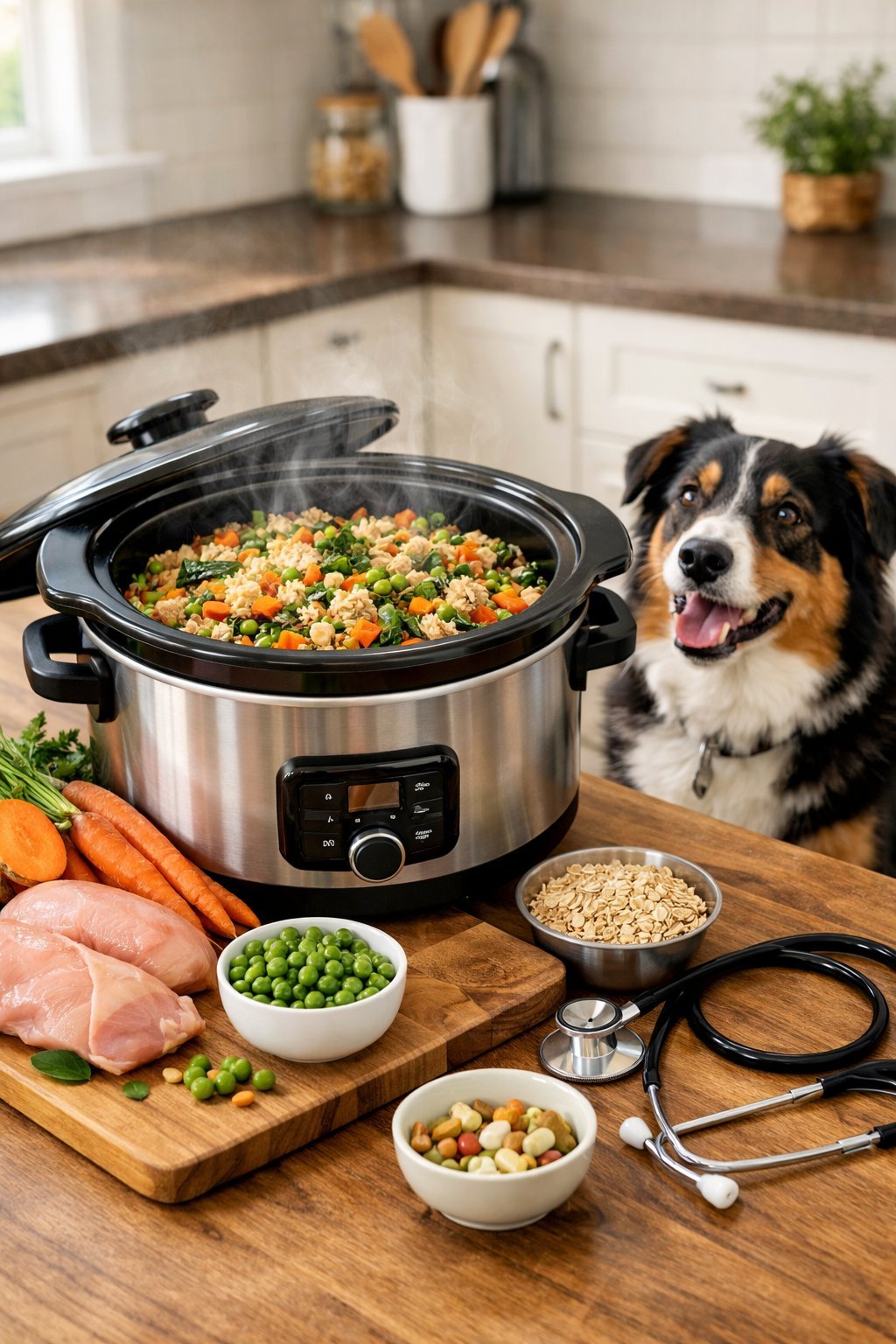
Making dog food in a crockpot offers real advantages that go beyond just feeding your pet.
I’ve found that slow cooking provides better nutrition, saves time and money, and gives me complete control over what goes into my dog’s bowl.
Health Advantages for Dogs
When I cook dog food in a crockpot, the low and slow cooking method helps preserve more nutrients compared to high-heat cooking.
The gentle heat keeps vitamins and minerals intact while making proteins easier for my dog to digest.
Crockpot meals provide balanced nutrition that meets a dog’s specific dietary needs.
I can adjust recipes based on my dog’s age, size, and health conditions.
This customization helps dogs with food sensitivities or allergies avoid problem ingredients.
Fresh ingredients mean no artificial preservatives, colors, or fillers that appear in many commercial dog foods.
The slow cooker breaks down tough fibers in vegetables and makes them more digestible.
My dog gets whole foods with recognizable ingredients instead of mystery meat by-products.
The cooking process also kills harmful bacteria while keeping food moist and palatable.
Dogs often eat homemade crockpot meals more eagerly than dry kibble.
Convenience for Pet Owners
Using a crockpot is almost as easy as buying store-bought dog food.
I simply add ingredients to the slow cooker, turn it on, and let it work while I’m at my job or running errands.
Most recipes cook in 3 to 6 hours without any stirring or monitoring.
I can prepare a week’s worth of meals in one batch and store portions in the refrigerator or freezer.
This approach saves me from cooking every single day.
The cleanup is simple too.
I only need to wash one pot instead of multiple pans and dishes.
The crockpot’s removable insert goes right into the dishwasher.
I don’t need special cooking skills or equipment beyond the slow cooker itself.
The recipes are straightforward with clear steps that anyone can follow.
Cost-Effectiveness
Making my own dog food costs less than buying premium commercial brands.
I can purchase ingredients in bulk when they’re on sale and freeze portions for later use.
A typical batch uses affordable proteins like chicken thighs or ground turkey.
I add inexpensive staples like rice, oats, and seasonal vegetables.
These basic ingredients cost a fraction of high-end dog food brands.
Homemade crockpot recipes are budget-friendly while still providing quality nutrition.
I’ve noticed my dog food budget dropped by 30-40% after switching to homemade meals.
The savings add up quickly over months and years.
I also reduce waste because I control portion sizes exactly.
There are no half-empty bags of kibble going stale in my pantry.
Ingredient Quality Control
I know exactly what goes into my dog’s food when I make it myself.
Every ingredient is something I can see and identify.
No hidden fillers, questionable meat sources, or chemical additives make it into the bowl.
I choose fresh vegetables from the grocery store or farmers market.
The meat comes from sources I trust.
I can select organic ingredients if that matters to me.
This control is especially important for dogs with health issues.
I can leave out ingredients that trigger allergies or upset stomachs.
I add supplements recommended by my vet directly into the recipe.
The quality stays consistent from batch to batch because I follow the same recipe.
I’m not dealing with formula changes that pet food companies sometimes make without warning.
Understanding Vet Approved Dog Nutrition
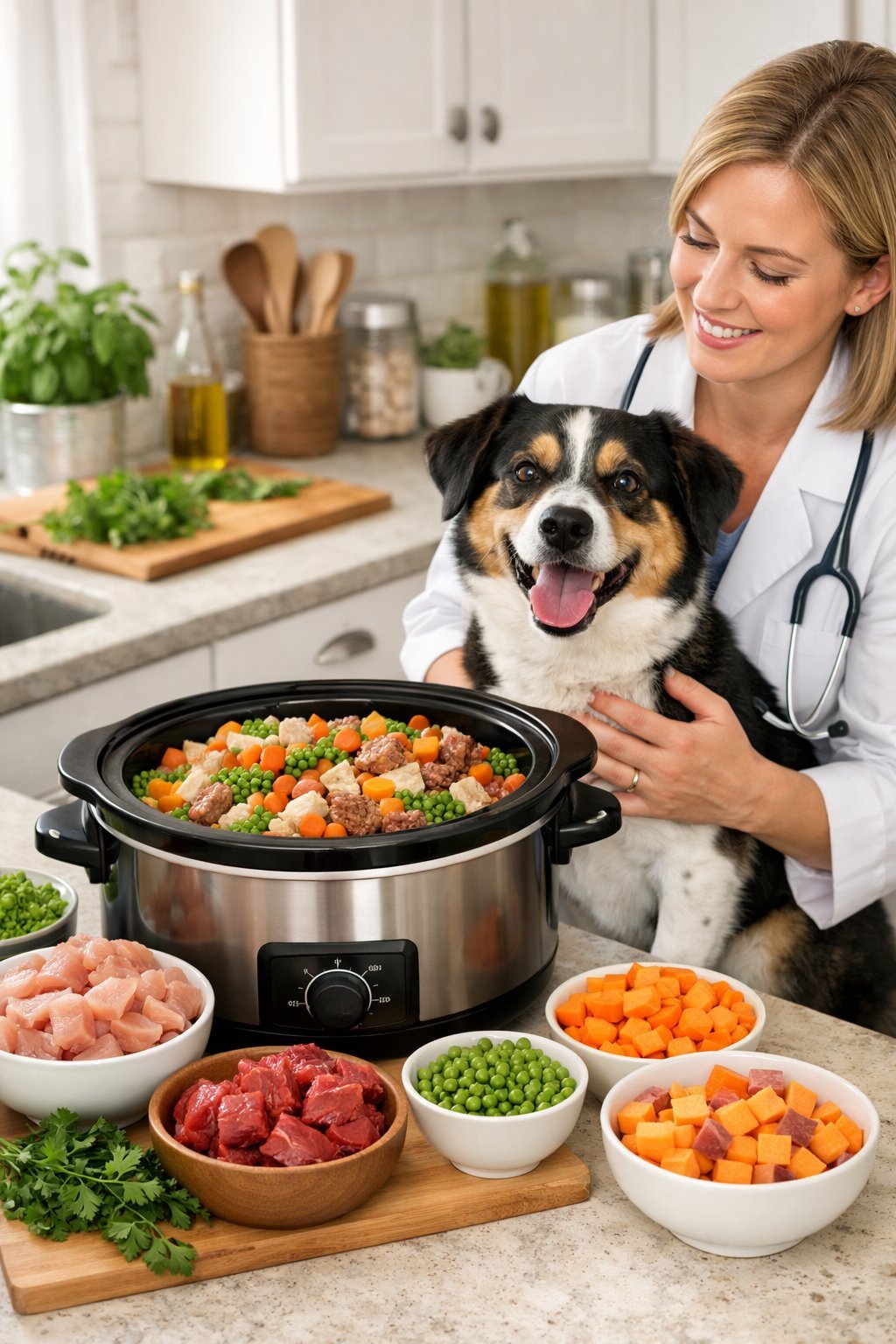
Dogs need a balanced mix of proteins, fats, carbohydrates, vitamins, and minerals to stay healthy.
Each dog has different needs based on their age, size, and health conditions.
Essential Nutrients for Dogs
I always make sure my homemade dog food includes six key nutrients that dogs need every day.
Protein is the most important one because it builds and repairs muscles and tissues.
Dogs need protein from meat, fish, or poultry.
Fats give dogs energy and help their bodies absorb vitamins.
They also keep their skin healthy and their coat shiny.
I include healthy fats like fish oil or chicken fat in my recipes.
Carbohydrates provide energy and fiber for digestion.
Dogs can digest rice, oats, and sweet potatoes well.
Vitamins and minerals support everything from bone health to immune function.
Water is the sixth essential nutrient.
Dogs need fresh water available at all times.
I also add some moisture to their food when I cook it in the crockpot.
Common Dietary Requirements
Different dogs need different amounts of food and nutrients.
Puppies need more protein and calories because they are growing fast.
Adult dogs need a balanced diet to maintain their weight and energy.
Senior dogs often need fewer calories but more joint support.
I adjust recipes based on my dog’s life stage.
Large breed dogs need careful calcium levels to protect their bones and joints.
Active dogs burn more calories than dogs who spend most of their time inside.
I increase portion sizes for my active dog.
Dogs with health issues may need special diets, so I always check with my vet before making changes.
Allergens and Food Sensitivities
The most common food allergens for dogs are beef, dairy, wheat, chicken, and soy.
I watch for signs like itchy skin, ear infections, or stomach problems that might mean my dog has a food sensitivity.
Some dogs can’t digest certain grains or proteins well.
If I notice my dog has problems after eating, I remove that ingredient from their meals.
Food sensitivities are different from true allergies.
Sensitivities cause digestive issues while allergies trigger immune responses.
I introduce new ingredients one at a time so I can spot any problems quickly.
Fish, lamb, and turkey are good protein options for dogs with sensitivities to common meats.
I use these alternatives when making vet-approved crockpot dog food for dogs with dietary restrictions.
Top Vet Approved Crockpot Dog Food Recipes
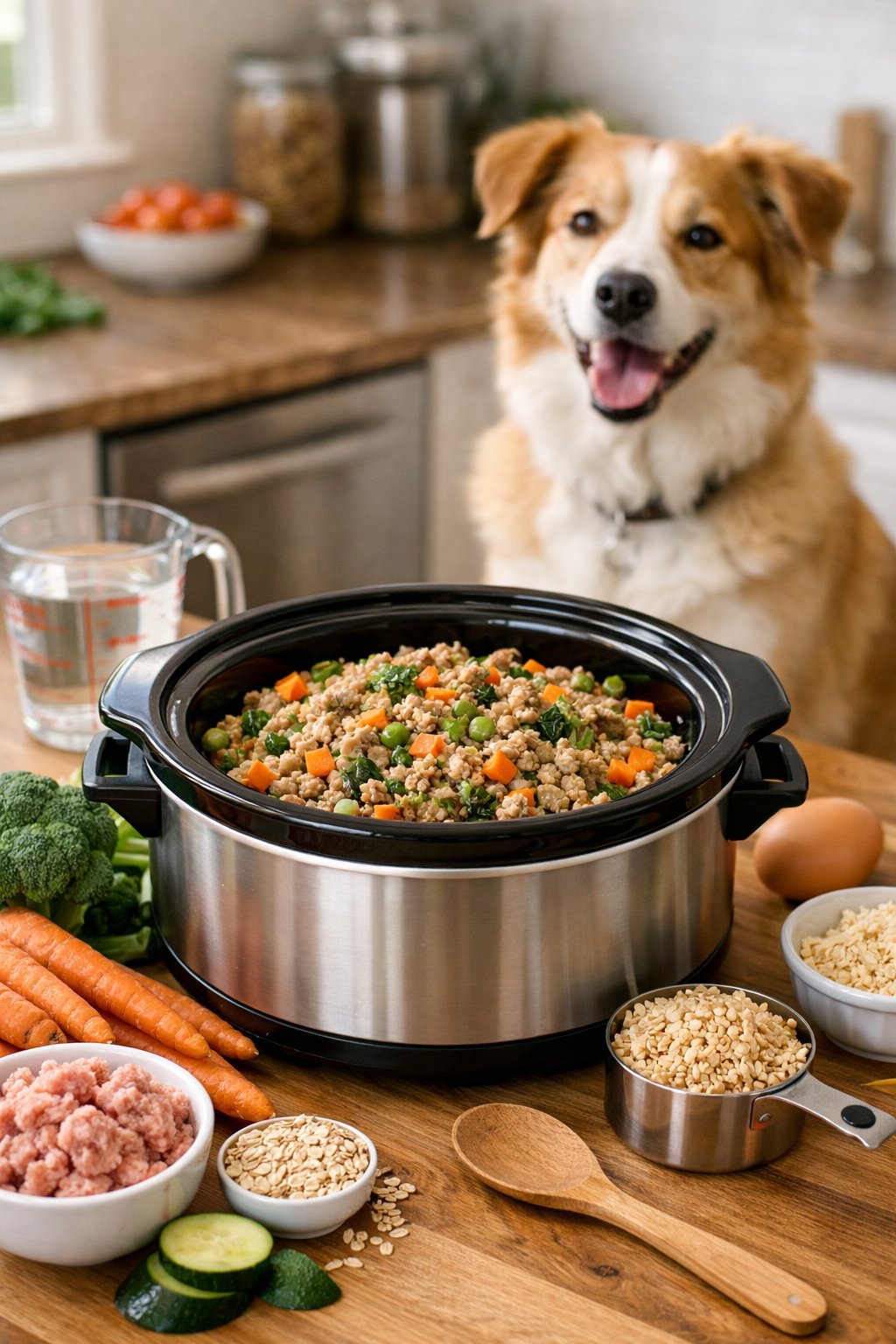
I’ve gathered three nutrient-rich recipes that combine lean proteins with wholesome vegetables and grains.
Each recipe uses simple ingredients and takes advantage of the slow cooker’s ability to retain natural nutrients.
Chicken and Vegetable Delight
I love starting with this recipe because chicken is easy to digest and packed with protein.
I use two boneless, skinless chicken breasts as my base.
For the vegetables, I add one cup each of diced carrots, chopped green beans, and peas.
These provide vitamins and fiber that support my dog’s digestive health.
I include one cup of brown rice for energy and additional nutrients.
I pour four cups of water or low-sodium chicken broth over everything.
The liquid helps cook the ingredients evenly and creates a gravy my dog enjoys.
I cook this on low for six to eight hours until the chicken shreds easily with a fork.
Once done, I shred the chicken and mix everything together.
I let it cool completely before serving.
This wholesome meal keeps nutrients intact through the slow cooking process.
Beef and Rice Medley
I choose lean ground beef for this recipe because it provides essential amino acids and iron.
I use one pound of ground beef with 90% lean meat or higher.
I add one and a half cups of brown rice along with one cup of chopped spinach for iron and vitamins.
I include one diced sweet potato for beta-carotene and one cup of green beans for fiber.
Half a cup of peas rounds out the vegetable mix.
I add four cups of low-sodium beef broth to keep everything moist.
I cook this mixture on low for seven to eight hours.
The beef breaks apart naturally as it cooks.
I drain any excess fat after cooking and stir well.
I store portions in the refrigerator for up to three days or freeze them for later use.
Turkey and Sweet Potato Feast
I rely on ground turkey as a lean protein option that’s gentle on sensitive stomachs.
I use one and a half pounds of ground turkey for this recipe.
I dice two medium sweet potatoes into small cubes for easy eating.
I add one cup of chopped carrots and one cup of chopped zucchini for variety.
Half a cup of oats provides fiber and helps bind the ingredients together.
I pour in three cups of low-sodium chicken broth and cook on low for six hours.
The sweet potatoes become tender and the turkey cooks through completely.
This simple recipe creates balanced nutrition with real ingredients.
I always let the food cool before serving and divide it into meal-sized portions based on my dog’s weight and activity level.
Step-by-Step Guide to Making Crockpot Dog Food
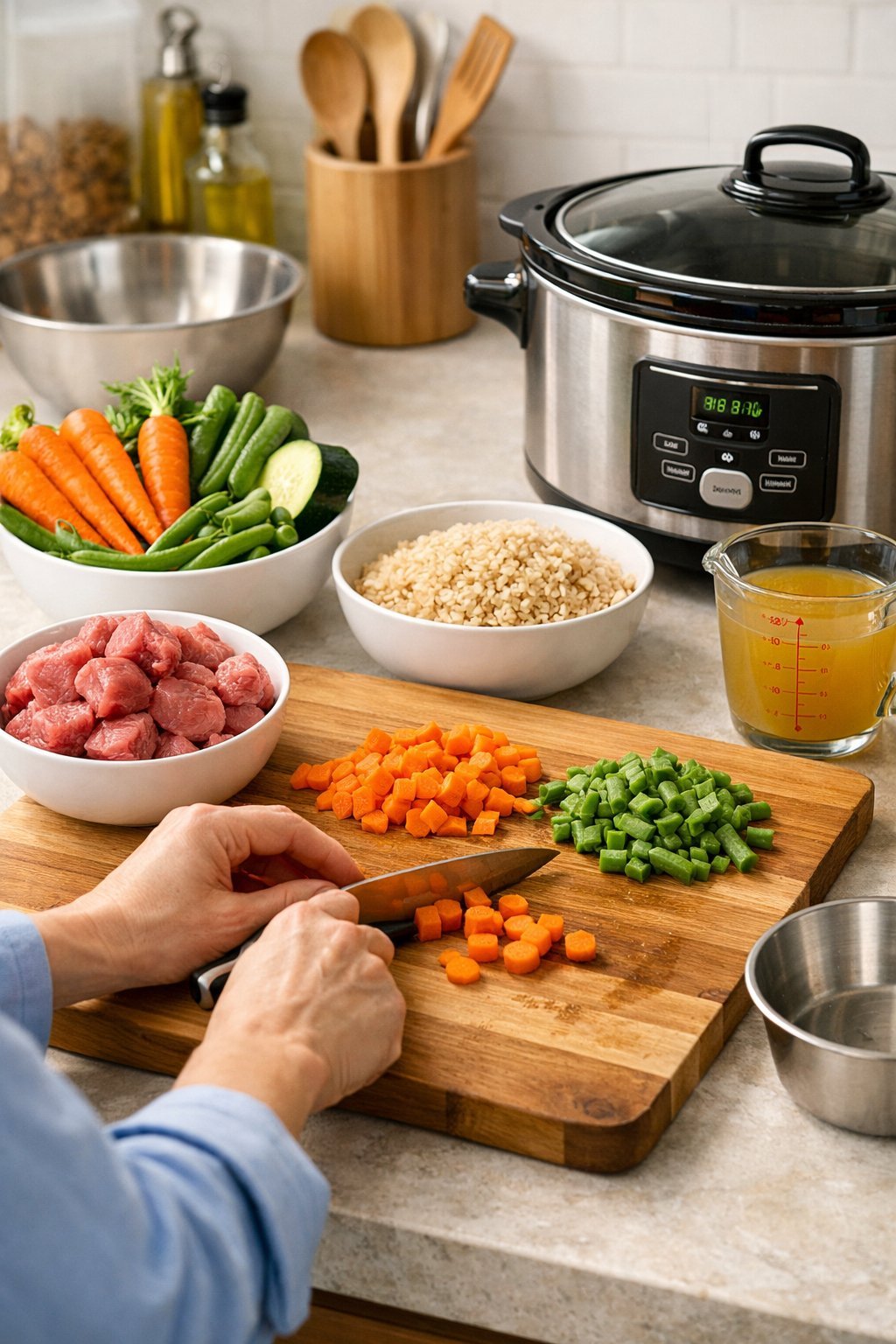
Making dog food in your crockpot involves three main steps: preparing fresh ingredients, cooking them on low heat for several hours, and storing portions properly for your pup’s meals throughout the week.
Ingredient Preparation
I always start by gathering all my ingredients before I begin cooking.
This includes protein sources like chicken, turkey, or beef, along with vegetables such as carrots, green beans, and peas.
I measure out complex carbohydrates like brown rice or sweet potatoes.
Next, I wash all vegetables thoroughly under running water.
I dice carrots into small pieces and chop green beans into bite-sized chunks.
For proteins, I trim away any excess fat and cut meat into uniform pieces so everything cooks evenly.
I measure the ingredients according to my recipe.
Most crockpot dog food recipes use a ratio of about 50% protein, 25% vegetables, and 25% carbohydrates.
I also add supplements like fish oil or calcium powder if my vet recommended them for my dog’s specific needs.
Cooking Instructions
I place all the prepared ingredients into my slow cooker and add water or low-sodium broth. The liquid should cover the ingredients by about an inch.
I stir everything together to distribute the ingredients evenly.
I set my crockpot to low heat and cook for 6-8 hours. Some recipes work well on high for 3-4 hours, but I prefer the low setting because it helps retain more nutrients.
I check the food halfway through and give it a gentle stir.
The food is ready when the meat is fully cooked and the vegetables are soft enough to mash with a fork.
Rice or other grains should be tender and fully cooked through.
Portioning and Storage
I let the cooked food cool completely before portioning it out.
I use a large spoon or ice cream scoop to divide the food into individual meal portions based on my dog’s daily caloric needs.
I store portions in airtight containers in the refrigerator for up to 5 days.
For longer storage, I freeze individual portions in freezer-safe containers or bags for up to 3 months.
I label each container with the date so I know when it was made.
When it’s mealtime, I thaw frozen portions in the refrigerator overnight.
I warm the food slightly before serving, but I make sure it’s not too hot for my dog’s mouth.
Tips for Serving and Transitioning to Homemade Meals
Getting the portion sizes right and making a smooth switch from store-bought food takes some planning.
Serving Sizes for Different Breeds
I recommend feeding adult dogs about 2-3% of their body weight per day when serving homemade meals.
A 50-pound dog needs roughly 1 to 1.5 pounds of food daily, while a 10-pound dog only needs 3 to 5 ounces.
Daily Feeding Guidelines:
| Dog Weight | Food Amount per Day |
|---|---|
| 10 lbs | 3-5 oz |
| 25 lbs | 8-12 oz |
| 50 lbs | 16-24 oz |
| 75 lbs | 24-36 oz |
Puppies need more food because they’re growing fast.
They typically eat 5-6% of their body weight split into three or four meals throughout the day.
Active dogs burn more calories and may need larger portions.
Senior dogs usually need less food because they move around less.
Transitioning from Commercial Food
I always suggest transitioning your dog to homemade food gradually over 7-10 days to avoid stomach upset.
Start by mixing 25% homemade food with 75% commercial food for the first 2-3 days.
Move to a 50-50 mix for days 4-6.
Then increase to 75% homemade and 25% commercial for days 7-9.
Watch for signs of digestive issues like loose stools, vomiting, or gas.
If your dog shows these symptoms, slow down the transition and keep the current ratio for a few more days.
Some dogs with sensitive stomachs may need two full weeks to adjust.
Keep fresh water available at all times during this period.
Supplementing with Additional Nutrients
Homemade dog food needs extra supplements to meet all nutritional requirements. I add a calcium supplement to balance the phosphorus in meat, using about 1,000 mg per pound of food.
Essential supplements include:
Talk to your vet about which supplements your dog needs based on their age, health, and the specific recipe you’re using.
Some vet-approved recipes already include calculated supplement amounts.
Ground eggshells work as a natural calcium source if you prefer that option. Use half a teaspoon of ground eggshell powder per pound of food.

