
DIY Blanket Ladder That Hides the Dog Blanket Pile Without Actually Hiding It: A Stylish Storage Solution for Pet Parents

If you’re like me, dog blankets seem to multiply overnight and end up piled on the couch, chairs, or wherever your pup decides to nest.
I love that my dog has cozy spots throughout the house, but the scattered blanket piles don’t exactly scream “organized home.”
That’s when I discovered the perfect solution that keeps those blankets accessible for my furry friend while making them look intentional.
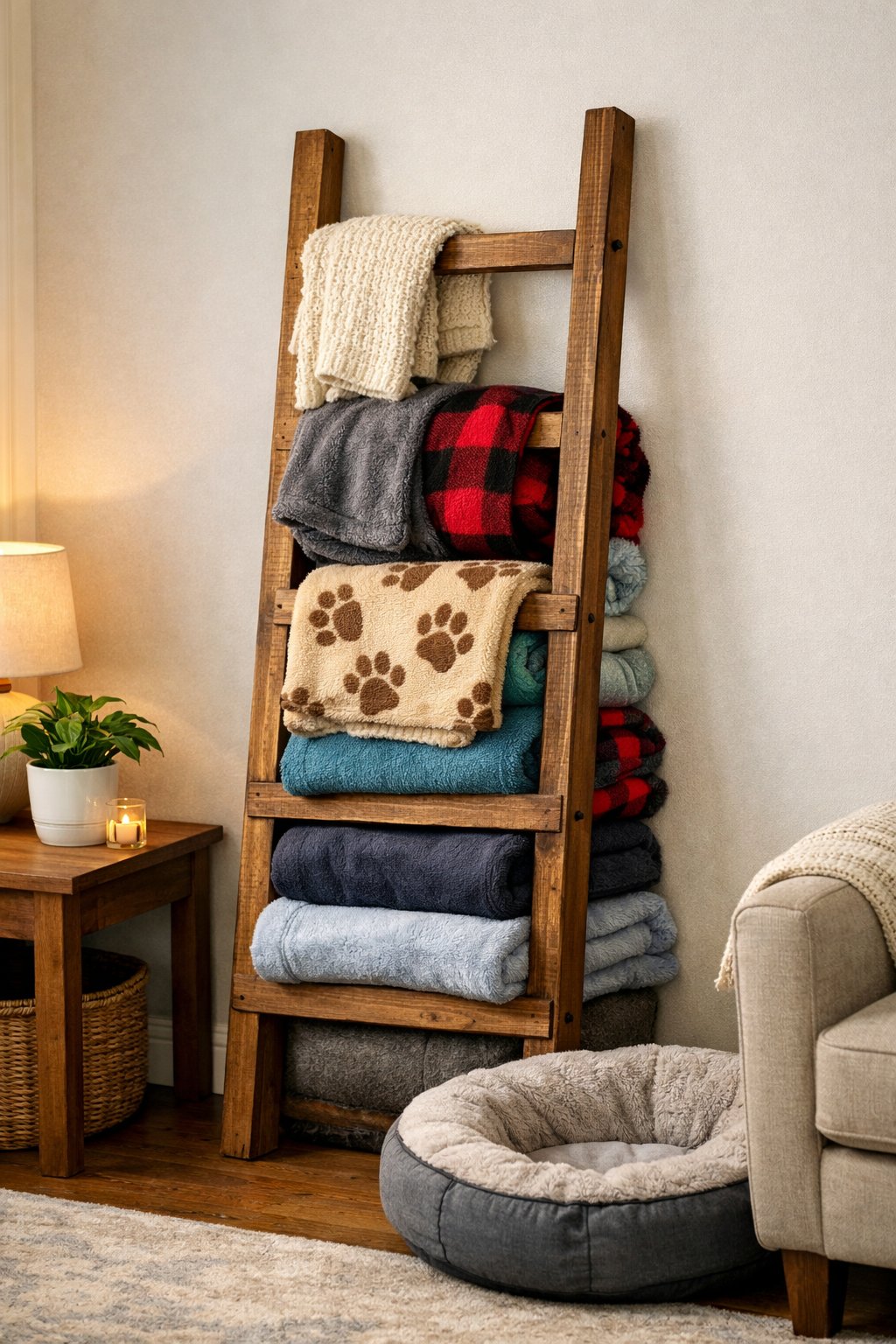
A blanket ladder lets you display dog blankets as part of your decor instead of hiding them away where they’re hard to reach.
You can build a blanket ladder for less than $10 with basic materials, and it takes only an hour or two.
Your dog can still grab their favorite blanket whenever they want, and you get to enjoy a tidier living space.
I’m going to walk you through creating a simple blanket ladder that works perfectly for pet households.
This project requires no fancy tools or woodworking experience, just a few cuts of wood and some straightforward assembly steps.
Key Takeaways
- A DIY blanket ladder turns messy dog blanket piles into an organized display for under $15
- You can build a sturdy blanket ladder in under two hours using basic 2×4 lumber and simple tools
- Arranging blankets on a ladder keeps them within reach for your pet while maintaining a clean look in your home
What Makes a DIY Blanket Ladder Perfect for Displaying Dog Blankets
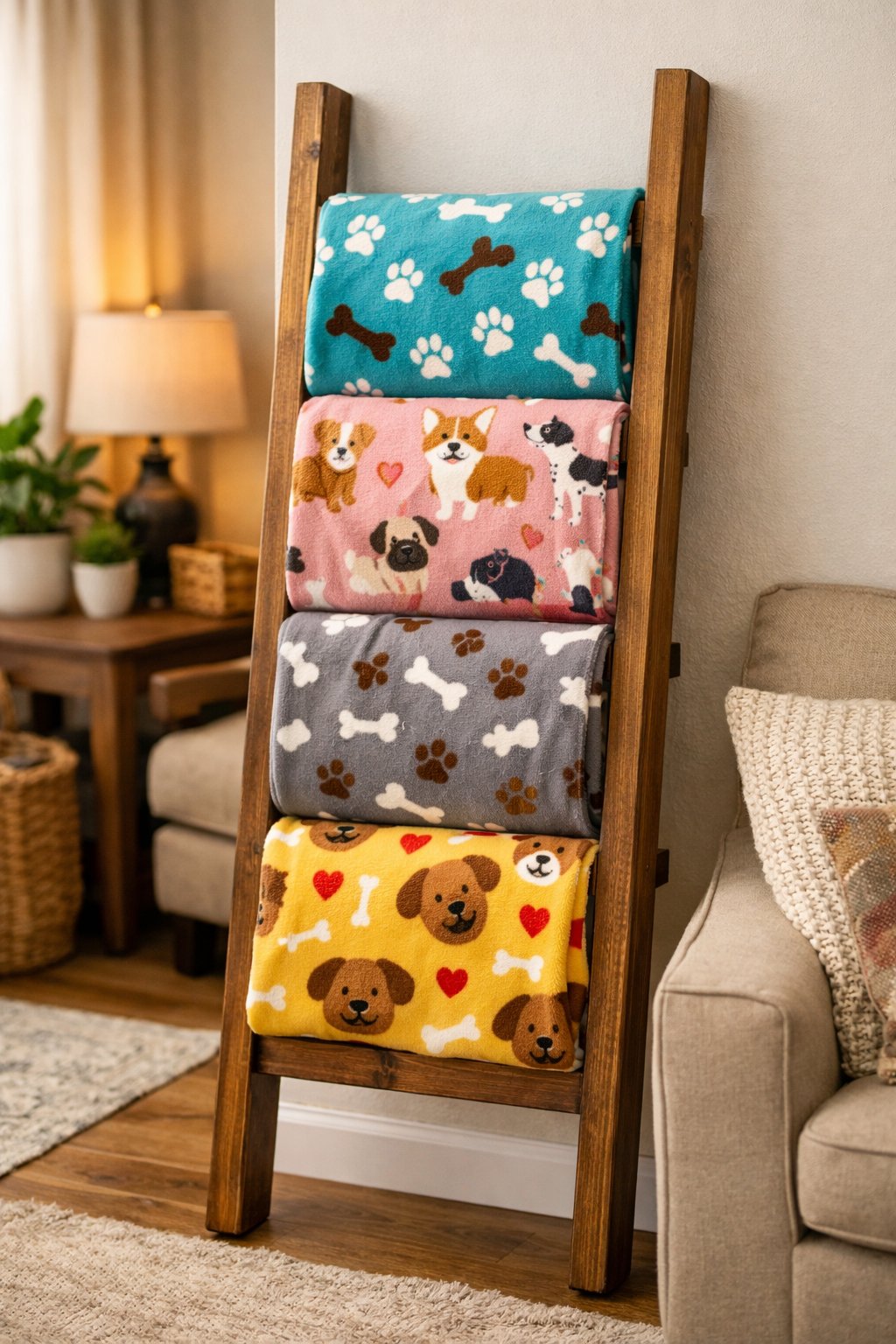
I’ve found that blanket ladders solve the constant problem of dog blankets piling up on furniture while keeping them within easy reach.
They turn what could be clutter into a decorative feature that fits naturally into my home.
Blending Functionality and Style
A blanket ladder provides easy access to stored throws while taking up minimal floor space.
I can grab a clean dog blanket when I need one and drape the used ones over different rungs until laundry day.
The ladder keeps dog blankets organized without stuffing them into closets where they get wrinkled and musty.
I like that the open design lets air circulate around the fabric between washes, which helps keep them fresher than when I used to pile them in a basket.
Wood ladders add a rustic farmhouse look that works in most rooms.
I can stain or paint mine to match my existing furniture.
The vertical design means I’m using wall space instead of valuable floor area.
My ladder holds 4-5 dog blankets comfortably depending on their thickness.
I arrange them by color or size to create a neat, intentional look rather than a messy pile.
Advantages Over Storage Bins
Storage bins hide dog blankets away, which sounds good until I need one quickly.
I used to dig through containers trying to find the right blanket while my dog waited on the cold floor.
Bins also trap moisture and odors between the blankets, creating that stale smell even when the blankets are clean.
With my ladder, each blanket hangs separately and gets air flow.
I can see exactly which blankets are clean and which need washing at a glance.
No more accidentally using a dirty blanket because I couldn’t tell them apart in a bin.
The ladder is also easier for guests to use.
When friends visit with their dogs, they can grab a blanket without asking me where I keep them.
Choosing the Right Location
I placed my blanket ladder in the living room near the couch where my dog spends most of his time.
This keeps his blankets separate from mine but still in reach when he needs them.
The bedroom works well if your dog sleeps there.
I’ve seen people put smaller ladders next to dog beds or crates.
You need about 2-3 inches of floor space next to a wall to lean the ladder safely.
Avoid placing it near doors where people might bump into it.
I learned this the hard way when my ladder kept getting knocked over in a high-traffic hallway.
Corner spots work perfectly because they use otherwise wasted space.
Make sure there’s enough clearance above for draping blankets over the top rung.
I need at least 5-6 feet of wall height for my full-size ladder.
Planning Your Blanket Ladder Project
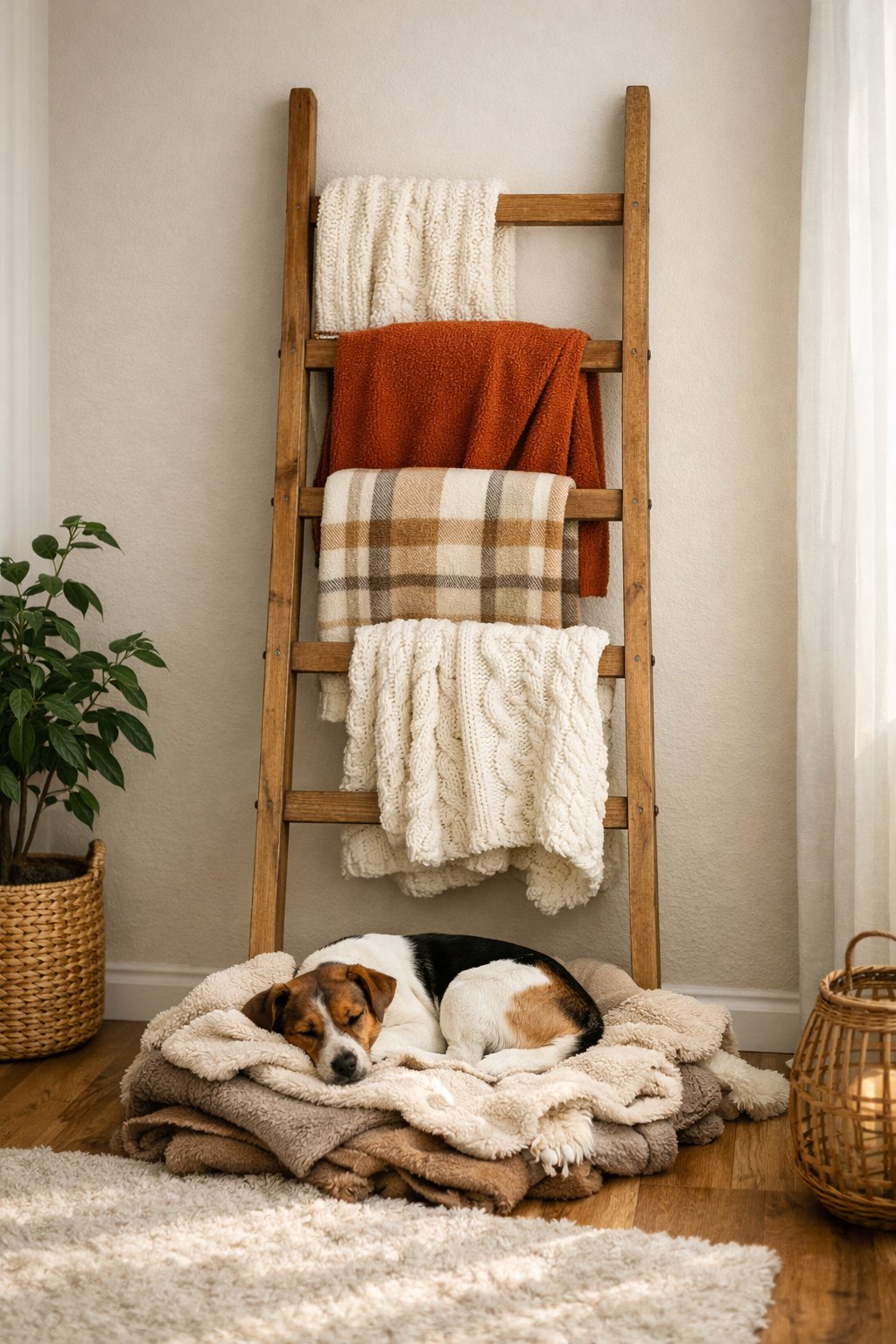
A successful blanket ladder starts with choosing the right wood and finish, measuring your space carefully, and gathering basic tools that most DIYers already have at home.
Selecting Materials and Finishes
I recommend using standard 2×4 lumber for the sides of your blanket ladder because it’s affordable and sturdy enough to hold multiple dog blankets.
Pine works great and costs around $10-15 for the entire project.
You can find these boards at any home improvement store already cut to standard lengths.
For the rungs, I use 1-inch diameter wooden dowels or smaller pieces of 1×2 lumber.
The dowels create a smoother look while the 1x2s are easier to attach with basic tools.
I space my rungs about 10-12 inches apart, which gives me enough room to drape blankets without them bunching up.
The finish you choose depends on your home’s style.
I like a simple stain that matches my furniture, but you could also paint it white for a farmhouse look or leave it natural with just a clear coat.
Sand everything down before finishing to avoid splinters when you’re grabbing dog blankets.
Measuring for the Perfect Fit
I always measure the wall space where my ladder will lean before I start building.
Most blanket ladders take up little floor space and need just a few inches next to a wall.
The typical height I build is 5-6 feet tall, which gives me 4-5 rungs for hanging blankets.
I measure from floor to ceiling first to make sure my ladder won’t be too tall.
The width between the two side rails should be 14-18 inches to hold blankets without them sliding off.
I angle the ladder at about 10-15 degrees from the wall so it leans securely without tipping.
To figure out the angle, I place the bottom about 8-10 inches away from the wall for every 5 feet of height.
Tools You’ll Need
I keep my DIY blanket ladder project simple by using basic tools.
You’ll need a saw to cut the wood (a hand saw works fine if you don’t have a power saw), a drill with bits, wood screws, wood glue, sandpaper, and a tape measure.
A level helps ensure your rungs are straight, though I just eyeball it sometimes.
If you’re staining or painting, grab brushes and your chosen finish.
Some people use pocket hole jigs for cleaner joints, but I’ve built sturdy ladders with just screws and glue.
Safety gear matters too.
I always wear safety glasses when cutting and drilling, and work gloves protect my hands during assembly.
Building Your Ladder: Step-by-Step Guide
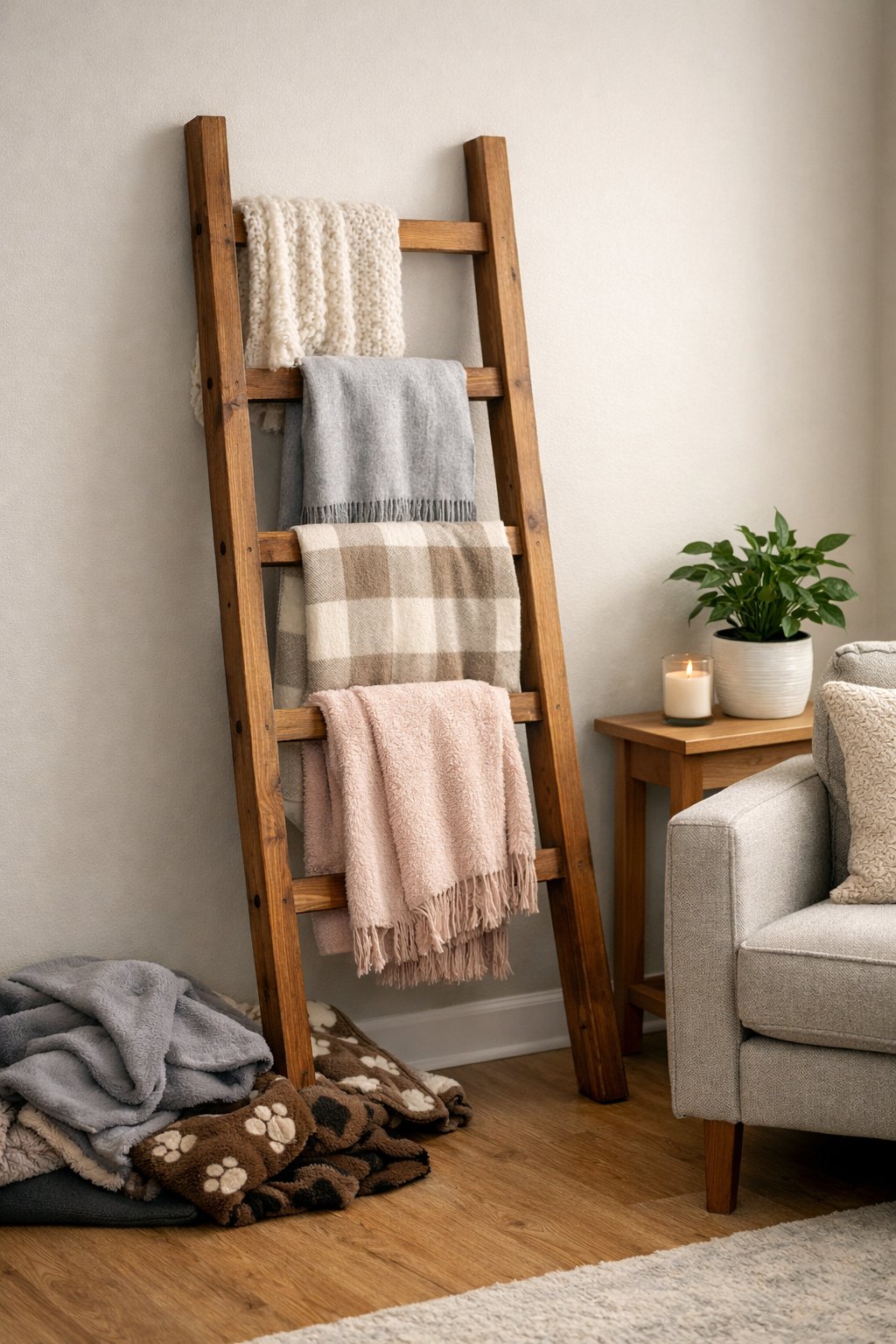
I’m going to walk you through cutting the wood pieces, putting them together with screws, and making everything smooth and ready for your dog’s blankets.
The whole process takes about two hours and doesn’t require fancy tools.
Cutting and Prepping the Wood
I start by cutting two 2×4 boards to 6 feet long for the side rails.
These will lean against the wall and hold everything up.
Then I cut four more pieces to 16 inches each for the rungs where the blankets will hang.
I lay the two long boards flat on my work surface, about 15 inches apart at the bottom.
At the top, I measure them to be about 12 inches apart.
This creates the angled ladder shape that leans nicely against the wall.
Before assembly, I mark where each rung will go on the side rails.
I space mine about 12 inches apart, starting 8 inches from the bottom.
I use a pencil to make clear marks on both rails so the rungs line up evenly.
Assembly and Fastening
I drill pilot holes at each mark to prevent the wood from splitting.
These small holes make it much easier to drive screws through the rails and into the rungs.
I use 2.5-inch wood screws because they’re strong enough to hold blankets without going all the way through.
I attach each rung one at a time, starting from the bottom.
I hold the rung in place and drive two screws through each side rail into the ends of the rung.
Having someone hold the ladder steady makes this step easier, but I’ve done it alone by propping one side against something heavy.
Sanding and Finishing Touches
I sand every surface with 120-grit sandpaper to remove rough edges and splinters.
This step is important because I’ll be grabbing blankets off the ladder regularly.
I pay extra attention to the edges and ends where my hands will touch most often.
After sanding, I wipe everything down with a damp cloth to remove sawdust.
I can leave the wood natural, stain it to match my furniture, or paint it to add color to the room.
For a quick and easy blanket ladder, I sometimes skip finish entirely and just use the bare wood.
Creative Ways to Arrange and Showcase Dog Blankets
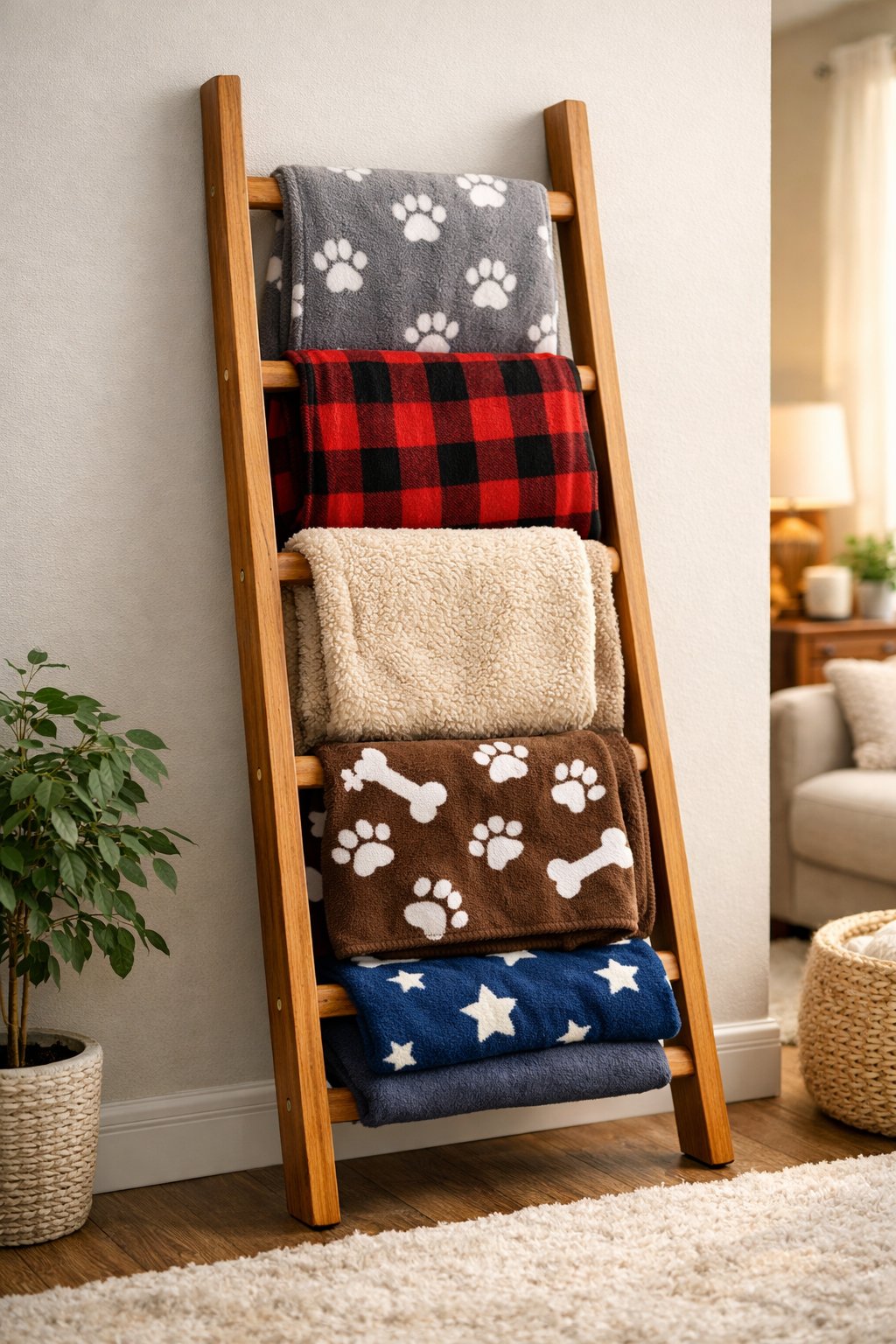
I’ve found that arranging dog blankets on a ladder takes some thought to make them look good instead of messy.
The right setup keeps blankets organized while turning them into a nice display piece that fits with your home’s style.
Organizing by Color or Pattern
I sort my dog blankets by color to create a pleasing look on the ladder.
Starting with the darkest blankets on the bottom and moving to lighter ones at the top makes the display feel balanced.
If your dog blankets have different patterns, I recommend grouping similar designs together.
Put solid colors on one side and patterned ones on the other.
This stops the ladder from looking too busy.
Color coordination options:
- Monochromatic: All shades of one color
- Complementary: Colors that look good together
- Neutral base: Start with beige or gray, add pops of color
I fold each blanket the same width so they look uniform on the rungs.
The fold should match the width of your ladder rungs for a clean appearance.
You can see more blanket ladder decorating ideas for different arrangements.
Incorporating Baskets or Hooks
I use small baskets at the base of my blanket ladder to hold extra items like dog toys or grooming supplies.
This keeps everything in one spot and adds storage without taking up more floor space.
Hooks attached to the sides of the ladder work great for leashes or smaller blankets.
I installed adhesive hooks on mine since I didn’t want to drill into the wood.
S-hooks also work if your ladder has thick enough rungs.
A basket on the floor next to the ladder catches blankets when I pull one off quickly.
I place it slightly to the side so it doesn’t make the ladder look cluttered.
The basket also gives me a spot to toss dirty blankets before wash day.
Displaying Seasonal Blankets
I swap out my dog blankets based on the season to keep things fresh.
Lighter cotton blankets go on display during spring and summer, while heavier fleece ones take over in fall and winter.
Holiday-themed dog blankets deserve their moment too.
I put them front and center on the middle rungs where they’re most visible.
This adds a festive touch to my living room without doing much work.
Between seasons, I store the off-season blankets in a closet to keep the ladder from getting too full.
I keep only three to four blankets on the ladder at once so it looks neat instead of stuffed.
This rotation also means I wash the displayed blankets more often since I’m using fewer at a time.
Pet-Friendly Tips for Keeping the Ladder Tidy
I’ve found that keeping a blanket ladder organized is all about regular cleaning and smart strategies to tackle pet hair and odors. The trick is setting up simple routines that fit your dog’s habits.
Easy Cleaning Solutions
I wipe down my blanket ladder weekly with a damp microfiber cloth to get rid of dust and paw prints. For wooden ladders, I use a gentle wood cleaner once a month to keep the finish looking good.
I shake out each blanket outside before refolding it back on the ladder. This quick step helps prevent dirt buildup.
If my dog has muddy paws, I let the blankets dry first so the dirt brushes off easily. I also rotate the blankets every few days so the same ones aren’t always on top.
When building a blanket ladder, I made sure to sand it smooth to avoid rough spots that might catch on fabric.
Managing Pet Hair and Odors
I keep a lint roller next to my blanket ladder for quick touch-ups. A rubber pet hair removal glove works great for removing hair while the blankets are still hanging.
I wash the dog blankets every two weeks in hot water with baking soda added to the detergent. Between washes, I sprinkle baking soda on the blankets, let it sit for 15 minutes, and then vacuum it off to neutralize odors.
I put a small bowl of activated charcoal behind the ladder to absorb lingering smells. For extra-stinky blankets, I spray them with a 50/50 mix of water and white vinegar, then air them out.
The vinegar smell fades as it dries and takes pet odors with it.
Frequently Asked Questions
Building a blanket ladder for your dog’s blankets comes with questions about size, materials, and safety. Here are answers to some of the most common concerns.
How do you choose the right size for a blanket ladder?
I measure the wall space where I want to lean the ladder before buying materials. Most blanket ladders work well between 4 to 6 feet tall, which gives you enough rungs for several dog blankets.
The width matters too. I keep my ladder between 16 to 20 inches wide so it fits nicely in corners or against walls without sticking out too far.
Can you suggest any creative ways to style a blanket ladder in my home?
I like to place my blanket ladder in the corner of my living room where my dog usually naps. This way, all the dog blankets are within easy reach and it looks intentional.
I drape the blankets loosely over each rung instead of folding them perfectly. This relaxed style matches the dog-friendly vibe of my home.
Some people add small hooks to the sides for leashes or toy bags. Fairy lights wrapped around the ladder posts can add a cozy touch in the evening.
What kind of materials do you need for a DIY blanket ladder?
I use basic 2×4 lumber pieces for my ladder because they’re strong and affordable. Most DIY blanket ladder projects cost between $10 and $25 depending on wood prices.
You’ll need two longer pieces for the sides and several shorter pieces for the rungs. Wood screws or dowels hold everything together.
Sandpaper smooths out any rough edges so no one gets splinters. I also grab wood stain or paint if I want to match my existing furniture.
Are there any safety concerns to consider when making a blanket ladder?
I make sure all screws are flush with the wood so nothing snags on blankets or scratches the wall. Sharp edges get a thorough sanding before I call the ladder finished.
The ladder needs proper weight distribution, so I test it with a few heavy blankets before letting my dog near it. I always position the ladder at a safe angle against the wall to avoid tipping or sliding.
What’s the best way to ensure stability for a blanket ladder?
I lean my ladder at about a 10 to 15 degree angle from the wall. This creates a sturdy base that stays put when I pull blankets off.
Adding rubber furniture pads to the bottom helps prevent sliding on hardwood or tile floors. These little pads are inexpensive but make a big difference.
If my dog is especially enthusiastic, I secure the top of the ladder to the wall with small L-brackets for extra stability. This gives me peace of mind, especially in busy areas of the house.
How can I integrate a blanket ladder into my existing home decor?
I stain or paint my ladder to match other wooden furniture in the room. A natural wood finish works well with farmhouse or rustic styles.
White or gray paint fits modern spaces. I choose blanket colors that complement my couch and curtains.
Even dog blankets can look decorative when I pick patterns and textures that tie into my existing color scheme. The ladder itself becomes a design feature rather than just storage.
I treat it like any other piece of furniture by considering how it fits with my overall room layout and style.
