
DIY Dog Collar: Easy Step-by-Step Guide to Creating a Custom Collar for Your Pup

Making a DIY dog collar at home is actually pretty simple. You can create a custom collar using basic materials like fabric, nylon webbing, D-rings, and a buckle, and it usually costs less than buying one from the store.
Whether you want a simple adjustable design or something more decorative, I’ll show you how to make a collar that fits your dog just right.

Making your own dog collar lets you control the style and fit. You can pick fabrics that match your dog’s personality and adjust the size as they grow.
These DIY projects work great for beginners because they teach basic sewing skills without being too complicated.
In this guide, I’ll walk you through everything from picking the right materials to adding your own creative touches. You’ll learn which fabrics work best, how to measure your dog correctly, and ways to fix common problems that come up during the process.
Key Takeaways
- You can make a custom dog collar with fabric, webbing, and hardware for less money than store-bought options.
- Proper measuring and material selection ensure your collar is both comfortable and safe for your dog.
- Basic sewing skills and simple tools are all you need to create adjustable collars in multiple styles.
Choosing Materials for Your DIY Dog Collar

The materials you pick will determine how long your collar lasts and how comfortable it feels on your dog’s neck. Nylon webbing provides a strong base, while fabric choices let you add personal style.
Selecting the Right Fabric and Webbing
I recommend starting with nylon webbing as your collar’s foundation. It handles daily wear better than most other materials and won’t fray easily when your dog pulls or plays.
Cotton webbing works too, but it doesn’t hold up as well in wet conditions. For the outer fabric layer, cotton is my go-to choice because it’s soft and comes in tons of patterns and colors.
You can also use canvas for a more rugged look or felt for a softer feel. The width of your webbing matters based on your dog’s size.
I use 5/8-inch webbing for small dogs under 25 pounds. Medium dogs between 25-60 pounds need 3/4-inch to 1-inch webbing.
Large dogs over 60 pounds require 1-inch to 1.5-inch webbing for proper support.
Material Comparison:
| Material | Durability | Water Resistance | Best For |
|---|---|---|---|
| Nylon Webbing | Excellent | High | All dog sizes, active dogs |
| Cotton Webbing | Good | Low | Indoor dogs, light use |
| Cotton Fabric | Moderate | Low | Decorative outer layer |
| Canvas | Good | Moderate | Rugged outdoor collars |
Best Hardware for Durability
The hardware needs to be as tough as the fabric. I always choose metal buckles over plastic ones because they won’t crack or break under pressure.
Side-release buckles work well for everyday collars. They’re easy to snap on and off but stay secure during walks.
D-rings made from welded steel give you a strong attachment point for leashes. I avoid painted hardware because the coating chips off over time.
Nickel-plated or solid brass hardware resists rust and keeps its finish longer. The D-ring size should match your webbing width to prevent twisting or pulling.
Eco-Friendly and Sustainable Options
Hemp webbing is a great sustainable alternative to synthetic materials. It’s naturally antimicrobial and gets softer with each wash.
Recycled polyester fabric gives plastic bottles a new life and dries quickly. Organic cotton costs more upfront but doesn’t contain any harmful chemicals.
Bamboo fabric is another eco-friendly option, though it’s less common in pet supplies. For hardware, look for recycled metal components—some craft suppliers now carry buckles and D-rings made from reclaimed materials that work just as well as new ones.
Step-by-Step Guide to Making a Dog Collar
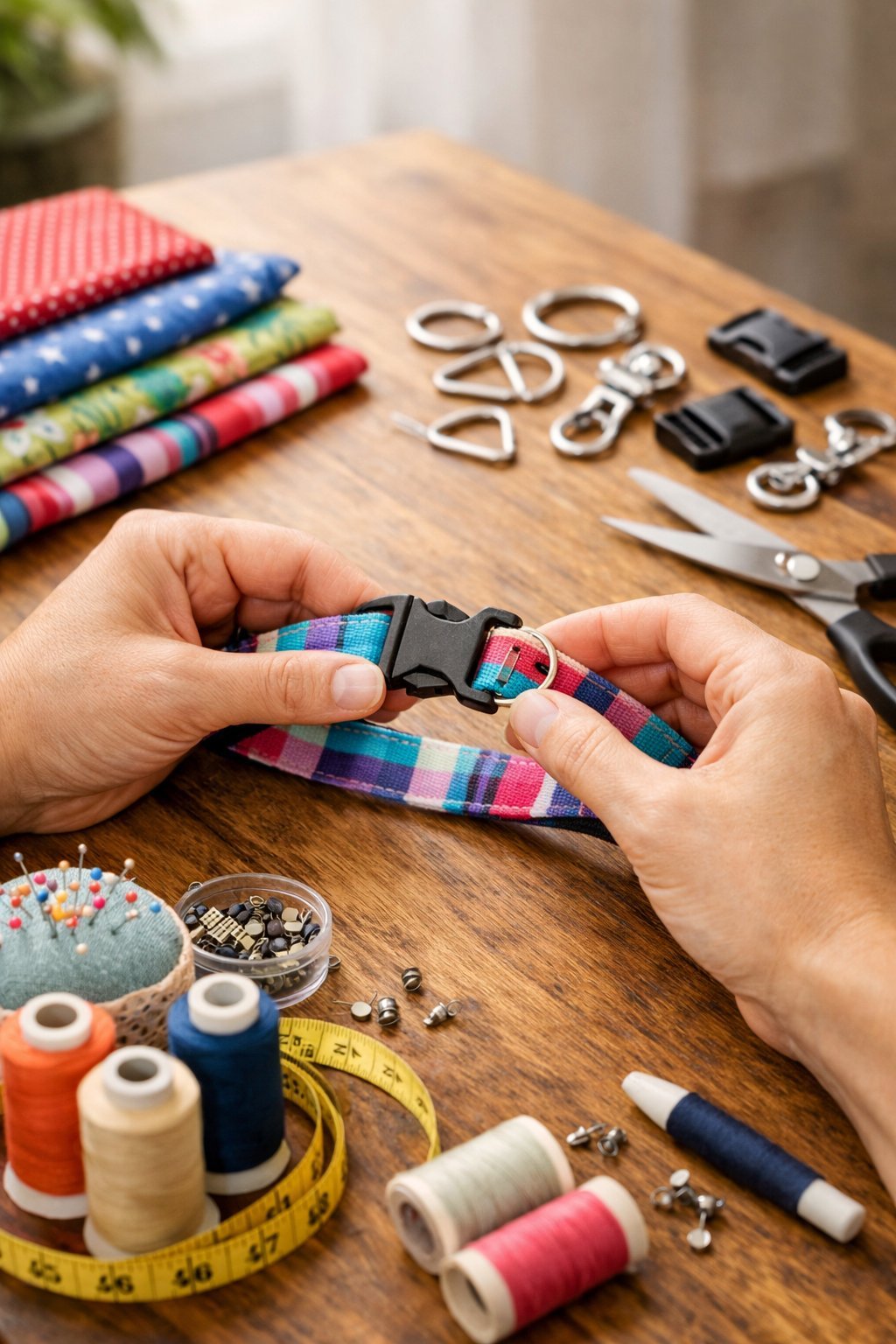
Making a dog collar takes some measuring, material prep, and careful assembly. Here’s how I put one together from start to finish.
Measuring Your Dog’s Neck Accurately
I start by wrapping a soft measuring tape loosely around my dog’s neck where the collar will sit. I make sure I can fit two fingers between the tape and my dog’s neck for comfort.
Once I have that measurement, I add 2 to 3 inches for adjustability. For example, if my dog’s neck measures 14 inches, I’ll make the collar 16 to 17 inches long.
This extra length helps the collar fit properly without being too tight. I write down this final measurement before cutting any materials.
Cutting and Preparing Materials
I cut my webbing or fabric to the length I calculated earlier. For a basic collar, I need one piece of webbing that matches my final measurement plus a few extra inches for the hardware.
Next, I gather my hardware—side release buckle, D-ring, and tri-glide slider for adjustment. For dogs that swim a lot, I choose stainless steel D-rings and plastic buckles since they resist rust.
I use a lighter or heat tool to seal the cut edges of synthetic webbing. This step keeps the collar from fraying and looking messy.
I let the sealed edges cool before handling them.
Sewing and Assembly Instructions
I thread one end of the webbing through the female part of the buckle, fold it back about 1.5 inches, and sew across the webbing using a box stitch. This creates a strong attachment point.
On the other end, I thread the webbing through the tri-glide slider, then through the D-ring, and finally through the male part of the buckle. I fold the end back and sew it securely with another box stitch.
I test the collar by adjusting the slider and checking that the buckle clicks firmly into place. When sewing webbing, I use a heavy-duty needle and strong thread.
I pull on all connection points to make sure my stitching holds before putting the collar on my dog.
Customizing Your Dog Collar Design

Making your collar unique is all about picking fabrics and patterns that match your dog’s vibe, adding personalized identification, and including features that keep your pet safe.
Adding Patterns and Embellishments
I like to start by choosing fabrics that reflect my dog’s character. Cotton prints are great for everyday collars, while grosgrain ribbon adds a fancier touch.
You can layer different fabrics or use patterned webbing as the base. For embellishments, I keep things simple and secure.
Decorative stitching in contrasting thread colors looks cool and doesn’t add bulk. Sometimes I add small metal studs or rivets, making sure they’re firmly attached.
Popular embellishment options:
- Fabric flowers sewn onto the collar
- Colorful ribbon overlays
- Heat-transfer vinyl designs
- Small buttons or beads (secured with strong thread)
I skip anything that dangles or could catch on stuff. If I’m working with paracord or leather, I’ll braid different colors together or add decorative knots.
The main thing is making sure decorations don’t mess with the collar’s fit or function.
Personalizing with Name Tags
I always add my dog’s name and my phone number directly to the collar. Metal tags can be noisy and fall off, so I like more permanent options.
Engraving leather collars is my favorite. Using a rotary tool, I can engrave my pet’s name and contact info so it won’t fade or wear off.
For fabric collars, I use:
- Iron-on letters or vinyl
- Embroidered names with a sewing machine
- Permanent fabric markers
- Slide-on ID plates attached to the D-ring
I make sure the text is big enough to read easily. Sometimes just a phone number is best since it fits better.
Safety Features and Reflective Elements
I always think about visibility when my dog is outside at night. Reflective materials help drivers and others see my pet from far away.
I sew reflective tape along the collar’s edges or use reflective thread for topstitching. Glow-in-the-dark paints and fabrics are another fun option.
I apply fabric paint in stripes or dots that charge in daylight and glow at night. Some webbing even has reflective stripes woven in.
Safety extras I consider:
- Breakaway buckles for cats or small dogs
- Quick-release buckles for emergency removal
- Double-stitched stress points
- Rust-resistant metal hardware
I test the collar’s strength by pulling firmly on both ends. For adjustable designs, I make sure the hardware slides smoothly but locks securely.
Care and Maintenance of DIY Dog Collars

Homemade collars need regular cleaning and safety checks to keep your dog comfy and protected. A little maintenance goes a long way.
Cleaning Tips and Tricks
I wash fabric collars by hand using mild soap and warm water every couple of weeks. For tough stains, I let the collar soak for 10 minutes before scrubbing gently with a soft brush.
Machine washing works for cotton collars if I use a delicate cycle and put the collar in a mesh laundry bag. I always air dry my collars instead of using a dryer—heat can mess up buckles and fabric.
Leather collars need different care. I wipe them down with a damp cloth to remove dirt and use leather conditioner once a month to prevent cracking.
I never soak leather collars in water because it can ruin the material and cause it to lose shape. For collars with metal hardware, I check for rust after cleaning and dry all metal parts thoroughly.
Inspecting for Wear and Tear
I check my dog’s collar weekly for damage. Frayed edges, loose stitching, and weak spots mean it’s time for repairs or a replacement.
I test the buckle by fastening and unfastening it a few times to make sure it still clicks securely. A buckle that feels loose or doesn’t snap properly can fail when my dog pulls.
The D-ring gets a lot of stress, so I tug on it to check if it’s still attached well. I also look for cracks in plastic buckles or bent metal parts.
If my collar has nylon webbing inside, I check that the outer fabric hasn’t separated from it. I replace collars right away if I find any damage that could affect my dog’s safety.
Troubleshooting Common Issues

When I make dog collars at home, I sometimes run into problems that need quick fixes.
Most issues are easy to solve with simple adjustments.
The Collar Fits Wrong
If my collar turns out too tight or too loose, I measure my dog’s neck again and add two inches for comfort.
I always check the fit by sliding two fingers between the collar and my dog’s neck before I finish the project.
Buckle Problems
Sometimes the buckle keeps coming undone or won’t stay closed.
I make sure I’m using a quality buckle that’s the right size for my webbing, and if it still fails, I swap it for a stronger one designed for pet collars.
Fabric Issues
The fabric might fray at the edges or feel too stiff against my dog’s skin.
I seal cut edges with a lighter or fray check product, and for comfort, I choose soft cotton fabric or add a fleece lining to protect sensitive skin.
Stitching Comes Loose
When my stitches start to pull apart, it usually means I didn’t backstitch at the beginning and end.
I go back and reinforce weak spots with extra stitching, and using a stronger thread or a double row of stitches helps prevent this problem.
If I encounter issues with electronic collars, those require different troubleshooting steps than handmade collars.
