
DIY Dog Food: Simple Homemade Recipes Your Pup Will Love

DIY Dog Food – Making your own dog food at home lets you control exactly what goes into your pet’s bowl.
You can create nutritious, balanced meals for your dog using simple ingredients like meat, vegetables, and grains that meet their dietary needs.
Many pet owners turn to DIY dog food recipes for beginners when they worry about commercial food recalls or want fresher options for their furry friends.

I’ve learned that homemade dog food isn’t just about throwing together random ingredients.
It requires understanding what nutrients dogs need and how to balance proteins, fats, and vitamins properly.
The good news is that making vet-approved homemade dog food doesn’t have to be complicated or expensive.
Whether you want to replace store-bought kibble completely or just supplement your dog’s diet, I’ll walk you through everything you need to know.
From essential nutrients to easy recipes and safety tips, you’ll discover how to prepare meals that keep your dog healthy and happy.
Key Takeaways
- Homemade dog food gives you control over ingredients and can be tailored to your dog’s specific health needs
- A balanced recipe must include proper amounts of protein, healthy fats, vegetables, and essential vitamins and minerals
- Always consult your vet before switching to homemade food and avoid common toxic ingredients like onions, grapes, and chocolate
Benefits of DIY Dog Food

Making dog food at home gives me complete control over what my pet eats while potentially saving money and addressing specific health needs.
I can choose fresh ingredients, avoid allergens, and tailor meals to my dog’s unique requirements.
Improved Nutritional Control
When I make my own dog food, I know exactly what goes into every meal.
I can select high-quality proteins like chicken, beef, or fish and pair them with fresh vegetables and whole grains.
Feeding homemade dog food can benefit my dog’s overall health when done correctly.
I avoid preservatives, artificial colors, and fillers that appear in many commercial foods.
I can also adjust recipes based on my dog’s life stage and activity level.
Puppies need different nutrients than senior dogs, and I can modify protein and fat content accordingly.
If my dog needs to lose weight, I can reduce calories while keeping meals filling and satisfying.
Catering to Food Allergies
Food allergies affect many dogs, causing skin problems, digestive issues, and discomfort.
When I prepare meals at home, I can eliminate specific ingredients that trigger reactions in my pet.
Common allergens include:
- Beef
- Dairy products
- Wheat
- Chicken
- Soy
I can create meals using novel proteins like duck, venison, or rabbit that my dog hasn’t eaten before.
This helps me identify problem ingredients through elimination.
If my dog has a grain sensitivity, I can make grain-free recipes using sweet potatoes or pumpkin as the carbohydrate source.
The ability to control ingredients and ensure safe preparation means I don’t have to worry about cross-contamination from manufacturing facilities.
Cost Savings
Making dog food at home can reduce my expenses, especially if I have a large breed or multiple dogs.
I can buy ingredients in bulk and prepare large batches to freeze for later use.
I save money by using affordable protein sources like chicken thighs, ground turkey, or eggs.
Seasonal vegetables cost less and provide variety throughout the year.
Preparing healthy, budget-friendly meals at home becomes easier when I plan ahead and shop sales.
While initial costs for containers and kitchen equipment exist, these are one-time expenses.
I also avoid paying for packaging, marketing, and retail markups that commercial dog food companies include in their prices.
Essential Nutrients for Homemade Dog Food
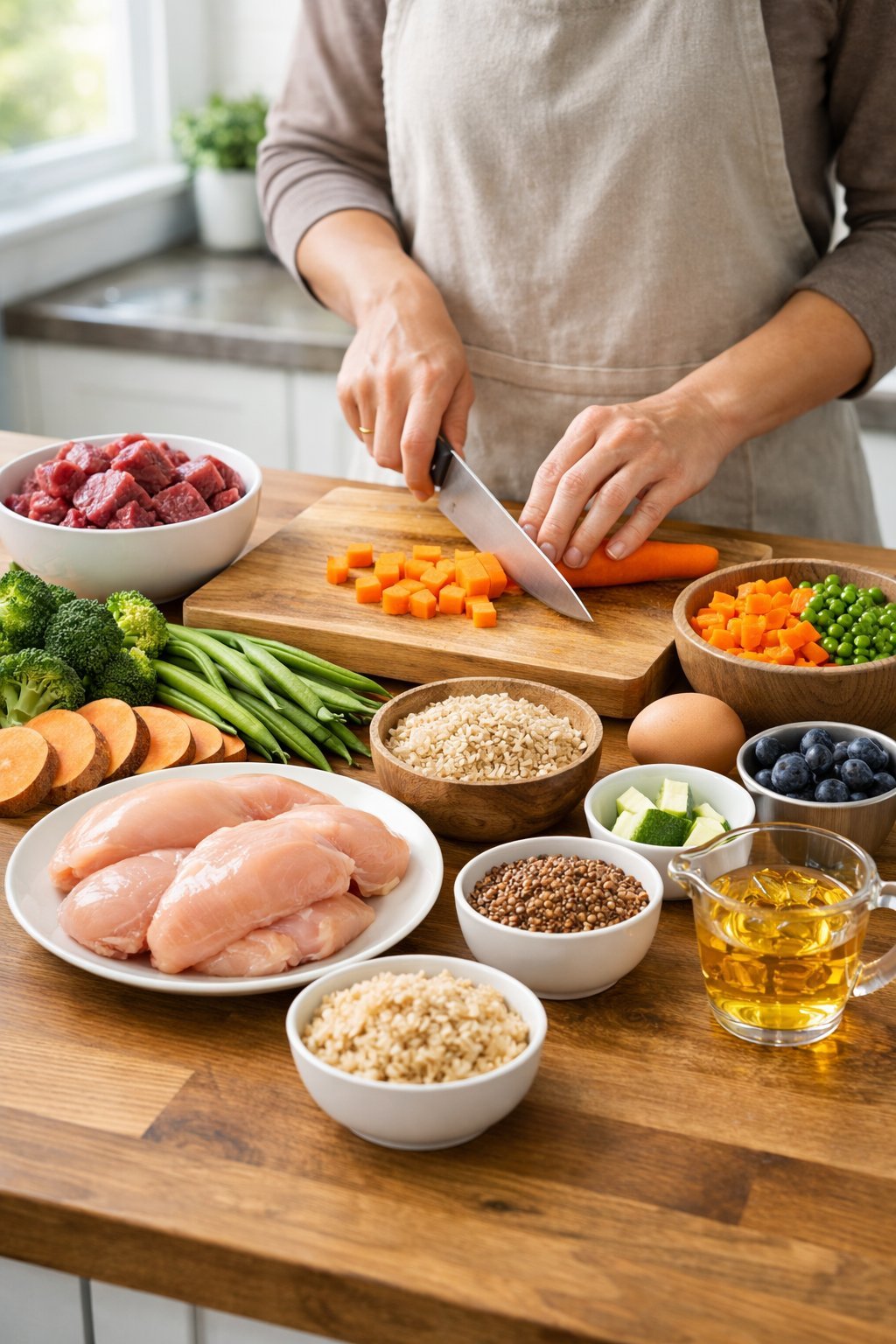
Dogs need six essential nutrients to stay healthy: proteins, fats, carbohydrates, vitamins, minerals, and water.
Getting the right balance of these nutrients is key when I prepare meals at home for my dog.
Proteins and Healthy Fats
Protein should make up about 18-25% of my dog’s diet.
I use lean meats like chicken, turkey, beef, or fish as my main protein sources.
Eggs and cottage cheese work well too.
My dog needs protein for strong muscles and healthy body functions.
I aim for about one gram of protein per pound of my dog’s body weight each day.
Healthy fats are just as important.
They give my dog energy and help absorb vitamins.
I include fat sources like:
- Chicken fat or beef fat
- Fish oil for omega-3 fatty acids
- Small amounts of vegetable oils
Fats should make up around 10-15% of the meal.
I’m careful not to add too much because it can lead to weight gain.
Vitamins and Minerals
Dogs require vitamins and minerals that differ from human dietary needs.
Calcium and phosphorus must be balanced correctly, especially for growing puppies.
I add these vitamin and mineral sources to my homemade recipes:
- Calcium: Ground eggshells, bone meal, or calcium supplements
- Vitamin A: Liver, carrots, or sweet potatoes
- B Vitamins: Organ meats and whole grains
- Vitamin E: Spinach and plant oils
Many people use a commercial vitamin and mineral supplement designed for homemade dog food.
This helps me avoid nutritional gaps that could harm my dog over time.
Carbohydrate Sources
Carbohydrates provide energy and fiber for healthy digestion.
I use cooked grains like brown rice, oatmeal, or quinoa in my recipes.
Vegetables add extra fiber and nutrients.
My go-to choices include:
- Sweet potatoes
- Carrots
- Green beans
- Peas
- Pumpkin
I cook all carbohydrates thoroughly so my dog can digest them easily.
Raw vegetables are harder for dogs to break down.
Carbs should make up about 30-50% of the total meal depending on my dog’s activity level and health needs.
How to Make a Balanced DIY Dog Food Recipe

Creating nutritious homemade meals for your dog requires selecting the right ingredients, measuring proper amounts, and following safe cooking methods to meet all of your pet’s dietary needs.
Choosing Quality Ingredients
I always start with high-quality protein sources as the foundation of any dog food recipe.
Lean meats like chicken, turkey, beef, or fish should make up about 40-50% of the meal.
These proteins provide essential amino acids that dogs need for muscle development and overall health.
Next, I include healthy carbohydrates like brown rice, sweet potatoes, or oatmeal.
These give my dog energy and fiber for digestive health.
Balanced recipes require a variety of ingredients including proteins, healthy fats, carbohydrates, and vitamins.
I never skip the vegetables.
Carrots, green beans, peas, and spinach add important vitamins and minerals.
I avoid onions, garlic, grapes, and chocolate as these are toxic to dogs.
Healthy fats are also crucial.
I add fish oil or a small amount of olive oil for omega-3 fatty acids.
These support skin, coat, and joint health.
Proper Portion Sizes
I calculate portions based on my dog’s weight, age, and activity level.
A general rule I follow is about 2-3% of my dog’s body weight per day for adult dogs.
This means a 50-pound dog needs roughly 1-1.5 pounds of food daily.
Puppies need more food relative to their size.
I feed them about 5-6% of their current body weight because they’re growing quickly.
Senior dogs might need slightly less depending on their activity level.
I divide daily portions into two meals for adult dogs.
This helps with digestion and prevents bloating.
Puppies under six months need three to four smaller meals throughout the day.
I always monitor my dog’s weight and adjust portions as needed.
If my dog is gaining too much weight, I reduce portions by 10-15%.
If they’re losing weight or seem hungry, I increase slightly.
Safe Preparation Techniques
I cook all meat thoroughly to kill harmful bacteria like salmonella and E. coli.
The internal temperature should reach 165°F for poultry and 160°F for ground meats.
I use a meat thermometer to check.
I steam or lightly cook vegetables to make them easier to digest.
Dogs can’t break down raw vegetables as efficiently as humans.
Cooking also helps release more nutrients.
I let all food cool completely before serving.
Hot food can burn my dog’s mouth and digestive system.
I store homemade dog food recipes in airtight containers in the refrigerator for up to five days.
For longer storage, I freeze portions in individual servings.
I thaw frozen meals in the refrigerator overnight, never at room temperature where bacteria can grow.
Sample DIY Dog Food Recipes

I’ve found that starting with a few basic recipes makes the transition to homemade dog food much easier.
These three meals provide different options based on your dog’s dietary needs and your cooking preferences.
Simple Cooked Chicken and Rice Meal
This is one of the easiest DIY dog food recipes for beginners to master.
I recommend using boneless, skinless chicken breasts or thighs as the protein base.
Ingredients:
- 2 cups cooked chicken (shredded or diced)
- 1 cup cooked white or brown rice
- 1/2 cup cooked carrots (diced)
- 1/2 cup cooked green beans
- 1 tablespoon olive oil
I start by boiling the chicken until it reaches 165°F inside.
Then I cook the rice according to package directions and steam the vegetables until they’re soft.
Once everything cools down, I mix all ingredients together in a large bowl.
This meal works well for dogs with sensitive stomachs.
The bland combination of chicken and rice is gentle on digestion while still providing essential nutrients.
Grain-Free Beef and Vegetable Bowl
Dogs who need to avoid grains can benefit from this protein-rich recipe.
I use lean ground beef to keep the fat content reasonable.
Ingredients:
- 1 pound ground beef (85% lean)
- 2 cups sweet potato (cooked and mashed)
- 1 cup spinach (chopped)
- 1/2 cup peas
- 2 tablespoons fish oil
I brown the ground beef in a pan and drain excess fat.
The sweet potato gets boiled or baked until soft, then mashed.
I add the spinach and peas during the last few minutes of cooking the beef so they wilt slightly.
Mix in the fish oil after everything cools to preserve its omega-3 fatty acids.
Vegetarian Dog Food Option
While dogs are naturally omnivores, I’ve learned they can thrive on properly balanced vegetarian meals.
This recipe requires careful attention to protein sources.
Ingredients:
- 2 cups cooked lentils
- 1 cup cooked quinoa
- 1 cup cooked pumpkin
- 1/2 cup cottage cheese
- 1 tablespoon ground flaxseed
I cook the lentils and quinoa separately according to their package instructions.
The cottage cheese adds calcium and extra protein that vegetarian diets sometimes lack.
Pumpkin provides fiber and helps with digestion.
This meal needs a calcium supplement if I’m feeding it regularly.
I always consult my vet before switching my dog to a vegetarian diet to make sure all nutritional needs get met.
Safety Tips and Common Mistakes
When I started making dog food at home, I quickly learned that certain foods can harm dogs. Proper storage matters just as much as the ingredients themselves.
Switching your dog to homemade meals also requires patience. A gradual approach is best.
Foods to Avoid for Dogs
I never include onions or garlic in my dog’s food because they damage red blood cells and can cause anemia. Even small amounts over time add up to trouble.
Grapes and raisins are also on my banned list. These fruits can cause kidney failure in dogs, and scientists still don’t know exactly why.
The risk isn’t worth it. Chocolate contains theobromine, which dogs can’t process like humans do.
Dark chocolate and baking chocolate are especially dangerous. I keep all chocolate products completely away from my homemade dog food prep area.
Other toxic ingredients I avoid include:
- Xylitol (artificial sweetener)
- Macadamia nuts
- Avocado
- Raw yeast dough
- Alcohol
- Coffee and caffeine
Storage and Shelf Life
I store homemade dog food in the refrigerator for up to three days maximum. After that, bacteria can grow even if the food looks and smells fine.
For longer storage, I freeze portions in individual containers. Frozen dog food stays safe for two to three months.
I label each container with the date so I know when I made it. When I’m ready to serve frozen food, I thaw it in the refrigerator overnight.
I never leave dog food sitting at room temperature for more than two hours. I cook proteins to safe internal temperatures and let everything cool before storing.
Hot food creates condensation in containers, which promotes bacterial growth.
Transitioning Your Dog to Homemade Food
I switched my dog to homemade food gradually over 7 to 10 days. Sudden diet changes can upset a dog’s stomach and cause diarrhea or vomiting.
I started with 25% homemade food mixed with 75% of my dog’s regular food for the first few days. Then I moved to a 50/50 mix for a few more days.
By day seven, I was feeding 75% homemade and 25% old food. I watched my dog carefully during this transition period.
I looked for signs like loose stools, gas, or decreased appetite. If I noticed digestive issues, I slowed down the transition.
Some dogs adapt faster than others. I let my dog’s individual response guide the pace.
