
DIY Dog Kennel: Build a Cozy Home for Your Pup in a Weekend

I’ve always wanted to give my dog a special outdoor space, but buying a pre-made kennel seemed expensive and not quite right for what I needed.
That’s when I discovered that building my own dog kennel was not only possible but actually pretty simple.
You can build a comfortable and safe dog kennel for under $200 using basic materials like chain link fencing, wood, and ready-made panels.
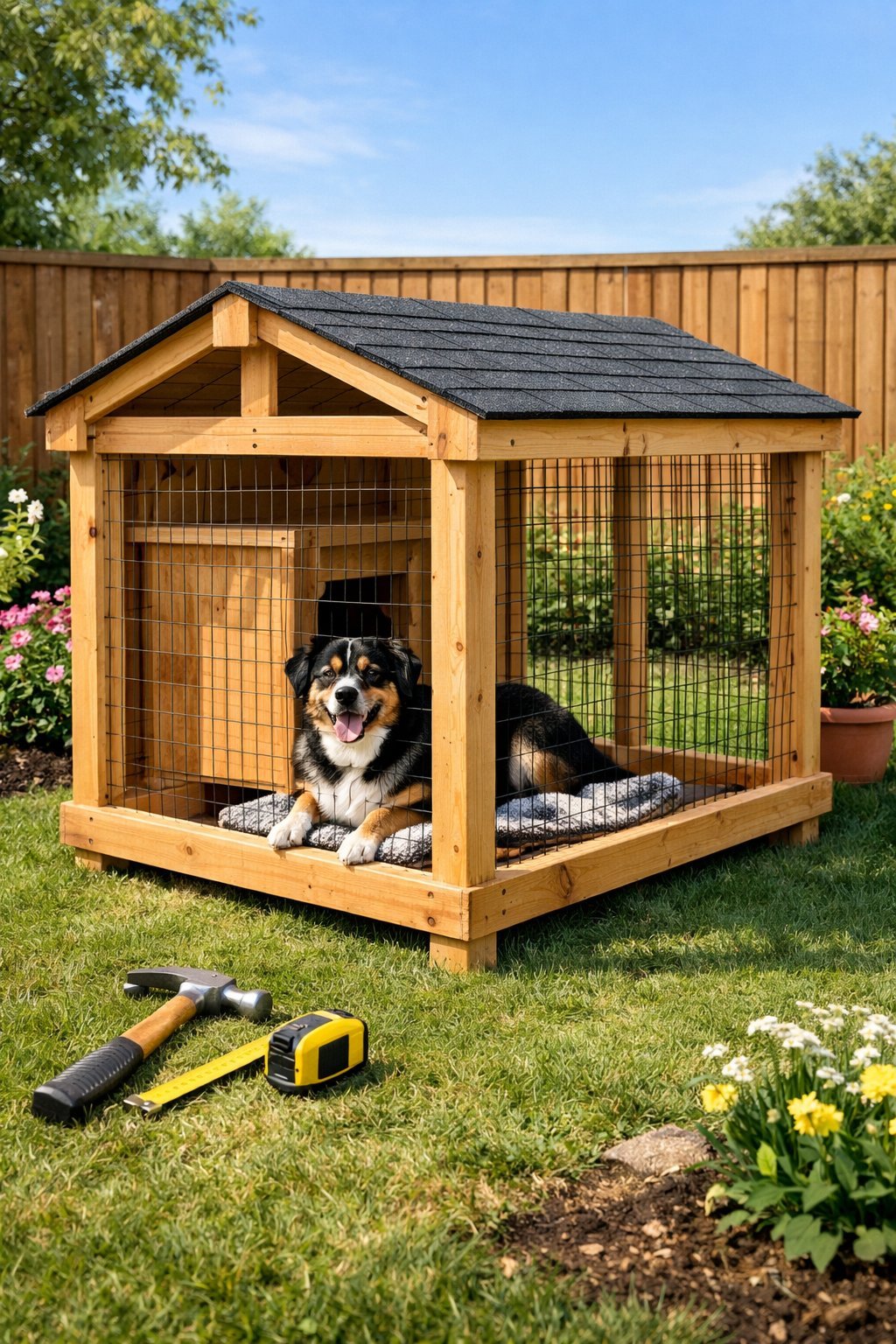
The best part about building your own dog kennel is that you can make it exactly the size and style your dog needs.
Whether you have a small backyard or lots of space, you get to decide how big it will be and what features to add.
Plus, you don’t need to be a professional builder to get great results.
I’m going to walk you through everything from planning and measuring to putting together the final pieces.
You’ll learn how to pick the right materials, make your dog’s kennel comfortable, and keep it safe and clean.
By the end, you’ll have all the info you need to create a cozy space your dog will love.
Key Takeaways
- Building a dog kennel yourself saves money and lets you customize the size and features for your dog’s needs
- You can complete most kennel projects with basic materials and tools without professional construction skills
- Regular maintenance and proper safety features will keep your dog comfortable and secure in their new space
Benefits of Building a DIY Dog Kennel
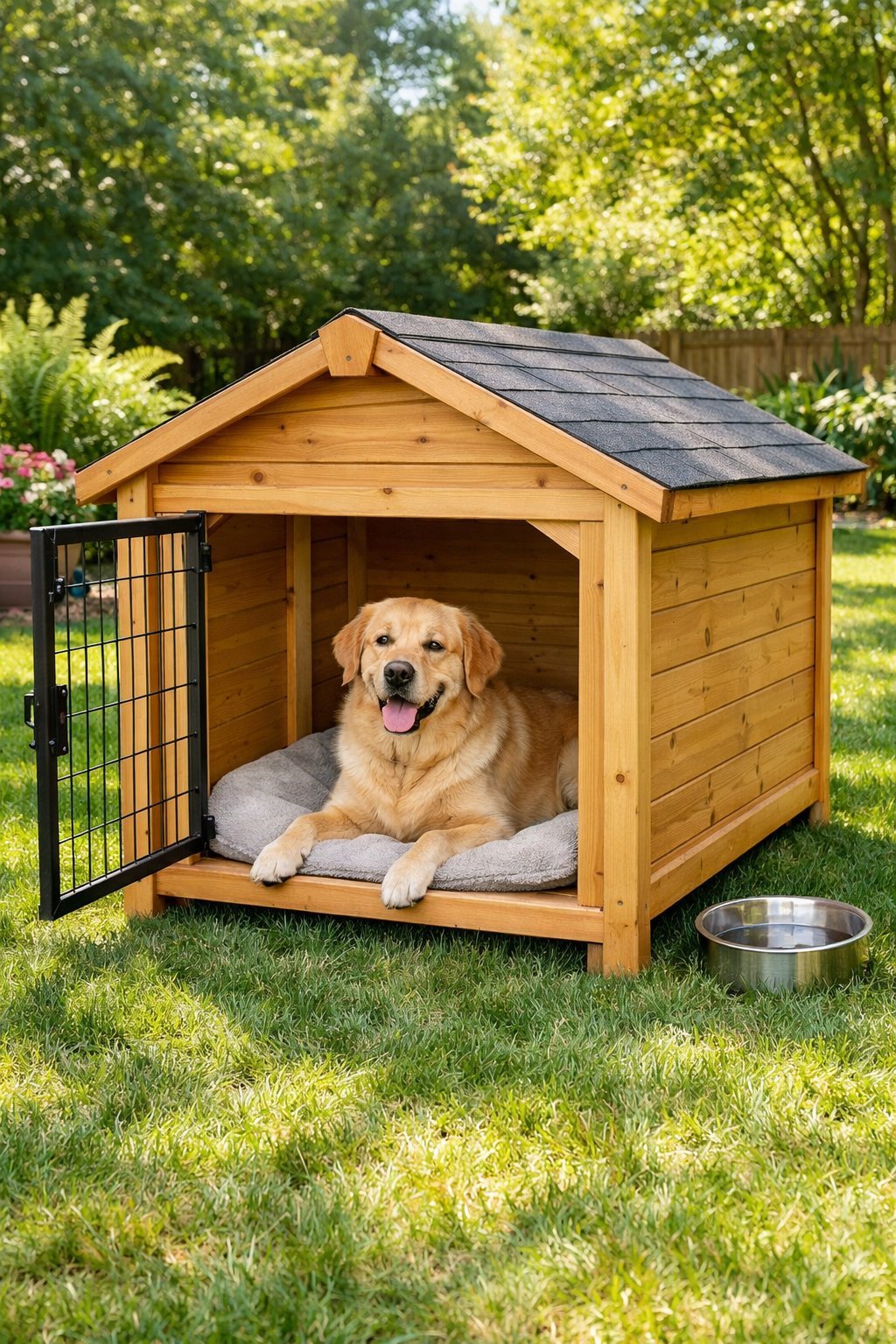
Building your own dog kennel saves money and lets you create a space that fits your dog’s exact needs.
You’ll enjoy the hands-on process while keeping your pet safe and comfortable.
Cost Savings
I’ve found that building a dog kennel yourself costs much less than buying a pre-made one.
Store-bought kennels can run hundreds or even thousands of dollars depending on size and quality.
When I build my own, I control the budget by choosing affordable materials.
Chain link fencing and basic lumber are inexpensive options that still provide durability.
Many outdoor kennels can be built for under $200 when I shop smart and use budget-friendly supplies.
I also avoid paying for labor costs that come with professional installation.
The money I save can go toward better bedding, toys, or other supplies my dog needs.
Plus, I can start with a basic design and add upgrades later as my budget allows.
Customization
When I build my own kennel, I make it the perfect size for my dog.
Small dogs need less space while large breeds require more room to move around comfortably.
I can design the kennel to match my yard’s layout and my home’s style.
Whether I want a cozy indoor retreat or an outdoor space, I choose what works best.
The materials, colors, and overall look are completely up to me.
My dog’s specific needs guide every decision I make.
If my dog loves shade, I add a covered area.
If my pup needs extra ventilation, I adjust the design.
I can include features like raised floors for drainage, multiple entry points, or attached storage for supplies.
Pet Safety
Building the kennel myself means I know exactly how it’s constructed.
I check every nail, screw, and board to make sure there are no sharp edges or weak spots that could hurt my dog.
I select materials that are safe and non-toxic for my pet.
Cheap pre-made kennels sometimes use questionable materials, but when I build it, I choose what goes into it.
I can avoid treated wood with harmful chemicals or flimsy wire that might break.
The structure stays secure because I control the quality of construction.
I reinforce corners, ensure gates latch properly, and make sure my dog can’t escape or get injured.
I also design proper spacing between bars or chain links so my dog can’t get stuck.
Satisfaction of Handcrafting
I feel proud every time I see my dog enjoying a space I built with my own hands.
There’s something special about creating something useful for a pet I care about.
The building process teaches me new skills that I can use for other projects around my home.
I learn about measurements, tools, and construction techniques.
Even if I’m a beginner, the project is relatively easy to complete.
Watching my dog settle into their new kennel makes all the effort worthwhile.
I know the space is built with love and attention to detail.
Friends and family often compliment the kennel, which adds to my sense of accomplishment.
Planning Your DIY Dog Kennel
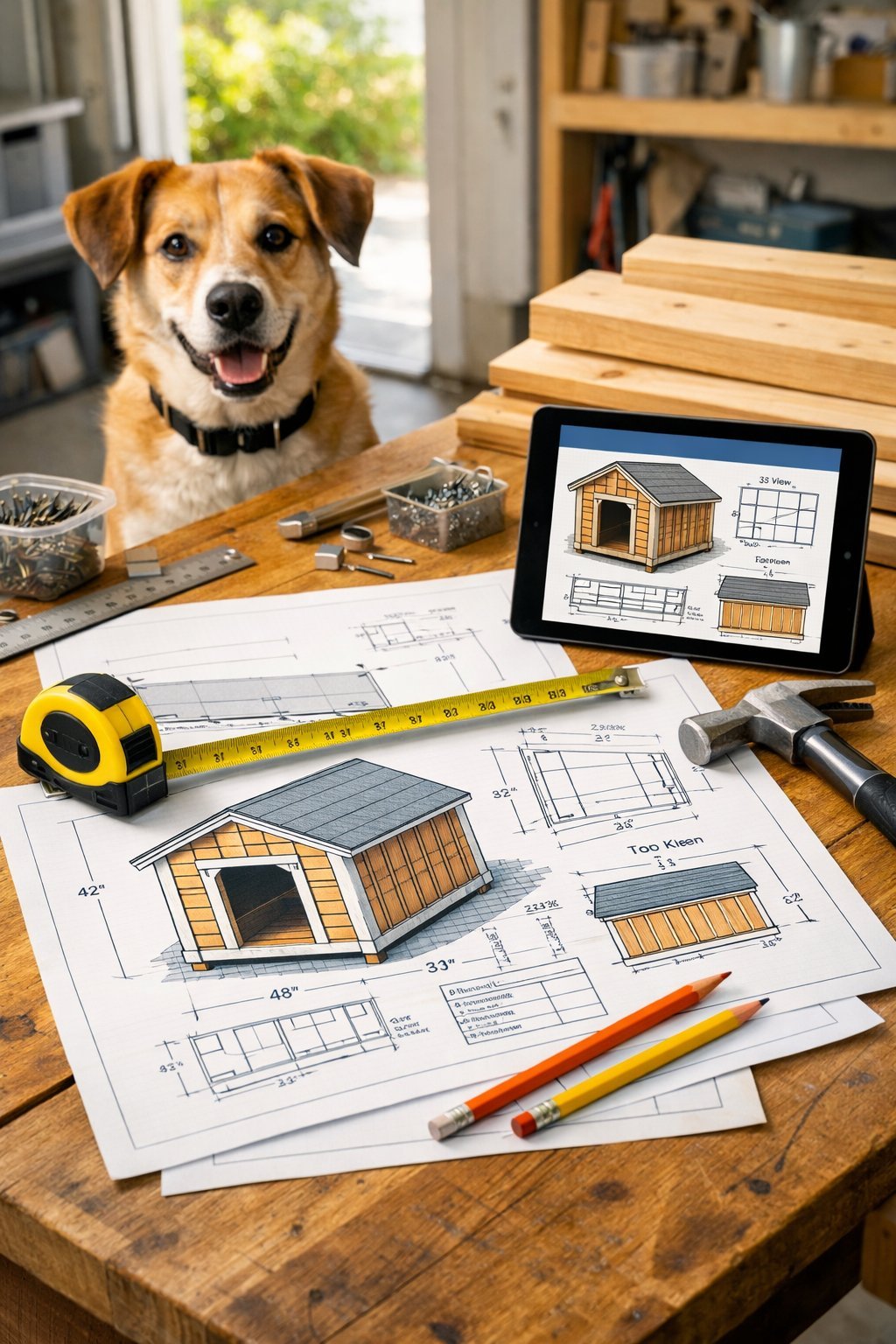
Getting the size right and picking a good spot makes all the difference when building a kennel.
The materials you choose affect both cost and how long your kennel lasts.
Choosing the Right Size
I always start by thinking about my dog’s adult size.
A small dog needs at least 32 square feet, while medium dogs need 48 square feet, and large breeds require 64 square feet or more.
The kennel should be tall enough for my dog to stand up without hitting their head.
I add at least 6 inches above their standing height to give them room to move comfortably.
If I’m building a kennel for multiple dogs, I multiply the space by the number of dogs.
Each dog needs their own area to rest without feeling cramped.
I also consider whether my puppy will grow bigger in the coming months.
Selecting the Location
I pick a spot with good drainage so water doesn’t pool after rain.
Flat ground makes construction easier and keeps the kennel stable.
Shade is important for keeping my dog cool during hot days.
I look for areas under trees or near buildings that block afternoon sun.
Morning sun can be nice for warmth in cooler months.
I place the kennel where I can see it from my house.
This lets me check on my dog easily.
I also keep it away from property lines to avoid noise complaints from neighbors.
Kennel Materials Overview
Chain link fencing is affordable and durable for outdoor kennels.
It provides good airflow and visibility while keeping dogs secure.
Wood frames work well but need weather treatment to prevent rot.
Pressure-treated lumber lasts longer than regular wood.
I avoid wood with toxic chemicals that could harm my dog.
For flooring, I choose between concrete, gravel, or dirt.
Concrete is easiest to clean but gets hot in summer.
Gravel drains well and stays cooler.
Some owners use ready-made plastic materials for quick assembly and lower costs.
Step-by-Step Construction Guide
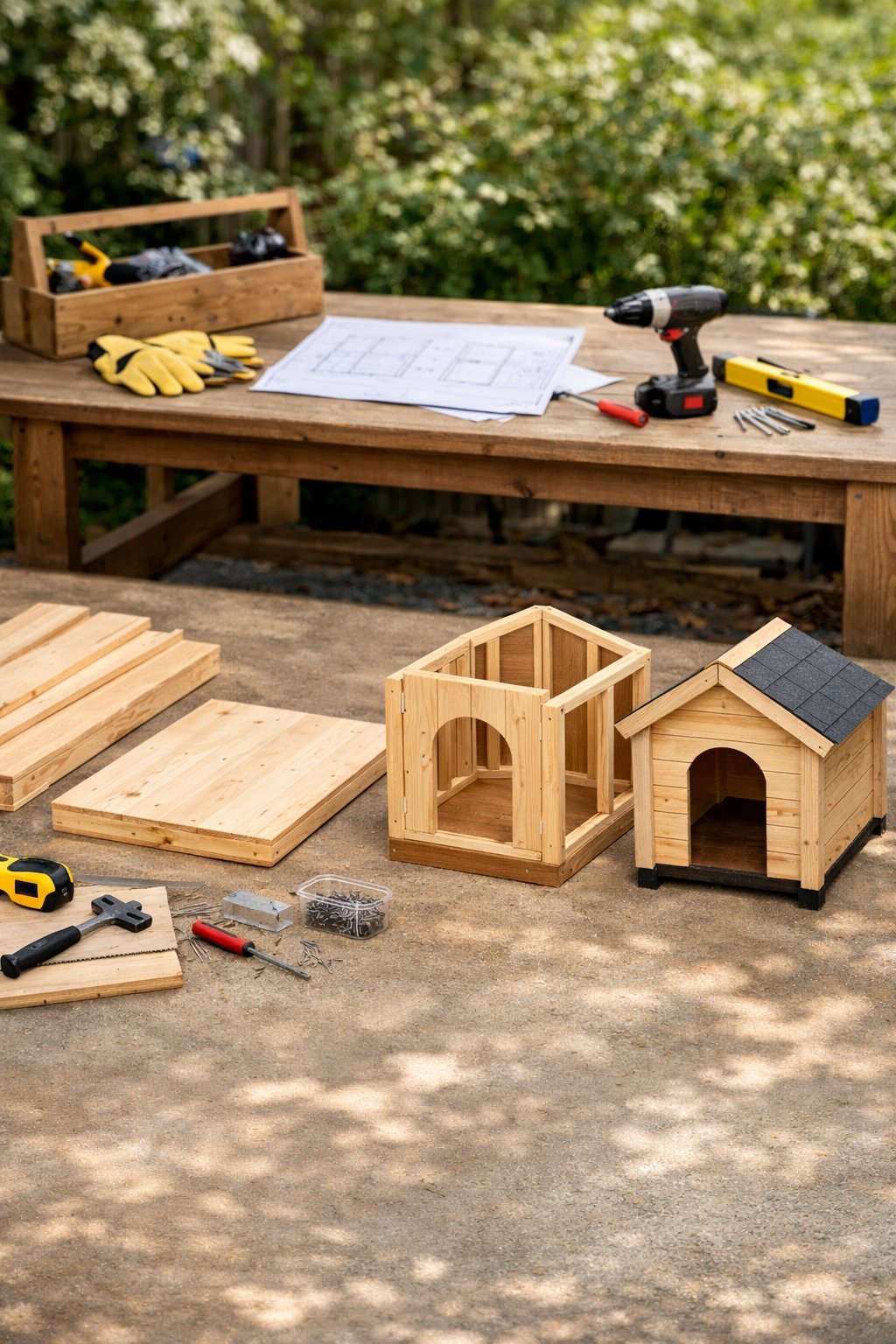
Building a dog kennel requires the right tools, a solid frame, and proper flooring to keep your pup safe and comfortable.
I’ll walk you through each part of the process so you can create a sturdy space your dog will love.
Gathering Tools and Supplies
Before I start building a dog kennel, I make sure I have everything on hand.
This saves me trips to the hardware store and keeps the project moving smoothly.
Essential Tools:
- Power drill with bits
- Circular saw or hand saw
- Measuring tape
- Level
- Screwdriver set
- Wire cutters (for chain link options)
Materials I Need:
- Pressure-treated lumber (2x4s and 4x4s)
- Galvanized screws and nails
- Chain link fencing or welded wire panels
- Concrete mix for posts
- Roofing material (metal or shingles)
- Flooring material (concrete, gravel, or wood)
I always buy cheaper materials like chain link fencing when working on a budget.
Pressure-treated wood is important because it resists rot and weather damage.
I also grab work gloves and safety glasses to protect myself during construction.
Building the Frame
I start by marking out the kennel dimensions on the ground.
The frame needs to be sturdy enough to handle my dog’s size and any weather conditions.
First, I dig holes for the corner posts about 2 feet deep.
I use 4×4 posts and set them in concrete to make sure they stay in place.
After the concrete sets for 24 hours, I attach horizontal 2×4 boards between the posts using galvanized screws.
I space the horizontal boards about 2 feet apart from bottom to top.
This gives me solid attachment points for fencing material.
I make sure everything is level as I go because a crooked frame causes problems later.
For the top frame, I attach 2×4 boards across all four sides.
This creates support for the roof and keeps the whole structure stable.
I double-check that all corners form 90-degree angles before securing everything permanently.
Installing Flooring
The right flooring keeps my dog comfortable and makes cleaning much easier.
I have a few options depending on my budget and needs.
Flooring Options:
| Material | Pros | Cons |
|---|---|---|
| Concrete | Easy to clean, durable | Hard on joints, expensive |
| Gravel | Good drainage, affordable | Hard to clean waste |
| Wood decking | Comfortable, warm | Needs sealing, can rot |
I prefer concrete for permanent kennels because it lasts forever and I can hose it down quickly.
I pour a 4-inch thick slab with a slight slope toward a drain for water runoff.
If I’m building an inexpensive kennel, I use pea gravel over landscape fabric.
This gives good drainage and costs much less than concrete.
For indoor kennels or covered areas, I build a raised wooden platform with gaps between boards for drainage and air flow.
Enhancing Comfort and Functionality
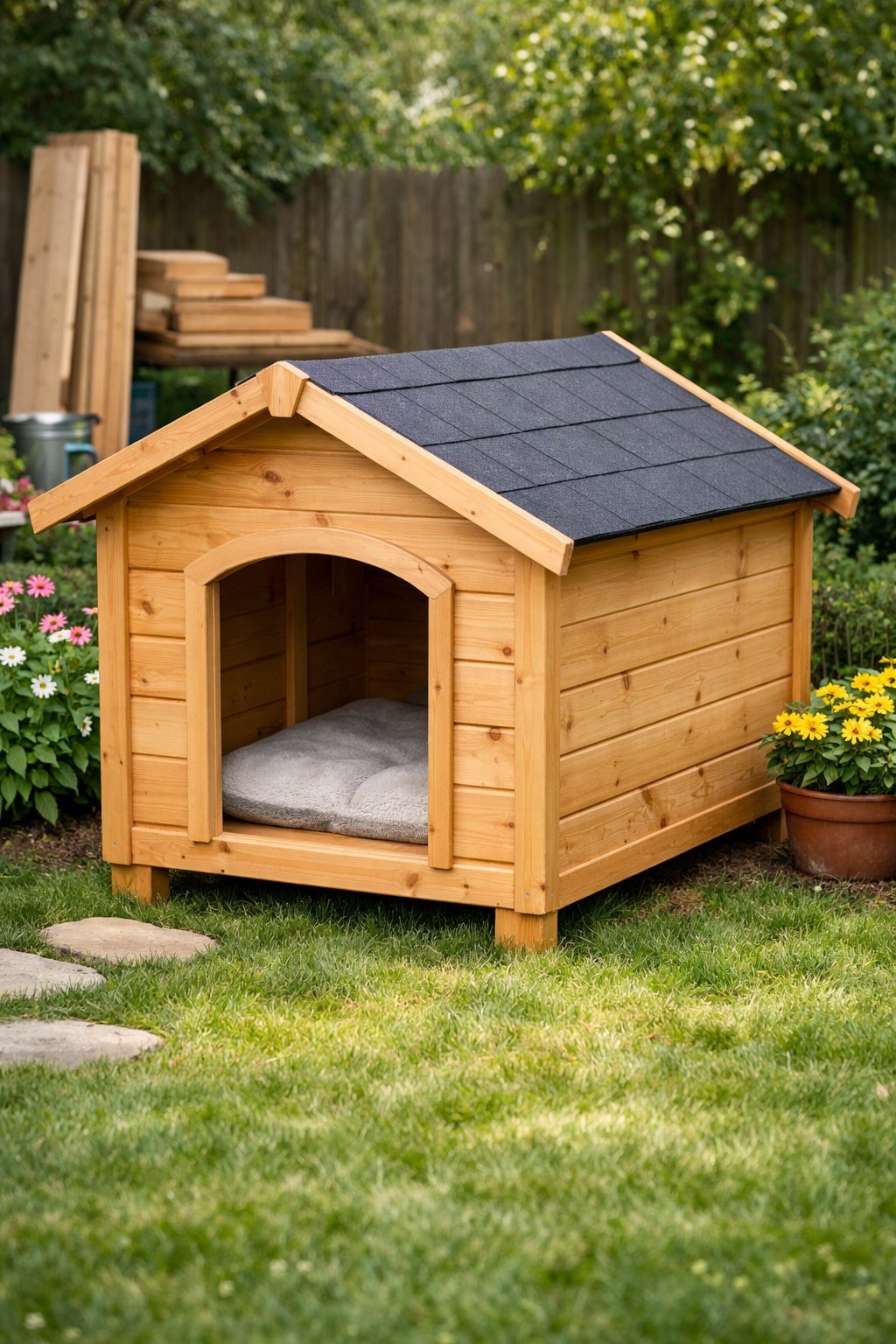
A well-built kennel needs proper protection from weather, good airflow, and adequate shade to keep your dog safe and comfortable year-round.
These elements work together to create a space where your pet can rest without stress from extreme temperatures or moisture.
Weatherproofing Solutions
I always start by sealing any gaps or cracks in the kennel walls with exterior-grade caulk.
This prevents rain and cold drafts from getting inside.
For the roof, I use waterproof materials like metal roofing or heavy-duty shingles.
I make sure the roof slopes slightly so water runs off instead of pooling on top.
I apply weatherproof sealant to all wooden surfaces every year.
This protects the wood from rotting when it gets wet.
I also elevate the kennel floor a few inches off the ground using concrete blocks or treated lumber.
This keeps the bottom dry and prevents moisture from seeping up through the floor.
Adding weather stripping around doors helps block wind and rain.
I use rubber or foam strips that stick to the door frame.
For winter months, I hang a thick plastic flap over the entrance to keep warmth inside while still letting my dog come and go.
Ventilation Options
Good airflow keeps the kennel from getting too hot or humid inside. I install vents near the top of opposite walls to create cross-ventilation.
Wire mesh panels are awesome because they let air through while keeping pests out. I usually cover about 20% of the wall space with ventilation openings for optimal airflow in custom dog kennels.
I avoid putting vents where rain can blow right in. Instead, I place them under roof overhangs or add small awnings above each vent.
For bigger kennels, I sometimes add a battery-powered fan in the summer to keep air moving on still, hot days. All openings get secure screens so my dog can’t squeeze through or get hurt.
Adding Shade and Shelter
Direct sunlight can make a kennel way too hot, so I always create shaded spots where my dog can cool down. If possible, I put the kennel under trees or build an extended roof for a porch area.
Shade cloth on one side of the kennel adds extra protection. This fabric blocks up to 70% of sun rays but still lets air flow through. I use zip ties or grommets to keep it in place, even on windy days.
Inside, I put the dog bed in the shadiest corner, away from direct sun. I also keep a section totally covered and insulated as a cozy retreat.
This way, my dog can move between cooler and warmer spots throughout the day, depending on what’s most comfortable.
Safety, Maintenance, and Upkeep
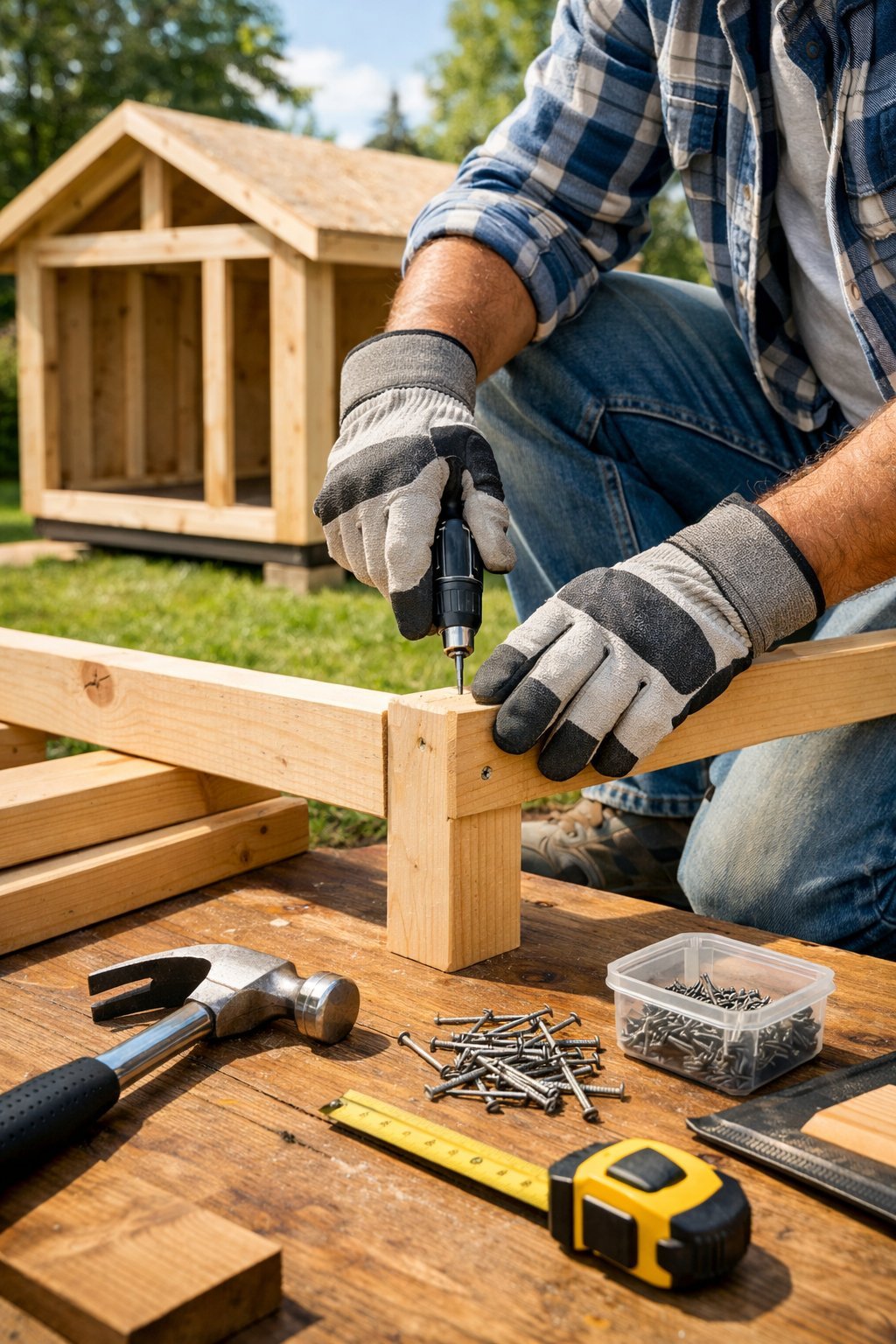
A good kennel needs solid safety features and regular care to keep your dog healthy and secure. Picking durable materials and staying on top of basic tasks will help your kennel last.
Secure Fencing and Gates
Always check that your fence is tall enough to stop jumping. Most dogs need at least a 5-foot fence, but bigger or more athletic breeds might need 6 feet or taller.
The spaces between fence boards or chain link should be small enough that your dog can’t squeeze through or get their head stuck. I aim for gaps no wider than 2 inches for small dogs and 4 inches for larger breeds.
Gates need heavy-duty latches your dog can’t open with their nose or paws. I like double-latch systems or carabiner clips for extra security.
The gate should swing smoothly and not drag on the ground. I also check for any gaps at the bottom where a determined digger might escape.
Metal or concrete work best for durable and low-maintenance kennels. I bury fencing at least 6-12 inches underground along the edges to stop digging escapes.
Routine Cleaning Tips
I clean my dog’s kennel at least once a week to keep things fresh. First, I take out all bedding, toys, and food bowls.
For the floor and walls, I use a pet-safe disinfectant mixed with warm water. I scrub every surface with a stiff brush, especially in corners where dirt builds up.
After scrubbing, I rinse everything thoroughly with a hose. I let the kennel air dry completely before putting bedding back inside.
Moisture can cause mold, which isn’t good for dogs. On sunny days, I leave the kennel open for a few hours to dry naturally.
Food and water bowls need daily washing with hot, soapy water. I swap out bedding weekly, or more often if it gets dirty.
During muddy seasons, I might need to clean twice a week to keep things sanitary.
Inspecting for Wear and Tear
I walk around my kennel every two weeks looking for potential problems. Sharp edges, loose nails, or splintered wood can injure my dog, so I fix these issues right away.
I check all fence connections to make sure nothing has come loose. Wire fencing can develop weak spots or holes over time.
Wooden structures may rot in areas that stay damp, especially near the ground. The roof needs inspection after heavy storms.
I look for leaks, loose panels, or damaged shingles that could let rain inside. Hinges and latches on gates wear out with repeated use, so I test them regularly and apply lubricant when they start to stick.
I also look for signs of rust on metal components. If I spot any, I sand it down and apply rust-resistant paint to stop it from spreading.
