
Dog Bunk Beds DIY: A Complete Guide for Dog Owners Who Want the Best

Dog Bunk Beds DIY – If you have multiple dogs and limited floor space, you’ve probably tripped over dog beds more times than you’d like to admit. I discovered that building a DIY dog bunk bed solved this problem while giving my pups their own cozy sleeping spots.
A dog bunk bed is a space-saving solution that provides separate, comfortable sleeping areas for multiple dogs using vertical space instead of taking up your entire floor.

I know what you’re thinking—building furniture sounds hard. But I was surprised to learn that creating a custom dog bunk bed is actually easier than it looks with basic tools and materials.
Plus, you can make it fit your home’s style and your dogs’ specific needs.
In this guide, I’ll walk you through everything from planning and measuring to assembly and decorating. Whether you’re new to DIY projects or have built things before, you’ll find practical steps to create a sturdy wooden dog bed that your pets will love for years to come.
Key Takeaways
- Dog bunk beds save floor space by stacking sleeping areas vertically for multiple dogs
- You can build a custom bunk bed with basic woodworking tools and readily available materials
- Safety features like sturdy construction and proper sizing ensure your dogs sleep comfortably
Why Choose Dog Bunk Beds for Your Furry Friends?
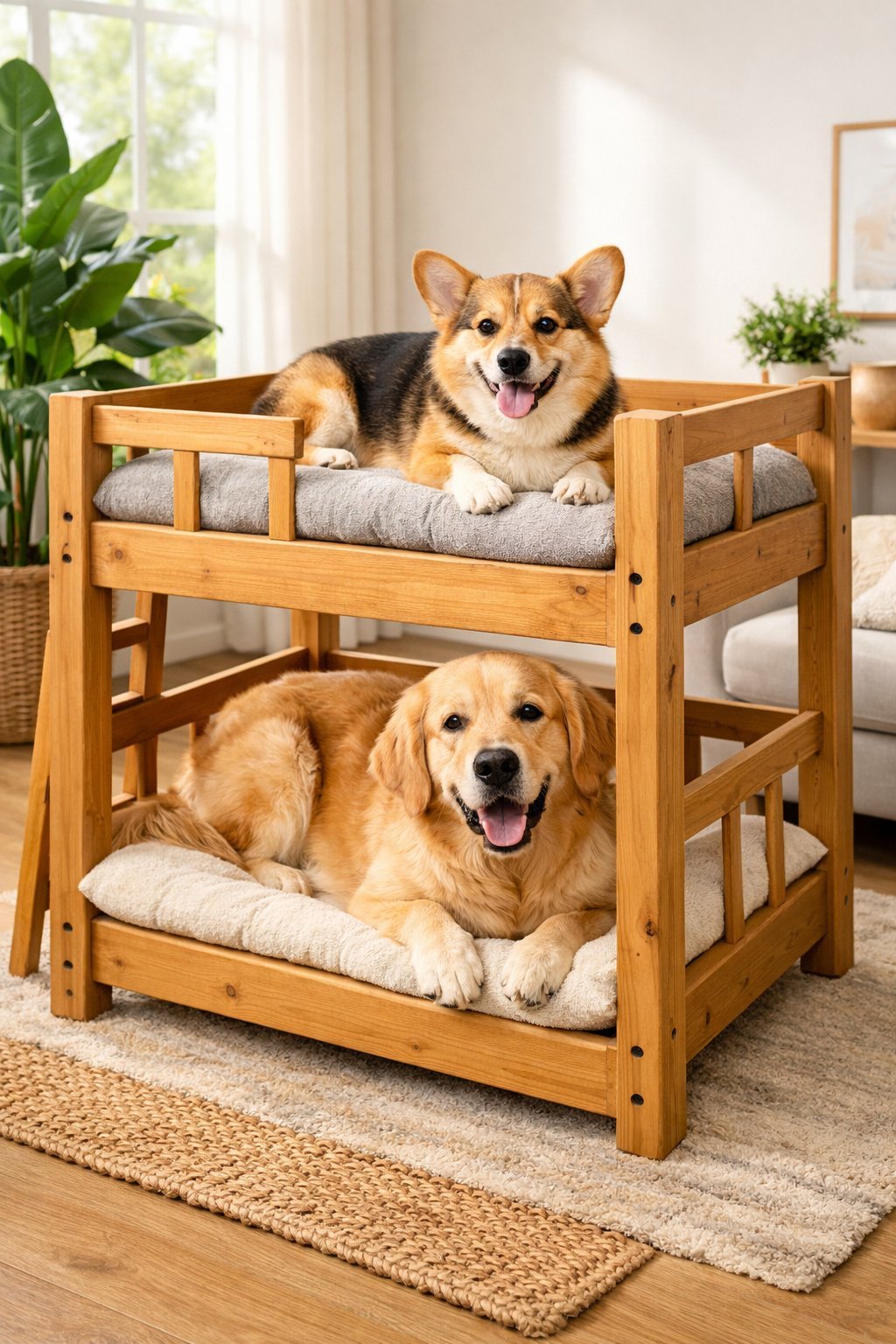
Dog bunk beds save precious floor space while giving each pup their own comfortable sleeping area. They work especially well in smaller homes and help reduce bedtime conflicts between dogs who might otherwise compete for the same spot.
Benefits of Dog Bunk Beds
I’ve found that dog bunk beds optimize space by stacking sleeping areas vertically instead of spreading them across the floor. This design frees up room for toys, food bowls, and walking space in your home.
Each dog gets their own designated spot to sleep. This setup can reduce territorial behavior and bedtime arguments between pets.
Some dogs prefer the top bunk for a better view, while others feel safer on the bottom level. Bunk beds keep multi-dog households tidier than having multiple beds scattered around your rooms.
You contain all the sleeping areas in one compact footprint. Many bunk bed designs include built-in stairs or ramps.
These features make it easier for smaller or older dogs to reach the top bunk safely without jumping.
Ideal Homes for Bunk Bed Setups
I recommend dog bunk beds most for apartments and small homes where floor space matters. Pet owners struggling with limited square footage can reclaim valuable room while still meeting their dogs’ comfort needs.
Studio apartments benefit greatly from vertical sleeping solutions. You can tuck a bunk bed into a corner and still have space for your own furniture.
Shared bedrooms work well with bunk beds too. Some styles sit level with your mattress so your dogs sleep nearby without taking up floor space or crowding your bed.
Homes with dedicated pet rooms can use bunk beds to accommodate more dogs in the same area. This works great if you foster animals or run a small boarding operation from home.
Multi-Dog Household Considerations
I always check that both dogs feel comfortable with the arrangement before committing to a bunk bed. Some dogs love elevated spots while others prefer staying at ground level.
Weight limits matter when you have two dogs sharing a bunk structure. I make sure the frame can safely support both pets, especially if you have larger breeds.
Consider each dog’s age and mobility. Senior dogs or those with joint issues might struggle with climbing to the top bunk, even with stairs or ramps available.
Personality differences play a role too. Dominant dogs might claim the preferred spot, so I watch for any signs of stress or conflict during the adjustment period.
Give each dog equal access and praise them for using their assigned bunk peacefully.
Planning Your DIY Dog Bunk Bed Project
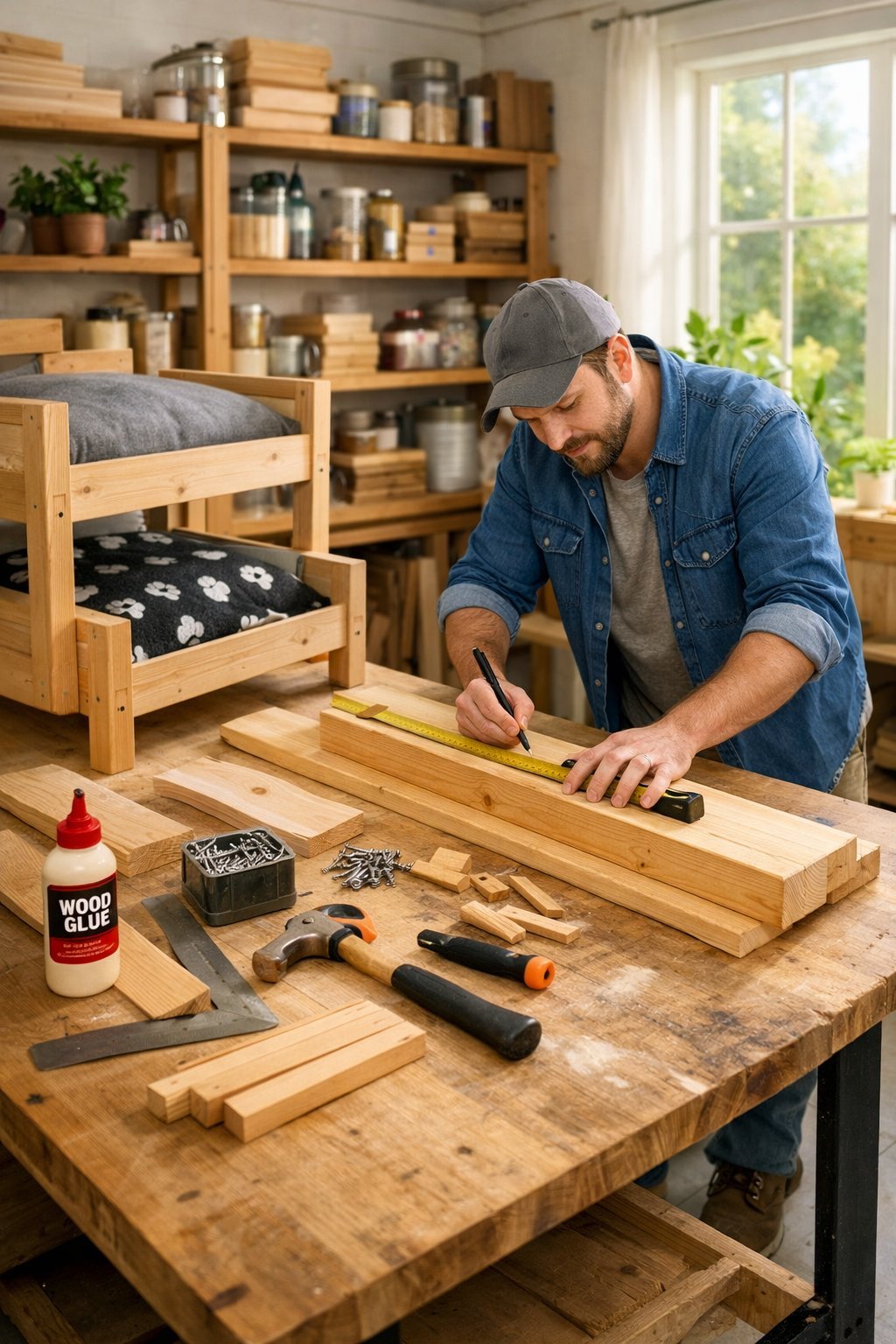
Before I start building, I need to gather the right materials and tools while thinking through the design that works best for my dogs. Safety should guide every decision I make during this planning stage.
Selecting the Right Materials
I recommend using pine or cedar wood for the frame because these materials are sturdy and affordable. Pine is easy to work with and costs less, while cedar naturally resists moisture and insects.
For the bed platforms, I need plywood that’s at least ½ inch thick to support my dog’s weight. I should avoid particle board because it breaks down easily and won’t hold up over time.
My hardware list includes wood screws, corner brackets, and wood glue for extra stability. I’ll need sandpaper or a sander to smooth rough edges that could scratch my dogs.
When building your own dog bunk bed, choosing quality materials ensures the structure lasts for years. For the bedding areas, I can use foam cushions covered with washable fabric.
Machine-washable covers make cleanup much easier when accidents happen.
Essential Tools Checklist
My basic tool list starts with a drill and drill bits for making pilot holes and driving screws. I’ll need a circular saw or miter saw to cut wood pieces to the right size.
A measuring tape and carpenter’s square help me get accurate measurements and square corners. I can’t skip the level because wobbly bunk beds are unsafe for my dogs.
Safety gear matters too. I should wear safety glasses to protect my eyes from wood chips and dust.
Work gloves prevent splinters while I’m handling lumber. Additional helpful tools include clamps to hold pieces together while the glue dries, a pencil for marking cut lines, and sandpaper in different grits.
If I’m new to woodworking, I can find free project plans that list exactly what tools each design requires.
Design and Size Considerations
I need to measure my dogs from nose to tail while they’re lying down, then add 6-8 inches to that measurement. This gives them enough room to stretch out comfortably on each level.
The height between bunks should be at least 6 inches taller than my dog when sitting. Small dogs need about 18-20 inches of clearance, while larger breeds need 24-30 inches.
I should think about where the bunk bed will go in my home. The space needs to fit the bed with extra room for my dogs to climb up and down safely.
Creating a cozy dual-level pet sleeping area works best when I plan the dimensions around my available space. For multiple dogs, I need to make sure the bottom bunk doesn’t feel cramped or dark.
Adding the ladder or stairs on the side keeps the front open and inviting.
Safety Tips for Dog Bunk Beds
I must secure all joints with both wood glue and screws to prevent the structure from wobbling or collapsing. Testing the stability by shaking it firmly before letting my dogs use it gives me peace of mind.
All edges and corners need thorough sanding to remove splinters and sharp points. I should run my hand over every surface to feel for rough spots I might have missed.
The top bunk needs side rails or a lip around the edges so my dog can’t roll off during sleep. Rails should be at least 4-6 inches high depending on my dog’s size.
I need to position the bunk bed away from windows, ceiling fans, and heaters. These can be hazards if my dog jumps from the top level.
When constructing dog bunk beds, proper placement and secure construction prevent injuries. I should also consider my dog’s age and mobility.
Older dogs or those with joint problems might struggle with climbing, so adding a ramp or wide steps helps them access the top bunk safely.
Step-By-Step Guide to Building a Dog Bunk Bed
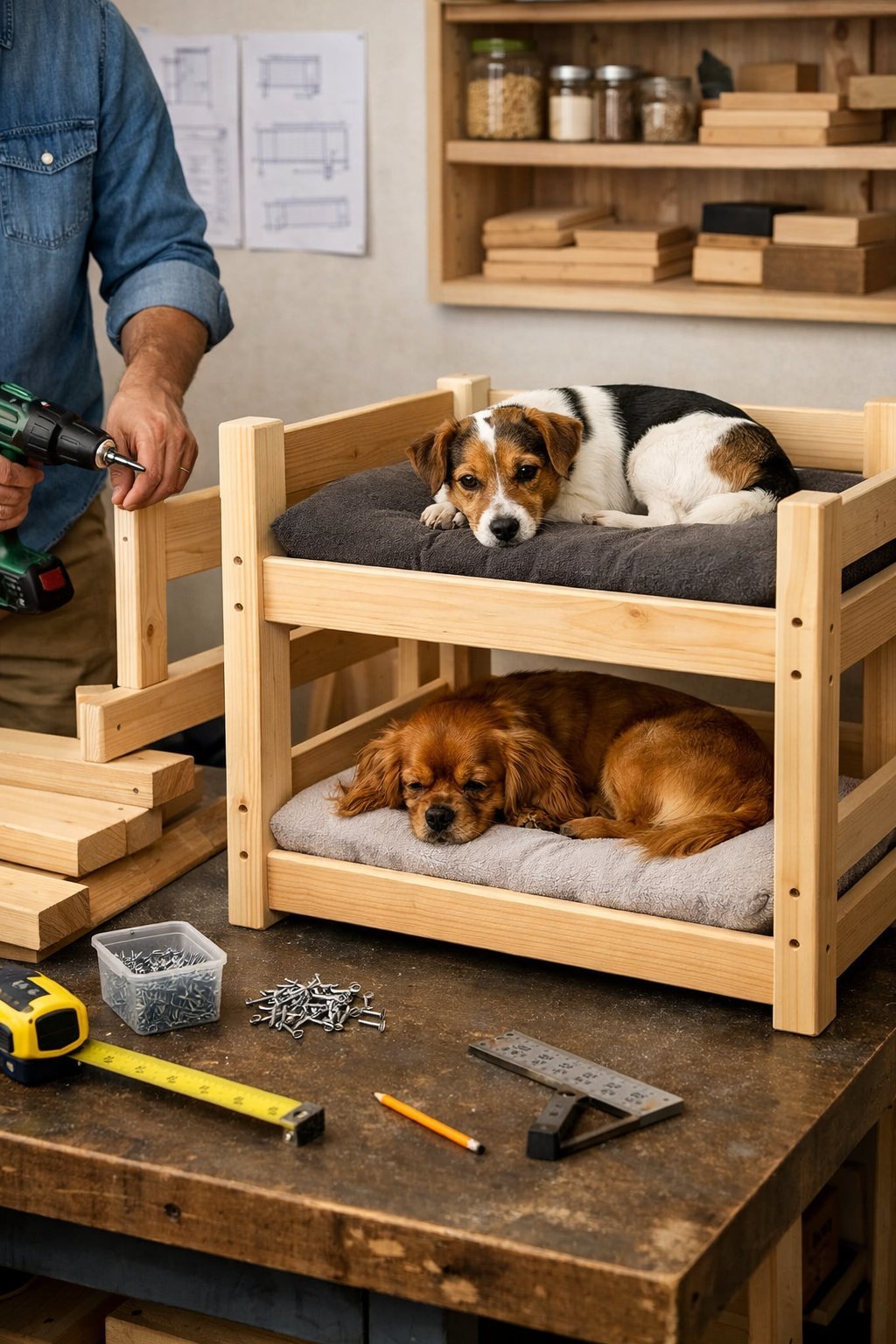
Building a dog bunk bed requires careful planning and execution to ensure your pets have a safe, comfortable place to sleep. I’ll walk you through the essential measurements, assembly process, finishing work, and customization options to create a sturdy bunk bed tailored to your dogs’ needs.
Precise Measurements and Cuts
I always start by measuring my dogs while they’re lying down in their natural sleeping positions. Add 6-8 inches to both length and width to give them room to stretch.
For the frame, I recommend cutting four corner posts at 36-40 inches tall for small to medium dogs. The bottom bunk should sit 4-6 inches off the ground, while the top bunk needs at least 18 inches of clearance above the bottom bed.
Cut two side rails and two end rails for each level, matching your calculated dimensions. I use 2×4 lumber for the frame posts and rails.
For the sleeping platforms, I cut plywood sheets to match the interior frame dimensions. Sand all pieces thoroughly before assembly to prevent splinters that could hurt your dogs.
Essential cuts for a basic bunk bed:
- 4 corner posts (36-40 inches)
- 8 rails total (4 per level)
- 2 plywood platforms
- Optional: 4 support braces for added stability
Assembly Instructions
I begin by assembling the frame using wood screws at each joint for maximum strength. Connect the rails to the corner posts at your marked heights, ensuring everything is level.
Attach the bottom rail frame first, checking with a level before securing. Then add the top rail frame at your predetermined height.
I always pre-drill holes to prevent wood from splitting. Secure the plywood platforms to each frame level using screws every 6-8 inches around the perimeter.
Add center support beams underneath each platform if your dogs weigh more than 30 pounds combined. This prevents sagging over time.
Test the stability by applying pressure to each level. The structure shouldn’t wobble or feel loose at any point.
Finishing Touches and Paint
I apply pet-safe wood stain or paint to protect the wood and match my home decor. Let each coat dry completely for 24-48 hours before allowing dogs near it.
Sand any rough edges one final time after assembly. Add non-slip grip tape or rubber pads to the top bunk entrance if you’re adding stairs or a ramp.
I place memory foam mattresses cut to size on each platform for comfort. Consider adding raised edges or small railings around the top bunk perimeter.
This keeps restless sleepers from rolling off during the night.
Customizing for Special Needs
I modify the design based on my dogs’ ages and abilities. Senior dogs or those with joint issues need a ramp instead of expecting them to jump to the top bunk.
Build the ramp at a gentle 30-35 degree angle. For anxious dogs, I add partial sides or curtains to create a den-like feeling.
Dogs with mobility challenges might need the bottom bunk entrance widened or positioned at ground level without any lip to step over. I also adjust bunk spacing based on dog size.
Large breeds need the bottom platform at least 8-10 inches high with 24+ inches between bunks. Small dogs do fine with tighter spacing and lower overall height for easier access.
Making Dog Bunk Beds Comfortable and Safe
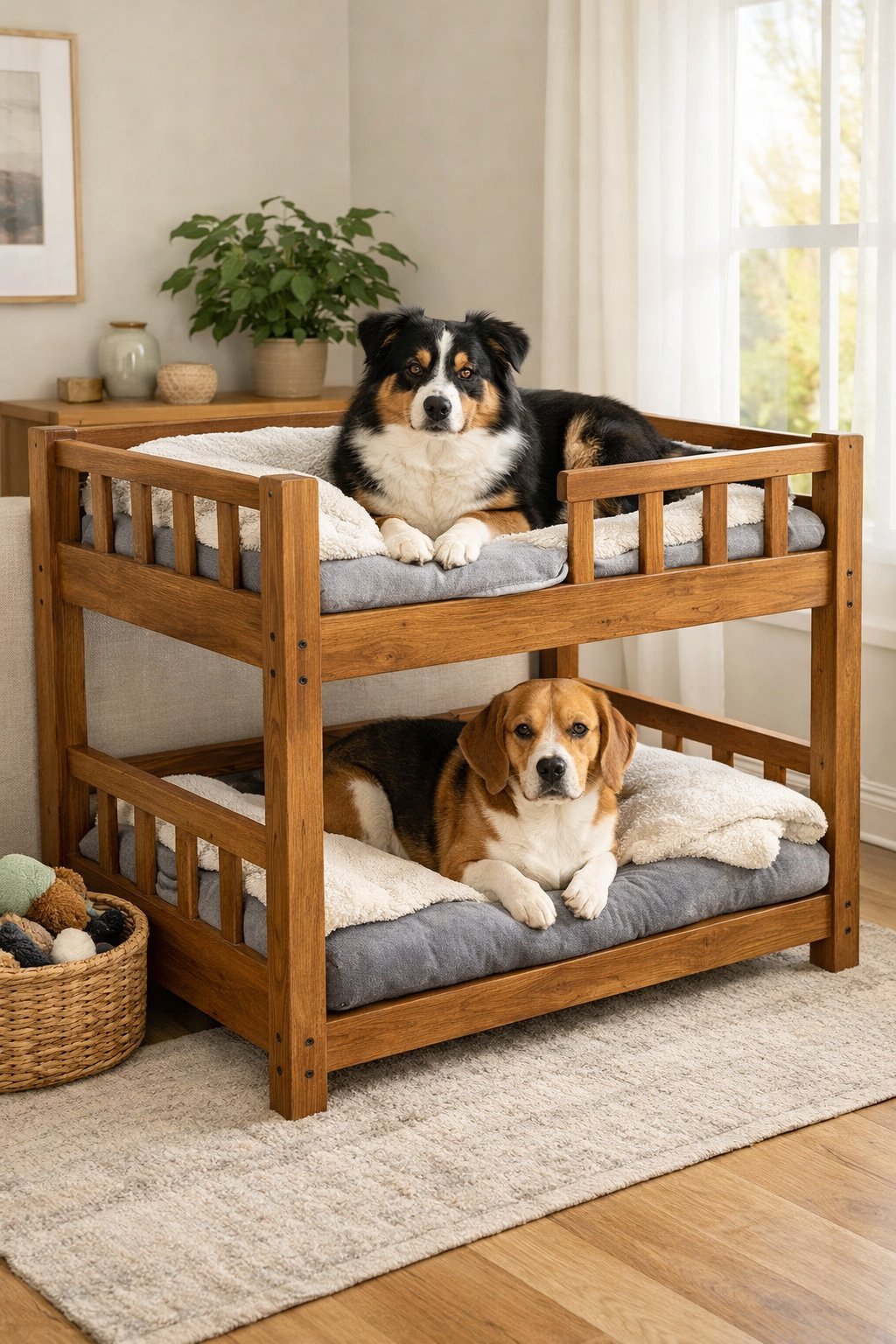
A well-built bunk bed needs proper bedding, safe access points, solid construction, and materials that are easy to keep clean. These elements work together to create a sleeping space your dogs will actually want to use.
Choosing Mattresses and Cushions
Always measure each bunk level before buying bedding. The mattress should fit snugly without hanging over the edges or leaving large gaps.
Memory foam dog beds are great for older dogs with joint pain. They provide support and cushioning that regular stuffing can’t match.
For younger, more active dogs, standard poly-fill cushions hold up better to scratching and digging. The thickness matters too.
I use at least 3-4 inches of padding on each level to keep my dogs comfortable on hard wood surfaces. Waterproof covers are essential, especially for puppies or senior dogs who might have accidents.
Look for removable, machine-washable covers. This makes cleaning much simpler when dealing with dirt, drool, or shed fur.
I keep extra covers on hand so I can swap them out during wash days.
Adding Ramps and Stairs
Dogs need a safe way to reach the upper bunk without jumping. Ramps work better for small dogs, while stairs suit medium to large breeds.
When building DIY dog bunk beds, I position ramps at a gentle angle of about 30 degrees. Steeper angles make climbing difficult and unsafe.
The ramp surface needs traction, so I attach carpet strips or add non-slip treads. For stairs, I build each step 4-6 inches high depending on my dog’s size.
Smaller dogs need shorter steps. The treads should be wide enough for all four paws to fit comfortably.
I always secure ramps and stairs to the frame with screws or brackets. Wobbly access points can cause injuries or make dogs afraid to use the bunk bed.
Enhancing Stability
The bunk bed frame must stay firm and not wobble when dogs climb on it. I test stability by pushing on the corners and top level with my full weight before letting my dogs use it.
Cross-bracing between the legs adds significant strength. I attach diagonal support beams on the back and sides of the frame.
Wood joints need proper reinforcement. I use wood glue plus screws at every connection point.
Corner brackets add extra support where the top bunk attaches to the posts. The base needs weight distribution too.
I make sure the bottom bunk sits flat on the floor with all four corners touching. Uneven floors require adjustable feet or shims to prevent tipping.
Easy-to-Clean Features
I design my bunk beds with materials that are simple to maintain. Sealed or painted wood surfaces wipe down quickly and don’t absorb odors like raw wood does.
Elevated bottom bunks make vacuuming underneath easier. I leave at least 4-6 inches of clearance from the floor.
This prevents dust and fur from building up in hard-to-reach spaces. Removable bedding platforms speed up deep cleaning.
I create bases that lift out so I can hose them down or scrub them thoroughly outside. This beats trying to clean bedding while it’s still installed.
Avoid fabric-covered structural elements. Dogs scratch, chew, and soil fabric parts that can’t be removed.
I stick to bare wood, metal, or plastic for the frame itself and save fabric only for removable cushions.
Decorating and Personalizing Your Dog’s Bunk Bed
Adding paint colors, custom name tags, and themed decorations transforms a basic bunk bed into a special space your dogs will love. Personal touches make the bed match your home’s style while giving each dog their own identity.
Creative Painting Ideas
Always use pet-safe, non-toxic paints when decorating dog furniture. Water-based acrylic paints work well and dry quickly without harmful fumes.
Bright colors like blue, green, or yellow can make the bunk bed a fun focal point in any room. Painting the top and bottom bunks different colors helps each dog recognize their own space.
You can also add patterns like polka dots, stripes, or paw prints for extra personality. Staining the wood creates a natural look that blends with existing furniture.
A clear coat sealant protects your paint job from scratches and makes cleaning easier. Let the bed air out for 24 hours after painting before letting your dogs use it.
Name Tags and Accessories
Personalized name tags show which bunk belongs to each dog. I attach wooden letters, metal plaques, or painted signs to the bed frame using screws or strong adhesive.
Removable cushion covers in different colors or patterns help distinguish between bunks. Adding small storage baskets on the side holds toys, treats, or grooming supplies within easy reach.
Popular accessories include:
- Clip-on reading lights for nighttime visibility
- Small water bowls attached to the frame
- Hanging toy organizers
- Decorative bunting or garland
Themed Decor Inspirations
Matching the bunk bed to your room’s theme creates a cohesive look. Farmhouse-style beds with rustic wood finishes and burlap bedding fit perfectly in country homes.
Modern minimalist themes work well with clean lines, neutral colors, and simple geometric shapes. Beach-themed beds use blue and white colors with rope details and nautical accessories.
Sports fans paint beds in their favorite team colors and add related decals. Holiday decorations can be swapped seasonally.
Hang small wreaths, banners, or themed pillows to celebrate different times of year without permanent changes.
Frequently Asked Questions
What steps should I follow to build a DIY bunk bed for my dog?
Start by measuring your dogs to figure out how much space they need. Each dog should have enough room to stretch out and turn around comfortably.
Gather your materials like wood boards, screws, sandpaper, and a saw. Pine or plywood work well for most builds.
Cut the wood pieces according to your measurements. You’ll need four corner posts, side rails, and platforms for both the top and bottom beds.
Assemble the frame by attaching the side rails to the corner posts. Make sure everything is square and level before drilling in the screws.
Attach the plywood platforms to create the sleeping surfaces. Sand down any rough edges to protect your dogs from splinters.
Add bedding or cushions to make the beds comfortable. Following a step-by-step guide for building dog bunk beds can help you avoid common mistakes.
How can I ensure the safety of my dogs when using a bunk bed?
Sand all wooden surfaces smooth before your dogs use the bed. Splinters can hurt their paws or skin.
Make sure the structure is sturdy by testing it with weight before letting your dogs on it. The bed shouldn’t wobble or feel unstable.
Install guardrails on the top bunk to prevent your dog from rolling off while sleeping. The rails should be tall enough to keep them safe but low enough so they can still get on and off.
Check all screws and connections regularly to make sure nothing has come loose. Tightening hardware every few months keeps the bed safe.
Never place the bunk bed near windows or furniture that could cause injury if your dog jumps. Keeping the area clear reduces accident risks.
Can large dogs comfortably use bunk beds, and how do I accommodate their size?
Large dogs can definitely use bunk beds if you build them strong enough. Use thicker wood and more support beams than you would for small dogs.
Make the sleeping platforms bigger to give your large dog room to move. A 40-pound dog needs more space than a 10-pound dog.
Reinforce the corner posts and add extra support underneath each platform. This prevents sagging or breaking under the weight.
Make sure the bottom bunk has enough clearance so your large dog doesn’t feel cramped. At least 18 to 24 inches of height works well for most big breeds.
What are the best materials to use for a durable and comfortable DIY dog bunk bed?
Pine or cedar wood are great for the frame because they’re strong and affordable. Cedar also naturally resists insects and odors.
Plywood works great for the sleeping platforms since it’s smooth and easy to clean. Use at least 3/4-inch thick plywood for durability.
Avoid using treated wood that contains chemicals. These treatments can be harmful if your dogs chew on the wood.
For bedding, use washable cushions or orthopedic foam pads. Memory foam helps older dogs with joint issues stay comfortable.
Choose stainless steel screws instead of nails because they hold better and won’t rust. Rust can stain bedding and weaken the structure over time.
How do I create a bunk bed with stairs for my dog to easily access the top bed?
Build stairs by creating a separate frame with steps at a comfortable height for your dog. Each step should be about 4 to 6 inches high for small to medium dogs.
Make the steps wide enough for your dog’s paws. A width of at least 12 inches gives them stable footing.
Attach the stairs securely to the side of the bunk bed frame. The stairs shouldn’t move or shift when your dog climbs them.
Cover the steps with carpet or rubber mats to prevent slipping. Traction is important for your dog’s confidence and safety.
Position the stairs at a gentle angle rather than straight up. A gradual incline is easier for dogs to climb, especially older ones or those with short legs.
What design considerations should I keep in mind when creating a co-sleeping space for my pet?
I think about my dogs’ personalities before designing the bunk bed. Some dogs like to sleep close together, while others prefer personal space.
I make sure each sleeping area is big enough so my dogs don’t feel crowded. Cramped spaces can lead to stress or fighting between pets.
I consider the room layout and where the bunk bed will fit. The bed should blend with my furniture, while giving my dogs easy access to water and their favorite spots.
I choose colors and finishes that match my home decor. A dog bunk bed can add charm to my home while being functional.
I add small touches like name tags or different colored bedding for each dog. This helps them identify their own space and feel more at home.
