
Dog Chews Homemade: Easy Recipes for Durable Treats That Entertain Your Pup All Day

Dog Chews Homemade – Dogs love to chew, but store-bought treats can get pricey fast. If your pup goes through chews quickly or you want to know exactly what’s in their snacks, making your own is a smart choice.

Homemade dog chews use simple ingredients like peanut butter, sweet potato, and oats. These treats keep dogs busy for hours and save you money.
Making long-lasting chews at home is easier than you might think. You can customize them based on your dog’s preferences and any food sensitivities.
In this guide, I’ll show you how to make durable chews that stand up to determined chewers. You’ll find out which ingredients work best, get easy recipes, and learn how to make your homemade treats last.
Key Takeaways
- Homemade dog chews cost less and let you control the ingredients
- Simple ingredients like sweet potatoes, peanut butter, and whole wheat flour keep dogs occupied
- Proper storage and supervision help your homemade chews stay fresh and safe
Why Choose Homemade Dog Chews?
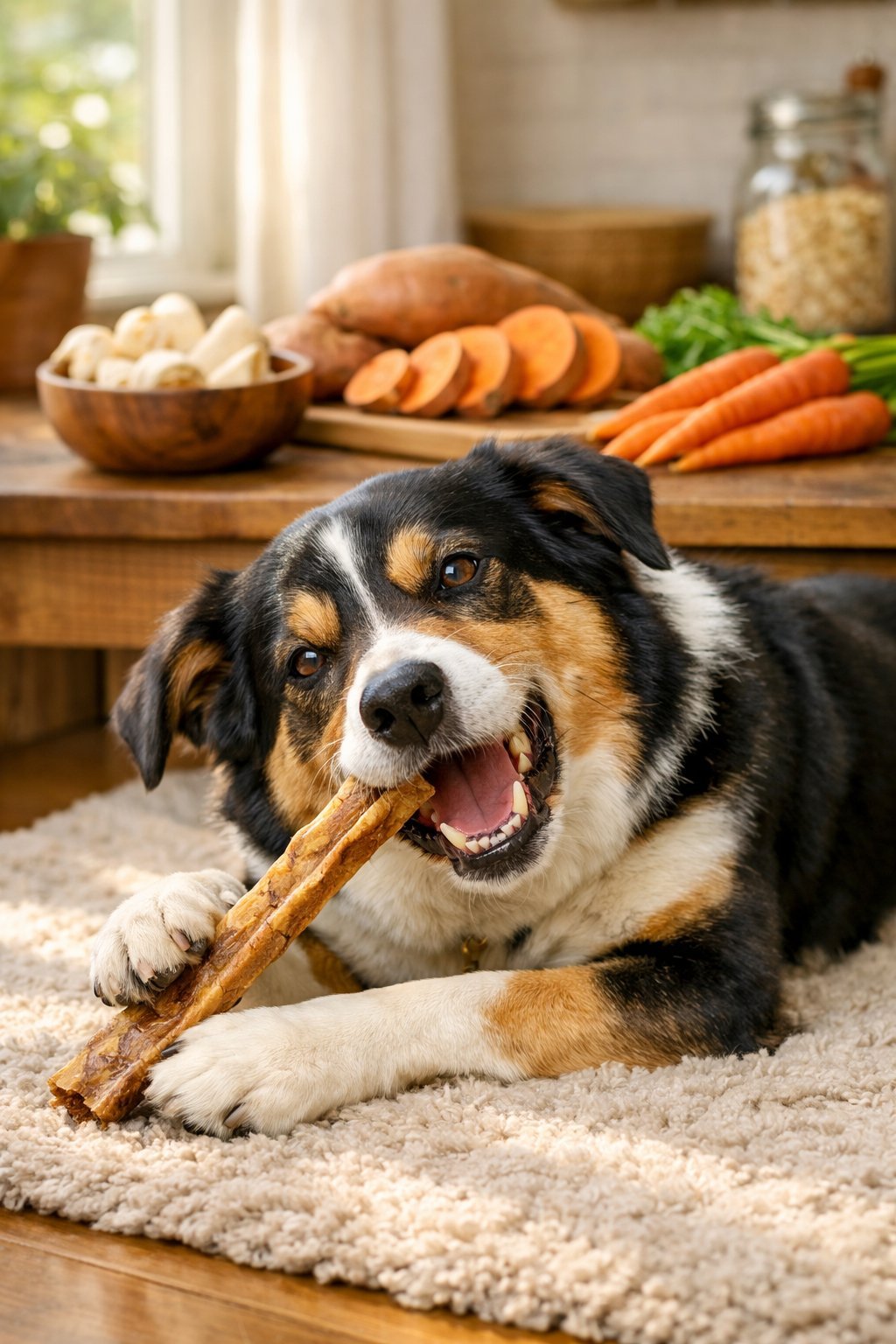
Making dog chews at home gives you full control over what your dog eats. It saves money and lets you customize treats to fit your pup’s needs.
Health Benefits of Homemade Chews
When I make chews at home, I know exactly what my dog is eating. Store-bought chews often have preservatives, artificial colors, and fillers.
Homemade chews let me use whole food ingredients like sweet potato, chicken, and pumpkin. These natural ingredients provide vitamins and minerals that support my dog’s health.
Chewing on homemade treats can also help clean teeth and massage gums. I can adjust the hardness of the chews based on my dog’s age and dental condition.
Softer chews are great for puppies and seniors, while harder chews are perfect for power chewers.
Cost Savings Compared to Store-Bought
Making chews at home costs way less than buying premium treats from pet stores. A bag of store-bought long-lasting chews can be $15 to $30 and might only last a week or two.
When I make inexpensive, homemade dog chews, I spend just a fraction of that on basic ingredients. A month’s worth of chews can cost under $10 using things like flour, peanut butter, and eggs.
The savings add up, especially if you have a dog that chews a lot. Buying ingredients in bulk saves even more.
Controlling Ingredients and Allergens
My dog has food sensitivities, so I need to watch what she eats. Making long-lasting dog treats at home means I can avoid ingredients that trigger her allergies.
I skip common allergens like corn, soy, and wheat if my dog reacts to them. I can also leave out any ingredients my dog doesn’t tolerate well, like certain proteins or grains.
This way, I never have to worry about mystery ingredients. Each chew is made in my kitchen with ingredients I trust.
Best Ingredients for Long-Lasting Dog Chews
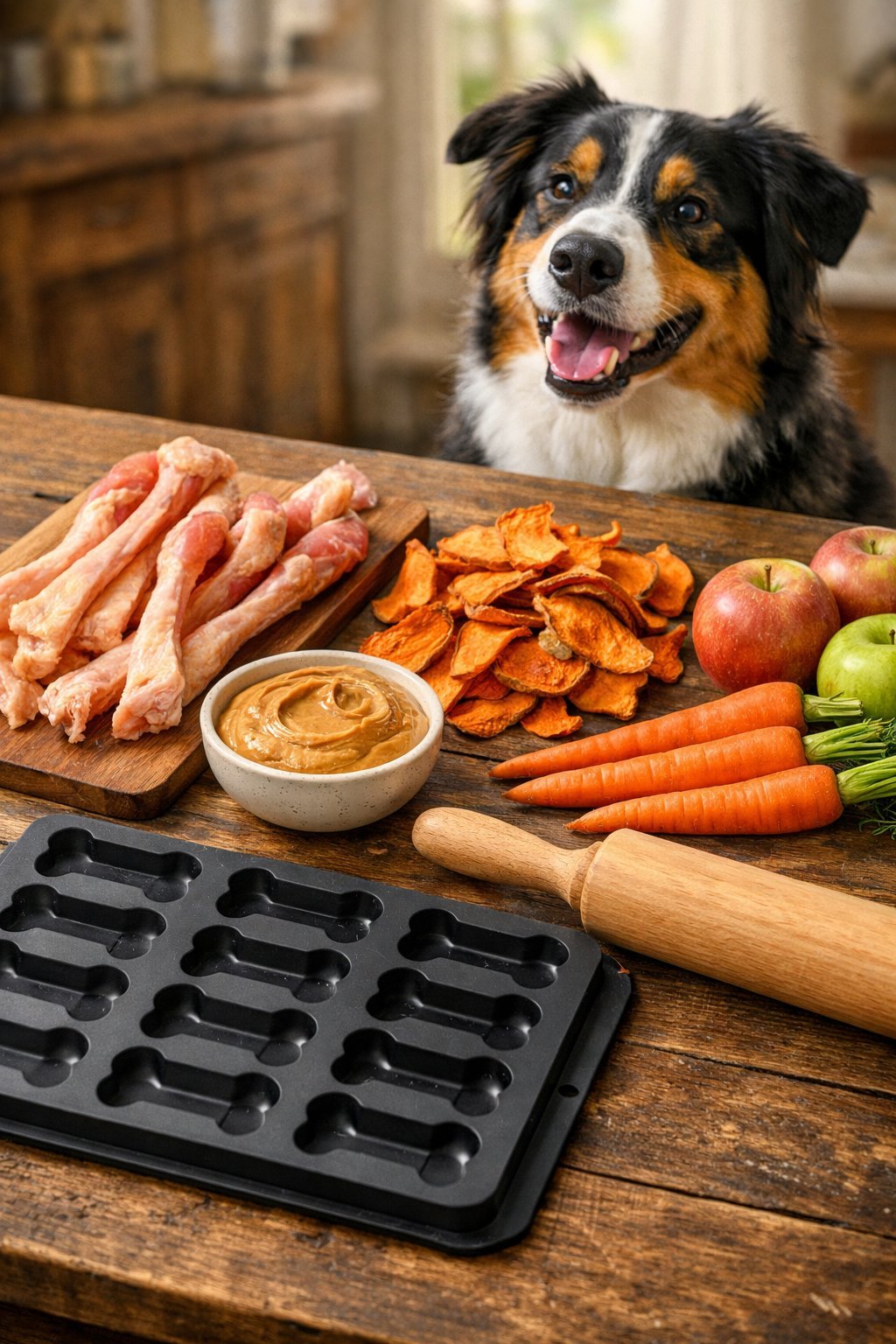
The right ingredients make all the difference when creating chews that actually last. I focus on proteins that harden well, veggies that add texture, and natural flavors that keep my dog interested.
Safe Proteins for Chew Recipes
Lean proteins work best for homemade chews because they dry out and get firm. I use chicken breast, turkey, and beef liver since they’re affordable and dogs love them.
Sweet potato can be combined with proteins to add bulk and help chews hold their shape. Baking these together at low temperatures for several hours makes them tough enough for aggressive chewers.
Peanut butter is another protein source I use, but I always check that it doesn’t contain xylitol. I mix peanut butter with whole wheat flour to make dough that bakes into long-lasting treats.
Eggs help bind ingredients and add extra protein. I usually use one or two eggs per batch.
Vegetables and Fruits for Chews
Carrots are my go-to veggie for homemade chews. I slice them thick and dehydrate them, or blend them into dough for added nutrition.
Pumpkin puree adds moisture and helps with digestion. I always use pure pumpkin, not pie filling.
Zucchini is great because it’s low in calories and adds volume. I slice it lengthwise and dehydrate it for simple chews.
Apples (without seeds) make sweet additions to chew recipes. I grate them into dough or slice them thin for dehydrating.
Natural Flavor Boosters
Bone broth is my favorite flavor booster. I make my own by simmering bones or buy low-sodium versions without onions or garlic.
Cinnamon in small amounts adds flavor dogs enjoy. I use just a quarter teaspoon per batch.
Parsley freshens breath and adds flavor. I chop fresh parsley and mix it into dough recipes.
Coconut oil helps ingredients stick together and makes chews more appealing. One or two tablespoons per batch does the trick.
Easy Homemade Dog Chew Recipes
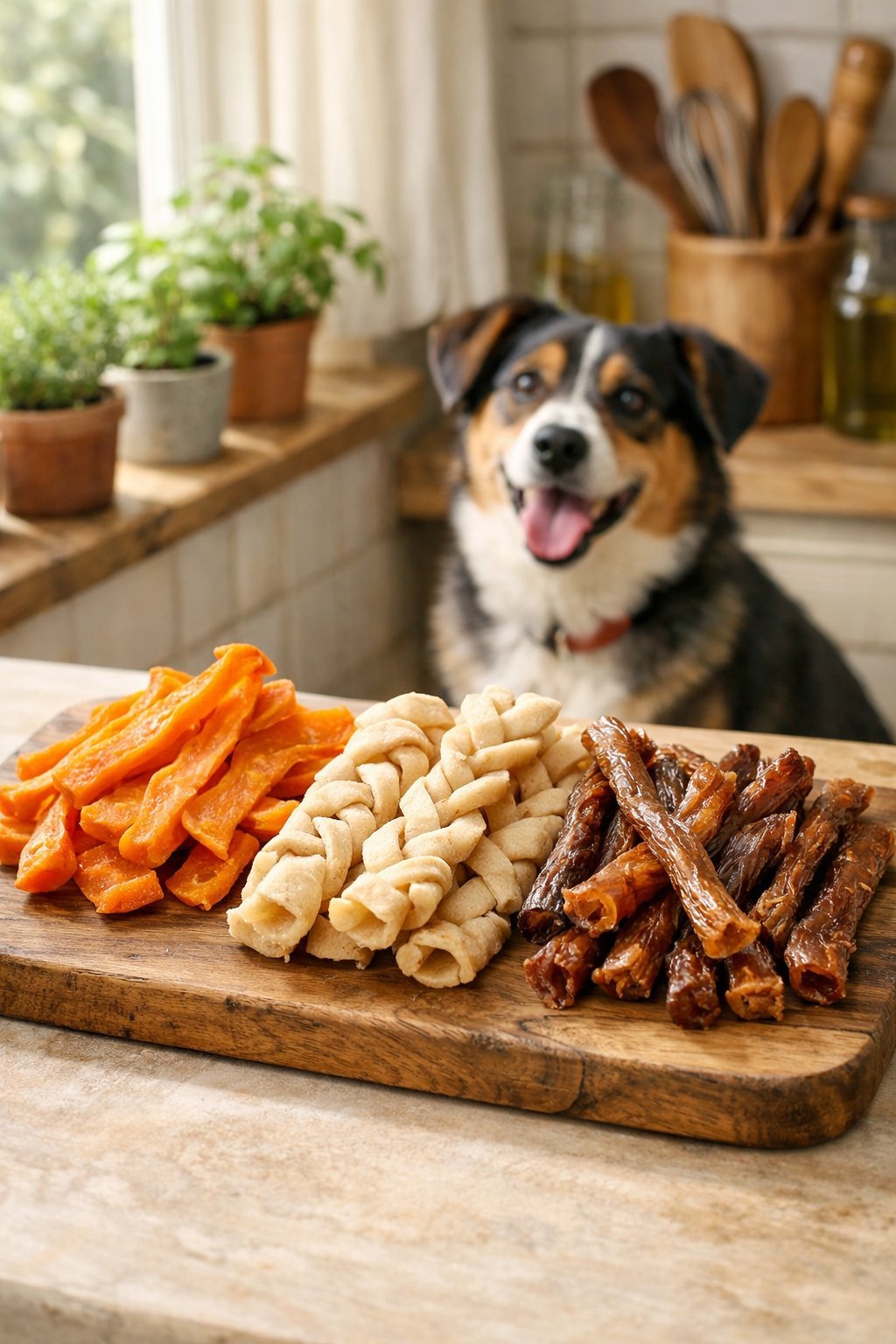
Making your own dog chews at home is easier than you might think. Here are four recipes that use basic ingredients and simple methods to keep your dog busy.
Baked Sweet Potato Chews
Sweet potatoes are one of my favorite ingredients for DIY dog chews. I wash one or two large sweet potatoes and slice them lengthwise into strips about 1/4 to 1/2 inch thick.
The thicker the slices, the longer they’ll last. I place the slices on a parchment-lined baking sheet and bake at 250°F for about 3 hours, flipping halfway through.
You can also dehydrate them for an even harder chew. When they’re done, they should be dry and leathery.
Let them cool completely before giving them to your dog. Store extras in an airtight container for up to two weeks.
Dehydrated Chicken Jerky
I buy boneless, skinless chicken breasts when they’re on sale to make this budget-friendly chew. I slice the chicken into thin strips, about 1/4 inch thick, cutting against the grain.
If you have a dehydrator, set it to 165°F and dry the strips for 6-8 hours. If not, use your oven at the lowest temperature with the door slightly open for 2-3 hours.
The jerky is ready when it bends but doesn’t break easily. Always make sure the chicken reaches 165°F internally.
These treats last about a week in the fridge or up to a month in the freezer.
Beef Tendon Chews
Beef tendons are tough and dogs love to gnaw on them. I buy raw beef tendons from my local butcher or pet supply store.
They need to be cleaned and then baked or dehydrated to make them safe and long-lasting. I bake them at 200°F for 4-6 hours until they’re completely dried and hard.
If the tendons are thick, they might need longer. These chews are great for aggressive chewers and can last several hours or even multiple sessions.
Store them in a cool, dry place for several weeks.
Peanut Butter Hard Biscuits
These long-lasting treats combine peanut butter with whole wheat flour for rock-hard biscuits. I mix 2 cups whole wheat flour, 1/2 cup natural peanut butter (no xylitol), and about 3/4 cup water to make a stiff dough.
Important: Always check that your peanut butter doesn’t contain xylitol.
I roll the dough out about 1/2 inch thick and cut it into shapes. Bake at 300°F for 45-60 minutes until very hard.
For extra hardness, I turn off the oven and leave them inside as it cools overnight. Store in an airtight container for 2-3 weeks.
Tips for Making Chews Last Longer
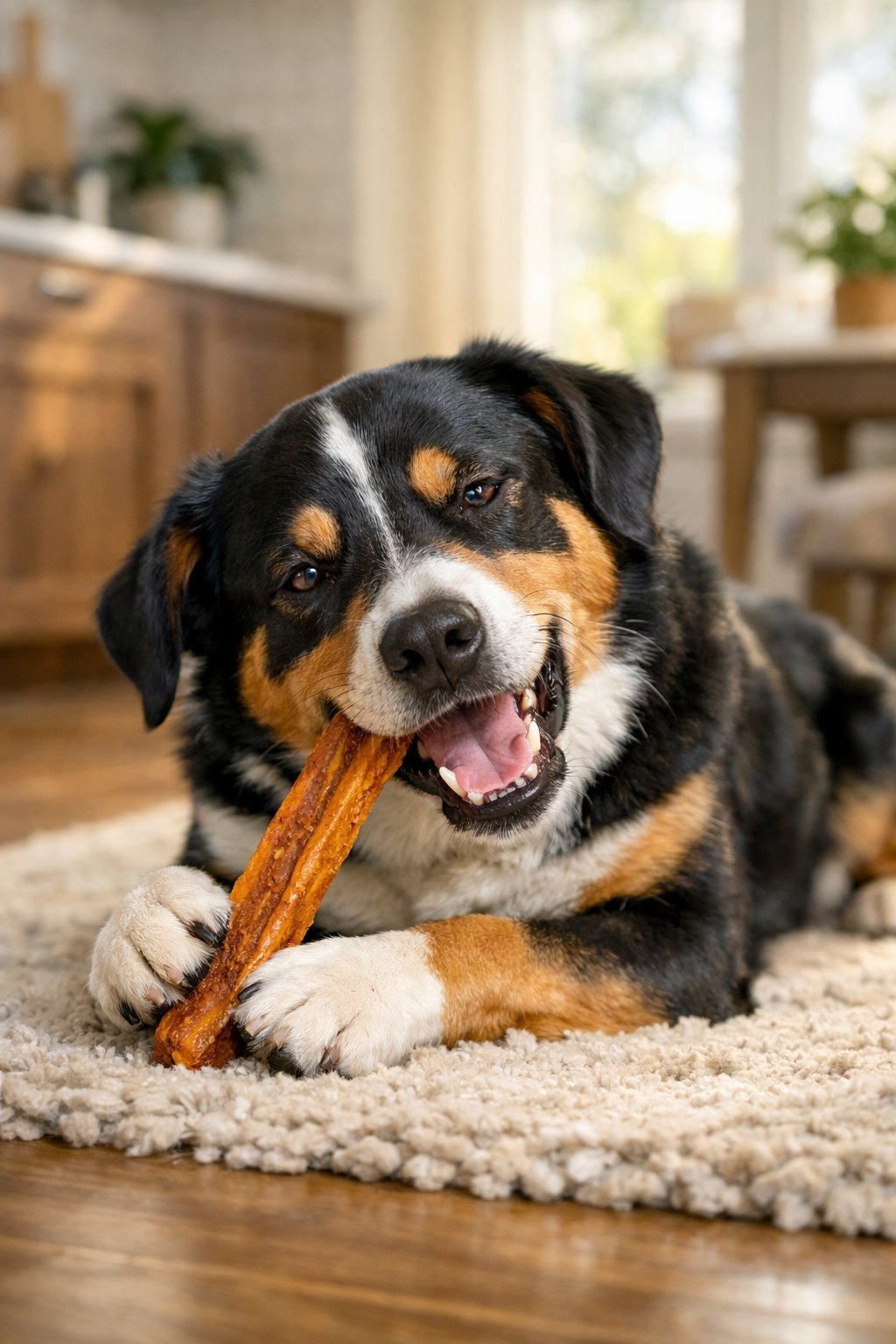
A few simple tricks can turn a quick snack into hours of entertainment. Size, prep method, and storage all play a part in how long your homemade chews last.
Proper Sizing for Your Dog
I always match the chew size to my dog’s mouth and chewing style. A chew that’s too small disappears fast, while one that’s too big can frustrate your pup or be a choking risk.
For small dogs under 20 pounds, I make chews about 2-3 inches long and half an inch thick. Medium dogs (20-50 pounds) get chews that are 4-5 inches long and three-quarters of an inch thick.
Large dogs over 50 pounds can handle chews 6-8 inches long and a full inch thick. Aggressive chewers need thicker, denser chews no matter their size.
Making chews with your dog’s dental health in mind helps create the right texture. Dogs with sensitive teeth do better with softer chews, while power chewers need rock-hard treats.
Dehydration Versus Baking Methods
Dehydrating creates the longest-lasting chews I’ve ever made. My dehydrator runs at 160-165°F for 8-12 hours, removing almost all moisture from the treats.
This makes them incredibly hard and shelf-stable. Baking works faster but produces softer chews.
I bake at 250°F for 2-4 hours, which creates treats that last a few hours rather than days. The lower temperature prevents burning while still removing enough moisture to extend their life.
Dehydrated chews last much longer than baked ones during chewing sessions. They’re also less likely to crumble or break apart.
If you don’t own a dehydrator, you can bake treats at the lowest oven setting (usually 170-200°F) for 6-8 hours with the door slightly open.
Storage and Shelf Life
I store my homemade chews in airtight containers to keep them fresh. Glass jars or plastic containers with tight-fitting lids work perfectly.
Room temperature storage works for fully dehydrated chews. I refrigerate softer baked treats.
Dehydrated chews last 2-3 weeks at room temperature and up to 6 weeks in the refrigerator. Baked chews stay fresh for 1 week in the fridge or 3 months in the freezer.
I always check for mold, off smells, or moisture before giving any stored chew to my dog. Label your containers with the date you made the chews.
This helps you track freshness and rotate your stock. I freeze extras in individual portions so I can thaw them as needed without exposing the whole batch to temperature changes.
Safety Tips and Chewing Supervision
Homemade chews need careful monitoring to keep your dog safe while they enjoy their treat. I always watch for choking risks, avoid certain materials that can harm dogs, and know when to take a chew away.
Preventing Choking Hazards
I make sure to choose the right size chew for my dog. A chew should be larger than my dog’s mouth so they can’t swallow it whole.
Small pieces that break off can get stuck in my dog’s throat. I check chews regularly for cracks or small chunks that might come loose.
I never leave my dog alone with a new chew until I know how they’ll handle it. Some dogs are gentle chewers while others attack treats aggressively.
My approach changes based on my dog’s chewing style. For powerful chewers, I pick harder recipes that won’t break apart easily.
I throw away any chew that becomes small enough to fit entirely in my dog’s mouth. The general rule I follow is that if a chew can pass through a toilet paper roll, it’s too small and needs to go.
Recognizing Chew Materials to Avoid
I never use cooked bones in homemade dog chews because they splinter and can puncture my dog’s digestive system. Raw bones are safer but still require supervision.
Certain ingredients are toxic to dogs and must stay out of recipes. I avoid chocolate, xylitol, grapes, raisins, onions, and garlic completely.
Hard materials like nylon, PVC, or treated wood don’t belong in homemade chews. These can damage teeth or cause blockages if swallowed.
I also skip rawhide alternatives that use chemicals or bleaches in processing. Some dogs have allergies to common ingredients like wheat, chicken, or peanuts.
I watch for itching, vomiting, or diarrhea after introducing new chew recipes. If my dog shows these signs, I stop using that recipe immediately.
Signs to Remove a Chew
I take away a chew when it becomes smaller than my dog’s mouth or develops sharp edges. Jagged pieces can cut gums or get lodged in the throat.
If my dog starts gulping instead of chewing, that’s my signal to remove the treat. Gulping means the piece is too small or my dog is trying to swallow it whole.
I watch for excessive drooling, pawing at the mouth, or gagging. These behaviors tell me something is wrong and the chew needs to go right away.
When a chew gets slimy or starts to fall apart, I throw it out. Soft, mushy pieces break off easily and create choking risks.
I also remove any chew that my dog has been working on for more than 30 minutes in one session to prevent stomach upset from overeating.
Frequently Asked Questions
Making your own dog chews at home can save money while giving you control over what goes into your pup’s treats. Many pet owners have questions about ingredients, preparation methods, and safety when creating homemade chews.
What are some vet-approved recipes for homemade dog chews?
I’ve found that vet-approved DIY dog chew recipes typically focus on simple, natural ingredients that support dental health. Sweet potato slices baked at low heat until they’re dehydrated make excellent chews that vets often recommend.
Peanut butter and pumpkin combinations are another popular choice among veterinarians. These ingredients provide nutritional benefits while creating a texture that’s tough enough to keep dogs busy.
I always recommend checking with your own vet before introducing new treats. They can advise based on your dog’s specific health needs and any allergies.
How can I make no-bake dog treats with minimal ingredients?
No-bake treats are perfect when I don’t want to turn on the oven. I mix peanut butter with rolled oats and a mashed banana, then roll the mixture into balls and refrigerate them.
Another easy option is freezing plain Greek yogurt in ice cube trays. I sometimes add a bit of pureed pumpkin or blueberries for extra flavor.
These treats won’t last as long as baked versions, but they’re quick to make. I store them in the fridge and they typically stay fresh for about five days.
What natural ingredients work best for long-lasting dog chews?
Sweet potatoes are one of my go-to ingredients for longer-lasting homemade dog chews. When sliced thick and dehydrated, they become tough and chewy.
Carrots are another excellent choice that many dogs love. I cut them into thick sticks and either serve them raw or lightly bake them.
For the toughest chews, I use whole wheat flour and oats as a base. These ingredients create a dense texture when baked at low temperatures for extended periods, making treats that can withstand serious chewing.
Are there any RSPCA-recommended dog biscuit recipes that are easy to make at home?
While I don’t have access to specific RSPCA-endorsed recipes, animal welfare organizations generally support homemade treats made with wholesome ingredients. Simple biscuits using whole wheat flour, eggs, and water are widely accepted as safe.
I make basic dog biscuits by mixing two cups of whole wheat flour with one egg and half a cup of water. I roll out the dough, cut it into shapes, and bake at 350°F for about 30 minutes.
Adding pureed vegetables like carrots or pumpkin boosts nutrition without compromising safety. These simple recipes align with animal welfare guidelines about avoiding artificial additives.
What homemade dog treats are safe for aggressive chewers?
Dogs with strong jaws need treats that won’t break into dangerous chunks. I make extra-hard biscuits by baking them twice, similar to making biscotti.
Dehydrated sweet potato chews work well because they’re tough but flexible. They won’t splinter like some harder materials might.
I avoid ingredients that could break teeth, like hard-frozen treats or overly dense baked goods. Homemade treats for aggressive chewers should be tough enough to last but safe enough to digest if swallowed in larger pieces.
Can you suggest simple three-ingredient recipes for healthy dog treats?
My easiest three-ingredient recipe uses peanut butter, oats, and an egg. I mix them together, form small balls, and bake at 350°F for 15 minutes.
Another favorite combines mashed banana, whole wheat flour, and water. This creates a simple dough I can roll out and cut into shapes.
For a no-bake option, I blend plain yogurt with pureed pumpkin and a small amount of honey. Then I freeze the mixture in silicone molds.