10 Dog Grooming Rooms at Home That Actually Work: Simple Ideas for Every Budget

Dog Grooming Rooms At Home – Grooming your dog at home can save you money and stress. Doing it in your bathroom or backyard often creates a mess.
A dedicated dog grooming room with the right setup makes washing, brushing, and trimming your pet easier while keeping fur and water contained in one space. I’ve seen how the right grooming area can turn a dreaded chore into a smooth routine.
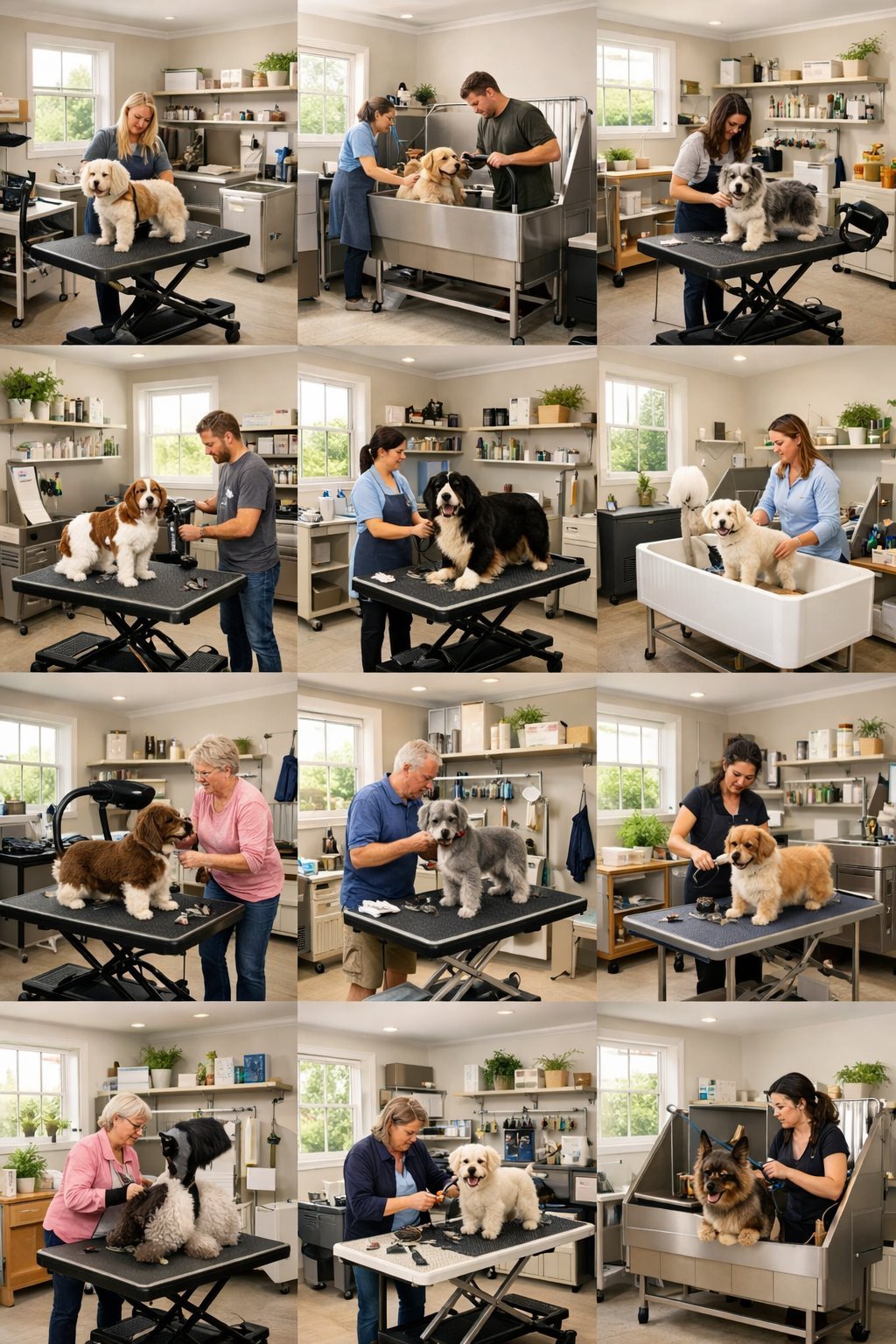
The best home grooming rooms don’t require huge budgets or major renovations. Simple additions like a raised tub, non-slip flooring, and good storage can make a big difference.
Whether you have a spare room, a corner of your laundry area, or even a section of your garage, you can create a functional grooming space that works for both you and your dog.
I’ve gathered ten real examples of dog grooming rooms that owners actually use and love. These setups range from simple budget-friendly stations to more elaborate spaces, but they all share features that make grooming safer and more comfortable.
Key Takeaways
- A dedicated grooming space keeps mess contained and makes the process easier for you and your dog.
- You don’t need a large room or expensive renovations to create an effective grooming station at home.
- The right features like non-slip floors, proper lighting, and organized storage make grooming faster and safer.
Benefits of Grooming Dogs at Home
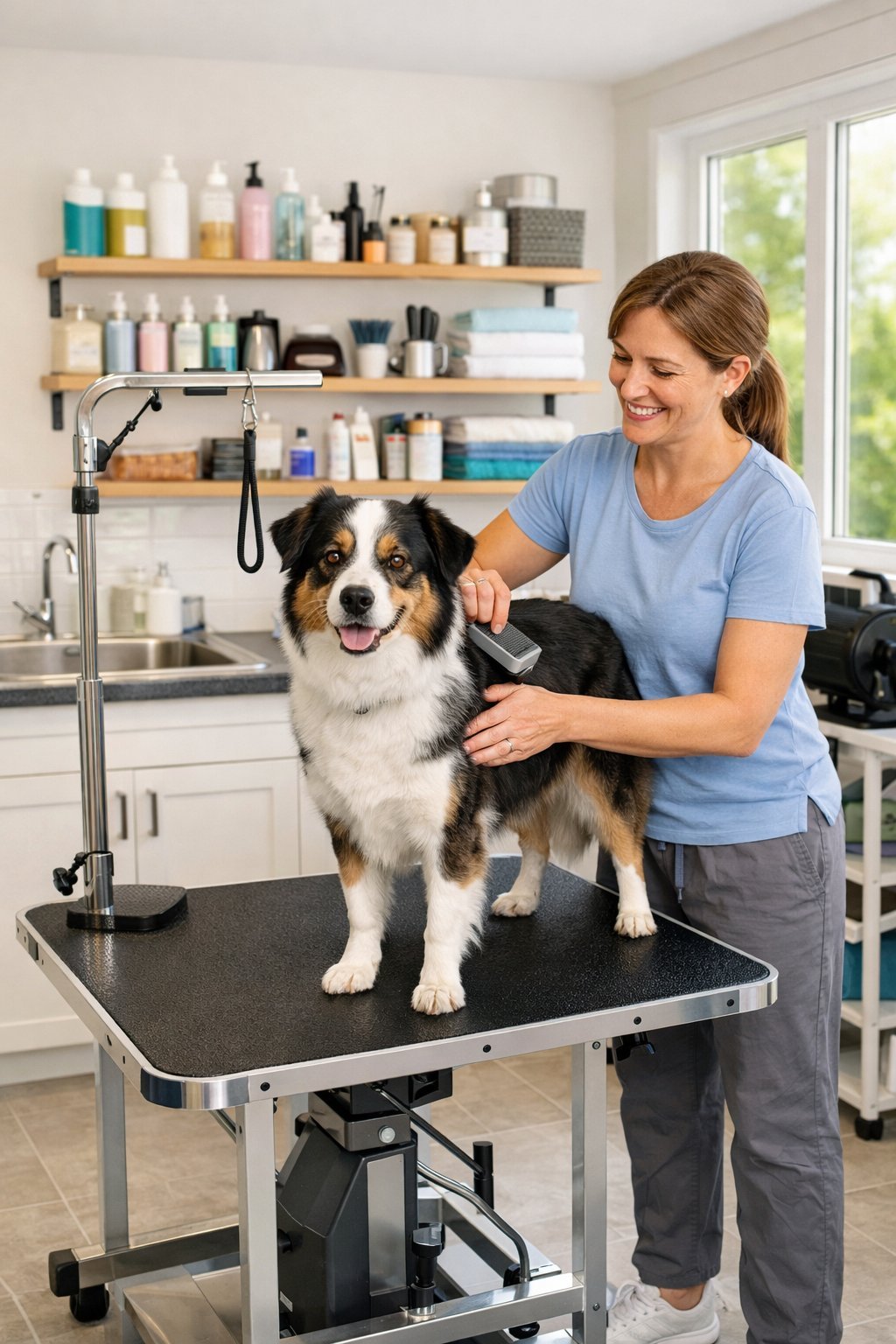
I’ve found that grooming my dog at home strengthens our relationship while keeping more money in my wallet. The comfort of familiar surroundings helps my pet stay calm during grooming sessions.
Building Trust with Your Pet
Regular grooming sessions at home create opportunities for bonding that professional appointments can’t match. When I groom my dog myself, I’m spending quality one-on-one time that helps build trust and understanding.
Grooming your dog at home allows me to work at my pet’s pace. I can take breaks when my dog feels uncomfortable and use positive reinforcement throughout the process.
This patient approach helps anxious dogs learn that grooming doesn’t have to be scary. Consistent handling during grooming also makes my dog more comfortable with being touched.
This pays off during vet visits and other situations where someone needs to examine my pet. The physical contact also helps me spot lumps, skin problems, or other health issues early.
Cost Savings Compared to Salons
Professional grooming appointments can cost between $30 and $90 per visit depending on my dog’s size and coat type. For dogs that need grooming every 4-6 weeks, these costs add up to hundreds or even thousands of dollars each year.
I’ve invested in basic grooming tools like brushes, nail clippers, and shampoo for around $50-$150 total. These supplies last for months or years, making each grooming session cost just a few dollars.
The savings become even more significant for households with multiple dogs. I can choose when to splurge on professional services for complex tasks like breed-specific cuts while handling routine maintenance myself.
Creating a Stress-Free Environment
Many dogs find grooming salons overwhelming because of unfamiliar sounds, smells, and other animals. My home provides a calm setting where my dog already feels safe and relaxed.
I control everything about the grooming experience at home. I can play my dog’s favorite music, adjust the water temperature carefully, and use products I know won’t irritate sensitive skin.
There’s no rushing to meet appointment times or waiting in a busy salon. In-home pet grooming offers a stress-free experience that’s especially helpful for senior dogs, puppies, or pets with anxiety.
I’ve seen my dog’s stress levels drop significantly since switching to home grooming sessions.
Essential Features of an Effective Dog Grooming Room
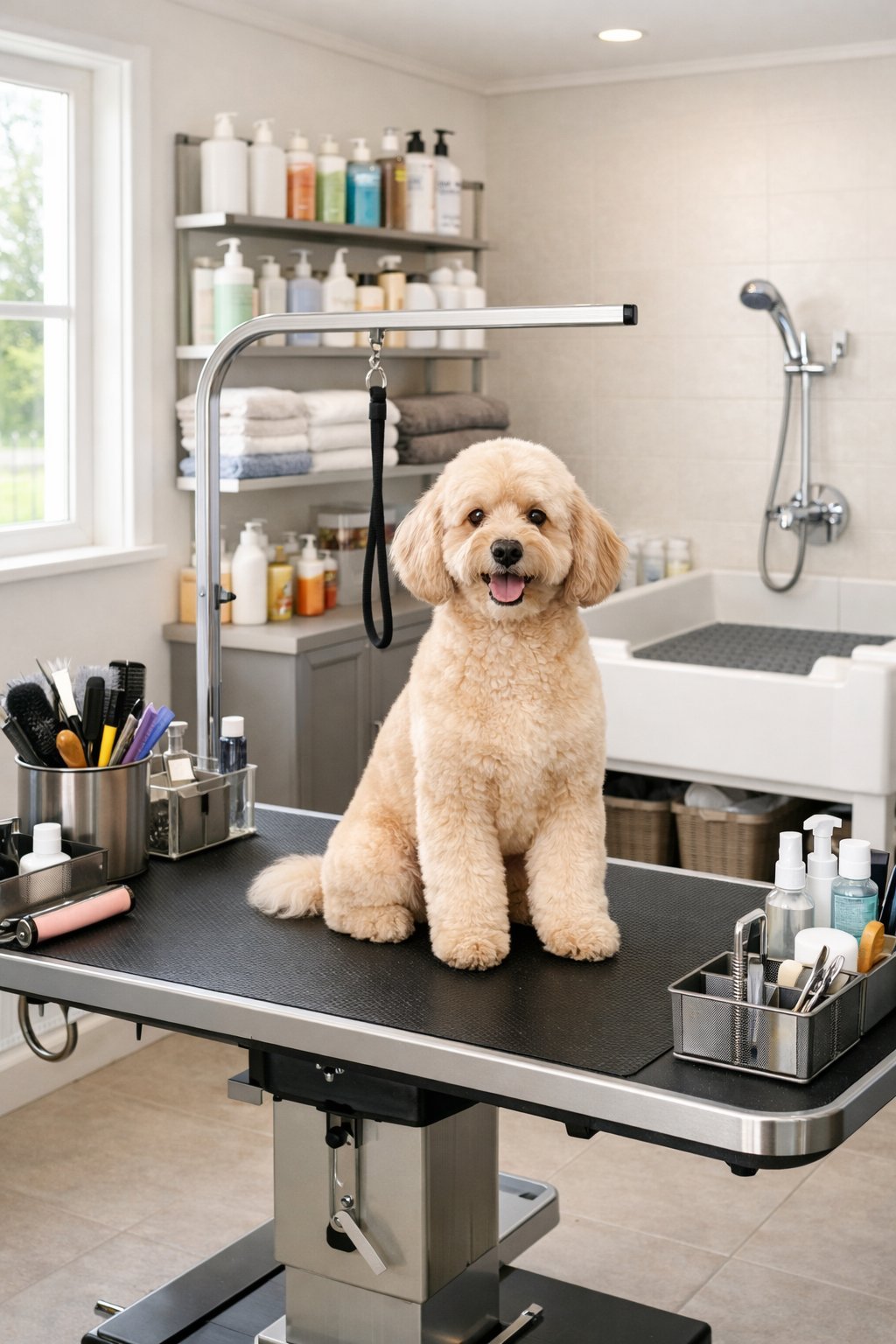
A good grooming room needs the right flooring to keep your dog safe. Proper airflow helps manage smells and moisture, and you want surfaces that are quick to clean between sessions.
Safety and Non-Slip Flooring
I always recommend starting with flooring that prevents slips and falls. Wet dogs move unpredictably, and water splashes everywhere during bath time.
Rubber flooring works best in my experience because it provides excellent grip even when soaked. You can find interlocking rubber tiles that are easy to install without professional help.
These tiles also cushion your knees and back when you’re working with your dog at floor level. Textured vinyl is another solid choice since it resists water damage and gives dogs enough traction to feel secure.
I avoid smooth tile or hardwood in grooming areas because they become dangerously slippery when wet. Creating separate wet and dry zones helps contain water in specific areas.
This makes your non-slip flooring even more effective since you’re limiting where moisture spreads.
Proper Ventilation and Lighting
Good airflow keeps the room fresh and helps wet fur dry faster. I installed an exhaust fan in my grooming room, and it made a huge difference with humidity and pet odors.
A window that opens provides natural ventilation when weather permits. If you don’t have a window, a strong bathroom-style exhaust fan works well.
Run it during grooming sessions and for at least 30 minutes afterward. Lighting matters more than most people think.
I need to see matted fur, skin issues, and nail quicks clearly. Overhead LED lights provide bright, even coverage without generating too much heat.
I also added an adjustable desk lamp near my grooming table for detail work like face trimming and nail clipping. Natural light from windows helps too, but don’t rely on it alone since you’ll groom during evenings and cloudy days.
Easy-to-Clean Surfaces
I spend less time cleaning now because I chose the right materials from the start. Wall protection is critical in wet zones where water and shampoo splash constantly.
I installed waterproof beadboard panels up to waist height around my washing area. These panels wipe down in seconds and don’t absorb moisture like drywall.
Semi-gloss or satin paint works well for the upper walls since you can spot-clean them easily. My countertops are either stainless steel or sealed wood.
Stainless steel never stains and handles disinfectants without damage. Keeping cleaning supplies on hand makes it easier to disinfect your workspace before and after each grooming session.
I avoid fabric or upholstered items in the grooming room. Everything collects hair, so I stick with metal, plastic, and sealed surfaces that I can vacuum or wipe down quickly.
10 Dog Grooming Room Ideas That Actually Work
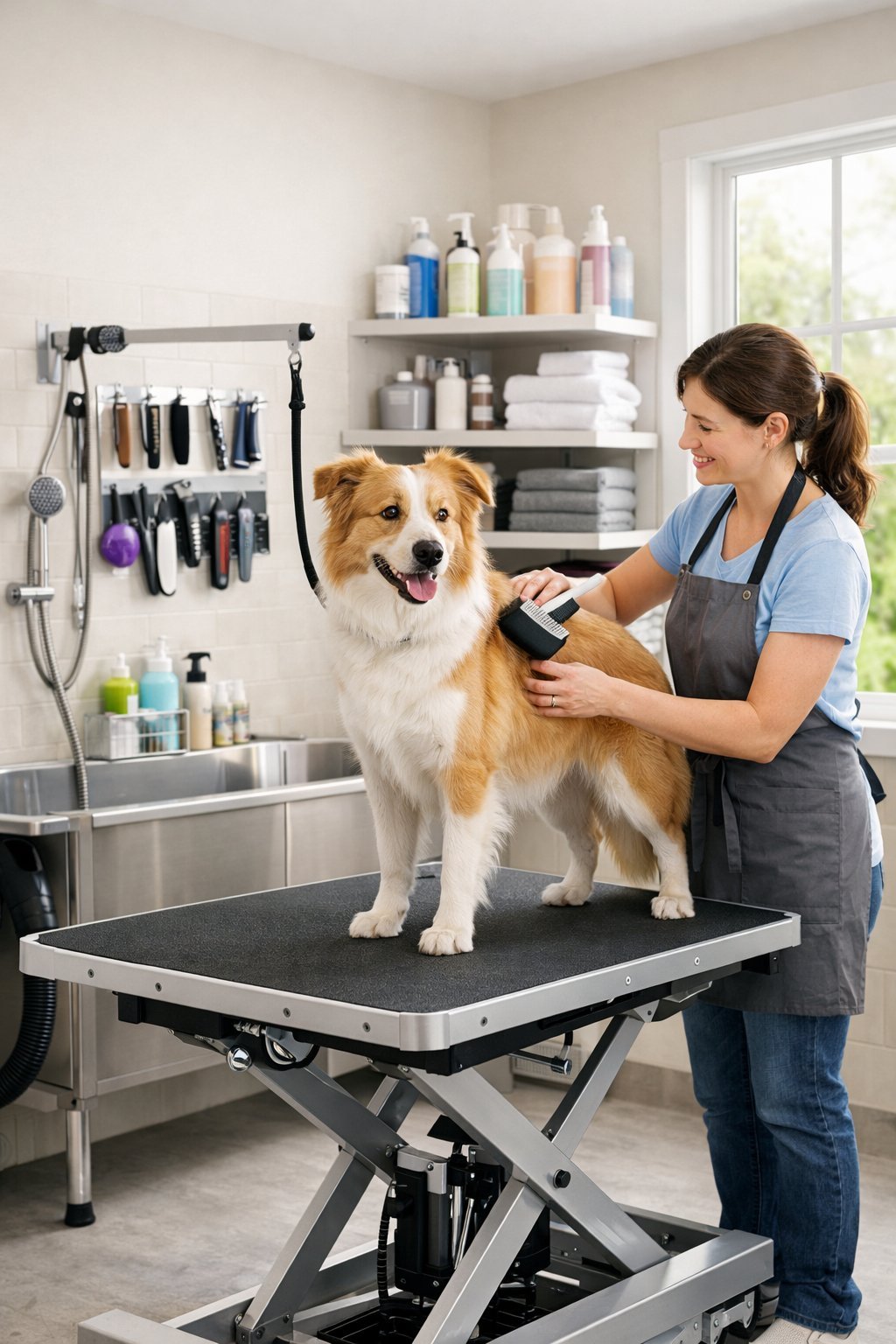
I’ve found that the best grooming spaces work with what you already have. These practical setups turn unused areas into functional grooming stations without breaking the bank.
Transforming an Extra Bathroom
An extra bathroom makes an ideal grooming room because the plumbing is already in place. I recommend using the existing bathtub or shower for washing larger dogs.
The tile floors handle water spills easily and clean up fast. Install a handheld shower attachment to make rinsing easier.
I like to add non-slip mats in the tub to keep dogs steady during baths. You can mount a grooming table between the sink and tub if there’s enough floor space.
The built-in ventilation fan helps dry the room quickly after grooming sessions. Store shampoos, brushes, and towels in the existing cabinets or add wall-mounted shelves.
A bathroom door keeps dogs contained and prevents hair from spreading throughout your home.
Laundry Room Makeovers
Laundry rooms offer the perfect combination of utility sink access and durable flooring. I’ve seen homeowners create functional grooming setups by adding a raised platform next to the washer and dryer.
The utility sink works great for bathing small to medium dogs. You can install a pull-out faucet sprayer for better control during washing.
Keep grooming tools in baskets on top of the dryer or hang them on hooks. I suggest placing a rubber mat under the grooming area to catch loose hair.
The washer comes in handy for cleaning towels and dog bedding right after grooming. This setup works especially well because you’re already doing laundry in the same space.
Space-Saving Fold-Out Stations
A fold-out station works perfectly in tight spaces like closets or hallways. I mount a fold-down table to the wall that flips up when not in use.
This keeps the area open for daily activities. You can add a portable grooming arm that attaches to the table edge.
Store supplies in a rolling cart that slides under the folded table. I recommend waterproof flooring or a washable mat underneath the station.
These compact grooming spaces maximize every square foot. The table height should match your comfort level to prevent back strain during grooming.
Converting a Basement Nook
Basements offer unused corners that convert easily into grooming areas. I look for spots near a utility sink or floor drain to handle water runoff.
The concrete floors in most basements tolerate spills and are simple to clean. Add bright overhead lighting since basements tend to be dark.
A small area rug defines the grooming zone and adds cushioning under your feet. Wall-mounted organizers keep clippers, scissors, and brushes within easy reach.
I suggest installing a small fan to improve air circulation in basement spaces. You can section off the area with a tension-mounted baby gate to contain your dog.
This setup keeps grooming separate from your main living areas while using otherwise wasted space.
Organizing Tools and Supplies for Grooming Rooms
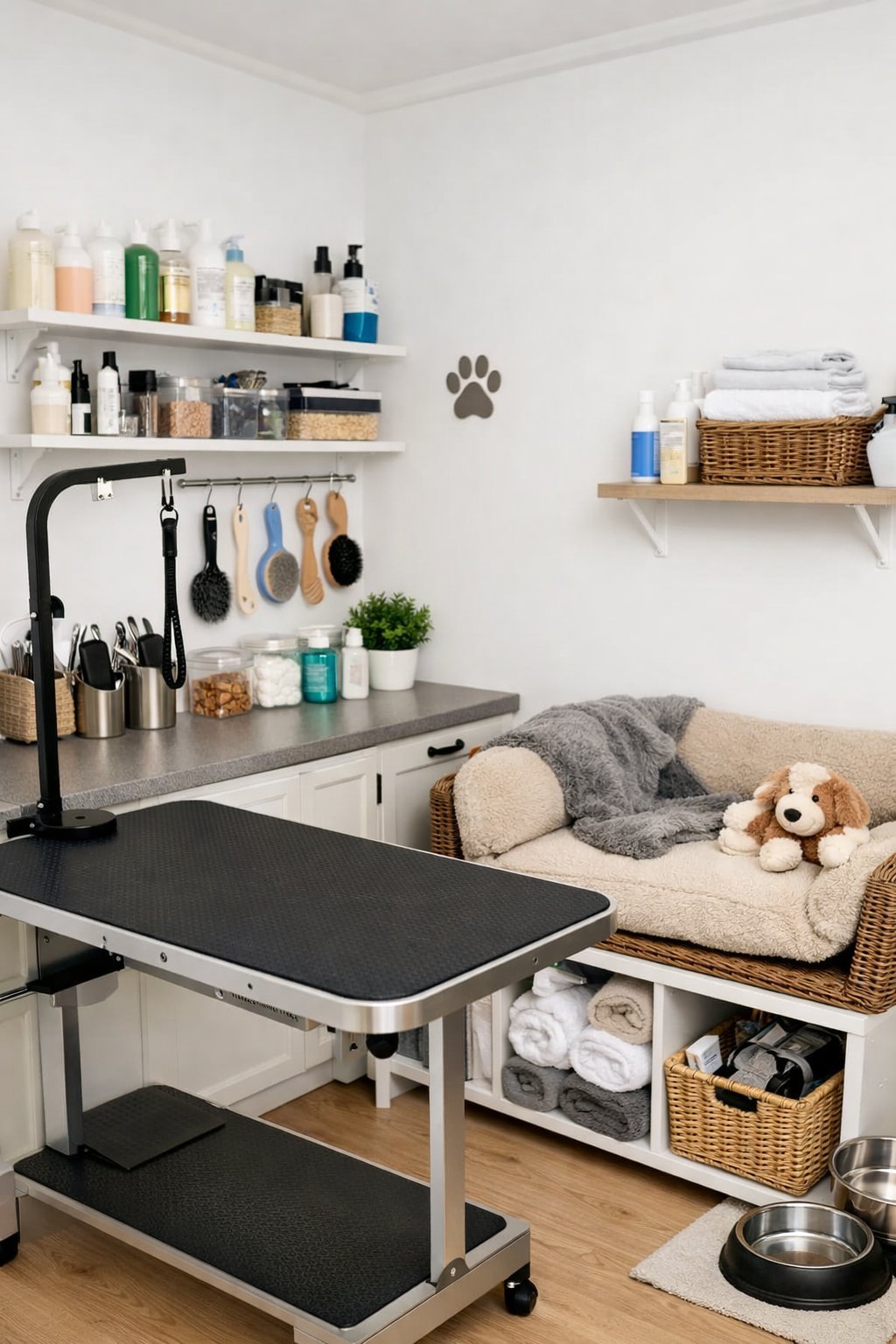
A well-organized grooming room keeps essential items accessible while preventing clutter from taking over your space. The right storage approach makes grooming sessions faster and less stressful for both you and your dog.
Storage Solutions for Grooming Tools
I always start by categorizing my grooming tools based on how often I use them. Daily items like brushes and combs go in easy-to-reach spots, while seasonal tools stay on higher shelves.
Wall-mounted pegboards work great for hanging scissors, clippers, and brushes. I can see everything at once and grab what I need without digging through drawers.
Clear plastic containers with labels help me group similar items together. I keep nail care tools in one bin, trimming scissors in another, and grooming sprays in a third.
This system means I spend less time searching and more time actually grooming my dog. Groomer’s Choice offers specialized storage options like professional cases and shelving units.
These work well if you have lots of tools or groom multiple dogs. For smaller setups, a simple rolling cart with multiple tiers keeps everything mobile and organized.
Keeping Bathing Products Within Reach
I installed a small shelf right above my dog’s bathing area to hold shampoo, conditioner, and detangling spray. Everything stays within arm’s reach while I’m wrestling a wet, soapy dog.
Shower caddies or waterproof baskets work perfectly for bath products. I use one with drainage holes so bottles don’t sit in puddles of water.
I also keep a separate container for smaller items like cotton balls, ear cleaning solution, and eye wipes. These tend to get lost easily, so having them in one designated spot saves me from constantly replacing them.
Managing Clean and Dirty Towels
I use two separate laundry baskets in my grooming room—one for clean towels and one for dirty ones. This simple system keeps me from accidentally grabbing a used towel during grooming.
I keep at least six towels dedicated solely to dog grooming. That way, I have enough for multiple grooming sessions without doing laundry every day.
Microfiber towels dry faster and take up less storage space than traditional cotton ones. They’re my go-to for convenience.
Wall hooks near the bathing area let me hang damp towels that aren’t quite dirty enough for the hamper yet. They air dry quickly and stay separate from my clean towel supply.
Tips for a Positive Dog Grooming Experience at Home
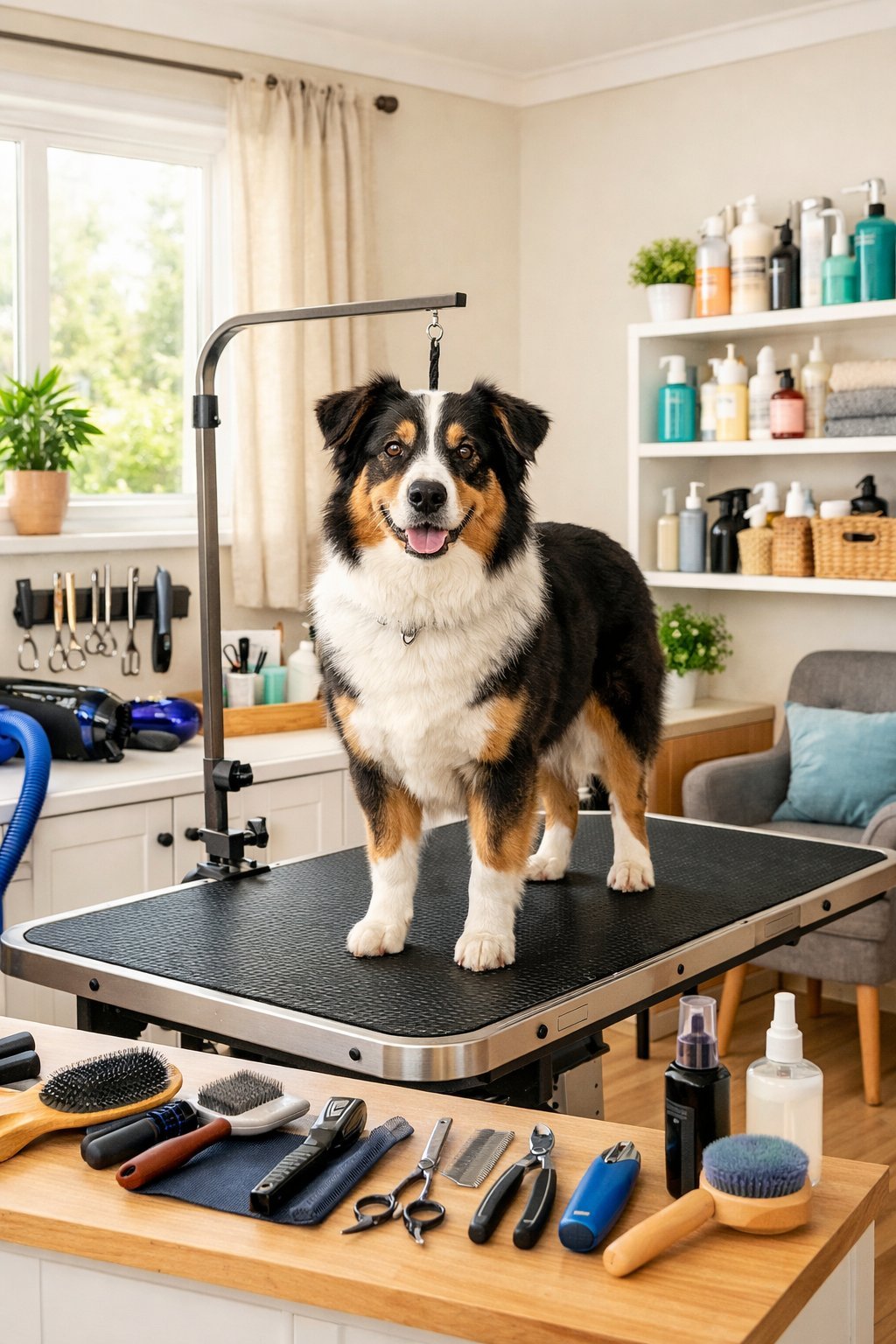
Making grooming enjoyable starts with proper training and a calm environment where your dog feels safe. Consistency and positive reinforcement can turn stressful sessions into bonding time.
Training Your Dog for Home Grooming
I always start by introducing grooming tools slowly to my dog before actually using them. Let your dog sniff and investigate brushes, clippers, and nail trimmers while they’re turned off.
This helps reduce fear and anxiety. Touch training is also essential for successful grooming.
I spend a few minutes each day gently touching my dog’s paws, ears, and tail while giving treats. This teaches them that being handled in these sensitive areas is normal and safe.
Start with short practice sessions of just 2-3 minutes. Gradually increase the time as your dog becomes more comfortable.
If your dog shows stress signs like panting, whining, or trying to leave, take a break and try again later. I never force my dog to stay if they’re clearly uncomfortable.
Establishing a Consistent Routine
I groom my dog on the same day each week at the same time. Dogs thrive on predictability, and a regular schedule helps them know what to expect.
Creating safe routines for at-home grooming means following the same steps in the same order every time. I always brush first, then bathe, and finish with nail trimming.
This predictable pattern reduces anxiety. Use the same grooming space for every session.
I’ve designated a specific room with non-slip mats and good lighting. My dog now walks into that room knowing it’s grooming time.
Schedule grooming when your dog is naturally calm. I prefer right after a walk when my dog has burned off excess energy.
Avoid grooming during high-energy times like before meals or playtime.
Rewarding Good Behavior
I keep high-value treats nearby that my dog only gets during grooming sessions. Small pieces of chicken, cheese, or special dog treats work perfectly as motivation.
Reward every small success throughout the grooming process. When my dog stays still for brushing, I give a treat.
When they let me touch their paw, another treat follows immediately.
Key moments to reward:
- Standing still on the grooming table
- Allowing you to touch sensitive areas
- Staying calm during loud noises from clippers
- Completing each grooming task
I also use verbal praise and petting along with treats. My excited “good dog!” in a happy voice tells them they’re doing exactly what I want.
Some dogs respond better to praise than treats, so find what motivates yours.
End every grooming session on a positive note. I always give a special reward and playtime after grooming so my dog associates the entire experience with good things.