Dog Nail Trimming Tips for At-Home Care: A Beginner’s Guide to Safe and Stress-Free Grooming

Dog Nail Trimming Tips – Trimming your dog’s nails at home can feel overwhelming, especially when you’re worried about hurting your furry friend. Many pet owners skip this grooming task because they’re afraid of cutting too short or dealing with a squirmy, anxious pup.
With the right approach and tools, nail trimming doesn’t have to be stressful for you or your dog. It can actually become a simple part of your regular routine.
Regular nail trimming at home keeps your dog healthy and happy. It also saves money on professional grooming visits.
When nails get too long, they can cause pain and affect how your dog walks. Over time, this can even lead to joint problems.
Patience, preparation, and practice are key for at-home nail trims. In this guide, you’ll find practical tips and techniques, from picking the right tools to handling nervous dogs with care.
Key Takeaways
- Understanding your dog’s nail structure helps you avoid cutting the quick and causing pain.
- Using proper tools and techniques makes trimming easier each time.
- Regular trimming and positive reinforcement keep your dog’s paws healthy and reduce anxiety.
Understanding Your Dog’s Nails

Dog nails grow continuously and need regular maintenance to prevent discomfort and health problems. Each nail includes living tissue that needs careful handling during trimming.
Why Nail Trimming Matters
Regular nail trimming is essential for keeping dogs comfortable. Long nails cause pain when your dog walks or runs because they put pressure on the nail bed and toe joints.
Overgrown nails can change how your dog moves. This can eventually lead to joint problems in the legs, hips, and spine.
Nails that are too long can split or break, which is painful and might cause bleeding or infection. Long nails also catch on carpets, furniture, and outdoor surfaces.
In bad cases, nails can curl back into the paw pad, creating serious injuries.
Anatomy of a Dog’s Nail
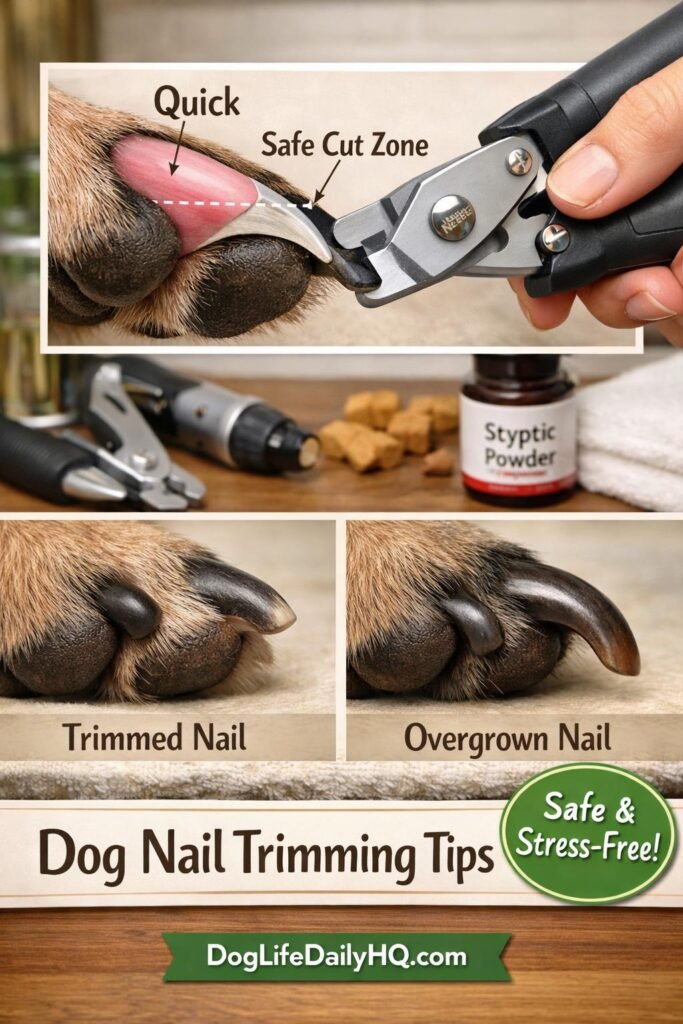
Each dog nail has two main parts: the hard outer shell and the inner quick. The quick contains blood vessels and nerves.
With white or clear nails, you can see the pink quick inside. Dark or black nails hide the quick, making trimming more challenging.
The quick grows longer as the nail grows. Trimming nails regularly helps the quick recede, making future trims easier and safer.
Recognizing Signs of Overgrown Nails
If you hear your dog’s nails clicking on hard floors, they’re too long. Nails shouldn’t touch the ground when your dog stands normally.
Curled nails or nails pointing to the side are also signs they’re overgrown. Your dog might lick or chew at their paws more often.
Watch your dog’s walk. Splayed toes or a changed gait can mean the nails are pushing into the paw pads.
Your dog might avoid certain surfaces or seem less eager to run and play if their nails are too long.
Preparing for a Stress-Free Nail Trim
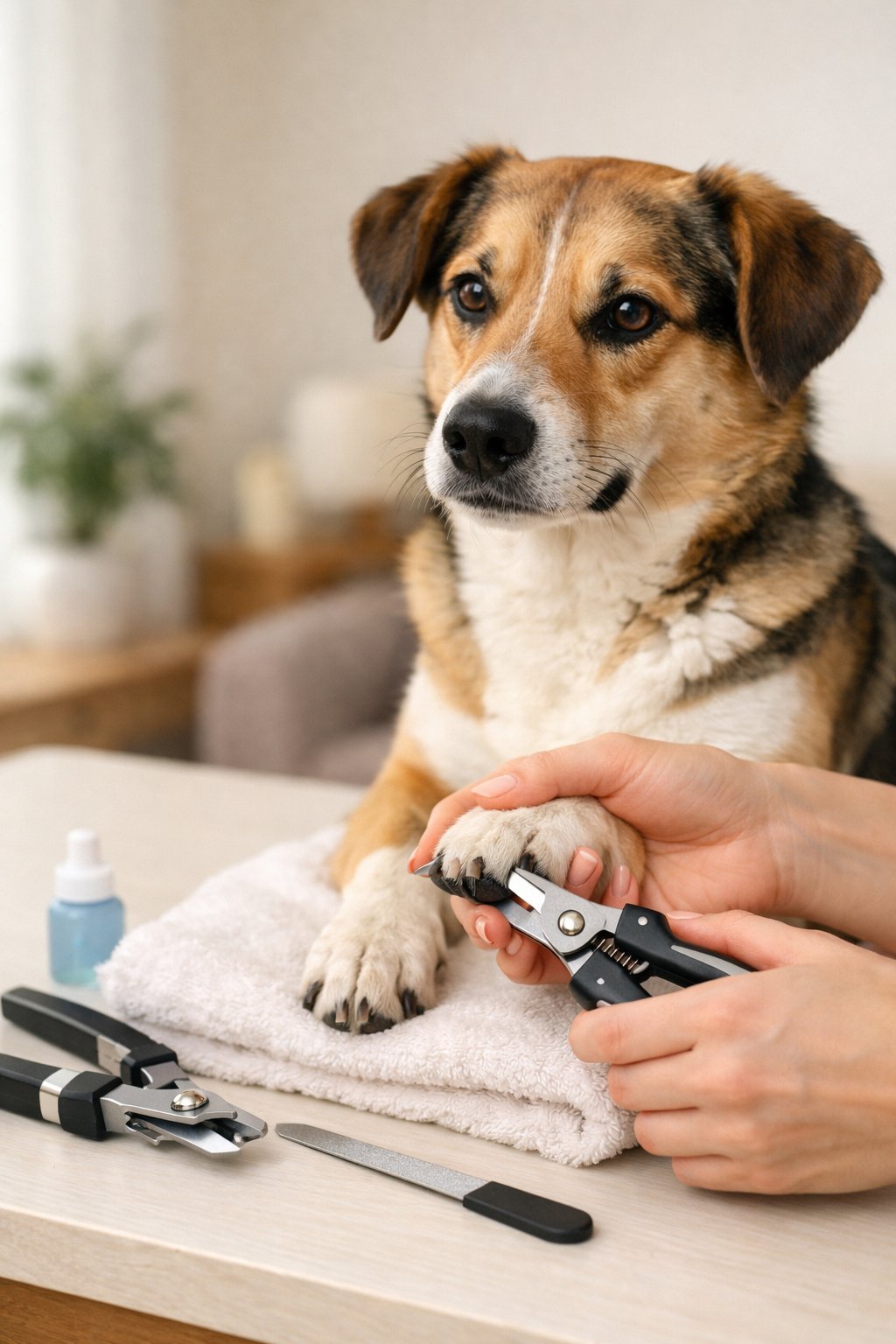
Getting ready for nail trimming means having the right supplies, helping your dog feel calm, and finding a safe position for both of you.
Gathering the Right Tools for Dog Nail Trimming Tips
Always have your tools ready before starting. The most important item is a quality nail clipper made for dogs.
There are two main types: guillotine-style clippers are good for small to medium dogs, while scissor-style clippers work better for larger dogs with thicker nails.
Keep styptic powder nearby in case you cut the quick. This powder stops bleeding fast if you trim too short.
A nail file or grinder is handy for smoothing rough edges after clipping.
Essential tools to have on hand:
- Dog nail clippers (guillotine or scissor-style)
- Styptic powder for bleeding
- Nail file or electric grinder
- Treats for rewards
- Good lighting source
Having everything within reach means you won’t have to stop mid-trim to look for something. Place your supplies on a towel or mat before you begin.
Calming Your Dog Before Trimming
Help your dog relax before picking up the clippers. Let your dog sniff the clippers to get used to the tool.
You can do this for a few days before actually trimming. Exercise helps too—a walk or play session about 30 minutes before trimming can burn off nervous energy.
Touch your dog’s paws regularly when you’re not trimming. This helps them get used to having their feet handled.
Gently hold each paw and press on the pads while offering treats. Choose a quiet room away from loud noises or other pets for trimming.
Soft voices and gentle movements help keep the mood relaxed.
Safely Positioning Your Dog
The right position depends on your dog’s size and comfort level. Small dogs can go on a table with a non-slip mat.
Medium to large dogs usually do better on the floor. Sit beside them instead of hovering over them.
Common positioning options:
- Sitting position: Dog sits while you hold one paw at a time.
- Standing position: Dog stands on all fours as you work on each leg.
- Side-lying position: Dog lies on their side for easier access to back paws.
Make sure your dog feels secure but not restrained. Too much pressure can make them anxious.
Hold the paw gently but firmly while you trim. If your dog struggles, take a break.
Sometimes, multiple short sessions are better than one long one.
Step-by-Step Guide to Trimming Dog Nails

Knowing where the quick is and using the right cutting technique will help you trim your dog’s nails safely. It’s also important to know how often to trim based on your dog’s nail growth.
Identifying the Quick and Avoiding Injury
The quick is the blood vessel and nerve inside each nail. If you cut into it, your dog will feel pain and the nail will bleed.
On light-colored nails, you can see the quick as a pink area inside the nail. Cut about 2mm away from where the pink ends.
For dark nails, look at the underside of the nail. You’ll see a solid black area near the tip and a softer, lighter groove closer to the paw.
Trim small amounts at a time and stop when you see a gray or pink oval on the cut surface.
If you accidentally cut the quick, stay calm. Use styptic powder or cornstarch to stop the bleeding by pressing it firmly against the nail for a few minutes.
Proper Trimming Techniques
Get your dog comfortable with having their paws touched before trimming. Treats and praise throughout the process help a lot.
Hold your dog’s paw firmly but gently. Press on the pad to extend the nail fully so you can see what you’re cutting.
Position the clipper at a 45-degree angle to the nail, not straight across. Use a quick, confident motion when cutting.
Trimming small amounts at a time is safer than trying to cut off a lot at once. After clipping, use a nail file or grinder to smooth out rough edges.
Don’t forget to trim dewclaws if your dog has them.
How Often to Trim
Most dogs need their nails trimmed every 3-4 weeks. The exact timing depends on how fast your dog’s nails grow and how much they wear down naturally.
It’s time for a trim if you hear your dog’s nails clicking on hard floors. If the nails touch the ground while your dog is standing, they’re ready for a trim.
Active dogs who walk on pavement may need trims less often since rough surfaces wear their nails down. Indoor dogs or those who mostly walk on grass usually need more frequent trims.
Trimming nails more often and taking off less each time keeps the quick short and makes each session quicker and less stressful.
Dealing With Common Nail Trimming Challenges

Even with the best prep, you’ll run into some bumps along the way. Fear, accidental cuts, and dark nails are three of the most common issues that can make nail trimming tricky.
Handling Fearful or Resistant Dogs
Working slowly with a scared dog makes all the difference. Start by just touching your dog’s paws for a few seconds each day—no clippers yet.
Give treats and praise right after touching each paw. Once your dog seems comfortable, let them sniff the clippers.
Click the clippers near your dog without actually cutting anything, and reward calm behavior with high-value treats. Trimming just one or two nails per session is a good idea if your dog gets anxious.
It’s better to go slow and keep things positive than to force it and create a bad memory. If your dog pulls away, take a break and try again later.
Never yell or punish your dog during nail trims. Some dogs are more relaxed after a walk or playtime.
What To Do If You Cut the Quick
Cutting the quick happens to almost everyone at some point. The nail will bleed and your dog might yelp or pull away.
Stay calm—your dog will pick up on your mood. Keep styptic powder or cornstarch nearby before you start trimming.
Press the powder firmly against the bleeding nail for 30 seconds. If you don’t have powder, pressing the nail into a bar of soap can help stop the bleeding.
The bleeding usually stops within a few minutes. Keep your dog calm and don’t let them run around right away.
Give extra treats to help your dog forget the uncomfortable moment.
Solutions for Dark or Black Nails
Dark nails make it really tough to see the quick inside. I take a careful approach by trimming small pieces at a time and checking after each cut.
Look at the cut surface after every trim. If you spot a gray or pink oval in the center, stop right away—you’re close to the quick.
I like using a nail grinder on dark nails since it removes tiny amounts gradually. This gives me more control and lowers the risk of hitting the quick.
Trim less nail at a time, but do it more frequently to keep nails short and avoid sensitive areas.
Maintaining Healthy Dog Nails Between Trims
Nail care doesn’t end after trimming. Regular checks and daily activities help keep your dog’s nails in good shape until the next trim.
Signs of Nail Health Problems
I watch for warning signs that something’s wrong with my dog’s nails. If you hear clicking sounds when your dog walks on hard floors, the nails are too long.
Look for these problems:
- Splitting or cracking – Nails might be dry or overgrown
- Discoloration – Yellow, brown, or black spots could signal infection
- Bleeding or discharge – Needs immediate care
- Swelling around the nail bed – Often a sign of infection or injury
- Limping or favoring a paw – Could mean nail pain
I check my dog’s nails weekly to catch issues early. Overgrown nails can curl into the paw pad and cause serious pain.
If the quick looks infected or inflamed, I get help right away.
Natural Ways to Help Keep Nails Short
Regular walks on concrete or asphalt naturally wear down my dog’s nails. The rough surface acts like a natural file and can reduce how often I need to trim.
Daily exercise on hard surfaces makes a big difference. I take my dog on 20-30 minute walks on sidewalks several times a week to help maintain healthy, strong nails.
Other activities that help include playing on gravel, running on rocky trails, and digging in safe areas. Walking on textured surfaces like brick patios also helps.
Natural wear won’t replace trimming completely, though. Older dogs or those who mostly stay indoors still need regular trims.
When To Seek Professional Help
I reach out to my vet or groomer if I see issues I can’t handle. If I accidentally cut the quick and bleeding doesn’t stop after 5-10 minutes, I get professional help right away.
I also ask for help if my dog shows extreme fear or aggression during nail care. Groomers have tools and experience for anxious dogs, and some dogs may need sedation from a vet.
I get expert help if nails grow in weird directions, infections keep coming back, or dewclaws become a problem. I don’t risk my dog’s health by tackling tough nail issues alone.
Frequently Asked Questions
Trimming your dog’s nails at home comes with plenty of questions about safety, frequency, and the right approach. Here are some of the most common concerns pet owners have.
How can I safely trim my dog’s nails at home without causing them any discomfort?
Start by getting your dog used to having their paws touched. Spend a few days just handling their feet and giving treats before you even bring out the clippers.
When you’re ready, hold the paw gently but firmly. Trim small amounts at a time, taking off just the curved tip of the nail.
Keep styptic powder nearby in case you hit the quick. Taking breaks between nails helps keep things positive for your dog.
What techniques can help calm an anxious dog before beginning a nail cutting session?
Pick a quiet time when your dog is naturally calm, like after a walk or play session. A peaceful environment helps a lot.
Give treats throughout the process, not just at the end, so your dog links nail trimming with good things. Sometimes it helps to have a second person offer treats and gentle pets while you work.
I also practice just touching the clippers to my dog’s nails for a few sessions before actually trimming. This reduces anxiety and builds trust.
Can you offer advice on how to properly trim the nails of a dog with black or dark nails?
With dark nails, I trim very small amounts at a time. I watch the cut surface for changes in texture and color.
If a gray or pink oval appears in the center, I stop cutting. That means I’m getting close to the quick.
A bright light or flashlight can sometimes help you see through darker nails. Grinding tools also work well for dark nails since they remove material slowly.
What is the best way to avoid cutting the quick and causing bleeding when trimming my dog’s nails?
I trim at a 45-degree angle, cutting from top to bottom to follow the natural shape of the nail. In light nails, I stay away from the pink quick and only cut the clear part.
For all nail colors, I trim small amounts and check the cut surface often. If I do hit the quick, I use styptic powder or cornstarch to stop the bleeding. It usually stops within a few minutes.
How frequently should I trim my pet’s nails to ensure their paws remain healthy?
Most dogs need their nails trimmed every 3 to 4 weeks. If you hear clicking sounds as your dog walks on hard floors, it’s time for a trim.
Active dogs who walk on concrete or pavement may need trims less often. Indoor dogs or those who walk mainly on grass usually need more regular nail care.
Check your dog’s nails weekly. If they’re touching the ground when your dog stands, it’s time for a trim.
Are there any tools or products that can make at-home dog nail trimming easier and safer?
I use guillotine-style clippers for small to medium dogs. For larger breeds, I prefer scissor-style clippers.
Both types work best when they’re sharp and clean. Electric nail grinders are another great option because they give you more control and lower the risk of hitting the quick.
Grinders are especially helpful for dogs with thick nails or pups who get nervous around clippers. I like to introduce the grinder slowly since the noise and vibration can be a bit startling.
I always have styptic powder nearby in case I accidentally trim too far. Good lighting, like natural light or a headlamp, helps me see what I’m doing.
Non-slip mats are also super helpful for keeping my dog steady during trimming sessions.