
Hypoallergenic Dog Treats: A Complete Guide for Dogs with Sensitive Stomachs

Dogs with food allergies need special treats that won’t trigger reactions like itching, stomach problems, or skin issues. Hypoallergenic dog treats use limited ingredients and novel proteins like duck or fish, which are less likely to cause allergic reactions in sensitive dogs.
These treats let dogs with allergies enjoy snacks without worries about flare-ups.
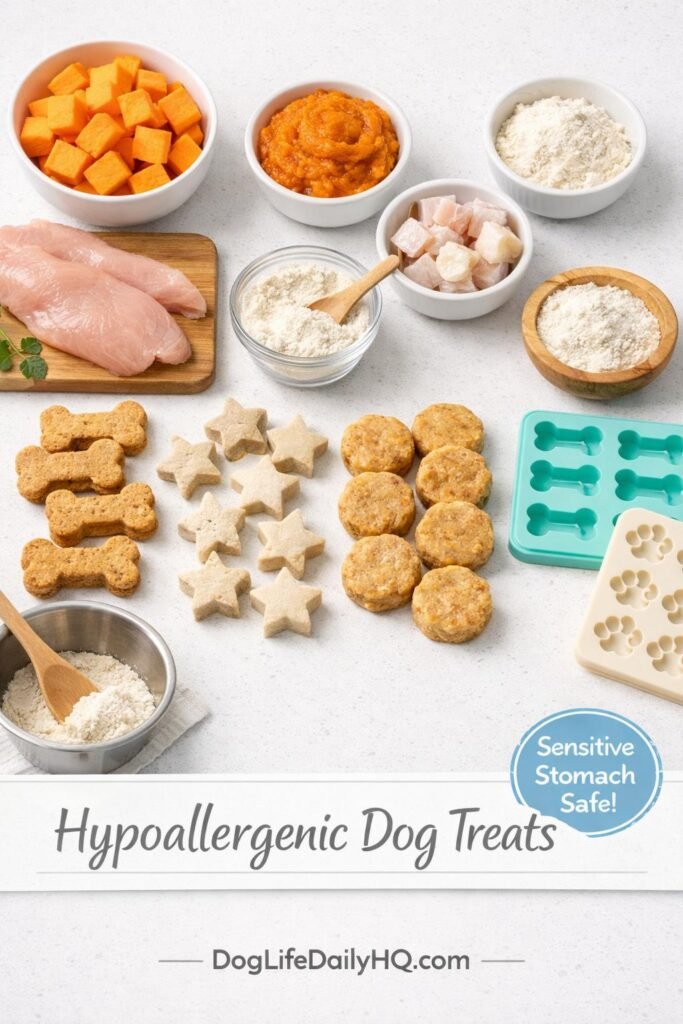
It can be tough to see your dog struggle with food allergies. Finding the right treats means reading labels and knowing which ingredients are safe for your pup.
Luckily, there are plenty of options now, from store-bought hypoallergenic treats to simple recipes you can whip up at home.
In this guide, I’ll show you how to spot food allergies, what ingredients to avoid, and how to choose or make treats that keep your dog happy and healthy.
Key Takeaways
- Hypoallergenic treats use limited ingredients and novel proteins to reduce allergic reactions in dogs.
- Reading labels carefully and knowing your dog’s specific allergies helps you pick safe treats.
- You can buy vet-approved hypoallergenic treats or make simple homemade versions at home.
What Makes Dog Treats Hypoallergenic?

Hypoallergenic treats skip common trigger ingredients and use simple formulas with carefully chosen proteins and carbs. They focus on ingredients that rarely cause reactions in dogs.
Common Allergens in Conventional Treats
Most dog food allergies come from certain proteins and grains found in regular treats. Beef, dairy, chicken, and wheat are the main troublemakers.
Soy, corn, and eggs can also trigger issues for many dogs. I’ve noticed that conventional treats often contain wheat, soy, or dairy, which can be a problem for sensitive pups.
Artificial colors, flavors, and preservatives might also cause allergic responses. Some dogs react to these additives even if they handle the main ingredients fine.
Common allergens to avoid:
- Beef
- Chicken
- Dairy products
- Wheat and wheat gluten
- Soy
- Corn
- Eggs
- Artificial additives
How Hypoallergenic Treats Are Formulated
Hypoallergenic treats use limited ingredients to lower the risk of reactions. Most use novel proteins like duck, venison, or fish that your dog probably hasn’t eaten before.
The formulas are simple on purpose. Fewer ingredients mean fewer chances for allergies.
I like treats with single protein sources instead of mixed meats. That way, if my dog reacts, it’s easier to figure out the cause.
These treats swap out common grains for alternatives like sweet potatoes, peas, or chickpeas. Sweet potatoes aren’t actually potatoes, which is helpful since regular potatoes can sometimes be a problem too.
Benefits of Hypoallergenic Ingredients
Simple ingredient lists make it easy to track what your dog eats and reacts to. If my dog has a reaction, it’s much easier to pinpoint the cause.
Novel proteins like duck, venison, salmon, and rabbit provide nutrition without setting off allergies. Most dogs haven’t developed sensitivities to these yet.
Alternative carbs like sweet potatoes add vitamins and fiber without common allergens. They’re also easier to digest for sensitive stomachs.
Natural ingredients without artificial additives can reduce inflammation and skin irritation. Dogs with allergies often see improvements in their coat and less scratching or paw licking.
Cleaner ingredients can support better digestion, especially for dogs who often have upset stomachs.
Recognizing Food Allergies in Dogs

Food allergies in dogs show up through certain physical symptoms. Proper diagnosis takes careful observation and sometimes testing.
An elimination diet is a helpful way to figure out which ingredients are causing trouble.
Signs and Symptoms of Allergies
Dogs with food allergies often have symptoms that look like environmental allergies. The most common signs are itchy skin, especially around the paws, ears, and face.
Your dog might lick or chew these spots a lot. Skin problems like red patches, rashes, or hot spots can also show up.
Some dogs get recurring ear infections that just won’t go away. Digestive issues are another big clue—vomiting, diarrhea, or gas after meals can mean food sensitivities.
Hair loss and chronic skin infections might also happen if food allergies go untreated. In severe cases, you might see hives or swelling.
Diagnosing Food Sensitivities
It’s best to work with your vet to diagnose food allergies. Blood tests and skin tests exist, but they’re not always reliable for food issues.
Your vet will ask about when the symptoms started and what foods your dog eats. They’ll check for other causes like parasites or infections first.
A full physical exam can help spot all problem areas. Keeping a food diary of everything your dog eats and when symptoms appear is super helpful.
Prescription hydrolyzed protein treats use proteins broken down so small that your dog’s immune system doesn’t recognize them as threats.
The Role of an Elimination Diet
An elimination diet is the most reliable way to identify food allergies. You feed your dog a simple diet with one protein and one carb they’ve never had before.
This lasts 8 to 12 weeks with no other foods or treats. During this time, watch for symptoms to improve.
After symptoms clear up, start adding back ingredients one at a time—each for about two weeks. If symptoms return, you’ve found an allergen.
This process takes patience, but it works. Be sure to avoid table scraps, flavored meds, or regular treats during the trial.
Choosing the Best Hypoallergenic Dog Treats

When I shop for hypoallergenic treats, I go for simple ingredient lists with novel proteins and skip common allergens like beef and wheat.
I also look for brands that specialize in sensitivity-friendly options.
Top Hypoallergenic Ingredients
Novel proteins like duck or fish are great for dogs with allergies. Since these proteins aren’t common in regular dog food, most dogs haven’t developed sensitivities to them.
Venison, rabbit, and kangaroo are also good choices. I stick with single-source proteins so I know exactly what my dog is eating.
For carbs, sweet potato, pumpkin, and peas are gentle on sensitive stomachs. I avoid chicken, beef, dairy, wheat, corn, and soy.
Limited-ingredient treats with just a few components give me more control over my dog’s diet.
Reading Ingredient Labels
I always check the ingredient list before buying treats. The first ingredient should be a recognizable protein, not a filler.
Labels that say “limited ingredient” or “single protein” make things easier. Knowing your dog’s specific allergies helps you avoid the wrong stuff.
I watch out for vague terms like “meat meal” or “animal fat”—these can hide allergens. Artificial colors, flavors, and preservatives are also a no-go.
I prefer treats made in the USA or countries with strict food safety standards. The label should show where it’s made and where the ingredients come from.
Recommended Hypoallergenic Brands
Some brands do a great job with hypoallergenic treats. I’ve had good luck with ones featured in vet-approved lists for sensitive stomachs.
Blue Buffalo has salmon biscuits that many dogs tolerate well. Smart Cookie makes trout treats that are simple and effective.
For plant-based treats, mini-sized, semi-soft options are great for training. These are perfect if your dog can’t handle animal proteins.
I also check expert reviews from Rover and read what other dog owners have to say before trying something new.
DIY Hypoallergenic Dog Treat Recipes

Making treats at home gives you total control over the ingredients. You can skip allergens like wheat, corn, soy, and dairy, and make wholesome, allergy-friendly treats your pup will love.
Single-Protein Treat Ideas
Using just one protein source helps you figure out what your dog can handle. Turkey is a popular choice that many sensitive dogs do well with.
For simple turkey bites, I use ground turkey mixed with a little water and form them into tiny balls. I bake them at 350°F for about 15 minutes.
These treats freeze well, so you can make a big batch at once. Salmon is another good option for dogs who can’t have chicken or beef.
I mix canned salmon (drained) with a bit of coconut flour to hold it together. Bake for about 20 minutes for treats packed with healthy omega-3s.
Duck treats are also easy to make. Cook ground duck meat, shape it into small pieces, and store them in the fridge for up to three days.
Grain-Free Recipes
Sweet potato makes a great base for grain-free dog biscuits. I cook and mash sweet potatoes, then mix them with coconut flour until I get a dough I can roll out.
My favorite recipe uses:
- 1 cup mashed sweet potato
- ½ cup coconut flour
- 1 egg
- 2 tablespoons coconut oil
I roll the dough to about ¼ inch thick and cut it into shapes. These bake at 350°F for 25-30 minutes until they’re firm.
The treats stay fresh in an airtight container for about a week. Pumpkin and oat flour (from ground oats) create another grain-free option.
I combine ½ cup pumpkin puree with ¾ cup oat flour and form small balls. They bake quickly in just 15 minutes.
Limited Ingredient Homemade Treats
The beauty of limited ingredient treats is their simplicity. I can make tasty snacks with just two or three ingredients.
My go-to recipe uses only banana and oat flour. I mash one ripe banana and add oat flour until I get a thick dough.
I form small cookies and bake them at 325°F for 20 minutes. My dog loves these, and I know exactly what’s in them.
Another favorite combines chicken breast with just water. I boil chicken breasts, slice them thin, and dehydrate them in my oven at 200°F for about 3 hours.
These jerky-style treats are pure protein with nothing else added. For dogs who can eat eggs, I make simple egg treats by whisking eggs and pouring them into silicone molds.
I bake them at 350°F for 10-12 minutes. Each treat is just egg, making it perfect for dogs with multiple food sensitivities.
Storing and Serving Hypoallergenic Treats
Safe Storage Tips
I always store homemade hypoallergenic treats in airtight containers to keep out moisture and bacteria. Glass jars or BPA-free plastic containers work best for maintaining freshness.
Most homemade hypoallergenic treats last 3-5 days at room temperature. I refrigerate mine to extend their shelf life to 1-2 weeks.
For longer storage, I freeze treats in portion-sized bags for up to 3 months.
Storage Guidelines:
- Keep treats away from direct sunlight and heat
- Label containers with the date you made them
- Store different treat types separately to avoid cross-contamination
- Discard any treats that smell off or show mold
I wash my hands before handling treats to prevent introducing allergens. I also use separate storage containers from my regular dog treats to avoid mixing ingredients.
Serving Sizes and Frequency
I follow the 10% rule when giving treats to my dog. Treats should make up no more than 10% of my dog’s daily calorie intake.
For a 20-pound dog, this means about 40-50 calories from treats per day. I break larger treats into smaller pieces for training sessions.
Daily Treat Amounts by Dog Size:
| Dog Weight | Maximum Daily Treats |
|---|---|
| 10 lbs | 2-3 small treats |
| 25 lbs | 4-5 small treats |
| 50 lbs | 6-8 small treats |
| 75+ lbs | 8-10 small treats |
I reduce my dog’s meal portions slightly on days when I give more treats. I also space out treats throughout the day rather than giving them all at once.
Frequently Asked Questions
What are the top-rated hypoallergenic treats for sensitive pups?
I’ve found that single-ingredient freeze-dried treats and limited ingredient biscuits work well for most dogs with sensitivities. These options keep things simple and reduce the chance of reactions.
Hill’s Prescription Diet Hypoallergenic Dog Treats use hydrolyzed protein, which breaks down proteins into smaller pieces that are less likely to trigger allergies. Novel protein jerky treats made from duck or fish are also popular since many dogs haven’t been exposed to these proteins before.
Fish-based treats and vegetable-based chews offer more variety. I recommend starting with just one type of treat at a time to see how your dog responds.
How do I choose the right treats for my dog with food allergies?
The first step I take is checking labels carefully to see what’s inside. I look for treats with the fewest ingredients possible since this makes it easier to spot potential triggers.
Understanding your dog’s specific allergies is crucial before picking treats. If my dog is allergic to chicken, I avoid any treats containing poultry or chicken meal.
I also consult with my vet before introducing new treats, especially for dogs with severe allergies. They can help identify which proteins and ingredients to avoid.
Can I find soft or chewy treats that are safe for my allergic dog?
Yes, there are soft hypoallergenic options available for dogs who prefer chewy textures. Many brands make limited ingredient treats in both crunchy and soft varieties.
Fish-based soft treats work well since fish is often a novel protein. I also look for sweet potato chews or other single-vegetable options that are naturally soft.
Some companies make hydrolyzed protein treats in softer formats. These are especially helpful for older dogs or those with dental issues who still need allergy-friendly options.
Are there any special treats for small breeds with diet sensitivities?
Many treat manufacturers make smaller-sized versions of their hypoallergenic products for small breeds. I find these helpful because they’re sized right for tiny mouths.
The key is looking for treats that use the same limited ingredients as full-sized options but in smaller pieces. This helps prevent overfeeding while still rewarding my small dog safely.
Breaking larger hypoallergenic treats into smaller pieces also works. I just make sure the original treat is safe for my dog’s specific allergies first.
What ingredients should I look for in treats for my hypoallergenic canine?
I always look for novel proteins like duck, venison, or salmon since these are less likely to cause reactions. Single-ingredient treats are my go-to because they’re simple and safe.
Limited ingredient lists with recognizable foods give me confidence. I prefer treats with no artificial colors, flavors, or preservatives since these can trigger sensitivities.
Hydrolyzed proteins are another excellent option. Sweet potatoes, pumpkin, and other single vegetables make good hypoallergenic choices too.
Where can I find recipes to make homemade allergy-friendly dog snacks?
I can find homemade hypoallergenic treat recipes on many veterinary websites and pet health blogs. These recipes usually use simple, safe ingredients that are easy to control.
Frozen apple bites are a simple option. I just cut apples into small pieces and freeze them for a refreshing snack.
I also like to use single proteins like plain cooked chicken or fish, as long as my dog isn’t allergic. Baking sweet potato slices makes easy homemade chews with no extra ingredients.