
15 Interactive Dog Toys That Stimulate Your Dog’s Brain: Keep Your Pup Engaged and Happy

Dogs need mental exercise just as much as they need physical activity. When dogs get bored, they can develop problem behaviors like chewing furniture or excessive barking.
Interactive toys that challenge your dog’s brain can tire them out mentally, reduce anxiety, and keep them happily entertained for hours.

Enrichment toys are like brain games that encourage your dog to use their natural instincts and problem-solving skills. These toys can include puzzle feeders, treat dispensers, and smart toys that move on their own.
I’ve put together a list of 15 interactive dog toys that will boost your pup’s brainpower and keep boredom away. Whether you have a clever Border Collie or a laid-back Labrador, the right interactive toy can help keep your dog mentally engaged and genuinely happier at home.
Let me show you the best options available in 2026.
Key Takeaways
- Interactive dog toys provide mental stimulation that reduces boredom and problem behaviors
- Different dogs need different types of brain-boosting toys based on their skill level and interests
- Introducing new toys gradually and rotating them regularly keeps your dog engaged and challenged
Why Interactive Dog Toys Are Essential

Interactive toys give my dog’s brain a workout while keeping their body active and helping prevent unwanted behaviors that come from boredom. These tools work harder than standard toys by engaging natural instincts and problem-solving skills.
Benefits for Mental Stimulation
I’ve found that interactive toys work like brain games for my dog, tiring them out even more than a long walk. Mental exercise is just as important as physical activity for my pet’s overall health.
When I use puzzle toys or treat-dispensing games, my dog has to think through challenges to get rewards. This keeps their mind sharp and engaged throughout the day.
Mental stimulation from interactive toys helps prevent boredom, which can lead to anxiety and stress in dogs. I notice my dog stays calmer and more content when they have regular mental challenges to solve.
These toys tap into my dog’s natural instincts like sniffing, hunting, and foraging. Giving them a safe outlet for these behaviors makes them happier and more satisfied.
Supporting Physical Health Through Play
Interactive toys get my dog moving in ways that support their physical fitness. Many of these toys require jumping, running, or pawing to access treats or trigger responses.
I use slow feeder toys during mealtimes, which make eating safer by slowing down how fast my dog gulps their food. This reduces the risk of bloating and digestive problems.
Physical play through interactive toys helps maintain my dog’s healthy weight. The extra movement throughout the day adds up to meaningful calorie burning.
Reducing Problem Behaviors
When my dog doesn’t get enough stimulation, they often turn to destructive behaviors like chewing furniture or excessive barking. Interactive toys give them appropriate outlets for their energy.
I’ve noticed that engaging toys help manage behavioral issues by keeping my dog occupied with productive activities. They’re too busy solving puzzles to get into trouble.
These toys are especially helpful when I’m busy or away from home. My dog can entertain themselves independently instead of becoming anxious or destructive.
Interactive toys also provide positive reinforcement when my dog successfully completes a challenge. This builds their confidence and encourages good behavior patterns over time.
Top 15 Interactive Dog Toys That Stimulate Your Dog’s Brain

Interactive toys come in several categories that target different aspects of your dog’s intelligence. From puzzle games that test problem-solving skills to high-tech options that respond to your pup’s actions, each type offers unique mental challenges.
Puzzle Toys That Challenge Your Pup
I’ve found that puzzle toys are among the best ways to keep dogs mentally sharp. These toys typically feature compartments, sliding panels, or hidden treat spots that require your dog to figure out how to access rewards.
Popular puzzle toy styles include:
-
Sliding panel games with adjustable difficulty levels
-
Flip-board designs with various locking mechanisms
-
Maze-style toys where treats move through channels
-
Rotating disk puzzles that require sequential steps
The Nina Ottosson series offers multiple difficulty levels, perfect for beginners and advanced problem-solvers alike. I recommend starting with level 1 puzzles if your dog hasn’t used these toys before.
Interactive dog toys with puzzles turn treat time into brain-teasing play. These toys work well for dogs who finish meals too quickly or need something to do while you’re busy.
Many puzzle toys feature non-slip bases to prevent frustration during play. I always supervise the first few sessions to ensure my dog understands the concept.
Treat-Dispensing Toys to Boost Engagement
Treat-dispensing toys release food as your dog interacts with them. These toys satisfy natural foraging instincts while providing mental stimulation through the challenge of extracting rewards.
Common treat dispenser types:
| Toy Type | How It Works | Best For |
|---|---|---|
| Rolling balls | Treats fall out as dog pushes it | Active dogs |
| Wobble toys | Self-rights while dispensing | Gentle players |
| Frozen treat holders | Slow-release through licking | Extended engagement |
| Adjustable difficulty | Variable opening sizes | All skill levels |
The Kong Classic remains a favorite because I can fill it with various foods and freeze it for longer-lasting fun. Treat dispensers challenge your pup to solve problems while stimulating their sense of smell.
I like using these toys during crate training or when leaving my dog alone. They create positive associations and reduce anxiety by keeping busy brains occupied.
Electronic Toys for High-Tech Fun
Electronic toys bring technology into playtime with features like automatic ball launchers, motion sensors, and programmable treat dispensers. These AI-powered dog toys offer enrichment through smart play features.
Some electronic options include built-in cameras so I can watch and interact with my dog remotely. Motion-activated toys start moving when your dog approaches, triggering chase instincts.
Automatic ball launchers let dogs play fetch independently. I set mine to different distances based on my available space.
Smart treat dispensers connect to phone apps for scheduled releases. These work great for dogs who need mental breaks throughout the day, even when I’m not home.
Chew and Tug Toys With a Twist
Standard chew toys get an upgrade when combined with interactive features. These toys often incorporate treat pockets, textured surfaces, or unique shapes that make chewing more engaging.
Rope toys with hidden treat compartments add mental challenge to physical play. I stuff them with small treats that my dog has to work to extract while tugging.
Rubber chew toys with grooves and ridges massage gums while holding peanut butter or paste treats. The varied textures keep my dog interested longer than smooth toys.
Some tug toys feature suction cups that attach to floors, letting dogs play tug-of-war solo. This gives my pup an outlet for natural pulling instincts without needing a partner.
Choosing the Right Interactive Dog Toy
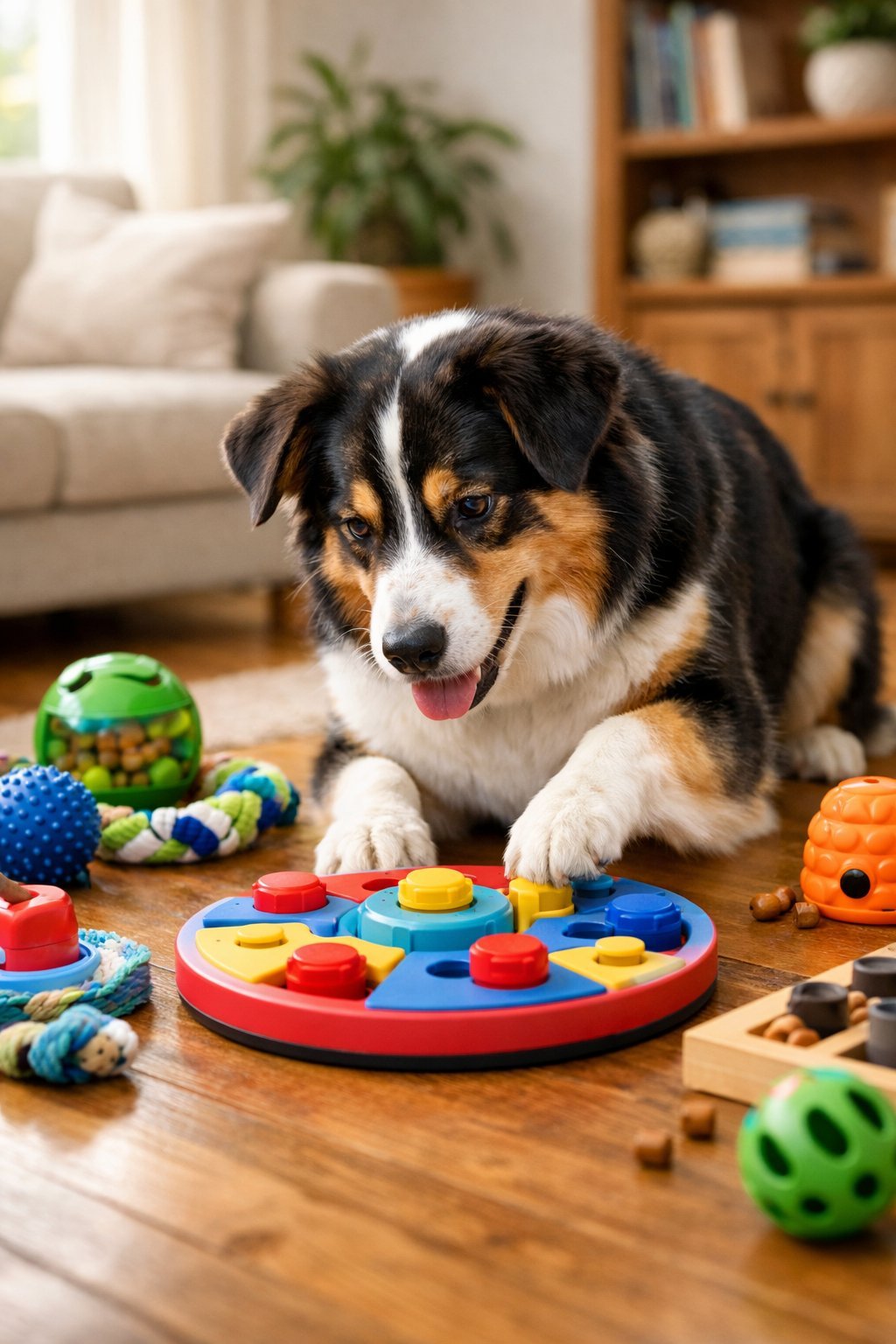
The best interactive toy for your dog depends on their age, size, and breed characteristics, along with the toy’s safety features and difficulty level. I’ve found that matching these factors correctly makes the difference between a toy that gets used daily and one that sits ignored in the corner.
Factors Based on Your Dog’s Age and Size
Puppies need softer interactive toys that are gentle on developing teeth and gums. I recommend starting with simpler puzzles that build confidence rather than frustrate young dogs still learning how to problem-solve.
Senior dogs benefit from interactive toys that provide mental stimulation without requiring excessive physical effort. Look for toys with larger pieces that are easier to grip for dogs with arthritis or dental issues.
Size matters more than many people think. A toy designed for a Chihuahua will be a choking hazard for a German Shepherd, while a large breed puzzle will be impossible for a small dog to manipulate.
When selecting an interactive toy for your dog, consider your dog’s size to ensure they can actually use it effectively.
Material Safety and Durability
I always check that toys are made from non-toxic materials without small parts that could break off and cause choking. BPA-free plastic and natural rubber are my go-to materials for most interactive toys.
Look for toys that are durable and safe for your dog to play with unsupervised. Heavy chewers need reinforced construction, while gentle players can use softer materials.
Avoid toys with sharp edges or loose components. I inspect each toy before giving it to my dog and replace any that show signs of significant wear or damage.
Levels of Difficulty for Different Breeds
Border Collies, Poodles, and other high-intelligence breeds need advanced puzzle toys that offer multiple steps to solve. These dogs get bored quickly with basic treat dispensers.
Breeds with moderate problem-solving abilities do well with intermediate difficulty toys. I find that most Labs, Golden Retrievers, and Beagles enjoy toys with two or three moving parts.
Brachycephalic breeds like Bulldogs and Pugs need puzzles designed for their flat faces. Choose toys with larger openings and pieces they can grip without excessive nose work.
Some breeds are more food-motivated than others, so treat-dispensing balls work better for certain dogs while others prefer toys with squeakers or different textures.
How to Introduce New Interactive Toys

Starting with the right approach helps your dog feel comfortable and excited about new toys. I focus on creating positive experiences, adjusting challenge levels, and keeping my dog safe during play.
Making Playtime Positive
I always introduce new interactive toys when my dog is calm and ready to focus. Rushing into playtime when they’re overly excited can lead to frustration.
I start by letting my dog sniff and explore the toy without any pressure. This helps them become familiar with it before I add any treats or challenges.
I use high-value treats that my dog loves to create positive associations with the new toy.
Key steps I follow:
-
Place the toy on the floor and let my dog investigate naturally
-
Reward any interest with praise or treats
-
Keep initial sessions short (5-10 minutes)
-
End on a positive note before my dog loses interest
I never force my dog to interact with a toy. If they seem hesitant or uninterested, I put it away and try again later.
Some dogs need multiple exposures before they warm up to new interactive toys.
Gradually Increasing Difficulty
I start every new toy on its easiest setting. This usually means putting treats where my dog can easily find them or leaving puzzle compartments a bit open.
Once my dog solves the toy a few times, I make things a little trickier. For sliding puzzles, I close the compartments more or use smaller treats.
With treat dispensers, I adjust the opening so treats come out more slowly. This way, my dog still gets the reward but has to work a bit harder.
My progression plan:
- Show my dog how the toy works by demonstrating once.
- Let them succeed easily for 3-5 sessions.
- Add one small challenge at a time.
- Watch for signs of frustration like whining or walking away.
I never jump from beginner to advanced levels. Moving too fast can make my dog avoid the toy.
If my dog struggles for more than a few minutes, I make the toy easier again.
Supervision and Safety Tips
I always stay nearby when my dog tries a new interactive toy. This helps me spot any problems and step in if needed.
I check toys before each use for broken parts, sharp edges, or loose pieces. Damaged enrichment toys can quickly become choking hazards.
Safety rules I follow:
- Remove toys if my dog tries to destroy them instead of solving them
- Choose size-appropriate toys my dog can’t swallow whole
- Clean toys regularly to prevent bacteria buildup
- Replace worn or damaged toys immediately
I limit playtime to 15-20 minutes per session to keep things fun and prevent my dog from getting frustrated. Some dogs can get possessive over food-filled toys, so I watch their body language around other pets or family members.
Maximizing the Benefits of Brain-Boosting Toys

Getting the most from interactive dog toys means using them with a bit of strategy. Planning how and when to use these toys keeps my dog engaged and mentally sharp.
Creating a Rotation Schedule
I keep about 5-7 puzzle toys in my rotation but only give my dog access to 2-3 at a time. This way, toys stay fresh and exciting.
Every few days, I swap out the toys for different ones from storage. My dog gets pumped when I bring out a toy she hasn’t seen in a week—it feels brand new to her.
I organize toys by difficulty level and rotate through easy, medium, and hard puzzles during the week. On busy days, I stick with simpler toys my dog can handle on her own.
Storage tips that work for me:
- Keep unused toys in a closet where my dog can’t see or smell them
- Clean toys before putting them away to remove old treat smells
- Label containers by difficulty level for quick selection
I also match toy difficulty to my dog’s energy and mood. On high-energy days, I start with harder puzzles to give her brain a workout.
Incorporating Toys Into Training
I use puzzle toys as rewards during training sessions instead of just handing out treats. After my dog follows a command, she gets to work on a treat-dispensing toy for a minute or two.
This makes training breaks more interesting and keeps my dog focused. She knows a fun puzzle is coming, so she’s more eager during lessons.
I’ve taught specific commands for toy play too. “Find it” means it’s puzzle time, while “all done” signals that we’re putting the toys away.
For dogs learning new things, I sometimes hide toys around the house as a jackpot reward. Searching and solving keeps training sessions fun and helps build problem-solving skills.
Encouraging Independent Play
I set up enrichment toys in a quiet area where my dog feels comfortable working alone. She has a favorite spot in the living room where she takes her puzzle toys to solve them without my help.
At first, I stayed nearby to guide her. As she got more confident, I gradually moved farther away.
Now she happily works on puzzles for 15-20 minutes without needing me to watch or encourage her.
I make sure the toys I pick for solo play match her current skill level. Toys that are too hard lead to frustration, while ones that are too easy get boring quickly.
I look for that sweet spot where she has to think but can still succeed.
Signs my dog is ready for independent play:
- She approaches puzzle toys on her own
- She tries different strategies without looking to me for help
- She stays calm when a toy is challenging
