
Outdoor Dog Kennel Ideas to Keep Your Pup Safe and Comfortable

Building an outdoor dog kennel gives your pet a safe space to play and relax while enjoying fresh air.
An outdoor dog kennel combines secure fencing, comfortable ground cover, and protection from weather to create a space where your dog can spend time outside safely.
The right setup depends on your yard size, budget, and your dog’s needs.
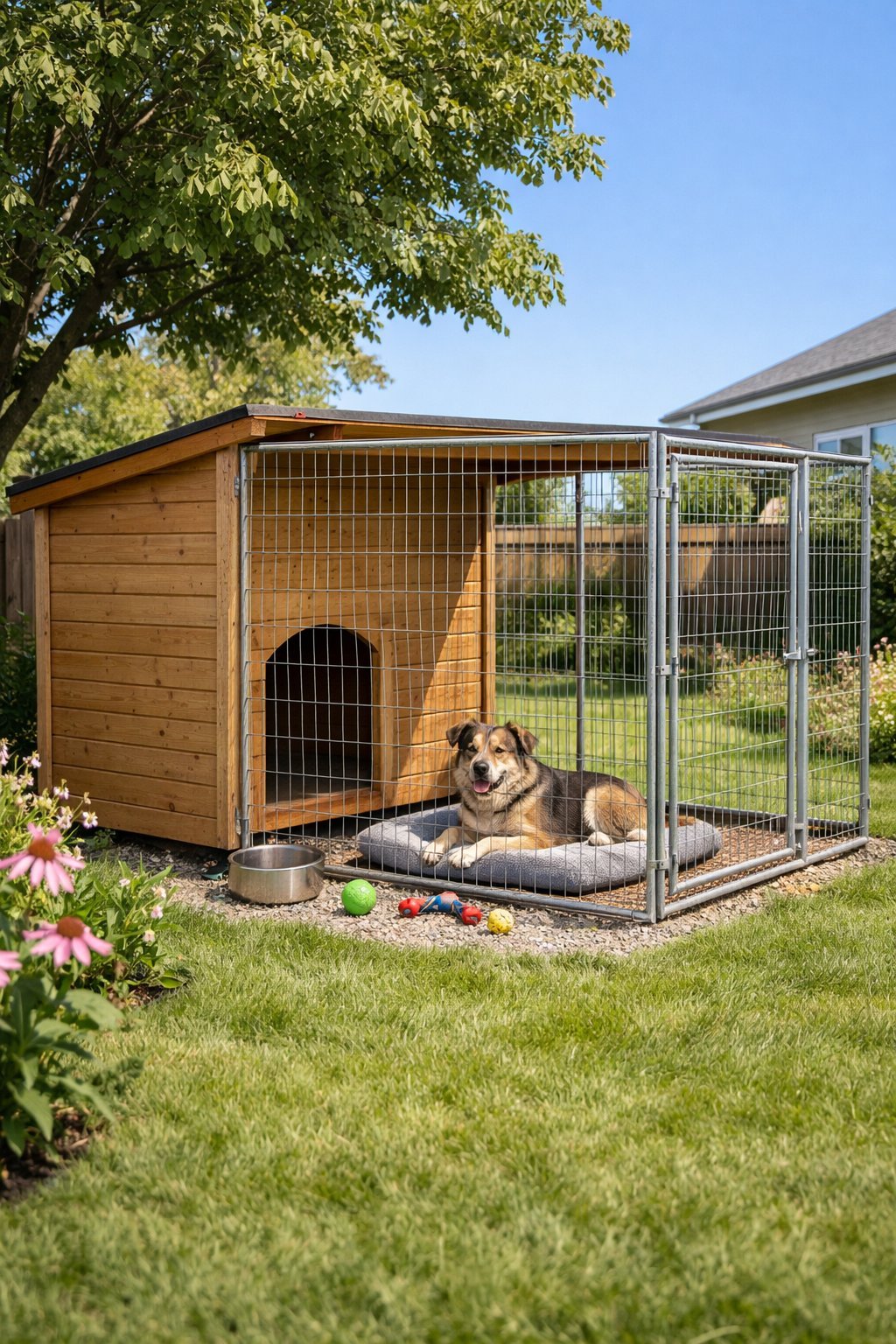
I’ve gathered ideas ranging from simple DIY builds to more permanent structures.
Some dog owners work with basic chain-link fencing while others create elaborate setups with shade structures and play equipment.
The goal is finding what works best for you and your dog.
Whether you want a cheap DIY outdoor kennel or a fancier permanent structure, there are options for every budget and skill level.
Creative designs for your backyard can transform a basic enclosed area into a space your dog will love spending time in.
Key Takeaways
- Pick kennel size and materials based on your dog’s breed, energy level, and local weather conditions
- Include proper flooring like gravel or artificial turf, shade coverage, and fresh water access for comfort
- Build your own kennel with basic materials or buy pre-made options depending on your budget and time
Choosing the Right Outdoor Dog Kennel
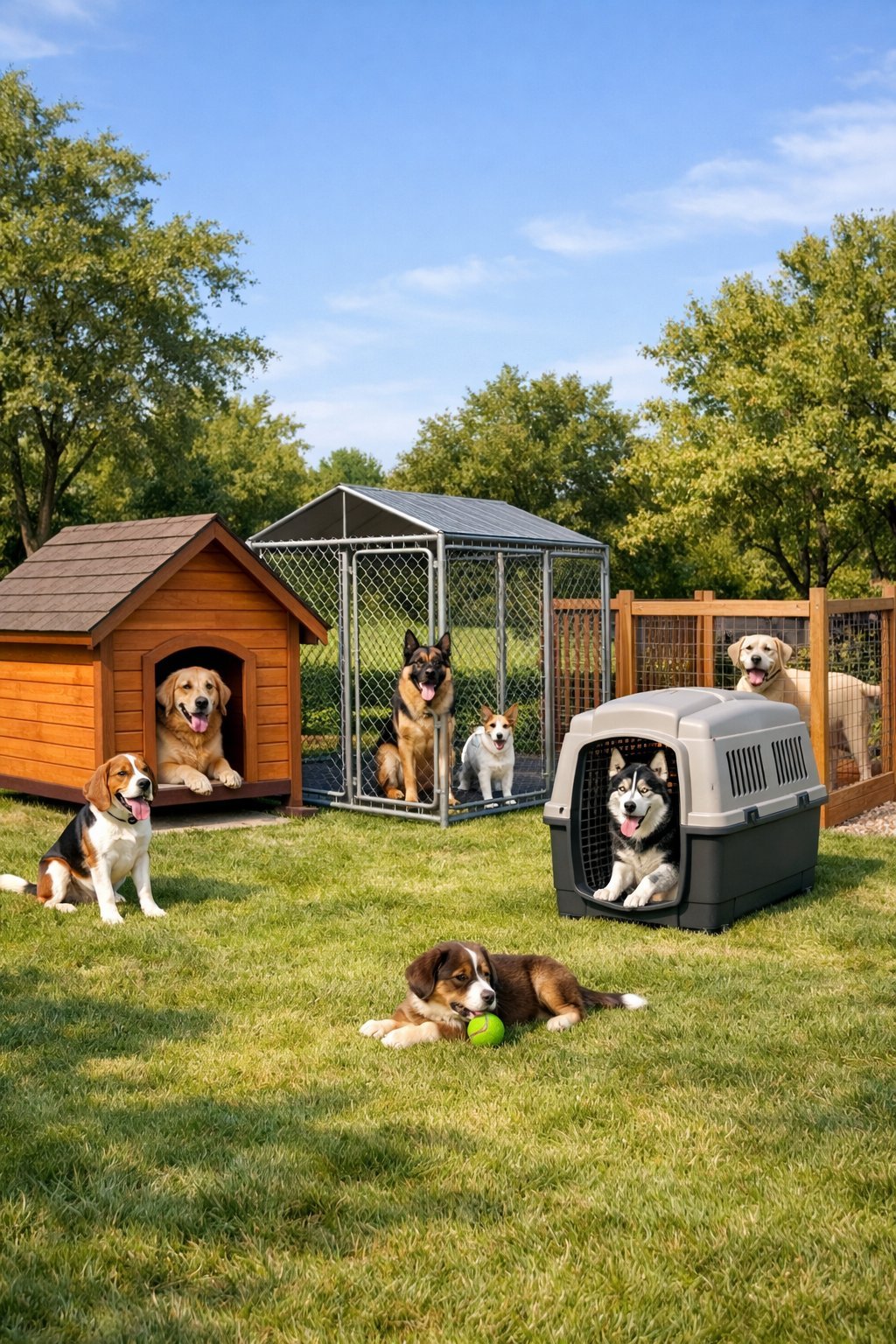
Picking the perfect outdoor kennel means looking at your dog’s size, choosing materials that last, and finding the best spot in your yard.
Size and Space Considerations
I always measure my dog first before buying or building a kennel.
Your dog needs enough room to stand up, turn around, and lie down comfortably.
For the kennel dimensions, I add at least 6 inches to my dog’s height when standing and 12 inches to their length when lying down.
This gives them space to move without feeling cramped.
Basic size guidelines:
- Small dogs (under 25 lbs): 4′ x 4′ minimum
- Medium dogs (25-50 lbs): 5′ x 8′ minimum
- Large dogs (50-90 lbs): 6′ x 10′ minimum
- Extra large dogs (over 90 lbs): 8′ x 12′ minimum
If I have multiple dogs, I multiply the space needed for one dog by 1.5 for each additional dog.
Active breeds need more room to play and burn energy throughout the day.
Material Options for Durability
I’ve found that choosing the right materials makes a huge difference in how long my kennel lasts.
Chain-link fencing is budget-friendly and provides good airflow, but some dogs can climb or dig under it.
Metal kennels resist chewing and last for years in all weather conditions.
I prefer galvanized steel because it won’t rust when it rains or snows.
Wood looks nice and blends with my yard, but it needs regular sealing to prevent rot.
I check wooden kennels every few months for splinters or damage that could hurt my dog.
Plastic and resin kennels are lightweight and easy to clean.
They work well in mild climates but can crack in extreme heat or cold.
Kennel Placement Tips
I learned that selecting the right spot determines whether your pet will thrive in their outdoor space.
I watch how the sun moves across my yard throughout the day to find areas with both sun and shade.
Morning sun keeps the kennel warm in cooler months, but I make sure there’s afternoon shade to prevent overheating.
I avoid low spots in my yard where water collects after rain.
Placing the kennel near my house lets me keep an eye on my dog and helps them feel less isolated.
I position it away from the property line so my dog doesn’t bark at passersby all day.
Good drainage is essential.
I put down gravel or use a slightly raised platform to keep the kennel floor dry and clean.
Creative Outdoor Dog Kennel Designs
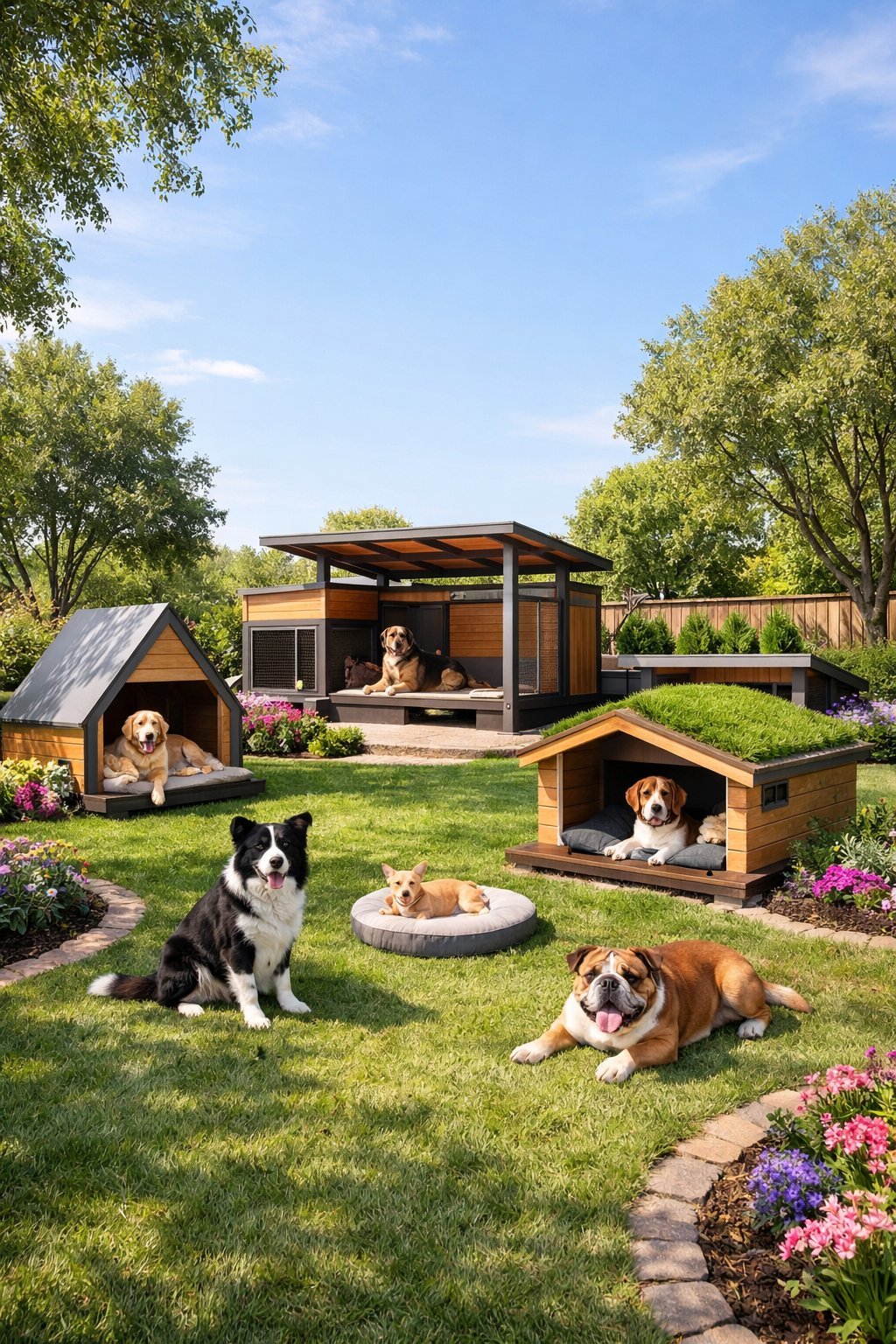
Modern kennel designs range from portable units you can move around your yard to high-end custom structures with heating and air conditioning.
The right design depends on your dog’s size, your budget, and how much flexibility you need.
Portable and Modular Kennels
I find portable kennels incredibly useful when I need flexibility in my yard layout.
These lightweight structures typically use chain-link panels or wire mesh that snap together without tools.
You can easily take them apart and move them to different locations.
Modular kennels let you expand the space as your needs change.
If you get another dog or want to give your pup more room, you just add extra panels.
Most portable and modular designs work well for temporary setups or renters who can’t install permanent structures.
The main benefit is affordability.
You can find basic portable kennels starting around $100 to $300.
They’re also great for camping trips or visiting friends with your dog.
Luxury and Custom-Built Kennels
Custom-built kennels offer features like insulated walls, climate control systems, and built-in feeding stations.
I’ve seen designs that include raised floors for better drainage, separate sleeping areas, and even doggie doors that lead to enclosed runs.
Some luxury outdoor kennels feature brick or stone construction that matches your home’s exterior.
These permanent structures can include electricity for lighting and temperature control.
You might spend $2,000 to $10,000 or more depending on size and materials.
Climate-controlled options work best if your dog spends extended time outdoors.
Heated kennels protect against winter cold while AC units keep dogs comfortable in summer heat.
Kennel Run Attachments
A kennel run gives your dog a long, narrow space to exercise while staying contained.
I recommend runs that are at least 4 feet wide and 10 to 20 feet long.
This gives most dogs enough room to trot and play.
You can attach runs directly to your house through a doggie door or connect them to a separate kennel structure.
DIY kennel run designs often use chain-link fencing with concrete or gravel flooring for easy cleaning.
Cover part of the run with a roof to provide shade and rain protection.
Some owners add agility equipment like small jumps or tunnels to keep their dogs entertained during outdoor time.
Functional Features for Outdoor Kennels
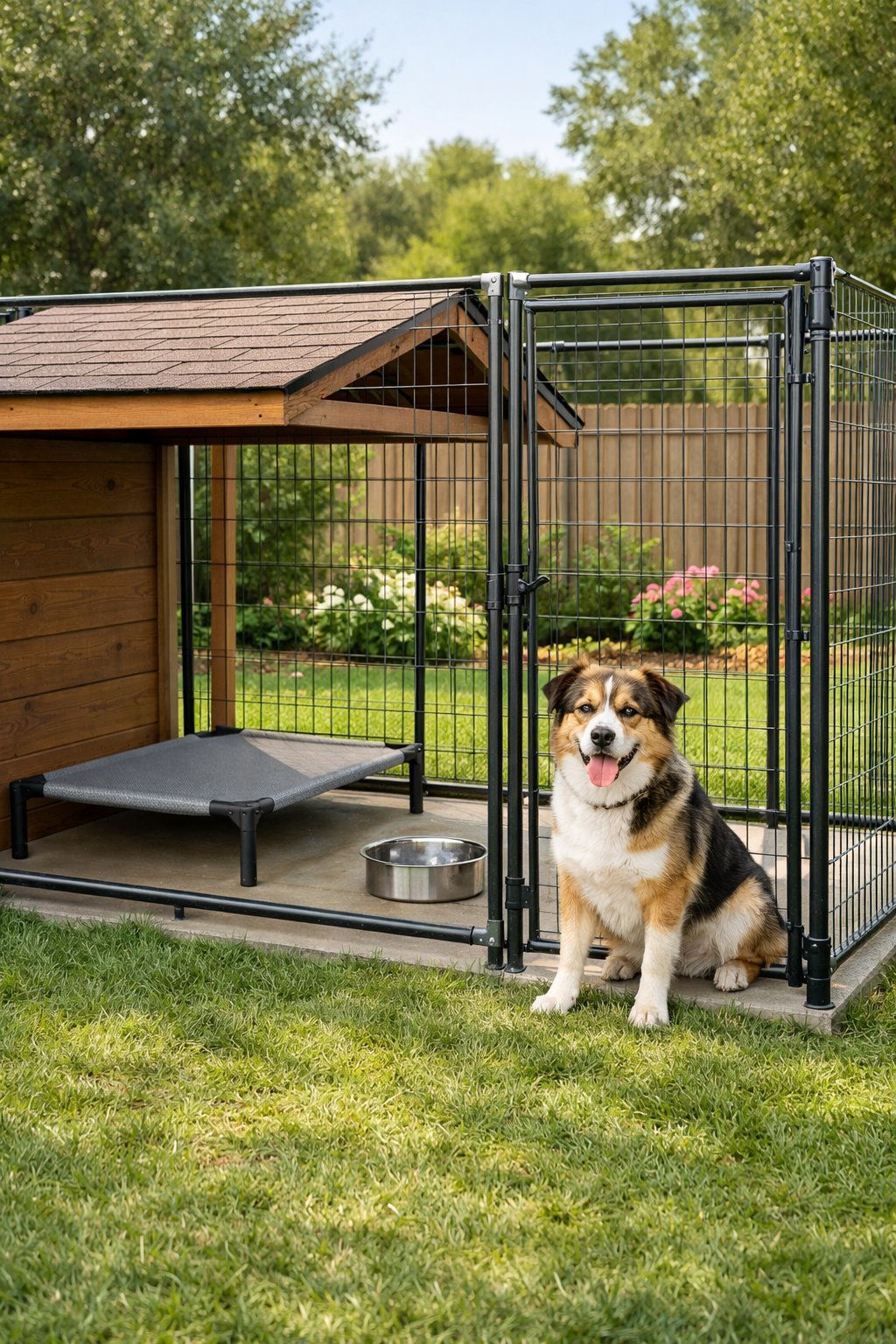
The right features can transform a basic outdoor kennel into a comfortable and practical space for your dog.
I focus on three essential elements: protecting against weather, keeping your pet secure, and making cleanup simple.
Weather Protection Solutions
I always start with a solid roof when planning weather protection.
A sloped roof prevents water pooling and keeps rain and snow from entering the kennel space.
Insulated walls help regulate temperature in both hot and cold weather.
I recommend using materials like insulated panels or double-walled construction for year-round comfort.
Proper ventilation is just as important as protection from the elements.
I install vents near the roof line to allow hot air to escape while keeping rain out.
Weather-resistant wood materials work well for building durable structures that withstand outdoor conditions.
Windbreaks made from solid panels or natural barriers protect against harsh winds.
I position these on the sides that face prevailing winds in your area.
Safety and Security Enhancements
I use heavy-duty latches that dogs cannot manipulate from inside the kennel.
Double-latch systems provide extra security for determined escape artists.
Secure fencing without gaps prevents digging and climbing attempts.
I bury fence material at least 6 inches underground to stop dogs from digging out.
Rounded edges and smooth surfaces eliminate injury risks.
I check all hardware regularly to ensure nothing has loosened or developed sharp edges.
Key security features I include:
- Locks that require human dexterity to open
- Fence height appropriate for your dog’s jumping ability
- Regular inspection points for wear and damage
- Covered or protected electrical components
Easy-to-Clean Flooring Options
I prefer concrete floors with a slight slope for drainage.
This allows me to hose down the area quickly and prevents standing water.
Raised platforms with slatted designs let waste fall through while keeping dogs dry and comfortable.
I place collection trays underneath for simple waste removal.
Sealed surfaces prevent odor absorption and bacterial growth.
I apply epoxy coating to concrete or use marine-grade sealant on wood platforms.
Removable floor sections make deep cleaning easier.
I design kennels with panels that lift out so I can access every corner without crawling inside.
Comfort and Enrichment for Dogs
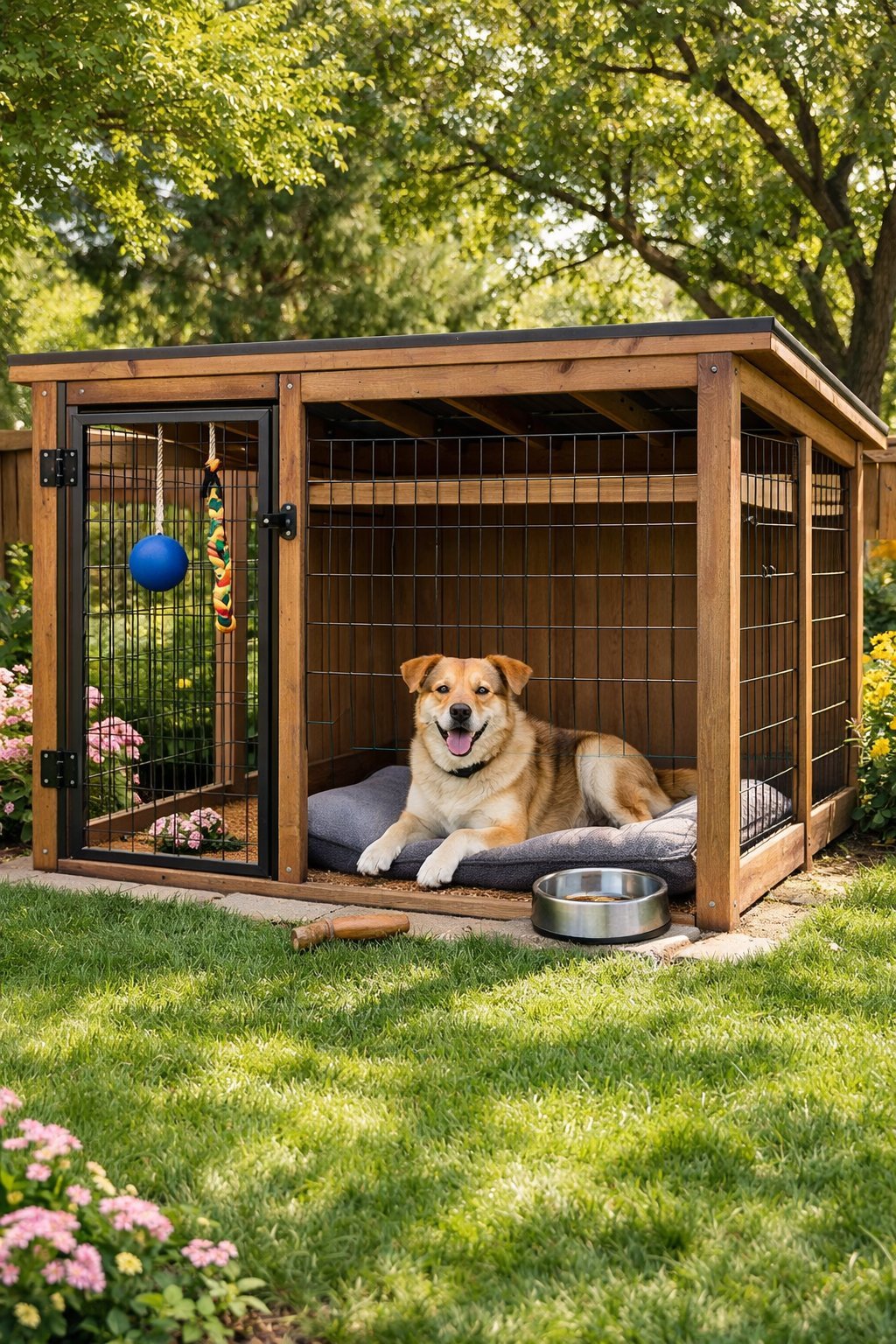
Creating a comfortable outdoor kennel means going beyond basic shelter to include areas where your dog can rest, play, and explore safely.
I focus on three main elements: proper shade, engaging activities, and thoughtful landscaping choices.
Shaded Rest Areas
Dogs need protection from direct sunlight to prevent overheating and exhaustion.
I always make sure to include at least one fully shaded spot where my dog can retreat during hot weather.
Natural shade from trees works well, but I also use artificial options like covered porches or shade sails.
Strategic placement of your kennel should account for sun patterns throughout the day.
A raised dog bed or platform keeps your pet off hot ground and improves air circulation.
I add outdoor cushions or mats that are waterproof and easy to clean.
Consider installing a small covered structure or doghouse within the kennel.
This gives your dog a den-like space where they feel secure and protected from weather.
Toys and Activities
Mental stimulation prevents boredom and destructive behavior in outdoor kennels.
I rotate different types of toys weekly to keep things interesting for my dog.
Durable chew toys, puzzle feeders, and rope toys work best in outdoor settings.
I avoid toys with small parts that could break off and become choking hazards.
Popular kennel enrichment options:
- Kong toys filled with frozen treats
- Hanging rope toys attached to fence posts
- Snuffle mats for scent work
- Digging boxes filled with sand
I also install a secure post or tree for tug toys.
Some owners add agility equipment like small jumps or weave poles if space allows.
Dog-Friendly Landscaping
The ground surface in your kennel affects your dog’s comfort and health.
I prefer grass, mulch, or gravel over concrete because they’re easier on joints and paws.
Avoid toxic plants like azaleas, lilies, or sago palms near the kennel area.
Safe options include sunflowers, roses, and most herbs.
I create small planted borders with sturdy shrubs that can withstand occasional contact.
Adding different textures like smooth stones or wooden platforms gives my dog sensory variety.
Proper drainage prevents muddy conditions that lead to dirty dogs and potential health issues.
I slope the ground slightly away from rest areas to keep them dry.
DIY Outdoor Dog Kennel Projects
Building your own outdoor dog kennel saves money while giving you complete control over size, materials, and design features that work best for your pup.
Budget-Friendly Ideas
I’ve found that building outdoor dog kennels under $200 is completely achievable with smart planning.
Chain-link fencing panels are one of the most affordable materials, costing between $50-$100 for a basic 10×10 foot space.
Pressure-treated wood posts work great as corner supports and typically cost $5-$8 each.
I recommend buying basic livestock panels from farm supply stores since they’re often cheaper than pet-specific products.
A simple concrete block foundation eliminates expensive pouring costs while keeping the structure stable.
For roofing, corrugated metal sheets provide weather protection at $15-$25 per panel.
You can also use outdoor shade cloth as a budget alternative that costs around $20-$30 for a large piece.
Basic hardware like hinges, latches, and screws should run less than $30 total.
Upcycling and Repurposing Materials
Wooden pallets make excellent kennel walls and can usually be obtained free from local businesses.
I stack and secure them with screws to create solid barriers that provide both ventilation and visibility.
Old doors work perfectly as kennel gates when you add simple hinges and a latch.
Leftover deck boards from home projects can become roof slats or flooring material.
Wire shelving units from closet systems can be repurposed as fence panels for smaller dogs.
PVC pipes from plumbing projects create lightweight frame structures that are easy to assemble.
Even old playground equipment or garden trellises can be transformed into kennel components with minimal modification.
Step-by-Step Building Tips
Start by measuring your dog standing, sitting, and lying down to determine minimum kennel dimensions. I always add at least 2 feet to each measurement for comfortable movement space.
Basic construction sequence:
-
Mark and level the ground area.
-
Install corner posts 2-3 feet deep in concrete.
-
Attach fence panels or walls to posts.
-
Add cross-beams for roof support.
-
Install roofing material.
-
Hang the gate and add latches.
Check local building codes before starting. Some areas require permits for permanent structures.
I use galvanized hardware throughout to prevent rust damage. Make sure all sharp edges are covered or filed smooth to protect your dog from injuries.
