
Pallet Dog House: Easy DIY Plans to Build a Cozy Home for Your Furry Friend

Pallet Dog House – Your dog deserves a comfortable place to rest outside, but store-bought dog houses can cost hundreds of dollars. Building a dog house from wooden pallets offers a budget-friendly solution that often uses free or low-cost materials while creating a sturdy shelter for your pet.
Pallets are easy to find at construction sites or through online marketplaces. They’re already designed with a structure that works well for building.
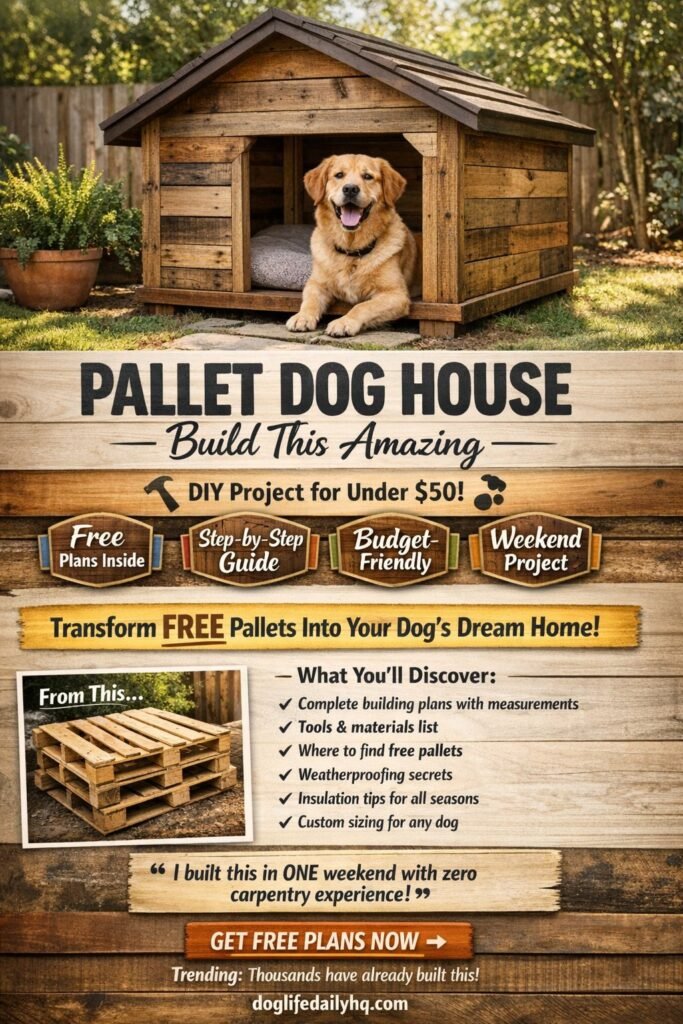
I’ve seen countless pet owners successfully build cozy dog houses from pallets with basic tools and minimal carpentry experience. The natural wood construction provides good insulation and ventilation for your dog.
You can customize the size and design to fit your yard and your dog’s needs. This guide walks you through everything from choosing safe pallets to adding the final protective coat.
Whether you want a simple rectangular shelter or something more creative, pallet dog house plans give you flexibility to match your skill level and available time.
Key Takeaways
- You can build a sturdy dog house using reclaimed wooden pallets at little to no cost
- Basic tools and beginner carpentry skills are enough to complete most pallet dog house projects
- Proper pallet selection, weatherproofing, and regular maintenance keep your dog’s house safe and comfortable
Benefits of Building a Pallet Dog House
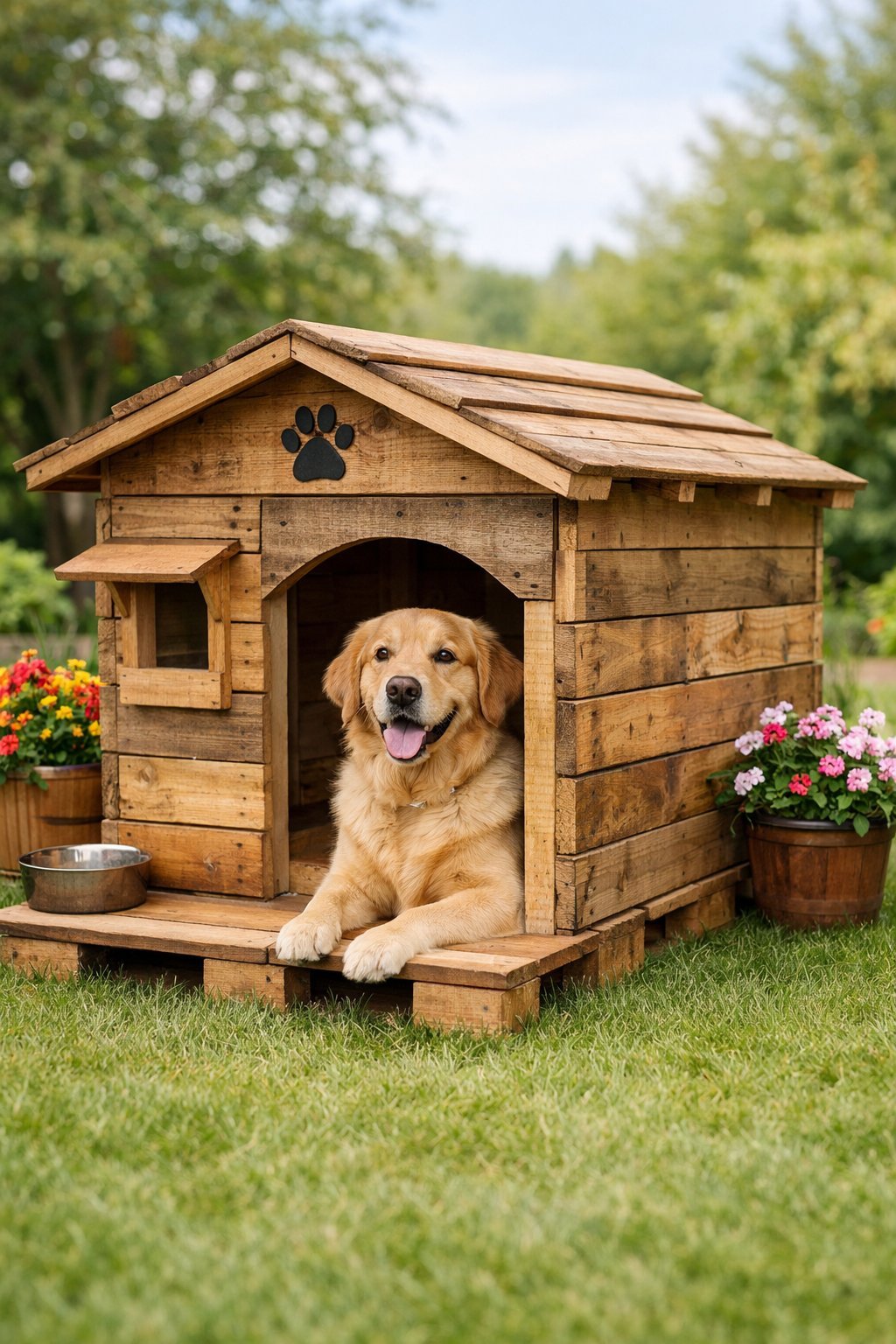
Building a dog house from pallets offers real advantages that go beyond just having a place for your dog to sleep. Pallets help me save money while creating something good for the environment.
I can build exactly what my dog needs.
Eco-Friendly and Sustainable Choice
When I build a dog house using pallets, I’m giving new life to materials that might otherwise end up in landfills. Most pallets are made from wood that’s already been used for shipping and storage.
Reusing these materials reduces the demand for newly cut lumber. This means fewer trees need to be harvested just to build my dog’s shelter.
I’m also keeping pallets out of waste streams where they take up space. Many pallets are available for free from construction sites, warehouses, and online marketplaces.
By choosing reclaimed wood pallets, I’m making a sustainable choice that benefits the planet. The wood is already processed and dried, so no additional energy goes into preparing the materials.
Cost Savings Compared to Store-Bought Options
I can often find pallets for free or at very low cost, which makes this project incredibly budget-friendly. Pre-made dog houses from pet stores can cost anywhere from $100 to $500 or more depending on size and quality.
When I build a dog house on a budget using pallets, my main expenses are just fasteners, tools I might not already own, and weatherproofing materials. The total cost typically stays under $50 for a basic structure.
Here’s a typical cost comparison:
| Item | Store-Bought | Pallet Build |
|---|---|---|
| Medium dog house | $200-$300 | $30-$50 |
| Large dog house | $300-$500 | $50-$75 |
| Custom features | Extra cost | Minimal cost |
I save even more money if I already have basic tools like a hammer, saw, and drill at home.
Customization for Dog Comfort
Building my own pallet dog house means I can design it specifically for my dog’s size and needs. I measure my dog and create a space that’s not too big or too small.
I can add features that store-bought houses don’t always include. This might mean extra insulation for cold weather, a raised floor to keep my dog dry, or an angled roof for better rain drainage.
I decide where to place the door based on my yard layout. If my dog likes having a window to look out, I can add that.
If they prefer a darker, den-like space, I can build solid walls. I control the height of the doorway so it’s easy for my dog to enter but still blocks wind.
I can also match the dog house style to my home or yard design. The customization options let me create something that works perfectly for both my dog and my outdoor space.
Durability and Strength of Pallet Wood
Pallet wood is built to handle heavy loads during shipping, which means it’s naturally strong and durable. These boards are designed to support hundreds or even thousands of pounds of goods.
The wood used in pallets is typically hardwood species like oak or pine that resist wear and damage. When I build a sturdy shelter, I’m using materials that have already proven they can handle stress and weight.
Most pallet wood is thick enough to provide good insulation and structural support. The boards hold up well to nail and screw connections, creating solid joints that don’t easily come apart.
With proper weatherproofing like silicone caulk and exterior paint or stain, my pallet dog house can last for many years. The thickness of pallet boards also helps regulate temperature better than thin plywood or plastic alternatives.
This keeps my dog more comfortable in both hot and cold weather.
Selecting and Preparing Pallets
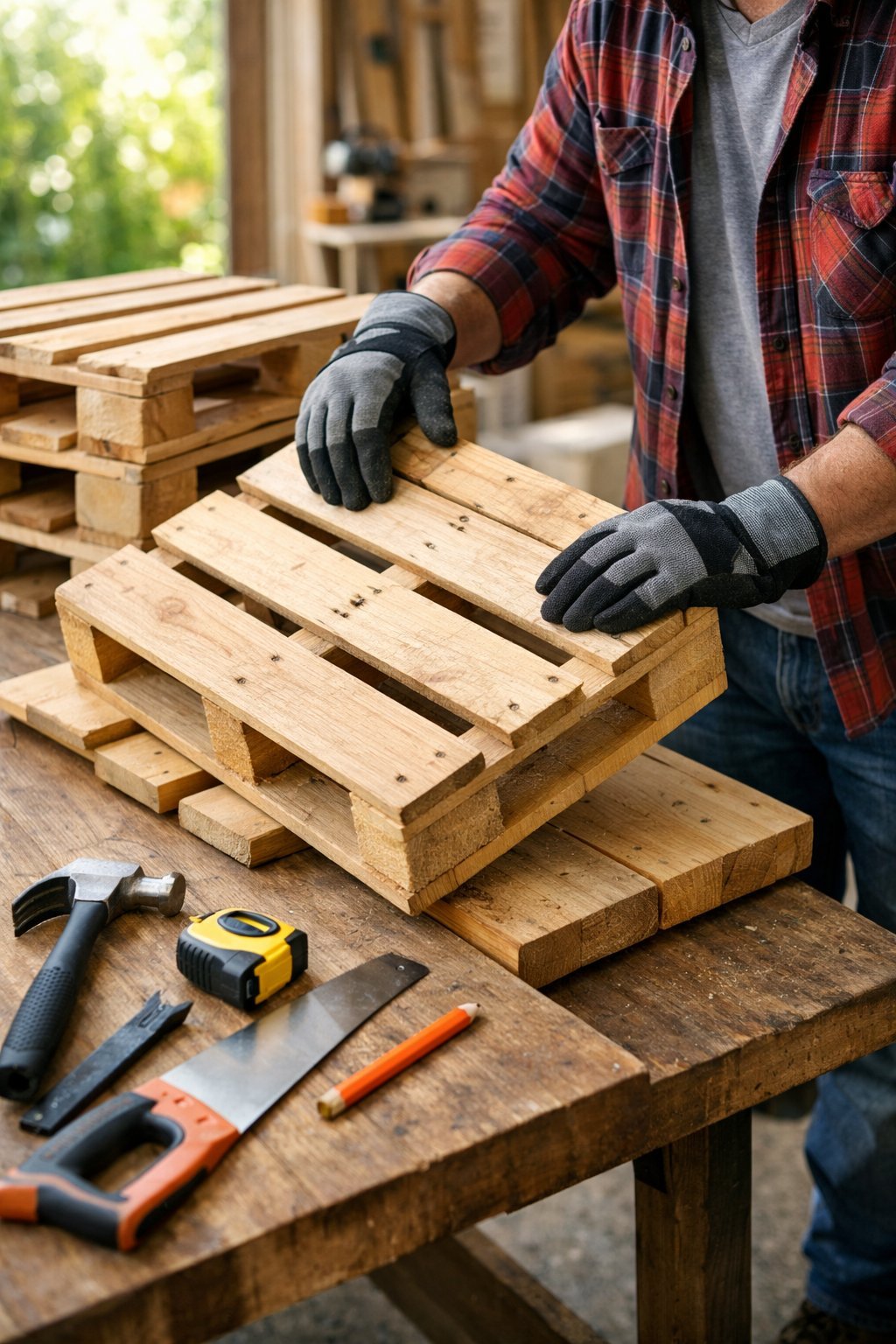
Getting your pallets ready is the foundation of building a safe and sturdy dog house. I’ll walk you through picking the right pallets, making sure they’re clean and safe, and taking them apart without any hassle.
Choosing Safe and Suitable Pallets
I always start by looking for pallets made from hardwood because they hold up better against weather and weight. Check the stamp on each pallet before you bring it home.
Pallets marked “HT” are heat-treated and safe to use, while those stamped “MB” contain methyl bromide, a harmful chemical I avoid at all costs. I stay away from pallets that look warped, cracked, or have missing boards.
These won’t give your dog house the strength it needs. The best pallets come from grocery stores, garden centers, or construction sites where they often give them away for free.
Make sure the pallets are the right size for your dog. I measure my dog from nose to tail and add about 6 inches to figure out how much space they need inside.
Three-stringer pallets work well because they provide extra support in the middle.
Cleaning and Treating Pallet Wood
I scrub each pallet with warm soapy water and a stiff brush to remove dirt, debris, and any stuck-on materials. After washing, I let them dry completely in the sun for at least 24 hours.
This helps prevent mold and rot from forming later. Once dry, I sand down any rough spots or splinters that could hurt my dog.
I use medium-grit sandpaper and pay extra attention to edges and corners. If I find any protruding nails, I either hammer them flat or pull them out completely.
I apply a pet-safe wood sealant or stain to protect the wood from moisture and insects. Never use regular paint or chemicals that could harm your dog.
Natural oils like linseed oil work great as a non-toxic option.
Dismantling Pallets Safely
I wear thick gloves and safety glasses every time I take pallets apart. A pry bar and hammer are my go-to tools for removing boards without breaking them.
I start by loosening one end of a board, then work my way down slowly. When nails won’t budge, I use a reciprocating saw to cut between the board and the stringer.
This saves the wood and makes the job faster. I pull out all old nails from the boards I remove and set them aside in a container so they don’t end up in anyone’s foot.
Some boards will split no matter how careful I am. I keep these aside for smaller pieces I might need later.
Taking pallets apart carefully gives me more usable wood and makes the building process much smoother.
Designing Your Pallet Dog House
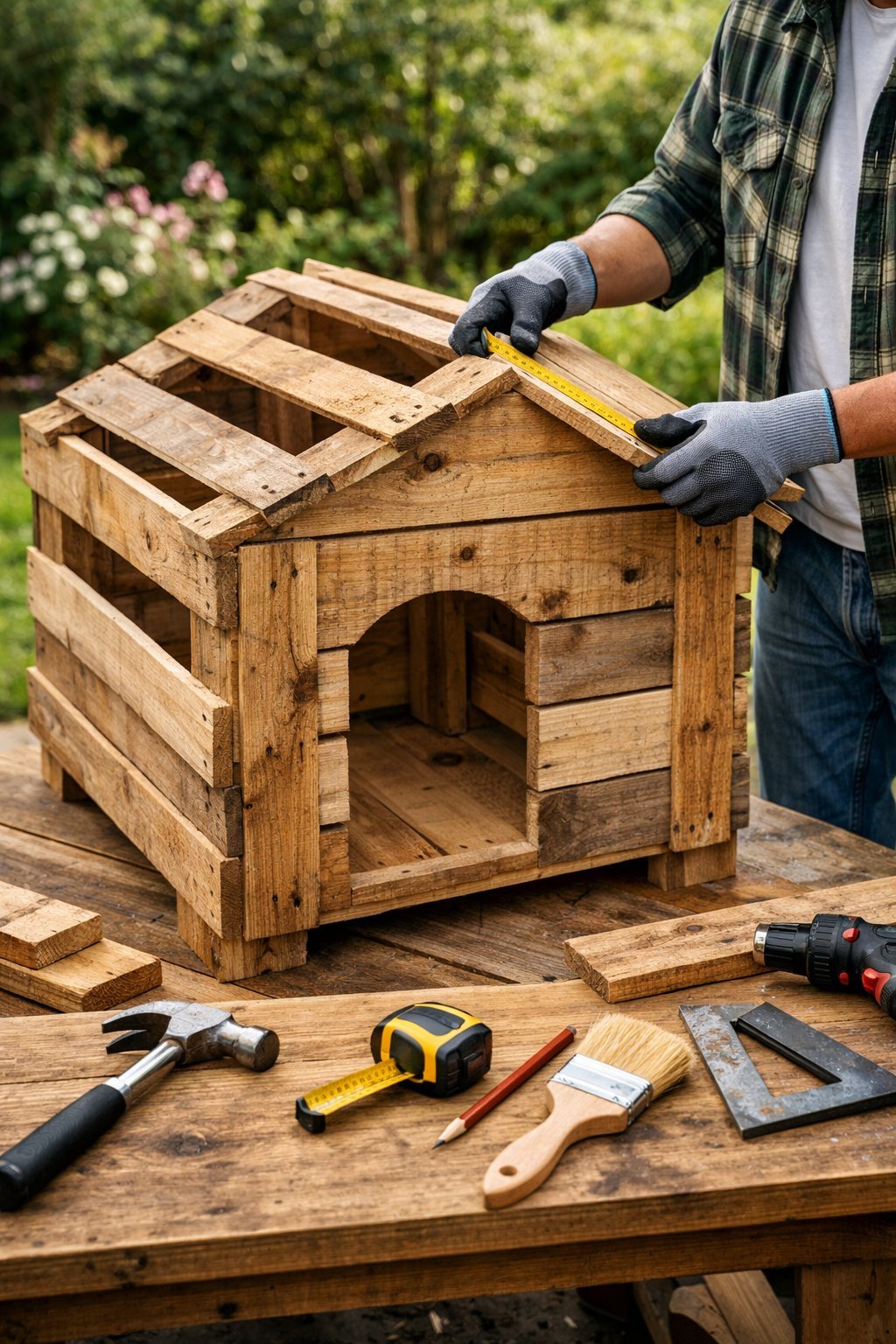
Getting the size right and planning for comfort will make your dog’s new home a place they actually want to use. I always start by measuring my dog and thinking through how air will flow through the space.
Determining the Right Size for Your Dog
I measure my dog from nose to tail while they’re standing, then add 6 to 12 inches to get the minimum length. For width, I measure my dog’s length from nose to the base of their tail and use that number.
The height should let my dog stand comfortably and turn around without ducking. A house that’s too big won’t hold body heat in winter.
I aim for just enough room for my dog to stand, turn, and lie down stretched out. For small dogs under 25 pounds, I build houses around 24 inches long by 18 inches wide.
Medium dogs between 25 and 50 pounds need about 30 inches long by 24 inches wide. Large dogs over 50 pounds require 40 inches long by 30 inches wide or more.
The door opening should be about three-quarters of my dog’s shoulder height. I position it off-center so my dog has a wind-protected corner to curl up in.
Selecting a Functional Layout
I prefer designs that include both shelter and outdoor space for active dogs who like to play. The most basic layout uses 4 to 6 pallets arranged in a simple box shape with a slanted roof.
My favorite setup includes:
- Floor: Two pallets laid flat and secured together
- Walls: Pallets stood upright on three sides
- Entrance wall: One pallet with a cut-out door opening
- Roof: Angled pallets or plywood for water runoff
I always elevate the floor a few inches off the ground using concrete blocks or additional pallet pieces. This keeps moisture away and improves air circulation underneath.
The entrance should face away from prevailing winds. I check my local weather patterns before deciding which direction the door should point.
Ventilation and Insulation Considerations
I drill 2 to 3 small holes near the roof peak on opposite walls to create cross-ventilation. Each hole should be about 1 inch in diameter.
This prevents moisture buildup and keeps the air fresh without creating drafts at dog level. For insulation, I attach rigid foam boards between the pallet slats or staple reflective foil insulation to the interior walls.
I never use fiberglass insulation because dogs can pull it out and eat it. In cold climates, I add a removable door flap made from heavy canvas or rubber.
The flap should overlap the opening by 2 inches on all sides. I attach it at the top with a strip of wood so my dog can push through easily.
For summer comfort, I skip heavy insulation and focus on shade and airflow instead. A well-ventilated pallet dog house design keeps temperatures manageable when it’s hot outside.
Step-by-Step Construction Guide
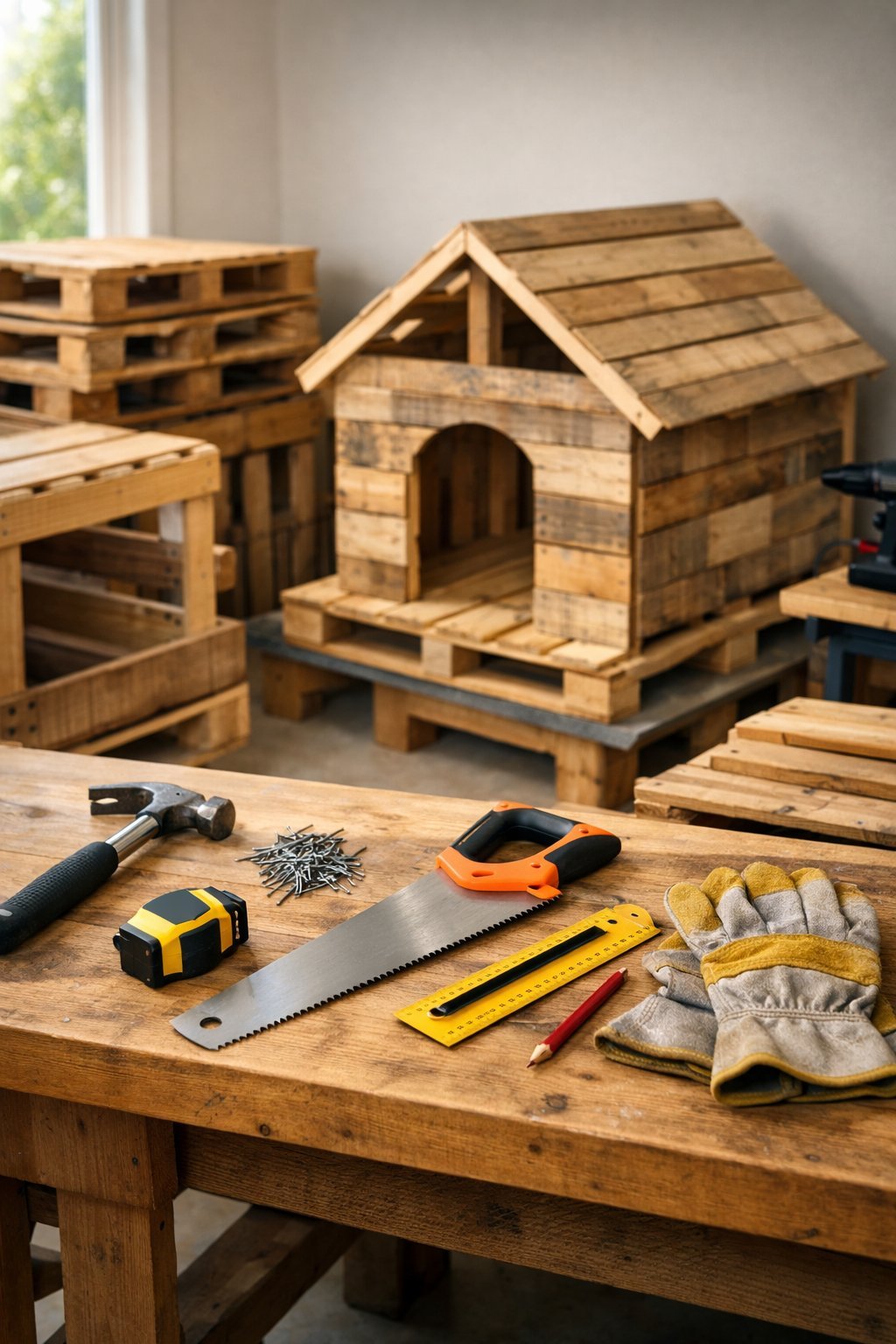
Building a pallet dog house requires gathering the right supplies first, then assembling the base structure before moving on to walls and roof installation. I’ll walk you through each phase so you can create a sturdy shelter for your furry friend.
Essential Tools and Materials
I recommend starting with 3-4 heat-treated wooden pallets that are free from chemicals and damage. Look for pallets stamped with “HT” rather than “MB” since MB indicates methyl bromide treatment, which can be harmful to pets.
You’ll need these basic tools:
- Hammer or nail gun
- Circular saw or handsaw
- Drill with bits
- Measuring tape
- Level
- Sandpaper or electric sander
For materials beyond pallets, I suggest picking up:
- Wood screws (2-3 inches long)
- Roofing material like shingles or waterproof tarp
- Wood glue for extra stability
- Paint or wood stain (pet-safe only)
- Hinges for the door
Building the Base and Walls
I start by disassembling one pallet carefully to get individual boards for later use.
Then I place two full pallets flat on the ground as the floor base, making sure they’re level and stable.
For walls, I stand pallets upright on three sides of the base.
I secure them to the floor pallets using wood screws every 6-8 inches along the bottom edge.
The front should remain open for now since that’s where the entrance will go.
I reinforce the corners by adding extra pallet boards vertically where walls meet.
This creates a much stronger frame.
Using my level, I check that walls stand straight before fully securing them.
Installing the Roof
I measure the top of my dog house and cut pallet boards to create a slanted roof frame.
A slope helps rainwater run off instead of pooling on top.
I attach two boards at an angle, meeting at the peak, then add cross supports every 12 inches.
Once the frame is solid, I cover it with either more pallet slats placed close together or a single piece of plywood.
I make sure there’s a slight overhang of 3-4 inches on all sides to keep rain away from walls.
For weatherproofing, I add roofing shingles, a tarp, or waterproof sealant over the wood.
This step is crucial for protecting your dog from moisture.
Adding Doors and Windows
I cut an entrance opening in the front wall that’s big enough for my dog to walk through comfortably.
The doorway should be about three-quarters of my dog’s standing height and slightly wider than their shoulders.
Many builders skip an actual door, but I like adding a simple flap using canvas or rubber material.
I attach it above the opening with hinges so my dog can push through easily.
Windows aren’t required, but I often cut small openings on the side walls for ventilation and light.
I keep them high enough that rain won’t blow in directly.
I sand all rough edges around openings thoroughly to prevent splinters.
Painting and Weatherproofing
I always start by sanding down any rough edges or splinters that could hurt my dog.
A good sanding also helps paint and sealant stick better to the wood.
For protection, I recommend using pet-safe wood sealant or paint.
Products labeled safe for children’s toys or food contact are usually fine for pets.
I apply at least two coats of exterior-grade sealant to all surfaces, including the bottom of the base.
The roof needs extra attention since it takes the most weather damage.
I add roofing felt or shingles on top of the pallet wood for better water protection.
Make sure all seams are sealed to prevent leaks.
Let everything dry completely before letting your dog inside.
Most sealants need 24 to 48 hours to cure fully.
Adding Bedding and Accessories
I place a waterproof mat or piece of plywood on the floor first.
This creates a barrier between the bedding and the ground, which helps prevent moisture buildup.
For bedding, I use washable blankets or a dog bed that fits the interior size.
Straw works well in cold weather because it insulates without holding moisture.
I avoid hay since it can get moldy.
A removable cushion makes cleaning much easier.
I can take it out to wash or air it out in the sun.
Consider adding a door flap made from heavy canvas or rubber.
This keeps out wind and rain while still letting your dog come and go.
I attach it with hinges at the top so it swings freely.
Routine Care and Upkeep
I check the dog house every few weeks for signs of damage. I look for loose boards, protruding nails, or areas where water might be getting in.
Cleaning the interior monthly prevents odors and pests. I sweep out debris and wash the floor with pet-safe cleaner.
The bedding needs washing every two weeks or more often if it gets wet or dirty.
Each year before winter, I inspect the roof and reapply sealant to any worn spots. I also check that the base hasn’t settled unevenly, which can cause water to pool.
