
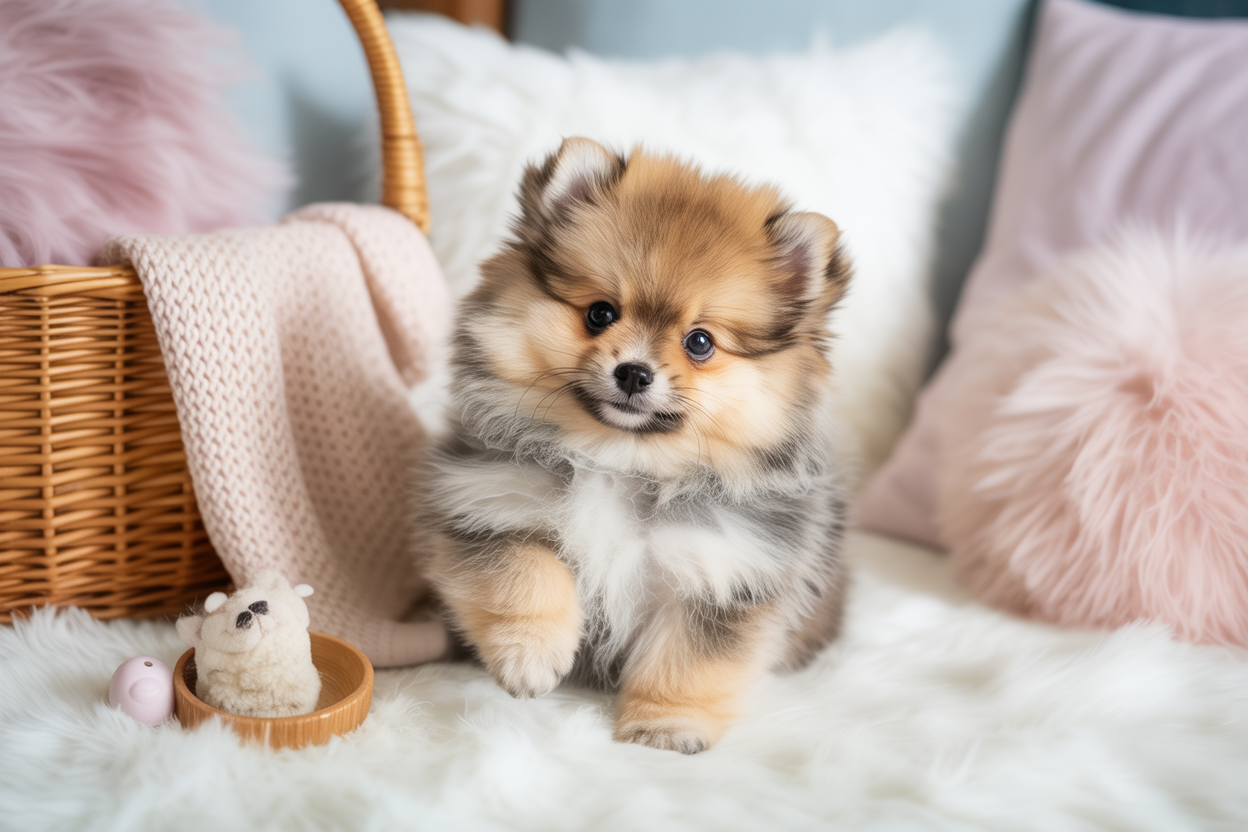
Pomeranian Puppy Care Guide: Everything New Owners Need to Know

I remember the first time I saw a Pomeranian puppy and instantly understood why these tiny, fluffy dogs have captured hearts around the world.
These small dogs pack a big personality into their compact frames, making them perfect companions for many different living situations.
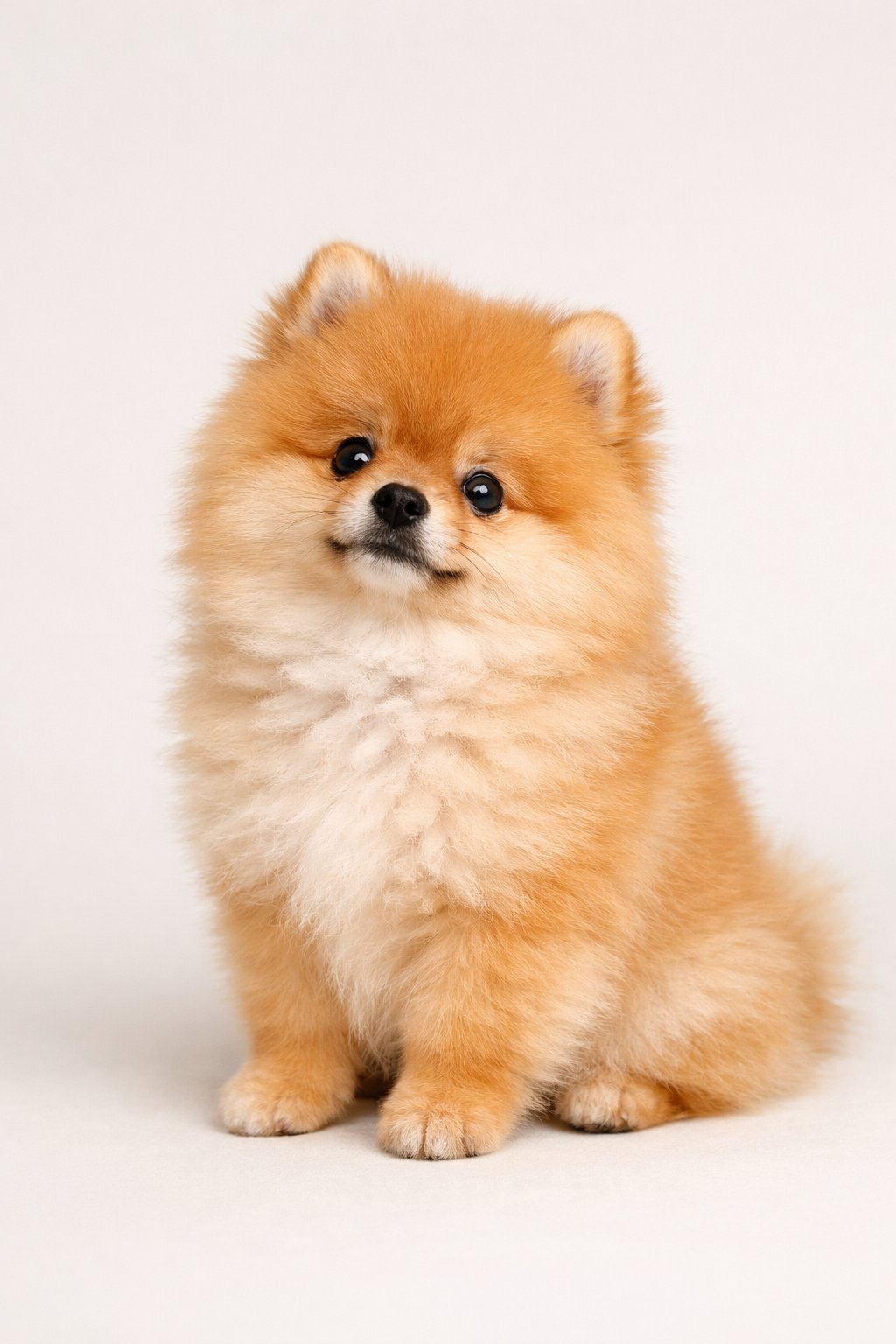
A Pomeranian puppy is a small breed dog that typically weighs between 3 to 7 pounds when fully grown and is known for its fluffy double coat, fox-like face, and bold personality. These toy dog breed puppies descended from larger Spitz-type dogs but have been bred down to their current miniature size.
They come in many different colors and patterns, from orange and red to black, white, and cream.
Before you look for Pomeranian puppies for sale, it helps to understand what makes these dogs special and what they need to thrive.
From preparing your home to learning about grooming and training, owning a Pom puppy requires some planning but brings endless joy and companionship.
Key Takeaways
- Pomeranian puppies are small dogs with big personalities that need proper socialization and training from an early age
- Your home needs puppy-proofing and specific supplies like small-sized bowls, toys, and grooming tools before bringing your Pom home
- Regular grooming, dental care, and consistent training help keep your Pomeranian puppy healthy and well-behaved throughout their life
Understanding the Pomeranian Puppy
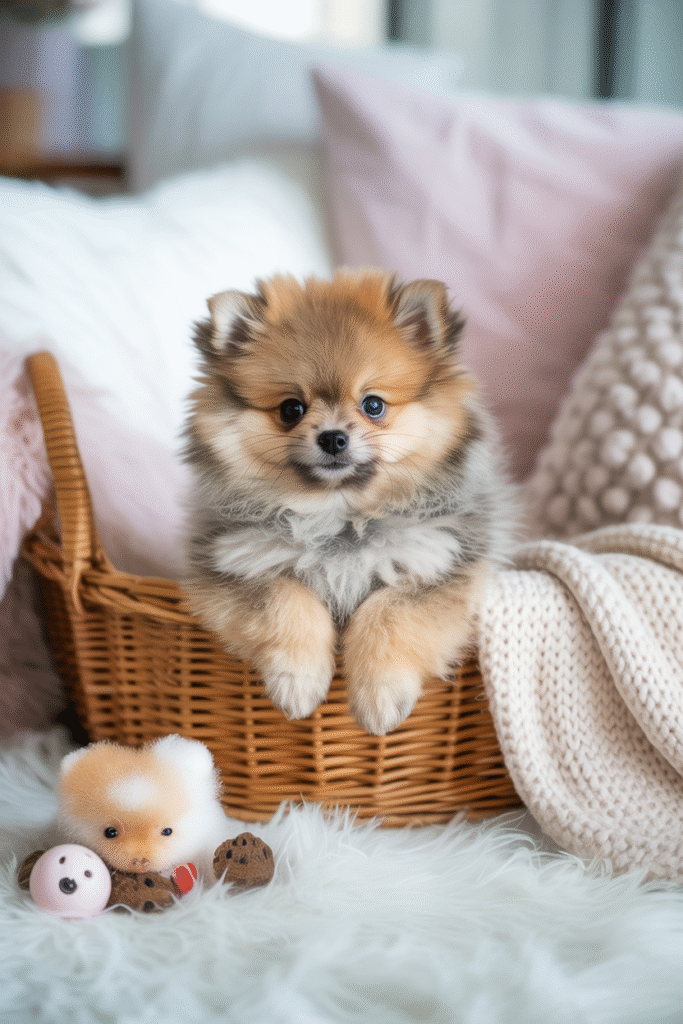
Pomeranian puppies are small dogs with big personalities that weigh between three and seven pounds when fully grown.
These fluffy companions need regular grooming and come with specific health needs that every owner should know about.
Breed Characteristics
Pomeranians belong to the Spitz dog family and share ancestry with larger sled dog breeds like the Samoyed, Chow Chow, and Siberian Husky.
Despite their tiny size, they carry themselves with confidence.
The most noticeable feature is their thick, fluffy double coat.
This coat requires regular brushing to prevent matting and tangles.
I recommend grooming sessions several times a week.
Pomeranians typically weigh between three and seven pounds as adults.
Their small size makes them perfect for apartment living.
Their coat comes in many colors including orange, black, white, cream, and parti-color patterns.
The fluffy fur around their neck creates a distinctive lion-like appearance.
Typical Personality Traits
Pomeranians have a big-dog personality packed into a tiny body.
They act bold and confident despite their small stature.
These dogs are loyal and affectionate with their families.
They form strong bonds with their owners and love spending time together.
Poms thrive on attention and companionship.
Pomeranian puppies are smart and alert.
They learn quickly but can also be stubborn during training.
Early socialization helps them become well-adjusted adults.
They tend to be vocal dogs who bark at new sounds or visitors.
This makes them good watchdogs but requires training to manage excessive barking.
Their spunky and energetic nature means they stay active throughout the day.
Common Health Considerations
Pomeranian puppies face some breed-specific health issues that I need to watch for.
Their small size makes them vulnerable to injury from falls or rough handling.
Dental problems are common in Pomeranians due to their tiny mouths.
Regular teeth cleaning and dental check-ups help prevent tooth decay and gum disease.
Luxating patella, where the kneecap slips out of place, affects many small breeds including Poms.
This condition can cause limping or difficulty walking.
Tracheal collapse is another concern in toy breeds.
The windpipe can weaken and flatten, leading to a honking cough.
Using a harness instead of a collar helps protect their delicate throat.
I recommend considering pet insurance to help cover veterinary costs throughout my Pomeranian’s life.
Regular vet visits and preventive care keep these puppies healthy and happy.
Choosing the Right Pomeranian Puppy
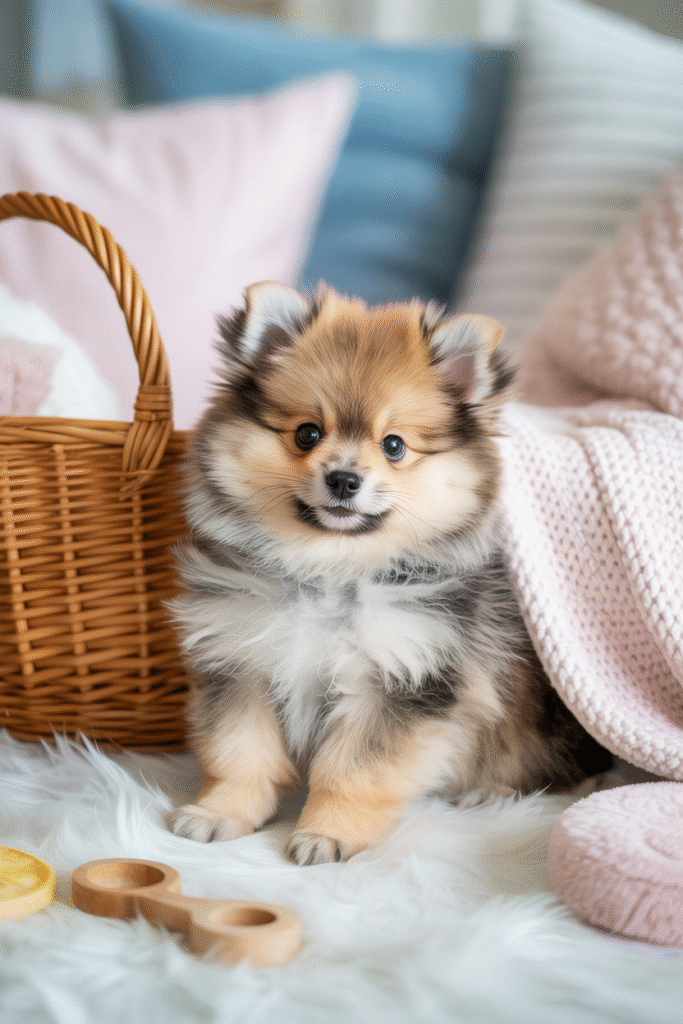
Finding the perfect Pomeranian puppy requires careful attention to the breeder’s practices, the puppy’s personality, and asking the right questions before you commit.
Selecting a Responsible Breeder
I always recommend starting your search with reputable breeders who understand the Pomeranian breed thoroughly.
A good breeder will welcome your visit to see where the puppies are raised and meet the parent dogs.
Look for clean living conditions with plenty of space for the puppies to play and socialize.
The puppies should appear healthy, active, and well-cared for.
Ask to see health clearances for both parents.
These documents show testing for common Pomeranian health issues like heart problems and joint conditions.
A reputable seller ensures puppies are healthy and well-socialized from birth.
They should provide vaccination records and be willing to answer all your questions.
If a breeder seems pushy or won’t let you visit, I’d look elsewhere.
Puppy Temperament Evaluation
When you meet the puppies, I suggest picking one that is sociable, extroverted, and curious.
Watch how each puppy interacts with their littermates and people.
A healthy puppy will show interest in you without being overly fearful or aggressive.
I look for these signs:
- Alert and playful behavior
- Comfortable being handled and touched
- Curious about new sounds and objects
- Friendly toward people and other puppies
Avoid puppies that hide in corners or show signs of extreme shyness.
These behaviors can indicate poor socialization or health issues.
Pay attention to energy levels too—Pomeranians are naturally lively, but a puppy that seems lethargic might be sick.
Key Questions to Ask
Before I make my final decision, I always ask the breeder specific questions about the puppy’s background and care.
Find out what food the puppy has been eating and the current feeding schedule.
Ask about the puppy’s vaccination history and upcoming vet appointments.
I also want to know if the parents have any health issues or genetic conditions.
Here are questions I never skip:
- What socialization has the puppy received?
- Can I meet both parent dogs?
- What health guarantee do you offer?
- Will you take the puppy back if things don’t work out?
I also ask about the puppy’s personality traits the breeder has noticed.
Experienced breeders are skilled at matching buyers with the right puppies based on lifestyle and preferences.
Request references from previous buyers if you want extra reassurance about the breeder’s reputation.
Preparing Your Home for a Pomeranian Puppy
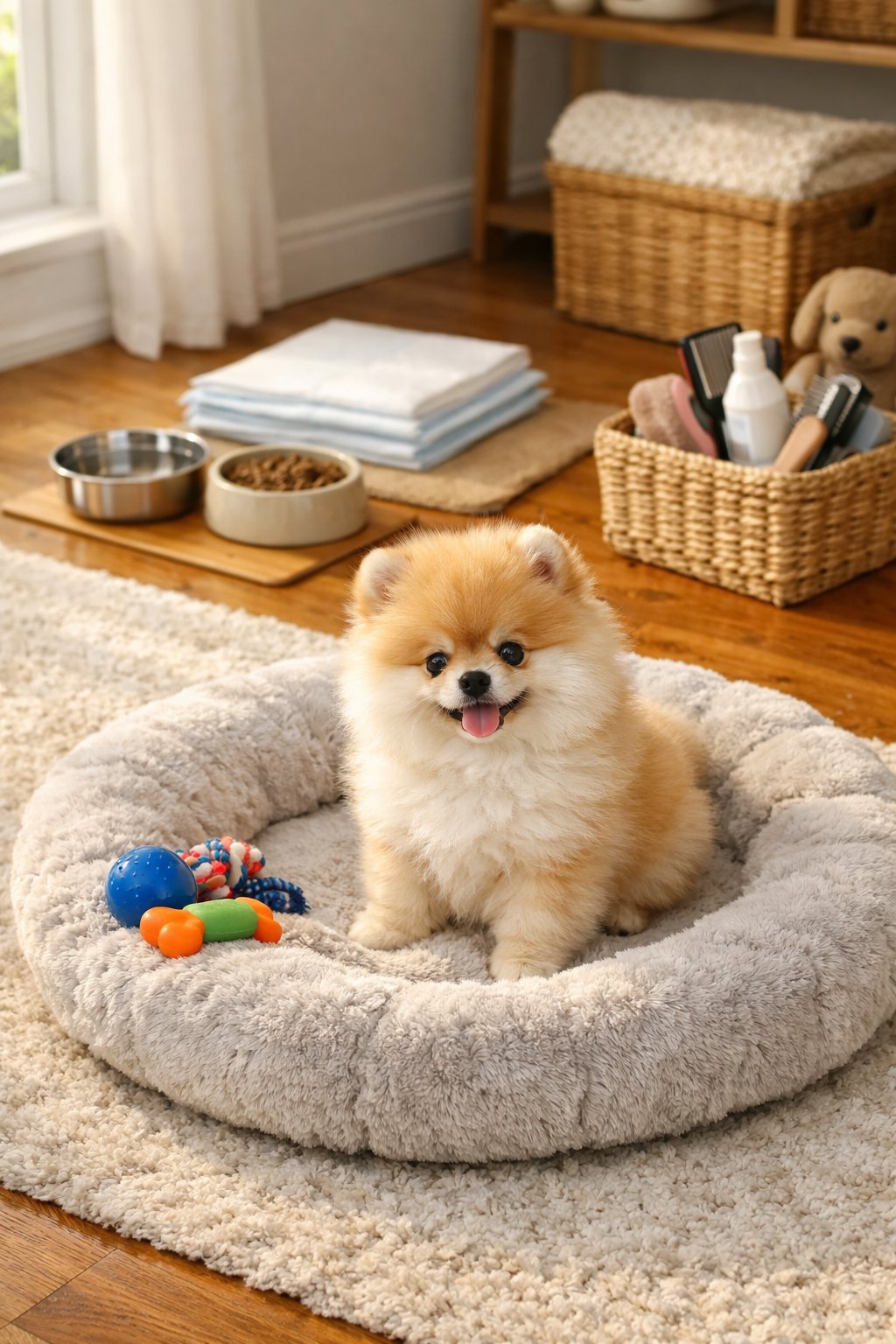
Getting your home ready means removing dangers, gathering the right supplies, and creating comfortable areas where your puppy can feel secure.
These steps help your new Pomeranian adjust quickly and stay safe.
Puppy-Proofing Essentials
I always start by getting down on my hands and knees to see the world from a puppy’s perspective.
This helps me spot hazards I might miss while standing.
Electrical cords need to be tucked away or covered with cord protectors.
Pomeranian puppies love to chew, and exposed wires can cause serious injuries or even death.
Small objects like coins, buttons, hair ties, and children’s toys must be picked up off the floor.
These items can become choking hazards or cause blockages if swallowed.
Toxic plants should be moved out of reach or removed entirely.
Common houseplants like pothos, philodendron, and lilies are poisonous to dogs.
I secure cabinet doors that contain cleaning supplies, medications, or food items with child-proof locks.
Even a small Pomeranian can learn to nudge doors open.
Trash cans need lids or should be stored in locked cabinets since puppies are drawn to food scraps and other items that could make them sick.
Recommended Supplies
Before bringing your puppy home, you’ll need essential supplies ready and waiting.
I make sure to have everything set up at least a day or two in advance.
Food and Water Bowls: Choose small, shallow bowls that match your Pomeranian’s size.
Stainless steel or ceramic options work best because they’re easy to clean and don’t harbor bacteria.
High-Quality Puppy Food: Buy food specifically formulated for small breed puppies.
Your breeder or vet can recommend the best brand.
Crate: A crate sized appropriately for a Pomeranian provides a safe den.
It should be large enough for your puppy to stand, turn around, and lie down comfortably.
Puppy Pads: Stock up on these for house training.
I place them in designated bathroom areas around my home.
Collar, Leash, and ID Tag: Get an adjustable collar with your contact information on the tag.
A lightweight 4-6 foot leash works well for training walks.
Toys: Provide soft plush toys, small balls, and chew toys to keep your puppy entertained and help with teething.
Safe Spaces for Your Puppy
Creating designated areas helps your Pomeranian feel secure in their new environment.
I set up multiple zones throughout my home for different activities.
A sleeping area with a comfortable bed or crate gives your puppy a quiet place to rest.
Place it away from high-traffic areas and loud noises.
Pomeranians need 18-20 hours of sleep daily as puppies.
I establish a feeding station in a calm corner of my kitchen or dining area.
This spot stays consistent so my puppy knows where meals happen.
A play zone with puppy-safe toys provides mental stimulation and exercise.
I use baby gates to block off this area and keep it free from hazards.
The space doesn’t need to be large since Pomeranians are small dogs.
For potty training, I designate a specific spot with puppy pads or, if I have yard access, an outdoor area.
Consistency with location helps puppies learn faster.
Caring for Your Pomeranian Puppy
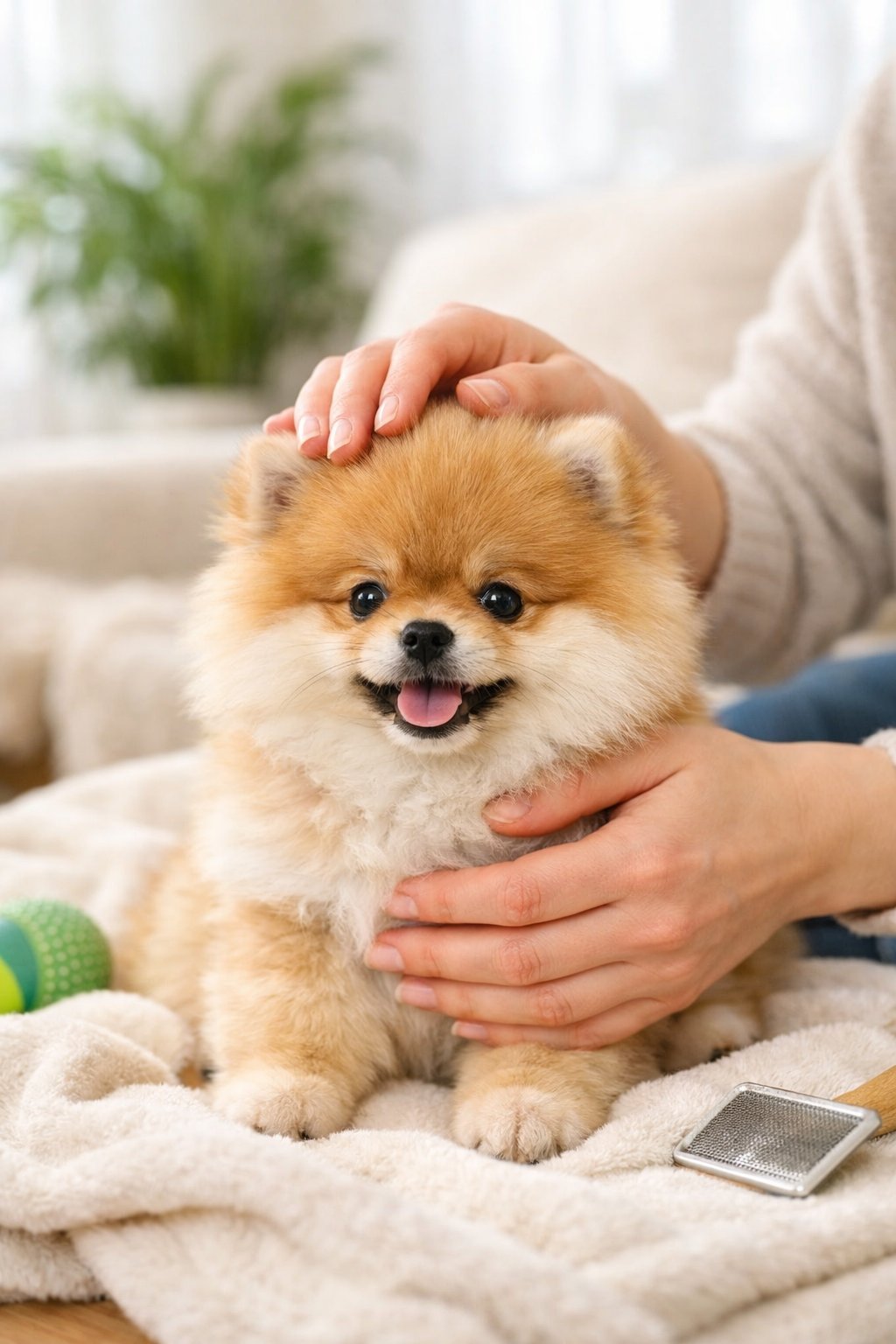
Pomeranian puppies need high-quality food, daily activity, and early social experiences to grow into healthy adult dogs.
These three areas form the foundation of good puppy care.
Nutrition and Feeding Tips
I feed my Pomeranian puppy three to four times per day until they reach six months old.
Puppies have small stomachs and need frequent meals to maintain their energy levels and blood sugar.
I always choose high-quality puppy food that lists real meat as the first ingredient.
Pomeranian puppies need food with the right balance of protein, fat, and nutrients for their growing bodies.
I avoid foods with excessive fillers like corn or wheat.
Fresh water must be available at all times.
I check the water bowl several times throughout the day to make sure it stays clean and full.
I measure each meal carefully to prevent overfeeding.
A Pomeranian puppy typically needs about one-quarter to one-half cup of food per day, split across multiple meals.
The exact amount depends on the puppy’s age, weight, and activity level.
I never give my puppy table scraps or human food.
Many human foods can upset a puppy’s stomach or even be toxic.
Chocolate, grapes, onions, and xylitol are especially dangerous.
Exercise and Playtime Needs
Daily walks and playtime keep my Pomeranian puppy healthy and happy. I take my puppy on two to three short walks each day, about 10 to 15 minutes each.
Pomeranians are active dogs despite their small size. I make sure my puppy gets at least 30 minutes of activity spread throughout the day.
Too much exercise at once can overwhelm a young puppy. I provide a variety of toys for indoor play.
Soft toys, small balls, and puzzle toys keep my puppy entertained and mentally stimulated. I rotate the toys every few days to keep things interesting.
Play sessions help me bond with my puppy while burning off excess energy. I use this time for gentle games like fetch or tug-of-war with appropriate-sized toys.
I watch for signs of tiredness during play. Puppies need plenty of rest between activities.
I make sure my puppy has a quiet, comfortable space to nap throughout the day.
Socialization Strategies
I start socializing my Pomeranian puppy as early as possible. The critical socialization window is between 3 and 14 weeks of age.
During this time, puppies learn how to interact with the world around them. I expose my puppy to different people, including children, adults, and seniors.
I make sure each interaction is positive and calm. This helps prevent my puppy from becoming anxious or aggressive around strangers later in life.
I introduce my puppy to other vaccinated, friendly dogs in controlled settings. Puppy classes offer a safe environment for socialization with other puppies of similar age.
Different sounds, surfaces, and environments are part of my socialization plan. I let my puppy experience car rides, various floor textures, household appliances, and outdoor noises like traffic or birds.
I always keep socialization experiences positive. If my puppy seems scared or uncomfortable, I slow down and try again later with a gentler approach.
Forcing a frightened puppy can create lasting fear issues.
Training and Grooming Tips
I’ve found that starting training and grooming routines early helps Pomeranian puppies adjust to these essential activities. Consistent house training with a schedule, positive rewards for good behavior, and regular coat brushing will keep my puppy healthy and well-behaved.
House Training Basics
I recommend taking my Pomeranian puppy outside every 2-3 hours, especially after meals, naps, and playtime. Puppies have small bladders and need frequent bathroom breaks.
I always take my puppy to the same spot outside. The familiar scent helps them understand what they’re supposed to do.
When my puppy goes in the right place, I praise them immediately. Understanding Pomeranian traits like their high energy levels helps me plan bathroom breaks around their activity.
I watch for signs like sniffing, circling, or whining. Accidents will happen during the learning process.
I never punish my puppy for mistakes since it creates fear and confusion. Instead, I clean up accidents with an enzyme cleaner and stick to the schedule more carefully.
Positive Reinforcement Techniques
I use treats, praise, and play as rewards when my Pomeranian puppy does what I ask. Training with positive reinforcement makes learning enjoyable for my puppy.
I start with basic commands like sit, stay, and come. Each command gets a small treat and excited praise when my puppy gets it right.
Timing matters—I reward within 2-3 seconds so my puppy connects the action with the reward. I keep training sessions short, around 5-10 minutes.
Pomeranian puppies have short attention spans and get bored quickly. Consistency is key in my training approach.
I use the same words and hand signals every time. Everyone in my household uses the same commands so my puppy doesn’t get confused.
Coat Care and Brushing
I brush my Pomeranian puppy’s coat 3-4 times per week to prevent mats and tangles. Their thick double coat needs regular attention to stay fluffy and healthy.
I use a slicker brush for the outer coat. I use a metal comb for areas behind the ears and under the legs.
These spots mat easily if I miss them. Teaching my puppy to enjoy grooming early makes the process easier as they grow.
I start by brushing for just a few minutes at a time. My puppy needs to get used to being handled and standing still.
I give treats during brushing to create positive associations. When I find a mat, I work it out gently with my fingers before using the comb.
Pulling hurts and makes my puppy resist future grooming sessions. I also check and clean my puppy’s ears with a cotton swab and non-alcohol cleaner.
I am careful not to go into the ear canal.


