Puppy Teething Remedies: 9 Ways to Soothe Sore Gums (Plus Easy Frozen Treats)

If your puppy suddenly wants to chew your hands, the couch, and every shoe in the house, teething is a likely suspect. Between about 3 and 6 months of age, puppies lose their 28 baby teeth and grow 42 adult teeth. That means sore, itchy gums for weeks. You can’t skip this stage, but you can make it a lot more comfortable for your puppy and a lot less destructive for you.
Here are 9 puppy teething remedies that help, including a few easy frozen treats you can make tonight with things you probably already have.
This post contains affiliate links. As an Amazon Associate I earn from qualifying purchases.
Products mentioned in this article:
freezable teething toy, puppy teething toys, stuffable rubber chew toy, silicone paw-print molds, lick mat, puppy rope toy.
Signs your puppy is teething
- Chewing on everything, especially hard edges and furniture legs
- More nipping and mouthing than usual
- Drooling, or tiny spots of blood on toys
- Finding small baby teeth on the floor (many puppies swallow them, which is normal)
- Red or slightly swollen gums
- Being a bit fussier or more restless, especially in the evening
9 puppy teething remedies that actually help
1. Frozen washcloth
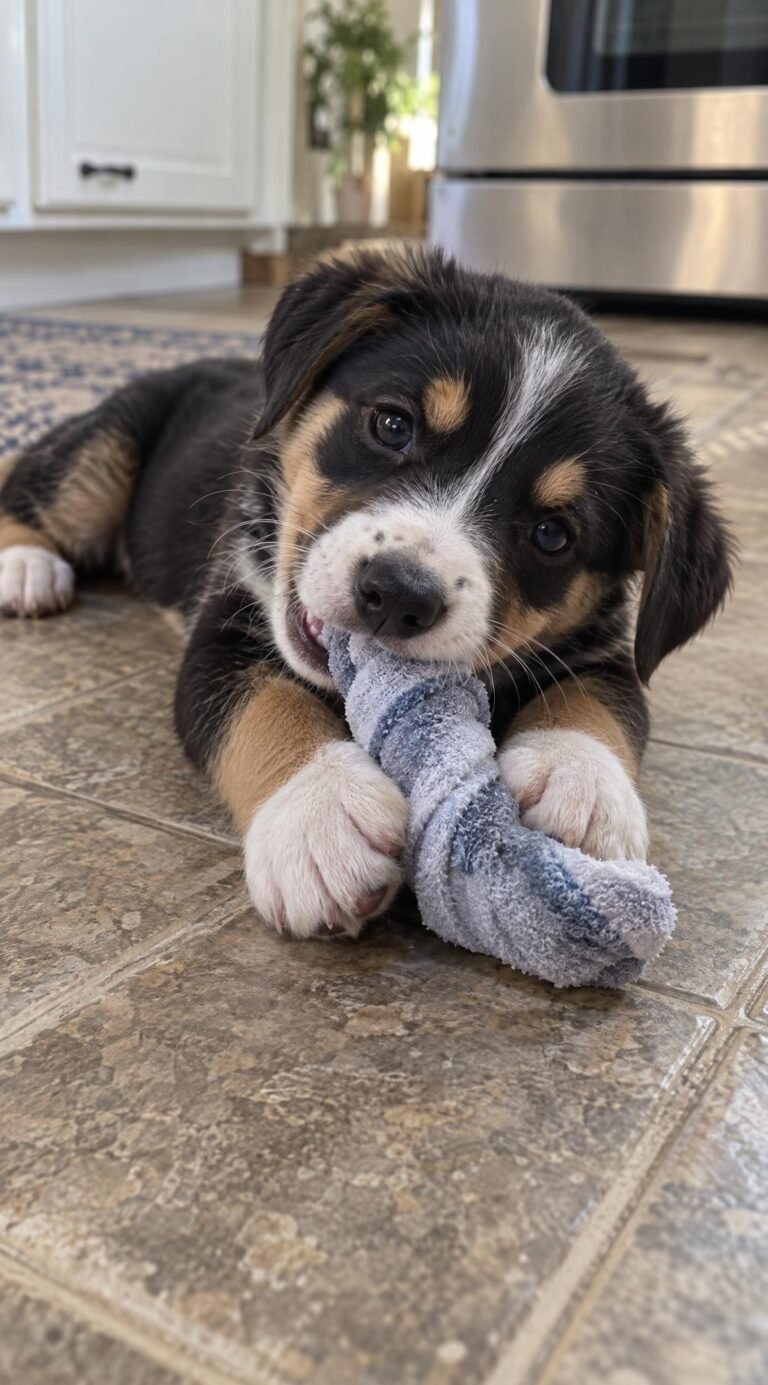
The simplest remedy is free. Soak a clean washcloth in water (or low-sodium, onion-free broth), twist it into a rope, tie a knot, and freeze it for an hour or two. The cold numbs sore gums, and the fabric gives them something satisfying to grind on. Supervise so your puppy doesn’t tear off and swallow pieces.
2. Freezable teething toys
Some toys are designed to go in the freezer. A freezable teething toy gives the same cooling relief as a washcloth, but it’s sturdier and easy to wash. It’s worth having two so one is always in the freezer.
3. Soft rubber teething toys
Puppy teeth and gums are more delicate than an adult dog’s. Look for puppy-specific teething toys made of softer rubber, with nubs or ridges that massage the gums. Rotate a few different textures so they stay interesting.
4. A stuffed and frozen chew toy
Fill a stuffable rubber chew toy with some of your puppy’s regular kibble, soaked in water until soft, then freeze it. This works double duty: it soothes gums and keeps your puppy busy for 15 to 30 minutes. Using their own kibble means it’s part of their daily food, not an extra treat.
5. Frozen carrot (for bigger puppies)

A whole, large frozen carrot is a classic teething remedy for medium and large breed puppies. Choose a carrot big enough that it can’t be swallowed whole, and take it away once it gets small. For toy breeds or puppies who gulp, skip this one and use the washcloth or a frozen toy instead.
6. Frozen puppy teething treats you can make at home
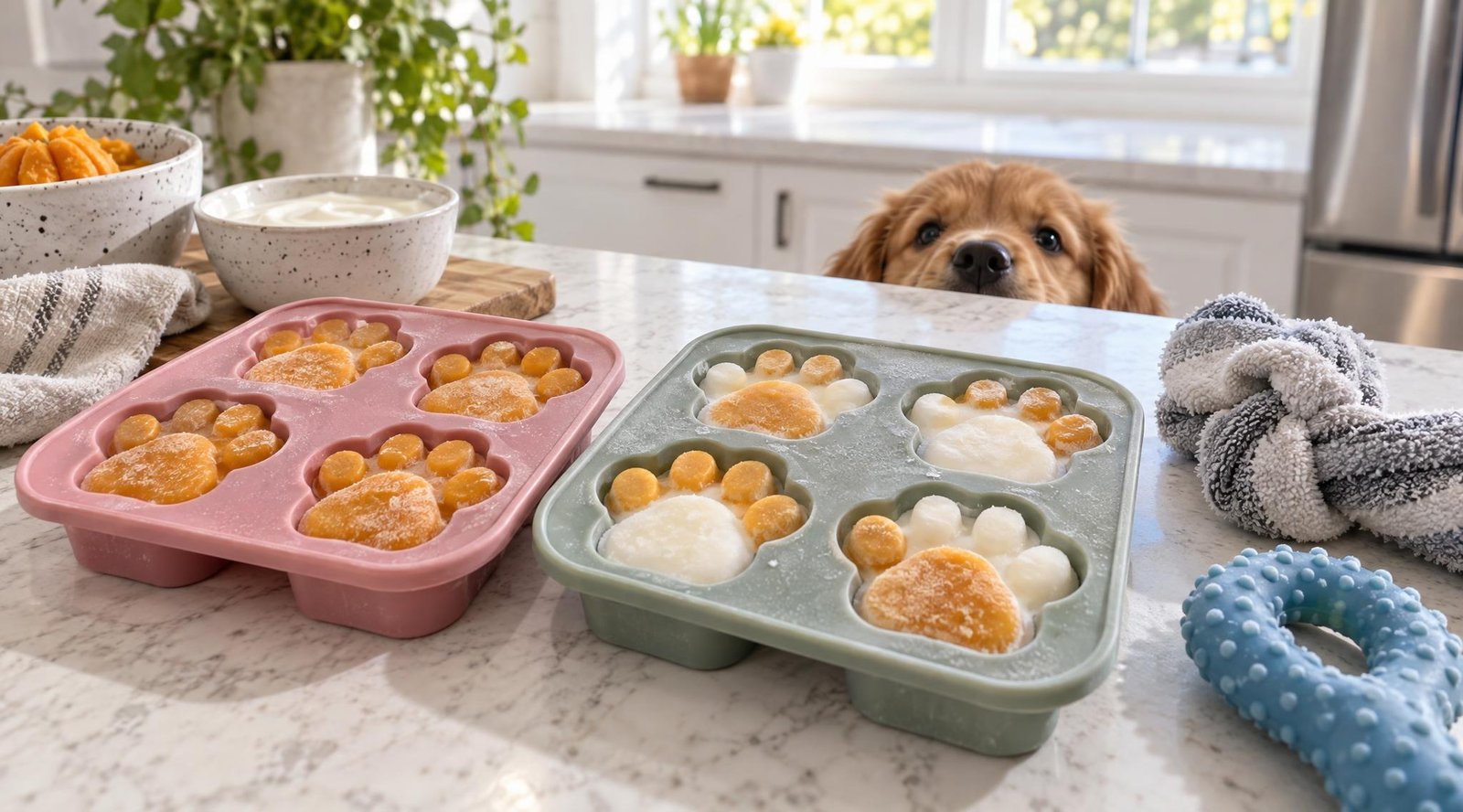
Homemade frozen treats are a great way to soothe gums with ingredients you trust. Use silicone paw-print molds or an ice cube tray, keep portions small, and introduce one new ingredient at a time. Three easy options:
- Pumpkin and yogurt bites: Mix ½ cup plain canned pumpkin (not pie filling) with ½ cup plain, unsweetened yogurt. Spoon into molds and freeze.
- Banana mash bites: Mash one ripe banana with a few tablespoons of water. Freeze in small molds. Banana is sweet, so keep these as occasional treats.
- Broth ice cubes: Freeze low-sodium broth that contains no onion or garlic. Many store-bought broths include both, so check the label or use a broth made for dogs.
Always check that store-bought ingredients like yogurt or peanut butter contain no xylitol, which is toxic to dogs. For more ideas, see our frozen dog treats recipes, using smaller portions for puppies.
7. A lick mat
Licking is calming for puppies, and a lick mat spread with a thin layer of plain pumpkin or yogurt and then frozen gives your puppy a long, soothing activity. It’s especially helpful in the evening, when teething fussiness tends to peak.
8. A cold, wet rope toy
A puppy rope toy soaked in water and frozen works like a sturdier version of the washcloth. Use it for supervised play only, and throw it out once it starts to fray, since swallowed strings can cause blockages.
9. Gentle gum massage
With clean hands, gently rub your puppy’s gums with a fingertip for a few seconds at a time. Many puppies find it soothing, and it gets them used to having their mouth handled, which makes future tooth brushing and vet visits much easier.
Teething usually comes with biting, chewing, and short nights
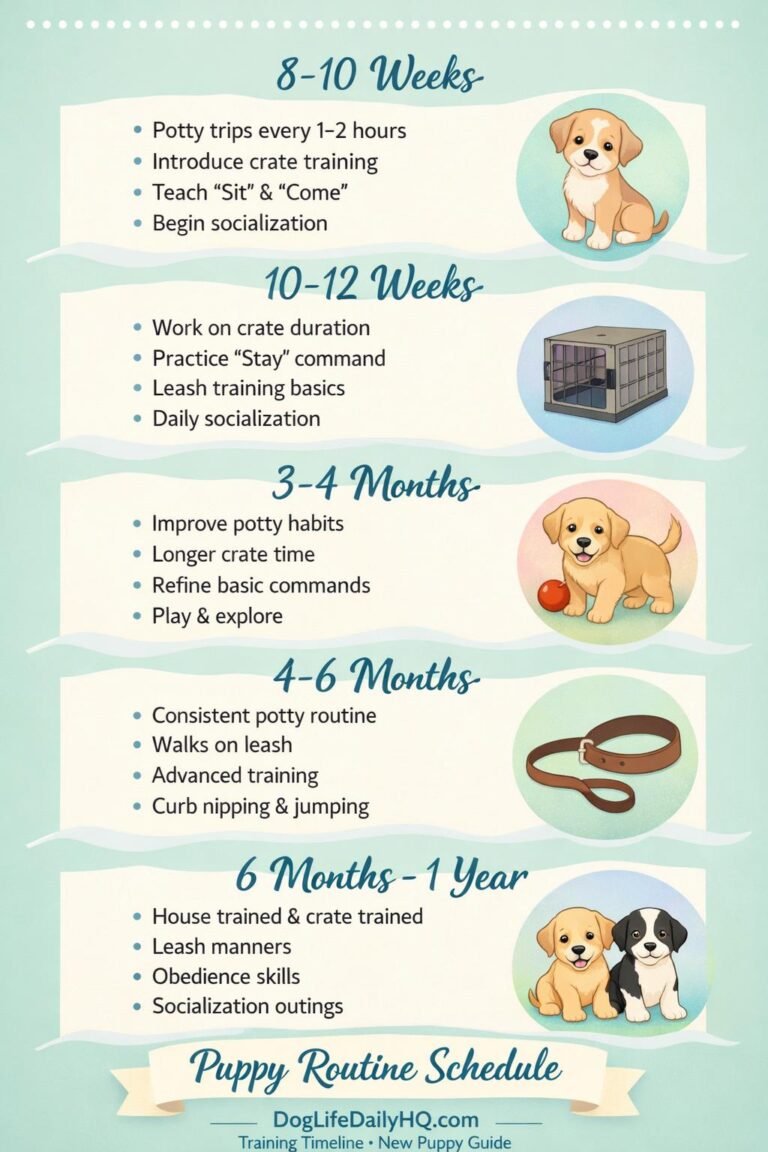
Teething lands right in the middle of potty training and crate training, which is why so many owners feel overwhelmed around 3 to 4 months. Our 28-Day Puppy Training Plan puts all of it into one day-by-day schedule, so you know what to work on and what can wait. Try Week 1 free.
What to avoid during teething
- Very hard chews. Antlers, hooves, hard nylon bones, and cooked bones can crack puppy teeth or splinter. If you can’t press a fingernail into it, it’s probably too hard for a puppy.
- Human teething gels. Many contain ingredients such as benzocaine or xylitol that aren’t safe for dogs. Don’t use them unless your vet specifically says to.
- Ice cubes for tiny puppies. Hard ice can be rough on small teeth. A frozen washcloth or soft frozen treat is gentler.
- Unsupervised fabric or rope toys. Pieces that get torn off and swallowed are a real risk.
Puppy teething timeline
- About 3 to 4 weeks: Baby teeth start coming in.
- About 3 to 4 months: Baby teeth begin falling out and adult incisors come in. Chewing ramps up.
- About 4 to 6 months: Canines and molars come in. This is often the toughest stretch.
- About 6 to 7 months: Most adult teeth are in, and teething chewing usually eases.
Every puppy is a little different, and small breeds can take longer. For help redirecting chewing during this stage, see our guide to a puppy chewing everything.
When to call your vet
Call your vet if your puppy stops eating, has a bad smell coming from the mouth, has gums that stay very red or swollen, or bleeds more than a few small spots. Also ask your vet to check if a baby tooth is still in place while the adult tooth is already growing in next to it. These retained baby teeth sometimes need to be removed.
Frequently Asked Questions
How long does puppy teething last?
Most puppies teethe from about 3 to 6 or 7 months of age, with the heaviest chewing between 4 and 6 months.
What can I freeze for my teething puppy?
A wet, knotted washcloth, a freezable teething toy, a rubber chew toy stuffed with soaked kibble, or small homemade treats like pumpkin and yogurt bites all work well. Always supervise.
Do puppies cry when teething?
Some puppies whine or seem fussier, especially in the evening. Offering something cold to chew before bedtime often helps them settle.
Is it normal for my puppy’s gums to bleed while teething?
A few small spots of blood on toys is normal when teeth are coming out. Heavy bleeding, bleeding that doesn’t stop, or signs of pain are a reason to call your vet.
Can I give my puppy ice cubes for teething?
Larger puppies often enjoy them, but hard ice can be rough on small teeth. Frozen washcloths and soft frozen treats are a gentler choice for most puppies.
Final thoughts
Teething is temporary, even if it doesn’t feel that way when your puppy is gnawing on the coffee table. Keep a couple of cold options in the freezer, give them safe things to chew, avoid anything too hard, and keep valuables out of reach. A few months from now, those sharp puppy teeth will be gone and the worst of the chewing will be behind you.