
Salmon Dog Treats: A Healthy and Delicious Reward for Your Furry Friend

Salmon dog treats are one of my favorite ways to reward my furry friend while supporting their health. These snacks offer more than just a flavor that dogs love.
Salmon treats are packed with omega-3 fatty acids, protein, and nutrients that support healthy skin, shiny coats, and strong joints in dogs.
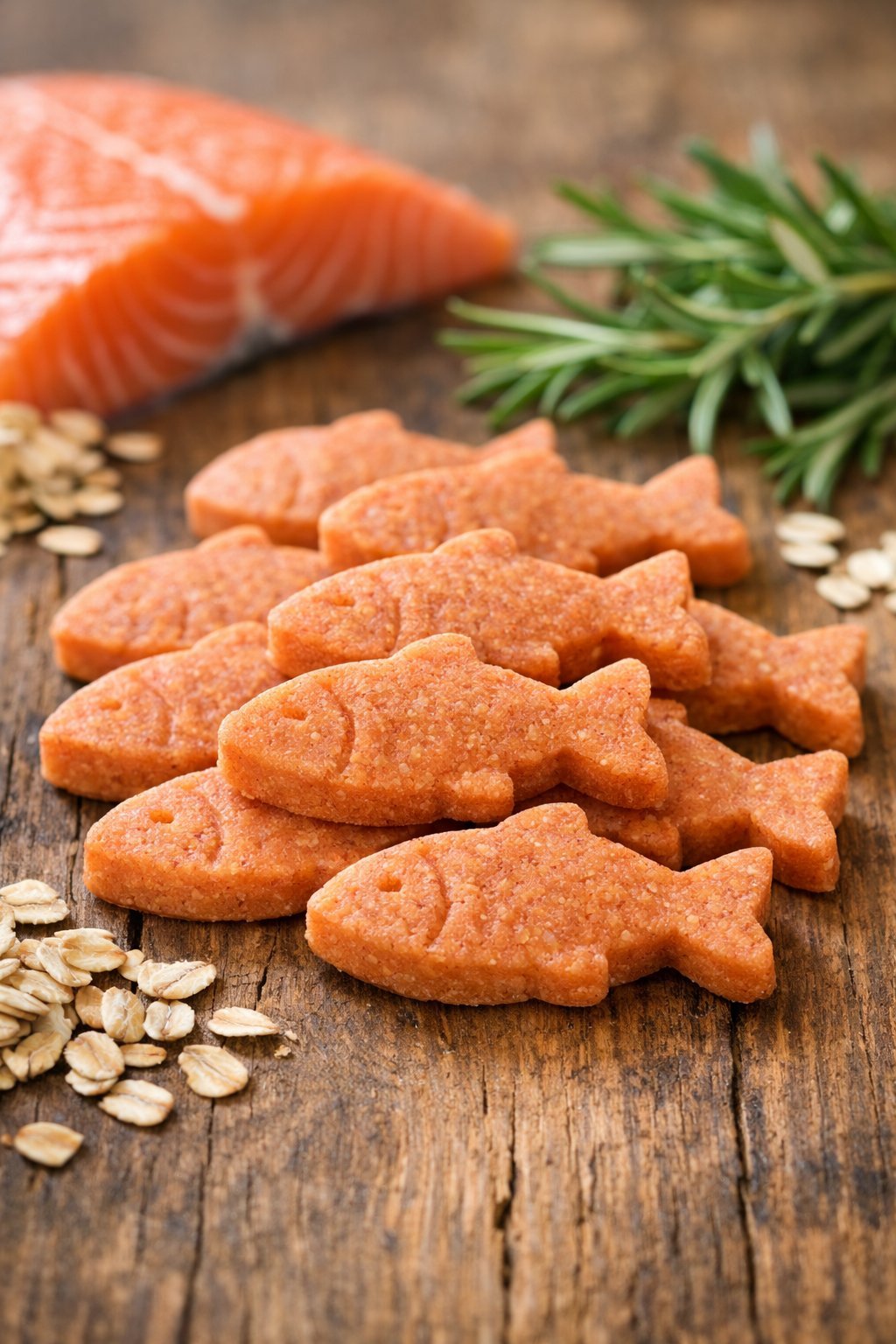
I’ve found that salmon dog treats come in many forms, from store-bought options to homemade recipes I can make at home. Whether you buy premium treats or make your own using canned salmon and simple ingredients, these snacks are great for training or daily rewards.
Salmon treats often work well for dogs with food allergies since many recipes use minimal ingredients. That’s a big plus for pups with sensitivities.
In this guide, I’ll share what I’ve learned about picking the right salmon treats for your dog. You’ll find out how to spot quality products, try easy homemade recipes, and learn how to add these treats to your dog’s diet safely.
Key Takeaways
- Salmon treats provide essential omega-3 fatty acids that improve your dog’s skin, coat, and joint health.
- You can choose between convenient store-bought options or make simple homemade treats with just a few ingredients.
- Always check ingredient quality and follow proper serving sizes to keep your dog healthy and safe.
Health Benefits of Salmon Dog Treats

Salmon treats deliver concentrated omega-3 fatty acids that support your dog’s heart and brain function. Their single-ingredient nature makes them ideal for dogs with food sensitivities.
These treats also contain nutrients that improve skin hydration and coat shine. They’re a tasty way to give your dog a health boost.
Omega-3 Fatty Acids for Canine Wellness
When I give my dog salmon treats, they’re getting EPA and DHA omega-3 fatty acids that their bodies can’t make on their own. These fatty acids support joint health by reducing inflammation, which is especially helpful for older dogs or active breeds.
Omega-3 fatty acids from salmon also boost immune system function and promote cardiovascular health. Dogs who regularly eat salmon treats often have better mobility and energy levels.
Wild-caught salmon typically contains higher levels of omega-3s compared to farmed varieties. When choosing treats, I look for products that specify wild-caught Alaskan salmon for maximum nutritional benefit.
Hypoallergenic Qualities for Sensitive Dogs
I recommend salmon treats for dogs with food allergies because salmon is considered a novel protein. This makes it less likely to trigger allergic reactions compared to chicken or beef.
Single-ingredient freeze-dried salmon treats are great for dogs with sensitive stomachs or specific dietary needs. They contain no grains, gluten, or artificial additives.
Dogs with diabetes or weight management needs can safely enjoy salmon treats because they’re pure protein without added sugars or fillers. They’re especially handy during training when you need to give frequent rewards.
Promoting Healthy Skin and Coat
The omega-3s in salmon treats support your dog’s skin and coat health by reducing dryness and inflammation. Dogs with flaky skin and dull coats often show improvement after adding salmon treats to their routine.
Salmon provides high-quality protein with amino acids necessary for healthy skin cells and strong hair follicles. This protein supports your dog’s coat from the inside out.
Dogs with itchy skin or hot spots can benefit from the anti-inflammatory properties of salmon. The natural oils help moisturize skin and reduce scratching.
Types of Salmon Dog Treats
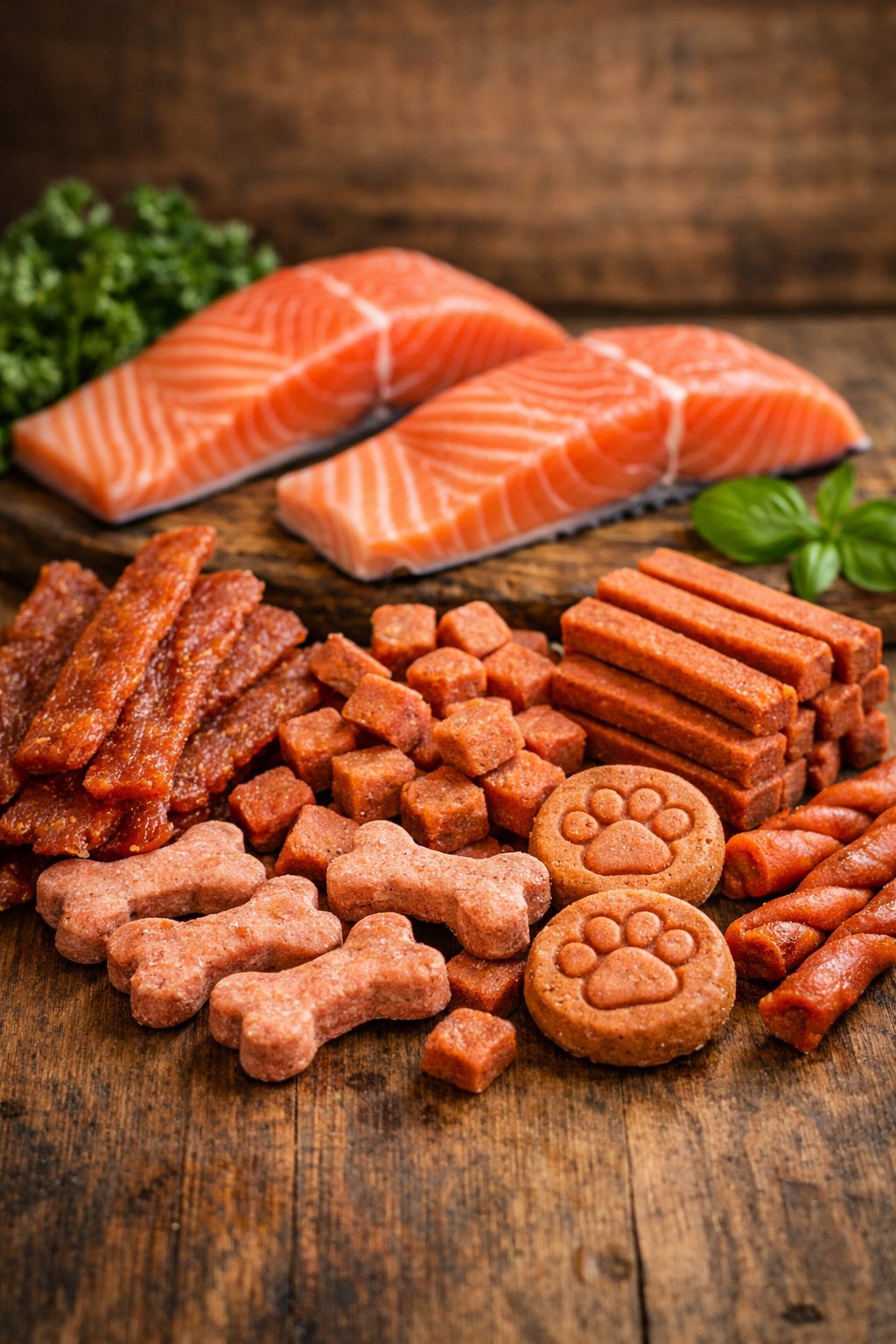
Salmon dog treats come in different textures and forms to match your dog’s preferences. Each type offers unique benefits for feeding, storage, and nutrition.
Soft Bites and Chews
Soft salmon treats are awesome for training because I can break them into smaller pieces quickly. They have a chewy texture that most dogs love.
These treats are perfect for older dogs with dental issues or puppies still developing their teeth. The soft texture makes them easy to chew and digest.
Blue Wilderness Trail Treats are ideal for small dogs and puppies because of their convenient size and soft-moist texture. They don’t crumble in your pocket during training sessions.
The downside is that soft treats often contain more moisture, so they can spoil faster. I always check the expiration date and store them in a sealed container.
Crunchy Biscuits
Crunchy salmon biscuits help clean my dog’s teeth while providing a satisfying snack. The hard texture scrapes away plaque as dogs chew.
These biscuits enriched with Omega fatty acids support healthy skin and coat. My dog takes longer to eat these compared to soft treats.
Crunchy treats are more shelf-stable than soft options. They won’t get mushy or sticky in warm weather, which is great for outdoor activities.
Some dogs prefer the crunch, while others might struggle if they have sensitive teeth. I always watch my dog the first time to make sure they can handle the texture.
Freeze-Dried Salmon Treats
Freeze-dried salmon treats are made from wild-caught Alaskan salmon and contain just one ingredient. They’re perfect for dogs with allergies or sensitive stomachs.
The freeze-drying process removes moisture but keeps all the nutrients intact. These treats offer pure protein without any fillers or additives.
They’re lightweight and easy to store for months without refrigeration. The single-ingredient formula means I know exactly what my dog is eating.
They’re more expensive than other options, but I think the quality is worth it for dogs with special dietary needs.
How to Choose Quality Salmon Dog Treats
When I shop for salmon treats, I focus on three things: what’s in the product, where the salmon comes from, and avoiding unnecessary chemicals.
Reading Ingredient Labels
I always flip the package over and read the ingredient list first. The best salmon treats list salmon as the first ingredient.
I look for treats with short ingredient lists. One or two ingredients means I’m getting a pure product.
I watch out for vague terms like “fish meal” or “salmon by-products.” Wild-caught salmon or specific types like Alaskan salmon tell me exactly what my dog is eating.
I also pay attention to the order of ingredients. If salmon appears third or fourth, the treat contains more of those other ingredients than actual fish.
Sourcing and Sustainability
I prefer treats made from wild-caught salmon over farmed salmon. Wild salmon usually contains higher levels of omega-3 fatty acids and fewer contaminants.
The location matters to me, too. Alaskan salmon has strict harvesting regulations that protect fish populations.
Some brands clearly state where their salmon comes from on the packaging. When companies are transparent about sourcing, it shows they care about quality.
I also consider how the salmon is processed. Freeze-dried treats preserve more nutrients than heavily processed options.
Avoiding Common Additives
I avoid treats with artificial colors, flavors, or preservatives. My dog doesn’t need Red 40 or Yellow 5 in his snacks.
I watch for preservatives like BHA, BHT, and ethoxyquin. Natural preservatives like mixed tocopherols (vitamin E) work just as well.
Fillers like corn, wheat, and soy often appear in lower-quality treats. These add bulk but provide little value, especially for sensitive dogs.
Sugar and salt don’t belong in dog treats either. I check for these hidden additives that manufacturers sometimes use to make treats more appealing.
Homemade Salmon Dog Treat Recipes
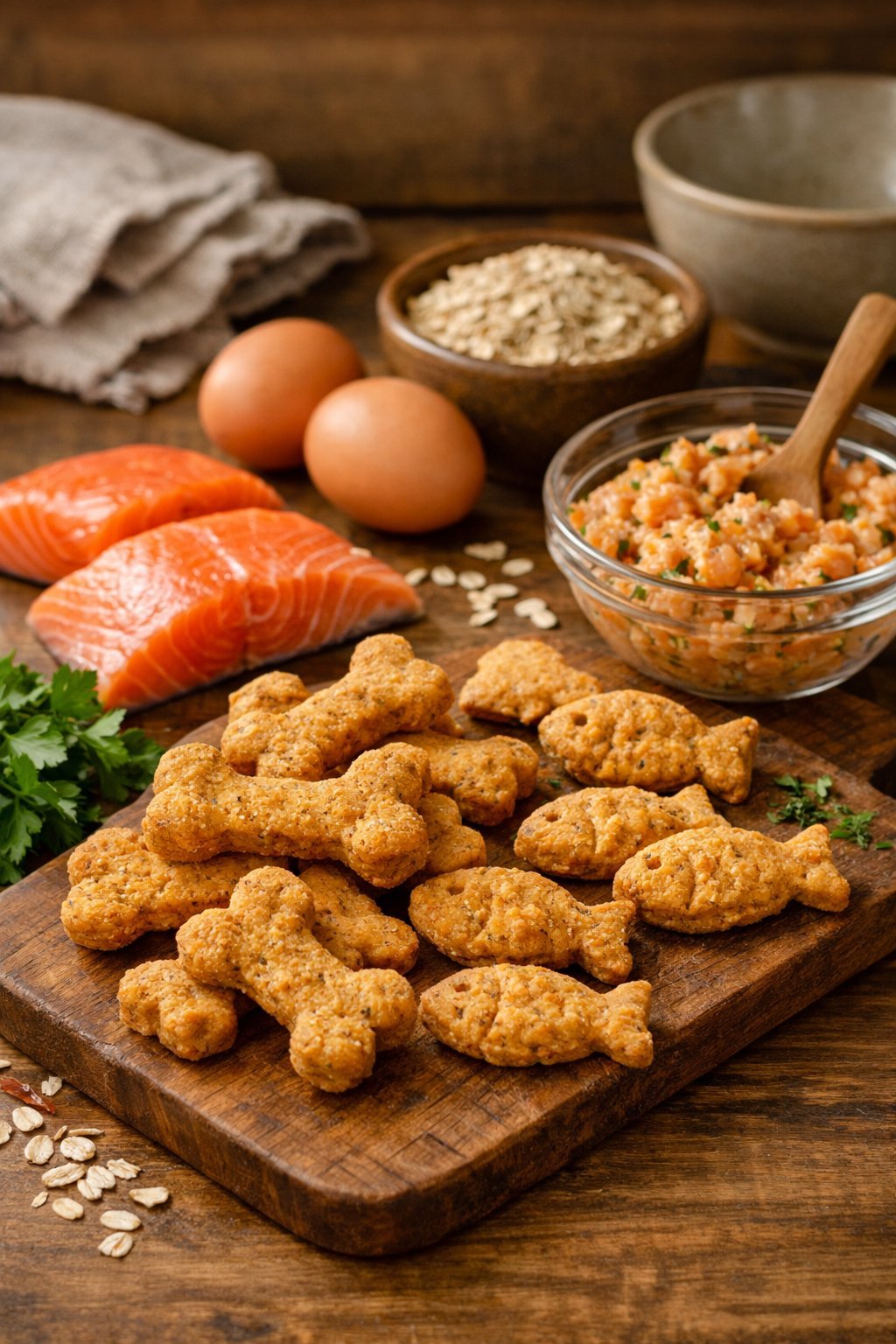
Making salmon treats at home lets you control exactly what goes into your dog’s snacks. You can bake simple treats with canned salmon, create grain-free options, or dehydrate salmon for a long-lasting chew.
Simple Baked Salmon Treats
I love making baked salmon dog treats because they’re so easy and my dog goes crazy for them. You only need a few basic ingredients.
Basic Ingredients:
- 1 can of salmon (drained)
- 2 cups of flour
- 1 egg
- Water as needed
I mix the salmon, flour, and egg together until it forms a dough. If the mixture feels too dry, I add water one tablespoon at a time.
Once the dough comes together, I roll it out to about 1/4 inch thick and cut it into small shapes. Bake these at 350°F for about 20 minutes until they’re golden brown.
The treats will harden as they cool, which gives them a nice crunch. Store them in an airtight container for up to two weeks in the fridge.
Grain-Free Salmon Snacks
For dogs with grain sensitivities, I make grain-free salmon and pumpkin treats using coconut flour instead of regular wheat flour. These treats are gentle on my dog’s stomach and still taste great.
Grain-Free Recipe:
- 1 can of salmon
- 1 cup coconut flour
- 1/2 cup pumpkin puree
- 1 egg
The pumpkin adds moisture and helps with digestion. I combine all the ingredients until smooth, then shape them into small balls or press the dough flat for cutting.
Coconut flour absorbs more liquid than regular flour, so the dough might seem wetter at first. I bake these at 325°F for 25 minutes.
They come out softer than traditional biscuits, which works perfectly for older dogs or puppies. Store them in the refrigerator and use within one week.
DIY Dehydrated Salmon Bites
Dehydrated salmon treats are my go-to for training because they’re small, smelly, and dogs find them irresistible. I use fresh salmon skin or salmon scraps from the grocery store to keep costs down.
I cut the salmon into thin strips about 1/4 inch wide. For a dehydrator, I set the temperature to 145°F and let them dry for 6-8 hours.
If I’m using my oven, I set it to the lowest temperature (around 170°F) and prop the door open slightly with a wooden spoon. The salmon is ready when it breaks apart easily but isn’t completely brittle.
These salmon skin treats last for several weeks in an airtight container. I keep mine in the freezer for up to three months to maintain freshness.
Feeding Guidelines and Safety Tips
When giving salmon treats to your dog, proper portion control and safe preparation methods protect their health. Fresh storage and gradual introduction help prevent digestive issues and keep treats nutritious.
Recommended Portion Sizes
I recommend treating salmon as a supplement rather than a main meal for most dogs. Salmon should be limited to a once a week treat rather than a daily food.
The amount depends on your dog’s size and weight. For small dogs under 20 pounds, I suggest giving no more than one ounce of cooked salmon per serving.
Medium dogs between 20-50 pounds can have up to two ounces. Large dogs over 50 pounds may eat up to three ounces.
Treats should make up no more than 10% of your dog’s daily calories. If you’re feeding salmon treats regularly, adjust their regular food portions to avoid weight gain.
Keep in mind that salmon is high in protein and fat. Too much can lead to stomach upset or pancreatitis in sensitive dogs.
Introducing New Treats Safely
I always start with a small piece of salmon treat when introducing it for the first time. This helps me watch for any allergic reactions or digestive issues like vomiting or diarrhea.
Wait 24-48 hours before offering another salmon treat. This gives me time to observe how my dog’s body responds to the new food.
Some dogs may show signs of food sensitivity including itching, skin irritation, or loose stools. Never give raw salmon to dogs due to parasites that cause salmon poisoning disease.
I only feed fully cooked salmon that has reached an internal temperature of 145°F. Remove all bones before serving, as they can splinter and cause choking or internal injuries.
Storage and Freshness Advice
I store homemade salmon treats in an airtight container in the refrigerator for up to three days. For longer storage, I freeze them for up to three months in freezer-safe bags.
Commercial salmon treats should stay in their original packaging until opened. After opening, I keep them sealed tightly and follow the manufacturer’s expiration date.
Most commercial treats last several months when stored properly in a cool, dry place. I check treats regularly for signs of spoilage including odd smells, discoloration, or mold.
Fish products spoil quickly, so when in doubt, I throw them out. Fresh or thawed frozen salmon should be used within two days of refrigeration.
Frequently Asked Questions
Salmon treats offer important health benefits for dogs and come in different forms like freeze-dried options. Understanding what to look for in ingredients and where to find quality products helps you make the best choice for your pet.
What are the benefits of giving salmon treats to my dog?
I’ve found that salmon treats provide excellent nutrition for dogs. They’re rich in omega-3 fatty acids that support healthy skin and coat.
These treats also boost the immune system and support joint health. The protein content helps maintain muscle strength while the fatty acids reduce inflammation.
How can I make homemade salmon treats that are safe for dogs?
I recommend using fresh or canned salmon without added salt or seasonings. You can bake thin slices of salmon at 200 degrees Fahrenheit for about 3 hours until they’re completely dried.
Another simple method involves mixing cooked salmon with a small amount of whole wheat flour and an egg. Roll the mixture flat, cut it into small pieces, and bake until firm.
Always make sure the salmon is fully cooked to avoid any parasites. Store homemade treats in the refrigerator and use them within a week for best freshness.
Which brands offer the highest quality salmon dog treats?
I’ve noticed that WildSide Pet Products offers treats made from 100% wild-caught Alaskan salmon with no fillers or artificial ingredients. These freeze-dried options work for both dogs and cats.
PetLabCo. makes protein-rich salmon bites that are freeze-dried to lock in nutrients. They’re suitable for all breeds and sizes.
Many quality brands focus on single-ingredient treats or minimal additives. I always look for products made in certified facilities that use wild-caught fish.
Are freeze-dried salmon treats better for dogs than other types?
Freeze-dried salmon treats preserve more nutrients than some other processing methods. The freeze-drying process locks in essential vitamins and minerals without requiring artificial preservatives.
I find these treats are easier to store and have a longer shelf life. They’re lightweight and convenient for training since they break apart easily into smaller pieces.
The texture appeals to many dogs, and the intense smell of freeze-dried salmon gets their attention quickly. However, baked or dehydrated salmon treats can also be healthy options depending on the preparation method.
What should I look for when buying natural salmon treats for my pet?
I always check the ingredient list first to make sure salmon is the main ingredient. Natural ingredients with minimal additives and preservatives are what I look for in quality treats.
Wild-caught salmon is generally better than farm-raised because it contains fewer contaminants. I avoid treats with artificial colors, flavors, or unnecessary fillers like corn or wheat.
The treats should be made in facilities with proper safety certifications. I also consider my dog’s specific needs, such as allergies or sensitivities to certain ingredients.
Can I purchase salmon dog treats in bulk for cost savings?
Buying in bulk usually means you pay less per treat. Lots of online shops and pet stores have bigger packages with discounts.
Think about how much storage space you have and how quickly your dog goes through treats. Bulk buying is great if you have more than one dog or use treats a lot for training.
Check the shelf life before you go for a big bag. I like to keep bulk treats in airtight containers in a cool, dry spot to keep them fresh.
