Dog Run Ideas Backyard: Creative Designs to Keep Your Pup Happy and Active

Dog Run Ideas Backyard – Your dog needs a safe place to run and play, but letting them roam free in your entire yard can damage your landscaping and put them at risk. A backyard dog run gives your pet a dedicated space to exercise while protecting both your garden and your furry friend. Building one doesn’t have to be complicated or expensive either.
I’ve spent years helping dog owners create outdoor spaces their pets love. Whether you have a small side yard or a large backyard, there are creative dog run ideas that fit any space and budget. The key is choosing the right design and materials that work for your dog’s size, energy level, and your yard’s layout.
From simple DIY setups you can build yourself to more elaborate designs with shade structures and play features, I’ll walk you through everything you need to know. You’ll learn how to pick the best location, select durable materials, and add elements that keep your dog happy and healthy.
Key Takeaways
- Choose a dog run design based on your yard size, budget, and your dog’s breed and activity level
- Use durable fencing and pet-safe ground materials like gravel, artificial turf, or wood chips for easy maintenance
- Add shade structures, water stations, and toys to keep your dog comfortable and entertained in their run
🐾 Quick Picks — Top Dog Run Products
Skip the scroll — here are our top recommended products for building a safe and comfortable backyard dog run:
- 🏗️ Best Kennel Kit: Lucky Dog Uptown Welded Wire Kennel →
- 🌿 Best Ground Cover: Pet Zen Garden Premium Artificial Grass Turf →
- 💧 Best Water Station: Veken Pet Fountain Automatic Water Dispenser →
- 🏃 Best Agility Add-On: EXPAWLORER Dog Agility Tunnel →
- ☀️ Best Shade Solution: Colourtree Custom Size Shade Sail →
As an Amazon Associate I earn from qualifying purchases.
Planning Your Backyard Dog Run
Getting the location right and understanding what your dog actually needs will save you time and money down the road. I’ve found that measuring carefully before you start building prevents most common problems.
Choosing the Best Location
I always recommend picking a spot that gets both sun and shade throughout the day. Your dog needs protection from hot afternoon sun, but also some sunny areas for cooler mornings. Check the drainage in your yard first.
Low spots that collect water after rain will turn into mud pits. I look for slightly elevated ground or areas where water naturally flows away. Keep the dog run visible from your main living areas if possible.
This lets you check on your pup without walking outside every time. Avoid placing it right next to property lines where your dog might bark at neighbors or their pets. Stay away from areas with toxic plants, underground utilities, or septic systems.
I also skip spots near pools or garden beds that you want to protect.
Assessing Your Dog’s Needs
Small dogs need less running space than large breeds. I calculate at least 3 feet wide by 10 feet long for small dogs, but large dogs need runs that are 5 feet wide by 20 feet or longer. High-energy breeds like Border Collies or German Shepherds require more room to burn off energy.
Older or calmer dogs can work well in smaller spaces. Think about your dog’s jumping and climbing abilities too—some breeds need 6-foot fencing while others only need 4 feet. Consider your dog’s digging habits.
Heavy diggers need barriers buried underground or concrete footers. I also think about whether your dog prefers soft ground for lounging or harder surfaces for playing.
Measuring Space and Setting Boundaries
I start by measuring the available area with a tape measure. Mark the corners with stakes and run string between them to visualize the actual size. Walk around inside this marked area to make sure it feels right.
An L-shaped configuration works great for corner spaces and creates separate zones for different activities. Rectangular runs are easier to fence and maintain. Write down these measurements:
- Total length and width
- Fence height needed
- Gate width (at least 3 feet for easy access)
- Distance from house and property lines
Leave room around the outside of the fence for maintenance. I keep at least 2 feet of clearance so I can mow and make repairs easily.
Creative Dog Run Design Ideas

The shape and location of your dog run can make a big difference in how well it works for your yard and your dog. I’ve found that picking the right layout depends on your available space, sun exposure, and how your dog likes to move around.
Linear Runs Along Fences
I love using the fence line for a dog run because it maximizes space without cutting up the yard. A linear dog run along your existing fence creates a natural boundary on one side, which cuts down on materials and installation time. These runs work best when they’re at least 4 feet wide and run the full length of your fence line.
I recommend making them 10 to 20 feet long so your dog has room to really stretch their legs and run. The long, narrow shape is perfect for dogs who like to patrol or run back and forth. You can add a gate at one or both ends to make access easy from different parts of your yard.
Shaded Dog Runs
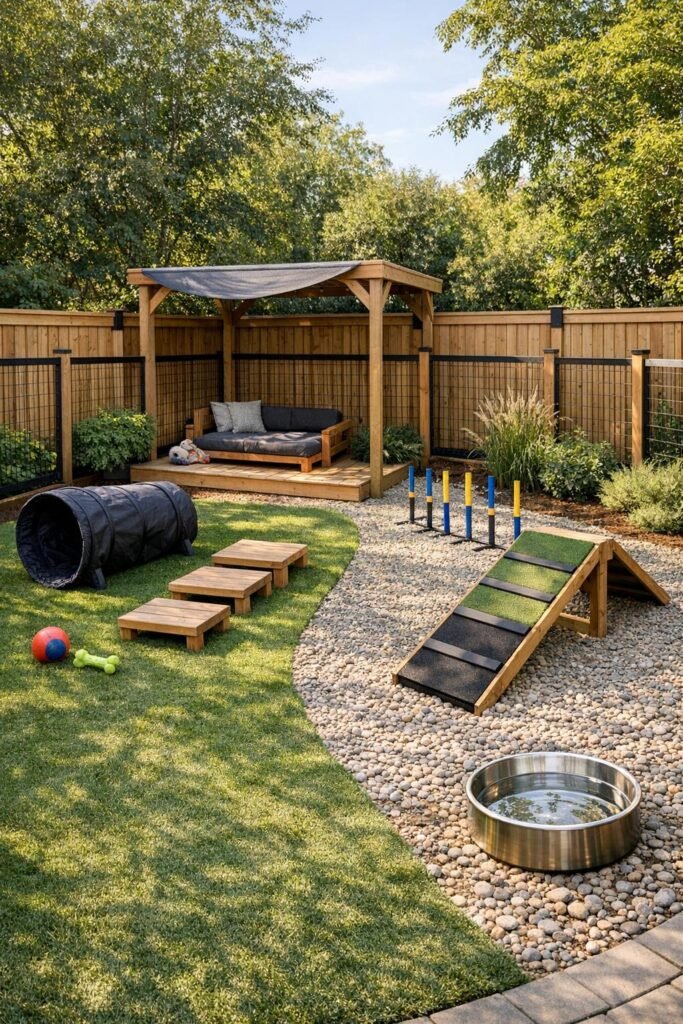
Dogs overheat quickly, so I always include shade in my run designs. You can use existing trees, install a pergola, or add shade sails to keep the area cool during hot months. Natural shade from trees is my favorite option because it stays cool and looks great.
If you don’t have trees, a simple tarp stretched between posts works on a tight budget. I’ve learned that at least 50% of the run should have shade coverage throughout the day. This gives your dog options to move between sun and shade as they want.
Adding shade structures to your dog run also protects against rain, so your dog can still enjoy outdoor time in bad weather. You can even include a small dog house or covered platform as a resting spot.
Corner Dog Run Layouts
Corner runs fit perfectly in unused yard spaces and feel more private for nervous dogs. I place these in the back corner of the yard where two fences meet, which means I only need to build two additional fence sides. These L-shaped or square designs typically work well in 10×10 or 12×12 foot spaces.
The compact layout keeps everything your dog needs close together while leaving the rest of your yard open. I add water bowls, toys, and resting areas along the edges to keep the center clear for playing. Corner runs also tend to stay cleaner because they’re contained and easier to maintain than larger spaces.
Best Materials for Dog Runs

Picking the right materials keeps your dog safe and makes maintenance easier for you. The fencing needs to be strong enough to contain your dog, the ground surface should protect their paws and joints, and weatherproof elements will help everything last longer. Here are the top products I recommend for building a safe, comfortable, and long-lasting backyard dog run.
1. Lucky Dog Uptown Welded Wire Kennel
If you want a ready-to-assemble dog run without the hassle of building from scratch, the Lucky Dog Uptown Welded Wire Kennel is one of the best options on the market. The welded wire panels are stronger than chain link and have smaller openings that work well for dogs of all sizes. Setup takes about an hour with basic tools and no concrete required.
2. Pet Zen Garden Premium Artificial Grass Turf
Artificial turf is one of the smartest ground cover choices for a dog run. Pet Zen Garden’s turf is specifically designed for pets — it drains quickly, resists odors, and holds up against heavy paw traffic year after year. The blades stay soft on your dog’s paws and the surface stays cool even in summer heat. Easy to hose down and maintain.
3. Veken Pet Fountain Automatic Water Dispenser
Keeping your dog hydrated in their run is non-negotiable, especially in warm weather. The Veken Pet Fountain circulates and filters water continuously so your dog always has access to fresh, clean water without you having to refill a bowl multiple times a day. The large capacity reservoir works great for outdoor use and the pump is whisper quiet so it won’t startle your pup.
4. EXPAWLORER Dog Agility Tunnel
Adding an agility tunnel to your dog run gives your pup the mental and physical stimulation they need to stay happy and healthy. The EXPAWLORER tunnel is made from heavy-duty Oxford fabric that holds up to outdoor conditions and enthusiastic dogs. It collapses flat for easy storage and sets up in seconds. Great for dogs of all sizes and energy levels.
5. Colourtree Custom Size Shade Sail
Every dog run needs reliable shade coverage. Colourtree’s shade sails block up to 95% of UV rays and are made from breathable HDPE fabric that stays cool even in direct sun. They’re available in multiple sizes and shapes so you can find the perfect fit for your run. Easy to install with the included hardware and built to withstand wind, rain, and heavy outdoor use.
Safe Fencing Options
I recommend chain link fencing as one of the most popular choices because it’s affordable and lets your dog see outside the run. The gaps in chain link give good airflow while keeping your pet secure. Make sure you choose a height of at least 4 to 6 feet depending on your dog’s size and jumping ability.
Wood fencing works well if you want more privacy in your yard. Cedar and redwood resist rot naturally and hold up better than other wood types. Welded wire panels offer another solid option.
They’re stronger than chain link and have smaller openings that work better for small dogs. You can find these panels at most hardware stores and they’re fairly easy to install yourself. Metal picket fencing gives you a decorative look while staying functional.
It’s more expensive than other options but lasts a very long time with minimal upkeep.
Ground Cover and Surfacing Choices
Gravel makes a practical ground cover because it drains well and doesn’t hold onto smells. I prefer pea gravel over larger rocks since it’s gentler on dog paws. The rounded edges won’t cut or scrape your pet’s feet during playtime.
Artificial turf has become increasingly popular for backyard dog runs because it looks natural and stays clean. It drains quickly after rain and you can hose it down easily. Good quality turf designed for pets resists wear and doesn’t absorb odors.
Concrete provides the easiest surface to clean and sanitize. It works especially well if you have multiple dogs or large breeds. The downside is that concrete gets hot in summer and feels hard on joints.
I suggest adding rubber mats in areas where your dog rests. Natural grass seems like an obvious choice but it requires the most maintenance. Your dog’s urine will create brown spots and heavy foot traffic will wear away the grass quickly.
Weatherproofing Tips
Adding a roof or shade cover protects your dog from sun and rain. I like using corrugated metal roofing or shade cloth because both materials are budget-friendly and simple to install. A covered area lets your dog use the run comfortably in any weather.
Seal wood fencing with a pet-safe stain or sealant every year or two. This prevents rotting and extends the life of your fence. Never use products with toxic chemicals that could harm your dog if they chew or lick the wood.
Proper drainage keeps water from pooling in the run. I always slope the ground slightly away from any structures and add a French drain if needed. Standing water creates mud and makes cleaning harder.
Apply rust-resistant coating to metal fencing and hardware. This simple step prevents rust from weakening the fence over time. Check and tighten all bolts and connections at least twice a year.
Adding Fun and Function to Your Dog Run
A well-designed dog run needs more than just fencing to keep your pup entertained and comfortable. I focus on adding features that encourage physical activity, keep my dog hydrated, and provide a place to rest between play sessions.
Agility Features and Toys
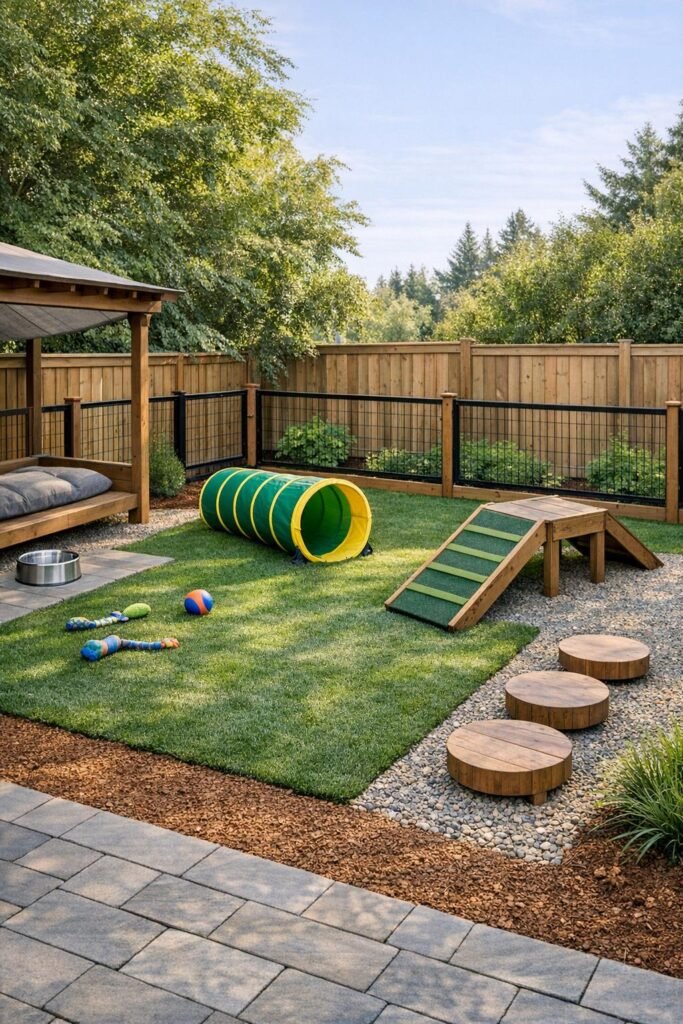
I like to include obstacles and toys that provide mental stimulation to prevent boredom. Weave poles are simple to install and help my dog practice coordination and speed. I use PVC pipes or wooden stakes spaced about 24 inches apart.
Tunnels are another favorite addition. I can find collapsible fabric tunnels online or build permanent ones with large drainage pipes. My dog loves running through them during play time.
Adjustable jumps let me change the height as my dog improves. I keep them low for older dogs or puppies. A digging pit filled with sand gives my dog a designated spot to dig without ruining my yard.
I bury toys in the sand to make it more interesting. I rotate toys weekly to keep things fresh. Rope toys, balls, and puzzle feeders work well. I attach some toys to posts or fencing so they don’t get lost in the grass.
Water Stations
I always keep fresh water available in my dog run. Elevated water bowls work better than ground-level ones because they stay cleaner and are easier for larger dogs to drink from. I use heavy ceramic or stainless steel bowls that won’t tip over easily.
In summer, I add ice cubes to keep the water cool. Some owners install automatic waterers that connect to a garden hose for constant fresh water. I place water stations in shaded areas to keep them cooler.
For dogs who love water play, I add a small kiddie pool during hot months. I empty and refill it daily to prevent mosquitoes.
Sheltered Rest Areas
My dog needs a shaded spot to cool down after running around. I install a covered section using a simple roof structure or large umbrella. This protects my dog from sun and light rain.
Dog houses work well for creating functional rest spaces. I choose one that’s large enough for my dog to turn around in comfortably. I add a raised bed or cushion inside to keep my dog off the ground.
Shade sails are affordable and easy to install. I position them over the water station and rest area. Natural shade from trees also works if my yard has them. I make sure the sheltered area has good airflow to prevent it from getting too hot.
Maintaining a Safe and Clean Dog Run
I keep my dog run in top shape through daily cleaning routines and weekly safety inspections.
Regular Cleaning Tips
I scoop solid waste from my dog run every single day. This prevents odors and keeps bacteria from building up in the space. Once a week, I hose down the entire run area. I pay extra attention to corners where dirt and debris tend to collect.
For runs with artificial turf or gravel, I use a pet-safe disinfectant diluted with water. I replace loose materials like mulch or pea gravel every 3-4 months. These materials break down over time and can harbor bacteria.
I also wash water bowls daily with hot soapy water to prevent algae and slime buildup. My backyard dog run design includes proper drainage to prevent puddles. Standing water attracts mosquitoes and creates muddy spots that track into my house.
Health and Safety Checks
I walk the perimeter of my dog run weekly to check for hazards. I look for loose fence boards, sharp edges, or gaps where my dog could escape or get injured. I inspect the ground surface for holes my dog may have dug. I fill these immediately because they can cause twisted ankles or broken legs.
I also remove any sticks, rocks, or foreign objects that shouldn’t be there. Every month, I check that all gates latch securely. I make sure hinges work smoothly. A faulty gate is a major safety risk that I address right away.
I trim back any vegetation growing into the run space. Some common plants are toxic to dogs, so I keep the area clear. I also ensure shade structures remain stable. They should provide adequate protection from sun and rain.