Dog Kennel Essentials: A Friendly Guide to Choosing the Perfect Home for Your Pup

A dog kennel gives your pet a safe space of their own while keeping them secure at home or on the go. Whether you’re house training a puppy, traveling with your dog, or just need a reliable spot for them to rest, the right kennel makes life easier for both of you.
Many pet owners feel confused about sizing, materials, and features when shopping for their first kennel.

The best dog kennel fits your dog’s size comfortably, provides good airflow, and has secure latches to keep your pet safe. You can find kennels at stores like Walmart, The Home Depot, and Chewy, with options ranging from basic wire crates to climate-controlled custom builds.
The variety can feel overwhelming, but I’ll help you understand what matters most.
I’ve put together this guide to walk you through everything you need to know about dog kennels. From picking the right size to setting it up properly, you’ll learn how to create a comfortable den that your dog actually enjoys using.
Key Takeaways
- Choose a kennel that allows your dog to stand up, turn around, and lie down comfortably
- Look for features like secure locks, proper ventilation, and easy-to-clean materials
- A well-chosen kennel helps with training, travel safety, and gives your dog their own space
What Is a Dog Kennel?

A dog kennel is a structured space that provides shelter and security for dogs in various situations. These enclosures range from small indoor crates to large outdoor structures and commercial boarding facilities.
Definition of Dog Kennel
A dog kennel is a shelter or structure designed specifically for dogs to stay in safely. I’ve found that kennels serve as protected spaces where dogs can rest, sleep, and feel secure when their owners can’t directly supervise them.
The term “kennel” actually has multiple meanings. It can refer to a small crate inside your home or a doghouse that provides outdoor shelter from weather conditions.
When I talk about kennels, I’m also referring to commercial boarding facilities. These are businesses that house multiple dogs and provide basic care like feeding, water, and exercise for a fee.
Types of Dog Kennels
Dog kennels come in several forms to meet different needs:
Indoor Crates are portable wire, plastic, or fabric enclosures used inside homes. I recommend these for house training, travel, and giving dogs a personal den-like space.
Outdoor Dog Houses are structures designed to provide shelter and protection outdoors. These protect dogs from rain, snow, wind, and sun while they spend time in the yard.
Outdoor Runs and Enclosures are larger fenced areas. These give dogs more room to move around while staying contained and safe.
Boarding Kennels are commercial facilities that house dogs temporarily. I’ve seen these provide basic care including shelter, food, and bathroom breaks while owners are away.
Common Uses for Dog Kennels
Kennels serve many practical purposes in daily dog care. I use them primarily for safety and containment when I can’t watch my dog directly.
Training is another key use. Kennels help with house training by teaching dogs to control their bladder and establish a routine. They also create a calm space for dogs who need to learn settling behaviors.
Many dog owners rely on kennels during travel. A crate keeps dogs secure in cars and meets airline requirements for flying with pets.
Kennels provide temporary boarding when I travel or face emergencies. Commercial boarding facilities meet dogs’ basic needs like feeding and exercise during these times.
I also find kennels useful for behavior management. They give anxious dogs a safe retreat and prevent destructive behaviors when dogs are home alone.
Choosing the Right Dog Kennel

I know picking a kennel can feel overwhelming with so many choices available. The key is matching the kennel size to your dog’s measurements, selecting durable materials that fit your needs, and thinking about where you’ll use it.
Factors to Consider
When I’m choosing a kennel for my dog, I always start by thinking about my dog’s behavior and needs. If my dog tends to chew or scratch, I need something escape-proof and sturdy.
I also consider where the kennel will go. Indoor kennels can be lighter and more decorative. Outdoor kennels need weather protection and ventilation.
My dog’s age matters too. Puppies need kennels for training and creating a safe space. Older dogs might need more room to stretch out comfortably.
I think about how often I’ll move the kennel. Travel kennels should be lightweight and easy to fold. Permanent setups can be heavier and more solid.
The kennel’s purpose guides my choice. Training kennels work best when they’re cozy. Sleeping areas can be bigger with bedding.
Size Recommendations
I measure my dog from nose to tail base, then add 2 to 4 inches for length. For height, I measure from floor to the top of my dog’s head when sitting, then add 2 to 4 inches.
My dog needs enough space to stand up, turn around, and lie down comfortably. Too much space can make house training harder for puppies.
Here’s what I use as a guide:
| Dog Weight | Kennel Size |
|---|---|
| Under 25 lbs | 24 inches |
| 26-40 lbs | 30 inches |
| 41-70 lbs | 36 inches |
| 71-90 lbs | 42 inches |
| Over 90 lbs | 48+ inches |
I buy kennels with dividers for growing puppies. This lets me adjust the space as they get bigger without buying multiple kennels.
Material Options
Wire kennels are my go-to for ventilation and visibility. They fold flat for storage and let me see my dog easily.
They’re affordable but can be noisy if my dog moves around.
Plastic kennels work great for travel since they’re airline-approved. They give my dog more privacy and feel den-like.
I use these for anxious dogs who want a darker, quieter space.
Soft-sided kennels are perfect for calm dogs and quick trips. They’re super lightweight and portable.
I avoid these for dogs who chew or scratch since they damage easily.
Heavy-duty metal kennels are what I choose for strong dogs or escape artists. They cost more but last longer and handle rough use.
Different kennel materials suit different situations and budgets.
Wooden kennels look nice as furniture but need more maintenance. I pick materials based on my dog’s personality and where I’ll use the kennel most.
Dog Kennel Safety and Comfort
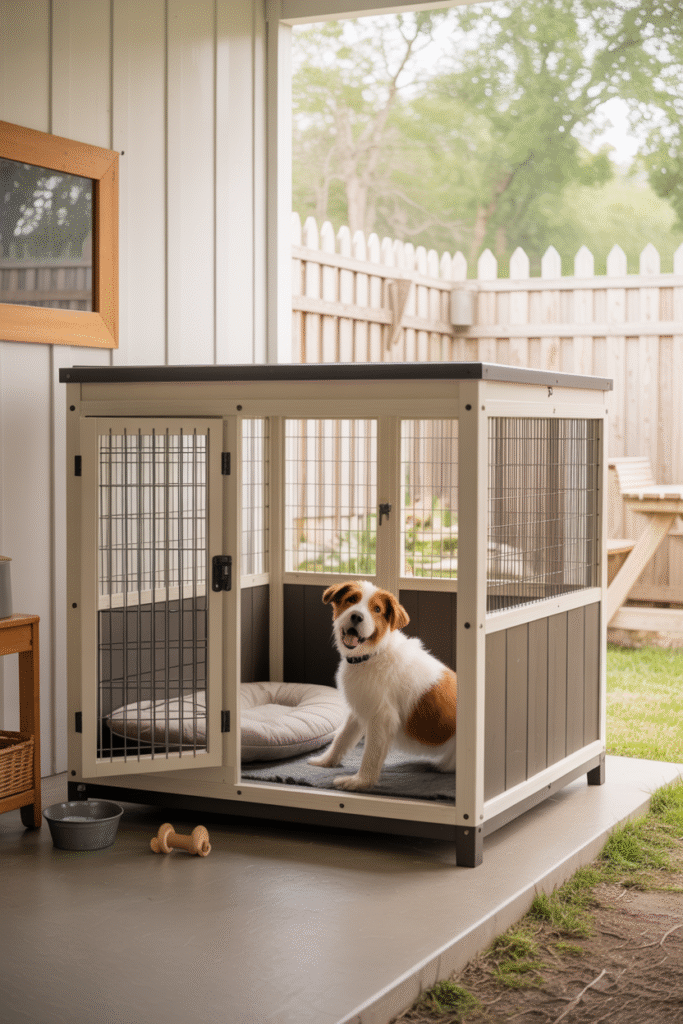
A safe and comfortable kennel protects your dog from injury while giving them a space where they feel secure. Proper ventilation keeps air fresh, the right flooring prevents health issues, and strong security features stop escapes.
Ventilation and Temperature
I always check that a kennel has enough airflow before putting my dog inside. Good ventilation stops heat from building up and keeps fresh air moving through the space.
Wire kennels work well because air flows freely through all sides. Plastic kennels need ventilation holes on at least three sides to prevent stuffiness.
I make sure the holes are big enough to let air pass but small enough to keep my dog’s paws from getting stuck.
Temperature control matters just as much as airflow. I never place a kennel in direct sunlight or near heating vents.
In summer, I keep kennels in cool, shaded areas with good air circulation. During winter, I add blankets but still maintain some airflow to prevent moisture buildup.
For outdoor kennels, I follow essential tips for proper ventilation that include covered areas for shade and protection from wind.
Indoor kennels need to sit away from drafts but not in closed-off rooms where air gets stale.
Kennel Flooring
The floor of a kennel affects my dog’s joint health and cleanliness. Hard surfaces like concrete or plastic are easy to clean but can hurt joints during long stays.
I add padding to make hard floors more comfortable. Rubber mats work well because they cushion joints and don’t absorb odors.
They’re also simple to remove and wash.
For outdoor kennels, I avoid dirt floors because they get muddy and harbor bacteria. Gravel drains well but can be rough on paws.
I prefer raised platforms or rubber flooring that keeps my dog dry and comfortable.
Bedding choices depend on my dog’s habits. I use washable blankets or dog beds for dogs who don’t chew.
For chewers, I stick with durable rubber mats that can’t be destroyed.
Security Features
I inspect every latch and lock before trusting a kennel with my dog. Weak closures lead to escapes and potential danger.
Door latches should require two steps to open. Simple hook-and-eye locks aren’t enough for smart or determined dogs.
I look for slide bolts or double-action latches that my dog can’t figure out.
Wire spacing matters for safety. Bars should sit close enough that my dog can’t squeeze through or get their head stuck.
I check that all welds are solid with no sharp edges that could cut.
Choosing a secure and comfortable space means looking at the overall construction too.
I make sure corners are reinforced and there are no gaps where a determined dog could push through. For outdoor kennels, I verify that the structure is anchored properly so it won’t tip over.
Dog Kennel Setup and Maintenance

I’ve learned that proper kennel setup and regular cleaning routines make all the difference in keeping my dog healthy and comfortable in their outdoor space.
Placement Tips
I always recommend choosing a spot with good drainage to prevent water from pooling inside the kennel. A slightly elevated area works best because it keeps the floor dry during rain.
Partial shade is important for temperature control. I look for locations where my dog can enjoy morning sun but have protection during the hottest part of the day.
Trees or building shade work well for this purpose.
I keep the kennel away from property lines to reduce barking at neighbors or passersby. This creates a calmer environment for my dog.
Proper placement helps dogs thrive outdoors when combined with adequate shelter.
Good ventilation is necessary but I avoid placing kennels in direct wind paths. I check that air can flow through while still protecting my dog from harsh weather conditions.
Cleaning and Sanitizing
I perform spot cleaning daily by removing waste, food debris, and visible dirt. This quick routine takes only a few minutes but prevents buildup.
Weekly deep cleaning is part of my schedule. I remove my dog and use a pet-safe disinfectant on all surfaces.
Hot water and a stiff brush help remove stuck-on grime from floors and walls. I let everything dry completely before allowing my dog back inside.
Moisture can lead to bacteria growth and unpleasant smells. Proper ventilation speeds up drying time.
I wash food and water bowls separately every day with hot soapy water. Bedding gets laundered weekly or more often if needed.
Essential Accessories
Water bowls need to be sturdy and tip-resistant. I use heavy ceramic or mounted bowls that my dog can’t knock over easily.
Fresh water must be available at all times. Elevated beds or platforms keep my dog off cold or damp ground.
I choose materials that resist moisture and are easy to clean. Comfortable bedding makes the kennel feel like a proper resting space.
I add toys and chew items to prevent boredom. Durable options work best for outdoor use.
Shade cloth or tarps provide extra weather protection during extreme conditions. A secure latch system is non-negotiable for safety.
I double-check locks regularly to make sure my dog can’t escape and unwanted animals can’t get in.
Benefits of Using a Dog Kennel
Dog kennels provide a dedicated space that helps manage behavior, makes travel easier, and supports effective training. These enclosed areas give dogs security while giving me practical solutions for daily challenges.
Behavioral Advantages
A kennel acts as a personal den for my dog, which taps into their natural instinct to seek safe, enclosed spaces. This helps reduce stress and promotes a sense of belonging in my home.
When I use a kennel properly, it prevents destructive behavior when I can’t supervise my dog. My furniture, shoes, and other belongings stay safe from chewing or scratching.
The kennel also reduces anxiety by giving my dog a calm retreat during stressful situations like thunderstorms or when guests visit. I’ve noticed my dog naturally goes to their kennel when they want quiet time.
This behavior shows the kennel isn’t a punishment but a comfortable spot they choose on their own.
Key behavioral benefits:
- Prevents destructive chewing and scratching
- Reduces separation anxiety
- Creates a safe retreat during stressful events
- Establishes healthy boundaries in the home
Travel and Boarding
A kennel makes traveling with my dog much safer and less stressful for both of us. In the car, it prevents my dog from moving around and distracting me while driving.
Airlines also require approved kennels for pets flying in cargo or under seats. When I need to board my dog, kennels at facilities provide professional care and supervision from trained staff.
My dog gets socialization opportunities with other dogs and follows a structured routine that keeps them comfortable. If my dog is already kennel-trained at home, boarding becomes less stressful because they’re familiar with the setup.
They see it as their normal sleeping space rather than confinement.
Training Support
Kennels are valuable tools for house training puppies and new dogs.
Dogs naturally avoid soiling where they sleep, so I use the kennel to establish bathroom schedules and routines.
The kennel helps me manage my dog’s behavior during training sessions.
I can teach commands like “kennel” or “place” that give my dog clear instructions about where to go.
For dogs learning boundaries, the kennel prevents them from practicing unwanted behaviors when I’m not watching.
I use the kennel for short periods during training, gradually increasing the time as my dog becomes more comfortable and reliable with good behavior.