
DIY Outdoor Dog Area: Simple Steps to Create a Safe and Fun Space for Your Pup

Your dog needs a safe place to play, use the bathroom, and enjoy the outdoors. Creating a DIY outdoor dog area gives your pet a dedicated space while keeping your yard organized and clean.
You don’t need to spend a lot of money or have special skills to build one.
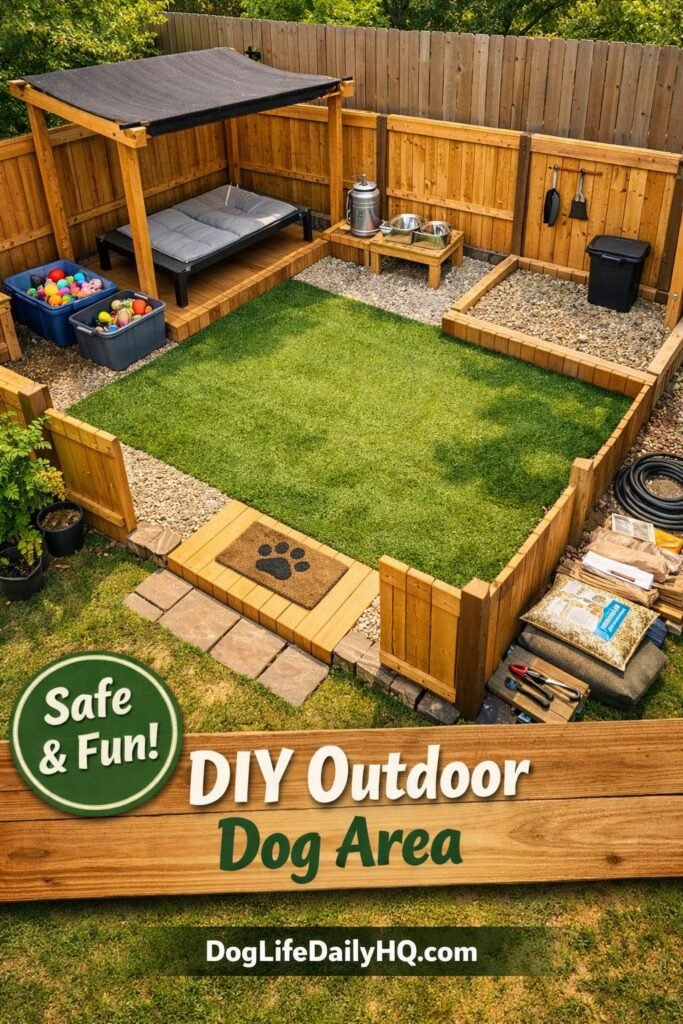
I’ve helped many dog owners set up outdoor spaces that work for their pets and their budgets. Whether you want to build a budget-friendly outdoor dog potty area or create a full playground, the process is easier than you think.
The right setup saves you time and gives your dog a spot they’ll love. A good outdoor dog area can include potty zones, play equipment, shade, and safe borders.
I’ll walk you through the planning, design, and building steps so you can create the perfect space for your dog.
Key Takeaways
- Planning your space based on your dog’s size and needs helps you create an area that works well.
- Adding features like shade, toys, and proper ground cover makes the space comfortable and fun for your pet.
- Regular cleaning and safety checks keep your outdoor dog area in good shape and safe to use.
Planning Your DIY Outdoor Dog Area
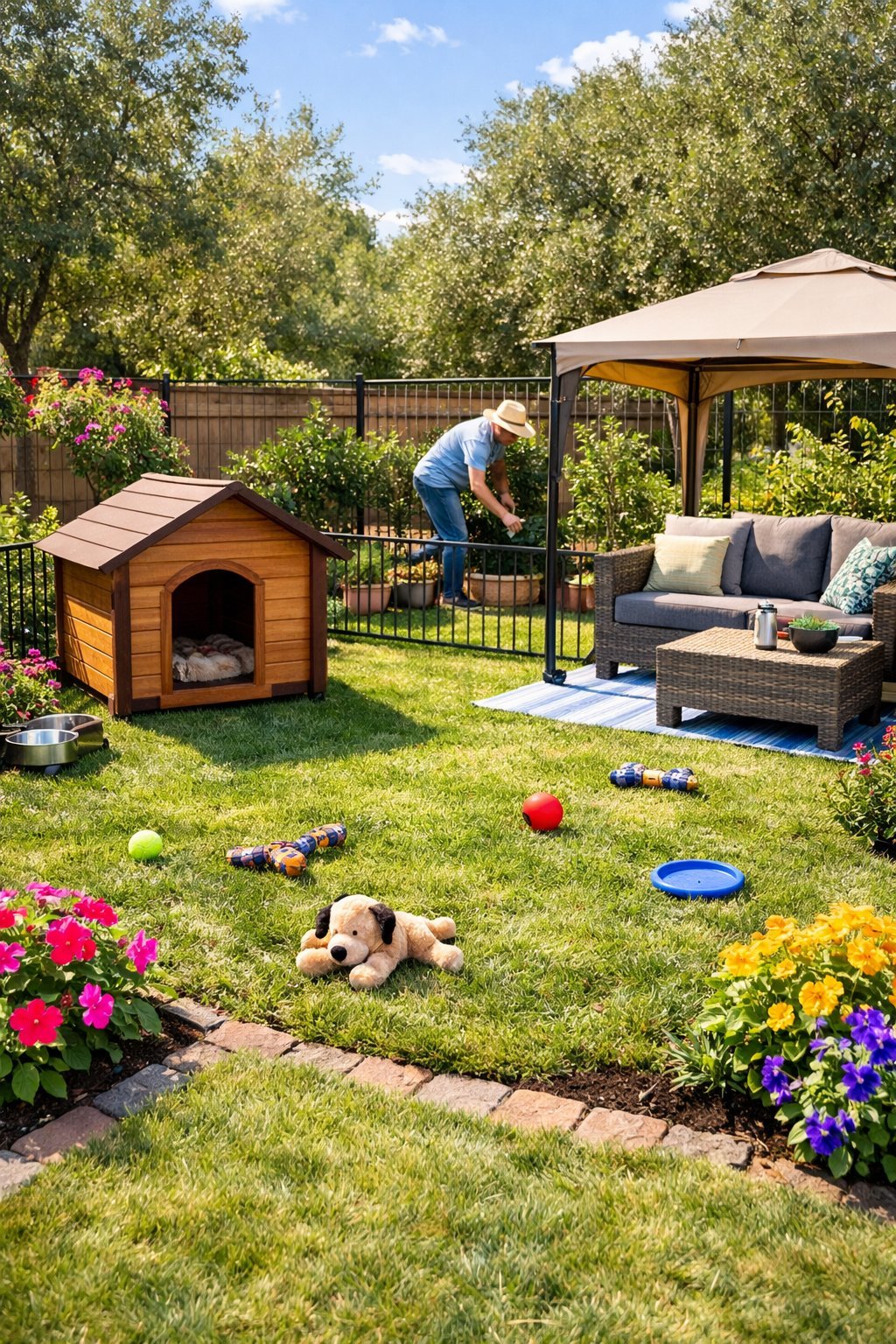
Getting the planning phase right makes a big difference. I focus on three main factors: what my dog actually needs based on their size and habits, where to put the area in my yard, and how much space to set aside.
Assessing Your Dog’s Needs
I start by looking at my dog’s size, age, and energy level. A large, active breed needs more room to run and play than a small lap dog who mostly wants a safe potty spot.
My dog’s behavior matters too. If they’re a digger, I plan for ground protection or designated digging zones.
Dogs who jump require taller fencing. Senior dogs benefit from flat, even surfaces that are easy on their joints.
I also think about how my dog handles weather. Some breeds overheat quickly and need lots of shade, while others love being outside in all conditions.
Key factors to consider:
- Size and breed – Larger dogs need 100-200 square feet minimum
- Activity level – High energy dogs require space for running
- Special behaviors – Digging, jumping, or chewing habits
- Age and mobility – Puppies and seniors have different needs
- Weather tolerance – Heat-sensitive breeds need covered areas
Choosing the Right Location
I pick a spot where I can easily see my dog from inside the house. This lets me keep an eye on them without going outside every few minutes.
The area needs good drainage so water doesn’t pool after rain. I avoid low spots in my yard where puddles form.
Natural shade from trees helps, but I make sure there aren’t toxic plants nearby. I place the area close to my house when possible, which makes it easier to add a doggie door later and keeps my dog connected to family activities.
I also check that the spot gets some sun during winter months for warmth.
Measuring the Space
I measure the area carefully before buying any materials. For one medium-sized dog, I aim for at least 10 feet by 10 feet.
Each additional dog needs about 50 more square feet. I use stakes and string to mark out the boundaries on the ground.
Walking through the marked space helps me visualize if it’s truly big enough. I can adjust the size before committing to any purchases.
I write down all measurements and sketch a simple diagram. This prevents buying the wrong amount of fencing or other supplies.
I add an extra 10% to material estimates to account for mistakes or adjustments during building the outdoor dog enclosure.
Design Ideas for Outdoor Dog Spaces
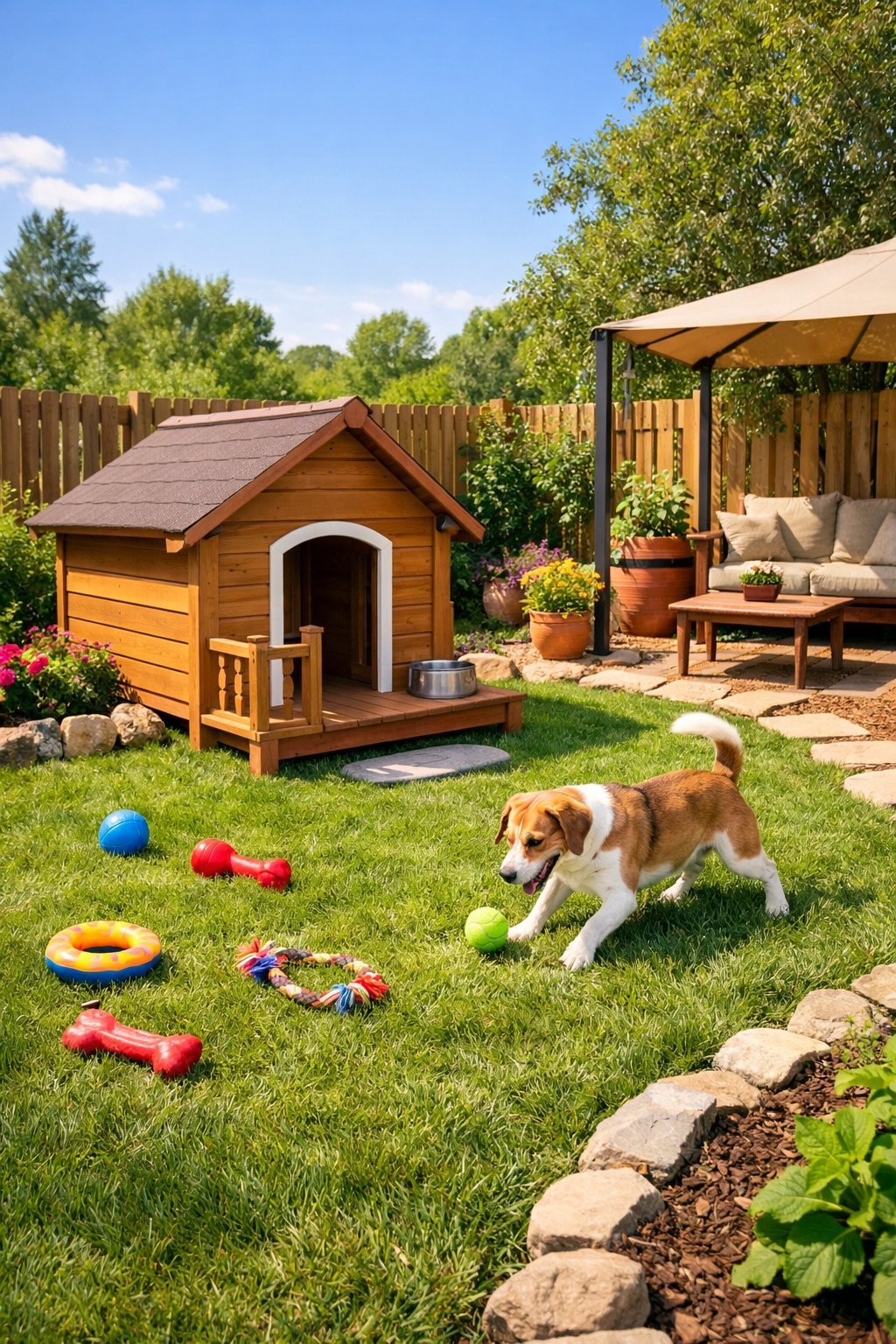
Creating a functional outdoor dog area requires planning around three key elements: protection from weather, durable ground surfaces, and secure boundaries.
Incorporating Shade and Shelter
I always start by identifying areas that offer natural shade throughout the day. Trees provide excellent coverage, but if your yard lacks them, you’ll need to add shade structures.
A simple pergola or shade sail works well for most budgets. These structures block harmful UV rays while allowing air to flow through.
I recommend placing shade over at least 50% of your dog’s play area so they can cool down whenever needed. For shelter, a doghouse gives your pet a retreat during rain or extreme heat.
Make sure the shelter is raised a few inches off the ground to prevent moisture buildup. The entrance should face away from prevailing winds.
Some dog owners prefer covered patios or extended roof overhangs. These options integrate with your home’s existing structure and provide reliable protection.
I’ve found that creating a dedicated dog zone helps establish a safe play area.
Selecting Ground Cover Options
Grass looks nice but doesn’t always hold up to heavy paw traffic. I’ve learned that mixing different ground covers creates both durability and comfort.
Best ground cover options:
- Artificial turf – drains well and stays green year-round
- Decomposed granite – affordable and provides good drainage
- Wood chips – soft on paws but needs regular replacement
- Clover – natural, soft, and more resilient than regular grass
- Pea gravel – drains quickly but can get stuck in paws
I avoid cocoa mulch since it’s toxic to dogs. Sand can work in small digging areas, but it tracks into your home easily.
For high-traffic zones like entry points, I use pavers or flagstones. These materials prevent muddy pathways and require minimal maintenance.
Combining materials works best—use grass or clover in play areas and gravel along fence lines.
Adding Boundaries and Fencing
Secure fencing keeps your dog contained while giving them freedom to explore. I measure my fence height based on my dog’s size and jumping ability.
Most dogs need at least a 4-foot fence, while larger or athletic breeds require 6 feet. Fencing materials to consider:
| Material | Pros | Cons |
|---|---|---|
| Wood | Privacy, classic look | Needs maintenance, can rot |
| Chain link | Affordable, durable | No privacy, less attractive |
| Vinyl | Low maintenance, clean look | Higher upfront cost |
| Wire mesh | Budget-friendly | Less secure for diggers |
I always check the fence bottom for gaps. Dogs who dig need barriers buried 6-12 inches underground or an L-footer along the base.
For DIY outdoor dog enclosures, I add gates with secure latches that dogs can’t open. Double gates work well if you need to move equipment in and out.
Visual barriers like slats prevent fence-line reactivity when neighbors or other animals pass by.
Building the Dog Area Step-by-Step
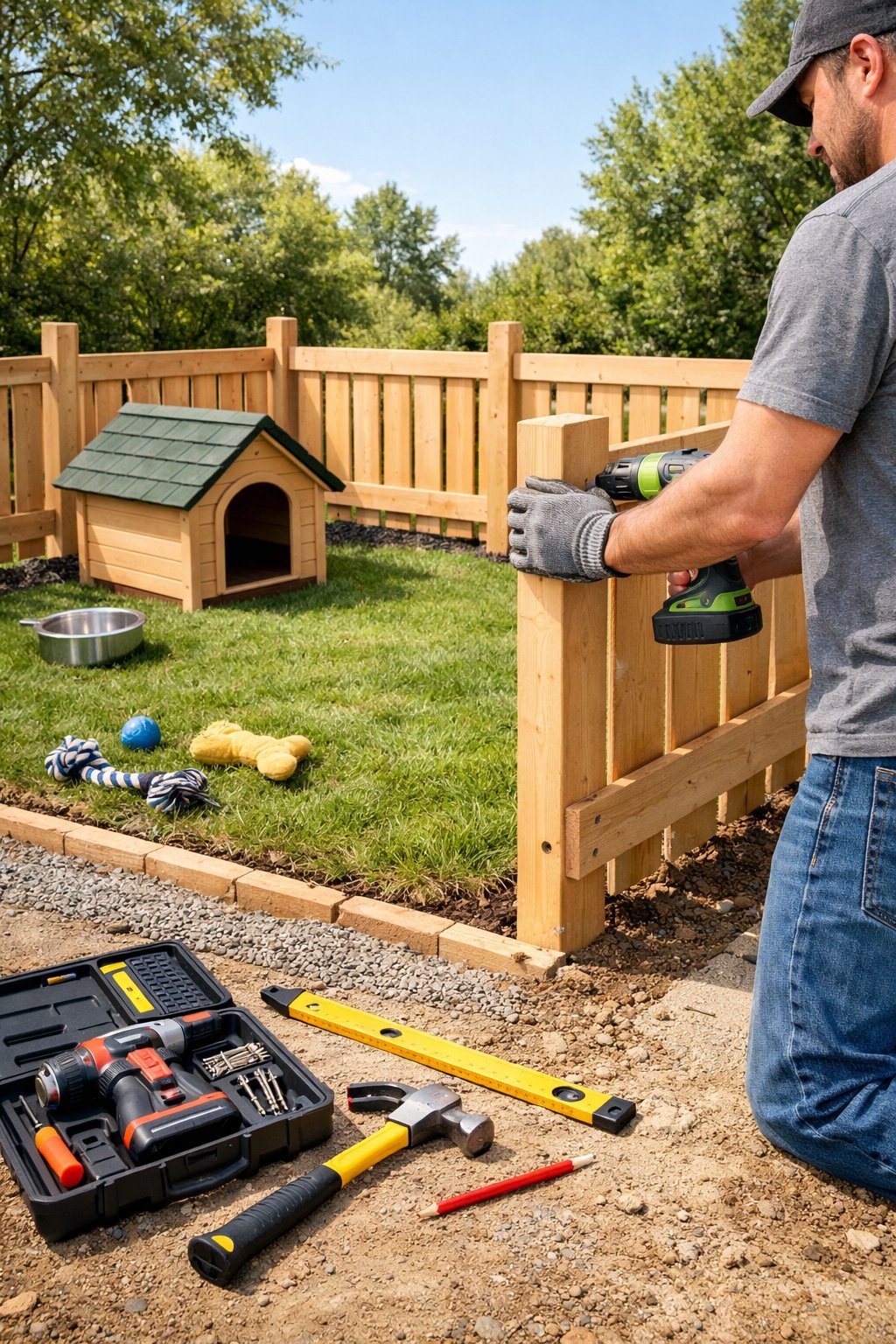
I’ll walk you through the main construction steps to get your outdoor dog area ready. Proper site preparation, sturdy fencing, and safe access points form the foundation of a functional space.
Preparing the Site
I always start by clearing the area of any debris, rocks, or plants that could harm my dog. This includes removing sticks, sharp objects, and any toxic plants like azaleas or oleander.
Next, I level the ground using a rake or shovel. Uneven surfaces can create drainage problems and make the space uncomfortable for my dog to walk on.
I mark the boundaries with stakes and string to visualize the final layout. This helps me plan where the fencing will go and how much space I’m actually working with.
When building a backyard dog potty area, checking local regulations about setbacks from property lines is important before I dig or install anything permanent.
I test the soil drainage by digging a small hole and filling it with water. If the water drains within an hour, the drainage is adequate.
Poor drainage means I need to add gravel or sand to prevent muddy conditions.
Installing Fencing and Gates
I choose fencing that’s at least 4 feet tall for small dogs and 6 feet for larger or athletic breeds. Chain link, wood panels, and vinyl are all durable options that work well outdoors.
I dig post holes about 2 feet deep and space them 6 to 8 feet apart. Concrete helps secure each post and prevents wobbling over time.
I let the concrete cure for 24 hours before attaching any fence panels. When creating a pet-friendly backyard space, I make sure the bottom of the fence sits close to the ground or is buried a few inches deep.
This prevents my dog from digging under and escaping. I install gates with self-closing hinges and secure latches.
The latch should be high enough that my dog can’t reach it by jumping.
Creating Safe Entry Points
I position the gate in a spot that’s easy for me to access from my house. This makes taking my dog in and out more convenient for daily use.
I add a small landing pad or gravel area right outside the gate entrance. This keeps mud from tracking into other parts of my yard and gives my dog a clean transition zone.
I check that the gate opens smoothly without scraping the ground. A gate that sticks or drags creates wear on the hinges and becomes harder to use over time.
I apply weather-resistant paint or sealant to wooden gates to protect them from rot and extend their lifespan.
Features to Enhance Comfort and Fun
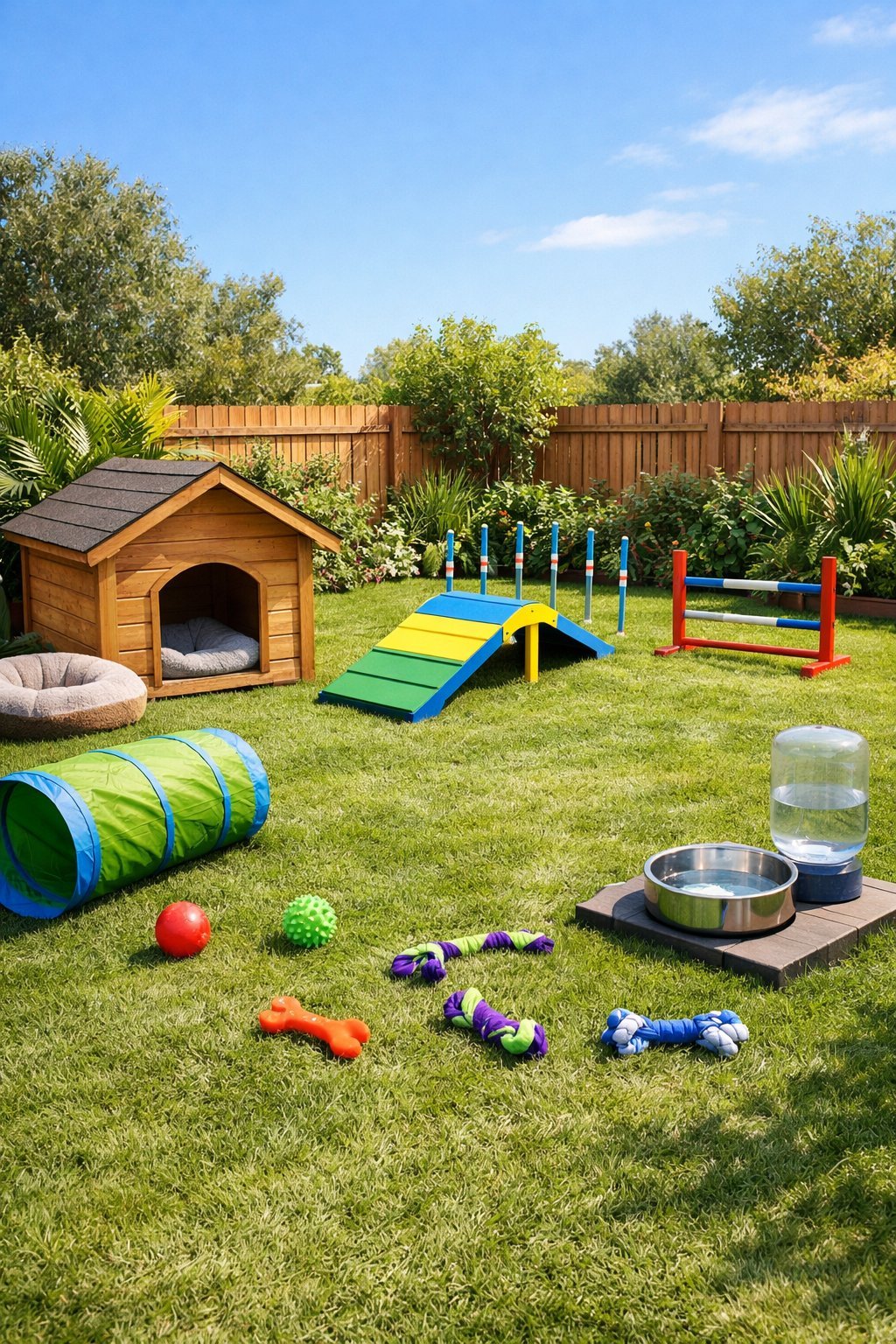
A well-designed outdoor dog area needs the right features to keep your pup comfortable and entertained. Water access, engaging toys, and comfortable resting spots form the foundation of a space where dogs can play hard and relax safely.
Installing Water Stations
I always make sure my dog has access to fresh water when spending time outside. A simple elevated water bowl works well, but I prefer automatic water dispensers that refill themselves from a hose connection.
These stations prevent dehydration during hot days and after play sessions. I position mine in a shaded spot so the water stays cool longer.
For multiple dogs, I set up two stations in different areas to prevent territorial behavior. Splash-proof bowls help reduce mess around the water area.
I also add a rubber mat underneath to catch spills and prevent muddy patches from forming. Some dog owners install dedicated play features that combine water elements with entertainment.
Providing Play Equipment
I find that dogs need mental and physical stimulation to stay happy outdoors. A small agility course with jumps, tunnels, and weave poles keeps my dog engaged for hours.
Chew-resistant toys attached to posts or buried tires give my pup something appropriate to gnaw on. I rotate toys weekly to maintain interest.
Tennis balls in a bucket, rope toys hanging from low branches, and puzzle feeders hidden around the yard all add variety. For diggers, I created a designated sandbox filled with play sand where digging is encouraged.
This saves my garden beds from destruction. When planning your dog-friendly outdoor space, include different activity zones for various energy levels.
Adding Rest Areas
Every dog needs a comfortable spot to cool down between play sessions. I built a covered platform with outdoor carpet that provides shade and a soft surface.
Rest area essentials include:
I position rest areas away from the active play zones so my dog can truly relax. A simple raised cot keeps my pup off hot ground in summer and cold surfaces in winter.
Adding windbreaks like lattice panels or planters creates a cozy corner that feels safe and protected.
Maintenance and Safety Tips
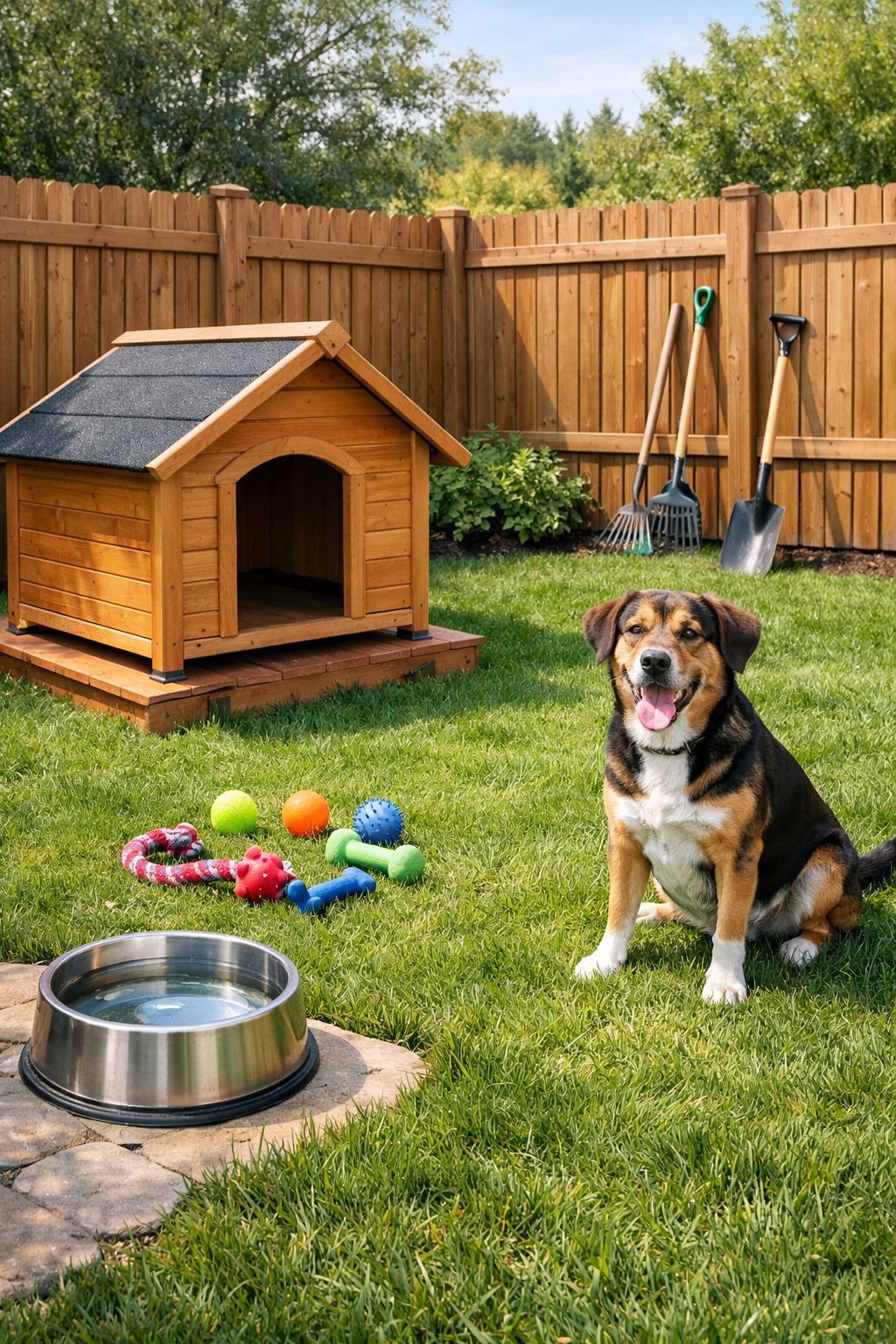
Keeping your DIY outdoor dog area clean and well-maintained protects your dog’s health while extending the life of your space.
Regular checks help you spot potential hazards before they become problems. Seasonal adjustments keep your dog comfortable year-round.
Cleaning the Dog Area
I make it a habit to pick up waste daily from my dog’s outdoor area. This prevents parasites and keeps odors under control.
For ground surfaces, I hose down concrete or gravel areas at least once a week. If I’m using artificial turf, I spray it with a pet-safe cleaner and rinse thoroughly.
Natural grass needs regular mowing and occasional reseeding in high-traffic spots.
I wash water bowls and food dishes every day with hot, soapy water. Toys and other play items get cleaned weekly with a mild detergent solution.
For areas where my dog rests, I shake out bedding and wash it according to the manufacturer’s instructions.
Monthly deep cleaning tasks:
Regular Inspection Routines
I walk through my dog’s outdoor space every few days looking for safety issues. Sharp edges on fencing can appear over time, so I run my hand along posts and panels to check for splinters or rust.
I test the gate latch each week to make sure it closes securely. Loose hardware gets tightened immediately.
I also examine the ground for holes my dog might have dug or hazards like broken glass.
Plants need checking too. I remove any toxic vegetation that might have sprouted and trim back overgrown bushes that could harbor pests.
I look at shade structures to ensure they’re still stable. Wind and weather can loosen supports over time.
Addressing Seasonal Challenges
Summer heat means I need to set up extra water stations and check that shade covers are still in place. I also avoid walking my dog on hot pavement or artificial turf during the hottest part of the day.
Kiddie pools are great for helping dogs cool off when it gets really warm.
Winter brings its own set of issues. I clear snow from pathways and only use pet-safe ice melt.
Rock salt can hurt paws, so I avoid it. I also check that water bowls haven’t frozen and move them to warmer spots if needed.
In spring, I look for any damage from winter storms. That’s when I fix loose fencing and replace any rotted wood.
Fall is all about clearing away wet leaves. They can get slippery and sometimes grow mold.
Rainy days, no matter the season, mean I need to pay attention to drainage. I make sure water flows away from play zones and resting areas so things don’t get muddy or attract mosquitoes.
