
Crate Training Puppy Schedule: Your Week-by-Week Guide to Success

Getting a new puppy is exciting, but those sleepless nights and constant supervision can get overwhelming fast. I’ve helped a lot of dog owners turn those chaotic puppy days into peaceful routines with a crate training puppy schedule.
A well-planned crate training schedule helps your puppy learn bladder control, prevents destructive behavior, and gives them a safe space to relax. It also helps reduce your stress as a new dog owner.
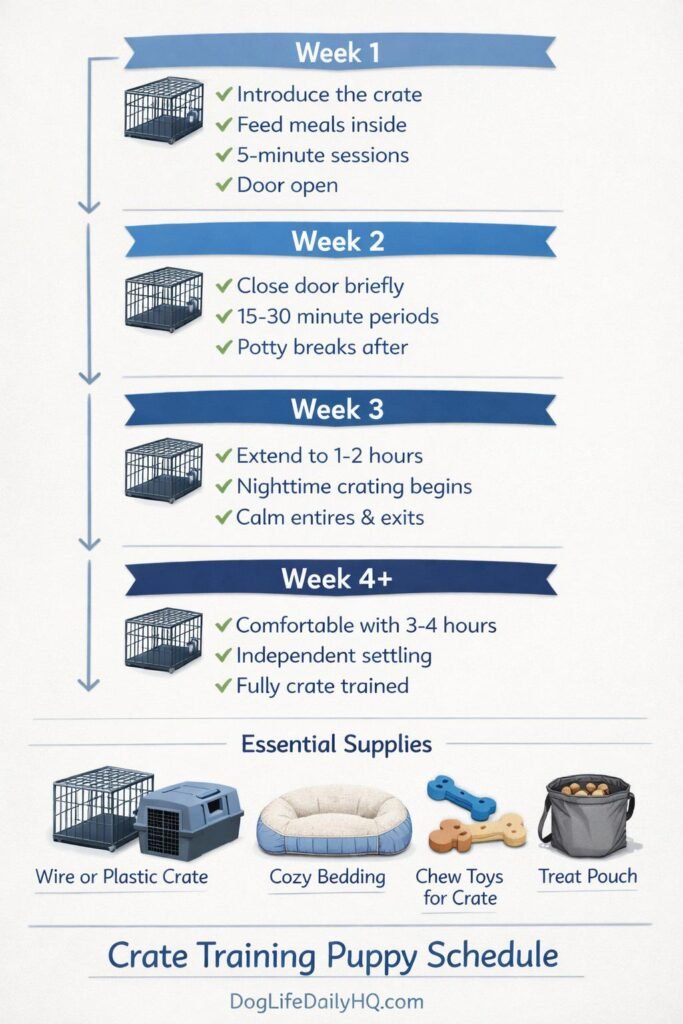
The key to success isn’t just buying a crate and hoping for the best. You need a clear timeline that matches your puppy’s age and development.
I’ll walk you through each phase of crate training so you know exactly what to do from day one through the first few months. Most puppies can be crate trained within a few weeks when you follow the right steps.
I’ve broken down the process into a simple schedule that fits into your daily routine without taking over your life.
Key Takeaways
- Crate training works best with an age-appropriate schedule that matches your puppy’s bladder capacity and sleep needs.
- A good timeline includes gradual introduction to the crate, consistent potty breaks, and positive reinforcement at every stage.
- Common issues like whining and resistance can usually be solved by tweaking your schedule and making the crate more comfy for your puppy.
Understanding Crate Training Basics
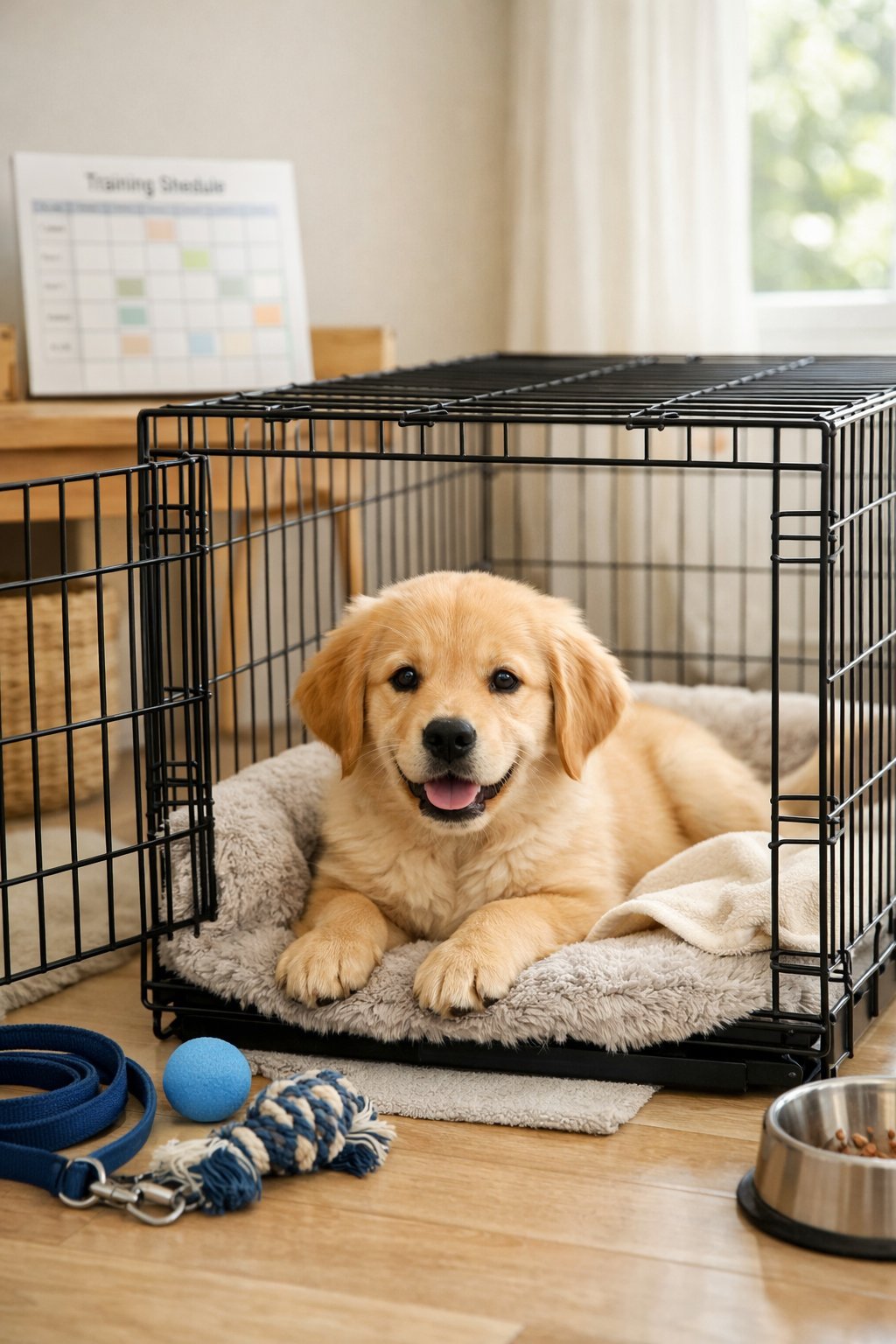
Crate training works because it taps into a dog’s natural den instinct. Success depends on picking the right size crate and creating a space your puppy actually wants to hang out in.
Why Crate Training Works
Dogs naturally seek small, enclosed spaces where they feel safe. This instinct comes from their wild ancestors who used dens for protection and rest.
A crate becomes your puppy’s personal den. It gives them a quiet spot to relax away from the hustle and bustle.
Puppies also avoid soiling where they sleep, which makes crate training great for house training. With a properly sized crate, your puppy learns to hold their bladder until they can go outside.
The crate keeps your puppy safe when you can’t watch them, preventing them from chewing dangerous things like electrical cords or eating toxic plants. Puppies who learn to love their crate often become calmer and more confident.
Choosing the Right Crate Size
Your puppy needs enough room to stand up, turn around, and lie down comfortably. They shouldn’t have so much space that they use one end as a bathroom.
For growing puppies, get an adult-sized crate with a divider panel. Adjust the divider as your puppy grows—this saves money compared to buying multiple crates.
Measure your puppy’s adult size:
- Add 2-4 inches to their expected standing height
- Add 2-4 inches to their length from nose to tail base
Typical crate sizes: 24 inches for small breeds, 30 inches for medium breeds, 36 inches for large breeds, and 42-48 inches for giant breeds.
Setting Up a Positive Crate Environment
Put the crate in a room where your family spends time. Avoid isolating it in a basement or garage—puppies are social animals.
What to put in the crate:
- Comfy bedding or a mat
- Safe chew toy
- Water bowl for longer stays
Keep the crate at a comfortable temperature and away from direct sunlight or drafts. Never use the crate as punishment—it should always be a positive place.
Remove your puppy’s collar before crating to prevent it from getting caught. Start with the crate door open so your puppy can explore and build good feelings about their new spot.
Building a Puppy Crate Training Schedule
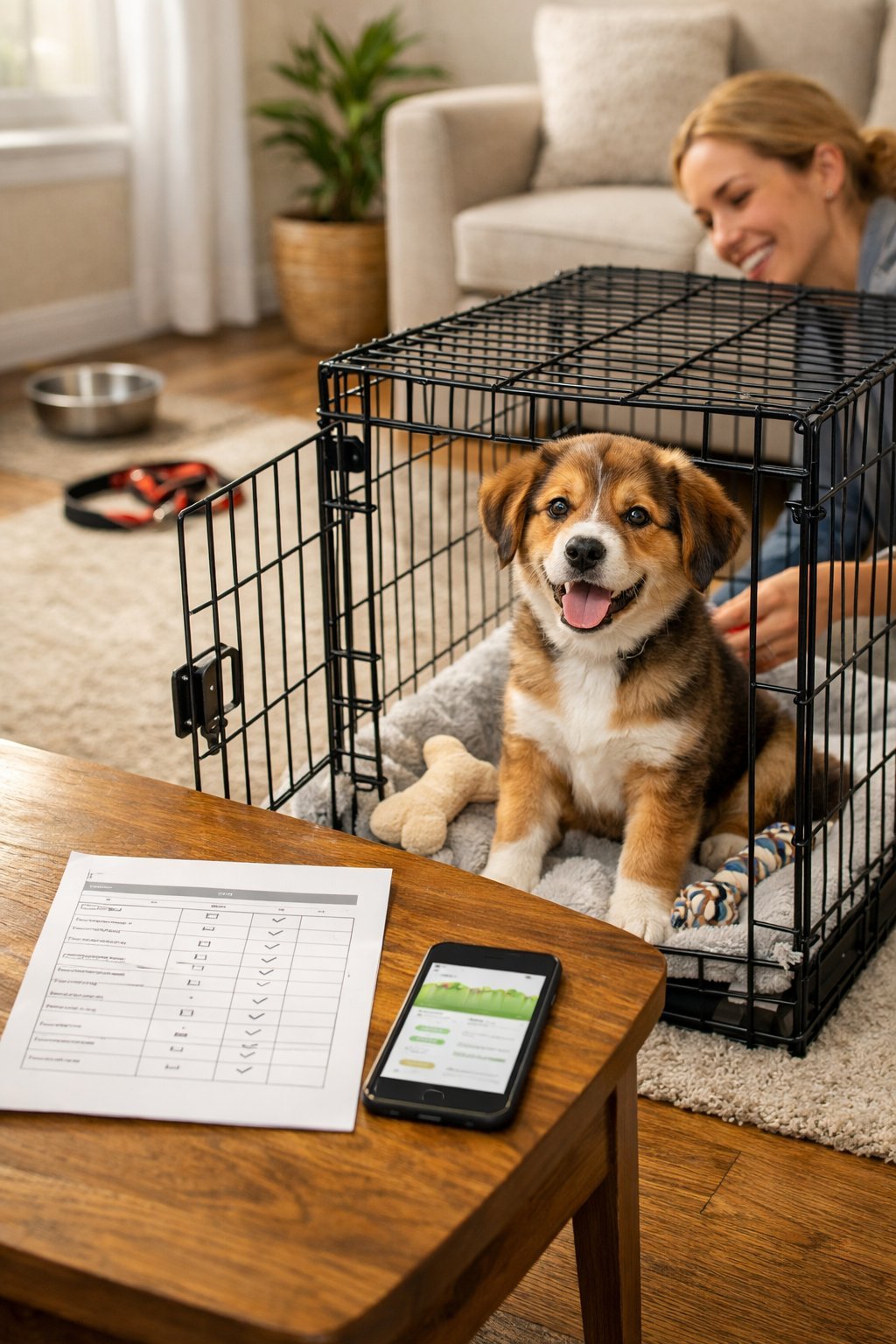
A good crate training schedule matches your puppy’s age with the right amount of crate time, potty breaks, and sleep. Young puppies need more frequent breaks and shorter crate sessions than older ones.
Daily Crate Time Breakdown by Age
Puppies can usually hold their bladder for one hour per month of age, plus one. So a two-month-old puppy needs a potty break every three hours.
Here’s an age-based structure for crate time:
8-10 weeks old: Keep crate sessions under 30-60 minutes during the day. Your puppy needs bathroom breaks every 1-2 hours.
11-14 weeks old: Crate time can be 1-3 hours. Potty breaks every 2-3 hours.
15-16 weeks old: Most puppies can do 3-4 hours in the crate. Breaks every 3-4 hours.
17+ weeks old: Older puppies can handle 4-5 hours max during the day.
Never crate your puppy for more than a few hours at a time except overnight. Make sure your puppy gets plenty of playtime, training, and attention between crate sessions.
Sample Training and Potty Schedule
Here’s an hour-by-hour routine for 8-12 week old puppies:
- 7:00 AM – Wake up, immediate potty break
- 7:15 AM – Breakfast and water
- 7:30 AM – Potty break, then playtime
- 8:30 AM – Crate time for nap
- 10:00 AM – Potty break and play
- 11:00 AM – Back in crate
- 12:00 PM – Lunch, potty, and play
- 1:30 PM – Crate for afternoon nap
- 3:30 PM – Potty and play session
- 5:00 PM – Dinner and potty break
- 6:00 PM – Family time outside crate
- 8:00 PM – Final potty break
- 8:30 PM – Bedtime in crate
Always take your puppy out right after waking up, eating, drinking, or playing. These are the times accidents are most likely.
Nighttime Crate Training Tips
Put the crate in your bedroom for the first few weeks. This helps your puppy feel less alone and lets you hear when they need a bathroom break.
Set an alarm for one middle-of-the-night potty break for puppies under 12 weeks. Take them straight outside with minimal fuss, then right back to the crate.
Keep lights dim and avoid playtime at night. Young puppies may cry at first—wait a few minutes to see if they settle on their own.
Only open the crate during quiet moments, never while they’re whining. A consistent nighttime routine makes bedtime easier.
Do the same activities in the same order each night so your puppy knows what to expect. Cover the crate with a blanket to make it cozy, but leave one side open for airflow.
Remove water about two hours before bedtime to help prevent overnight accidents.
Step-by-Step Timeline for Crate Training Success
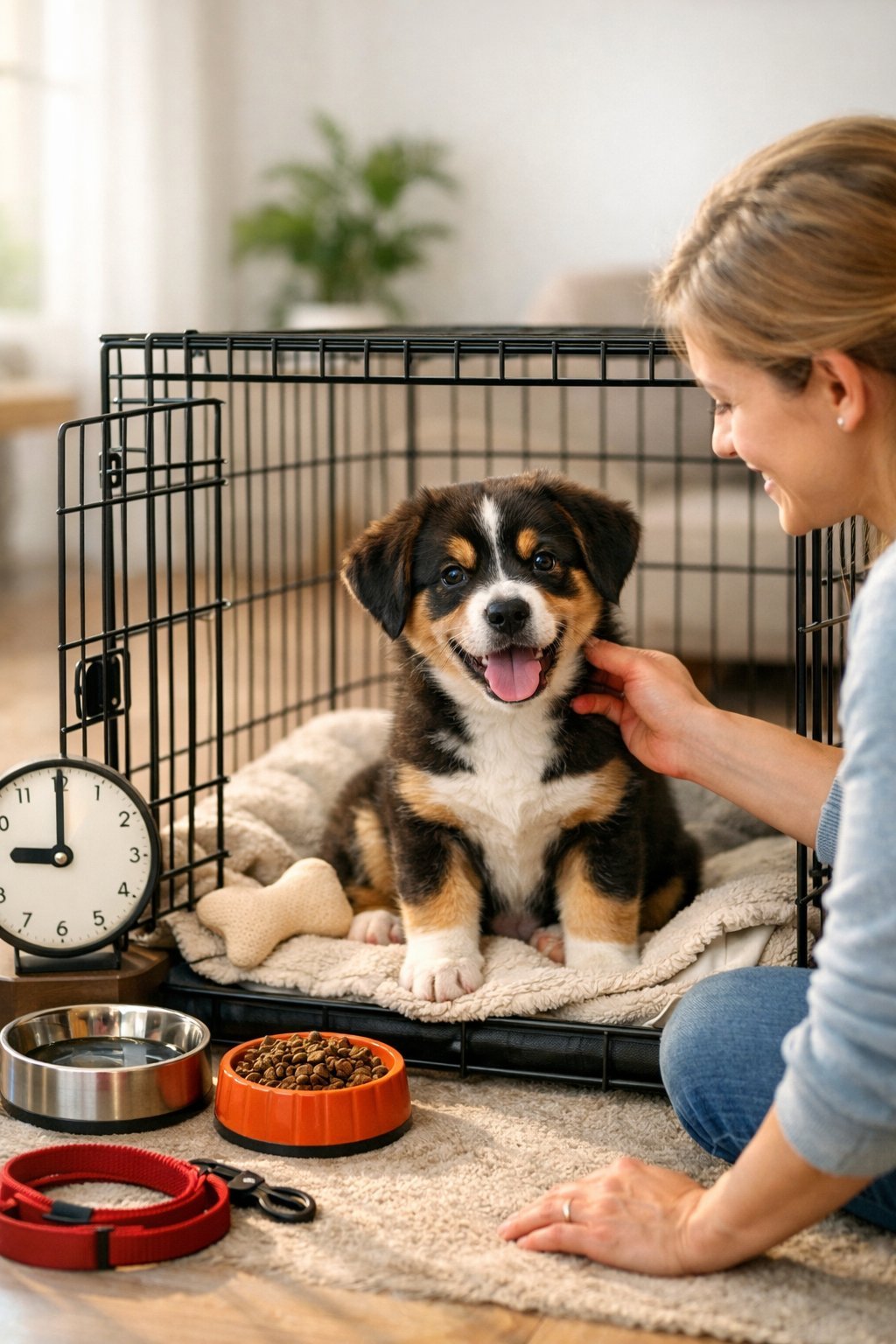
Crate training goes smoother when you break it down into weekly goals and slowly extend the time your puppy spends alone. Progress is faster when you spot normal setbacks and adjust your approach instead of pushing too hard.
Week-by-Week Puppy Milestones
In the first week, focus on making the crate feel inviting. Leave the door open and toss treats inside to encourage your puppy to explore on their own.
Most puppies will eat meals near or inside the crate by day three or four. Don’t force them in—let curiosity do the work.
By week two, start closing the door for short periods while you’re in the room. Begin with just 30 seconds and build up to longer increments based on your puppy’s comfort.
Week three is a good time to start leaving the room briefly. Step out for a minute, then return before your puppy gets anxious.
By week four, most puppies can handle 30 minutes alone in the crate without stress. This timeline may shift depending on your puppy’s age and temperament.
Gradual Increase of Alone Time
Add five to ten minutes each day once your puppy stays calm for their current duration. Rushing this step can create anxiety that’s tough to undo.
Practice crate time during the day when you’re home, not just at bedtime. This way, your puppy doesn’t only associate the crate with being left alone.
Key time increments:
- Days 1-3: Door open, puppy explores freely
- Days 4-7: Door closed for 1-5 minutes with you present
- Days 8-14: 5-15 minutes with you in another room
- Days 15-21: 20-30 minutes alone
- Days 22-30: 30-60 minutes alone
Never open the crate door while your puppy is whining or barking. Wait for a quiet moment, even if it’s just a couple of seconds of silence.
Identifying and Overcoming Setbacks
Regression is normal. Puppies might backslide during growth spurts, after schedule changes, or when teething.
If your puppy suddenly refuses the crate, go back to an earlier stage where they were comfortable. Spend a few days there before moving forward again.
Common setback signs:
- Whining that gets worse instead of stopping
- Refusing to enter the crate on their own
- Accidents inside the crate
- Excessive drooling or panting
Check that the crate isn’t too big, which can cause potty accidents. Also make sure your puppy isn’t being crated longer than they can handle.
When accidents happen, clean up with an enzyme cleaner and reduce crate time temporarily. Most setbacks clear up within three to five days if you slow down and adjust.
Troubleshooting Common Crate Training Issues
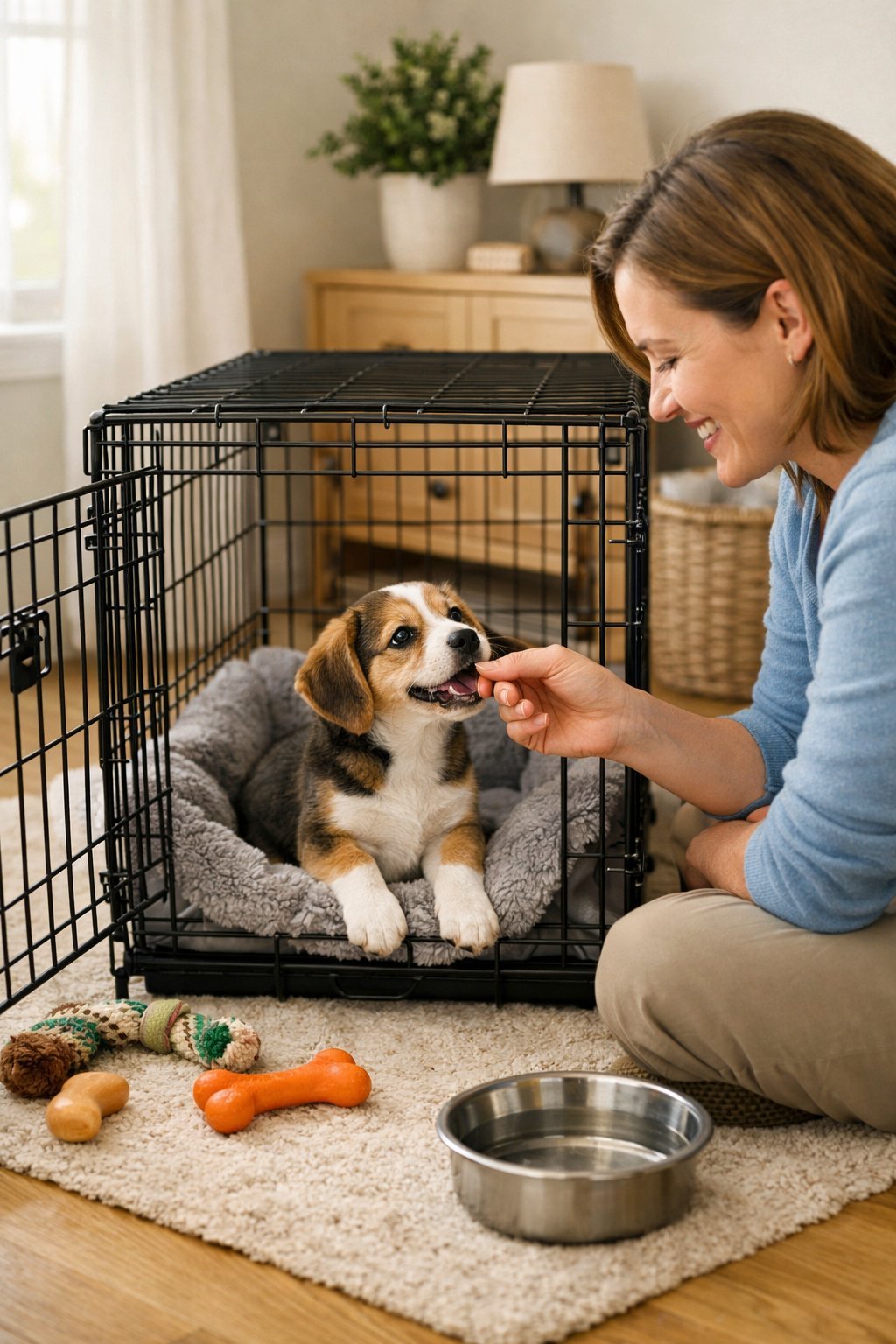
Even with a solid plan, you’ll probably run into some bumps. Whining, accidents, and anxiety are all normal challenges during crate training.
Dealing with Whining and Barking
It’s tough to hear your puppy cry in their crate. But if you respond to every whine, it can actually make things worse.
Learn to tell the difference between attention-seeking whining and real needs. If your puppy just went potty and had some exercise, they’re probably testing to see if whining gets them out.
Wait for a quiet moment before opening the crate. But if the whining sounds urgent or your puppy hasn’t been out in a while, they might really need a bathroom break—especially if they’re under 12 weeks.
Ignore brief whining that starts in the first few minutes of crate time. Your puppy is adjusting and needs to learn that being quiet gets them freedom.
Cover the crate with a blanket to make it feel more den-like—this often helps anxious pups settle down. If barking becomes a pattern, avoid common crate training mistakes like using the crate as punishment or leaving your puppy crated too long.
Preventing Accidents in the Crate
Accidents in the crate usually mean something needs adjusting in your approach. A properly sized crate shouldn’t have room for your puppy to potty in one corner and sleep in another.
The most common cause of crate accidents is leaving puppies crated longer than they can physically hold it. Young puppies can typically hold their bladder for their age in months plus one hour.
So, a 2-month-old puppy needs bathroom breaks every 3 hours. Remove water about two hours before bedtime to reduce nighttime accidents.
Always take your puppy out immediately before crating and right after releasing them. If accidents continue despite proper timing, your puppy might have a medical issue.
Consult your vet to rule out urinary tract infections or other health problems. Some puppies also need house soiling issues addressed with specific training techniques.
Easing Separation Anxiety
Separation anxiety looks different from regular whining. Puppies with true anxiety may drool excessively, try to escape, or show extreme distress when you leave.
Start by making the crate a positive space before ever closing the door. Feed meals inside, toss treats in randomly, and let your puppy explore it freely.
Never force your puppy into the crate or use it for punishment. Practice leaving for very short periods at first—like 30 seconds.
Gradually build up the time as your puppy stays calm. Leave a piece of your worn clothing in the crate so your scent provides comfort.
White noise or calming music can also help mask outside sounds that might trigger anxiety. Some puppies do better when the crate is in your bedroom at night rather than isolated in another room.
If your puppy shows severe distress or the anxiety doesn’t improve with positive training methods, talk to your vet about whether professional help is needed.
Maintaining Progress and Next Steps
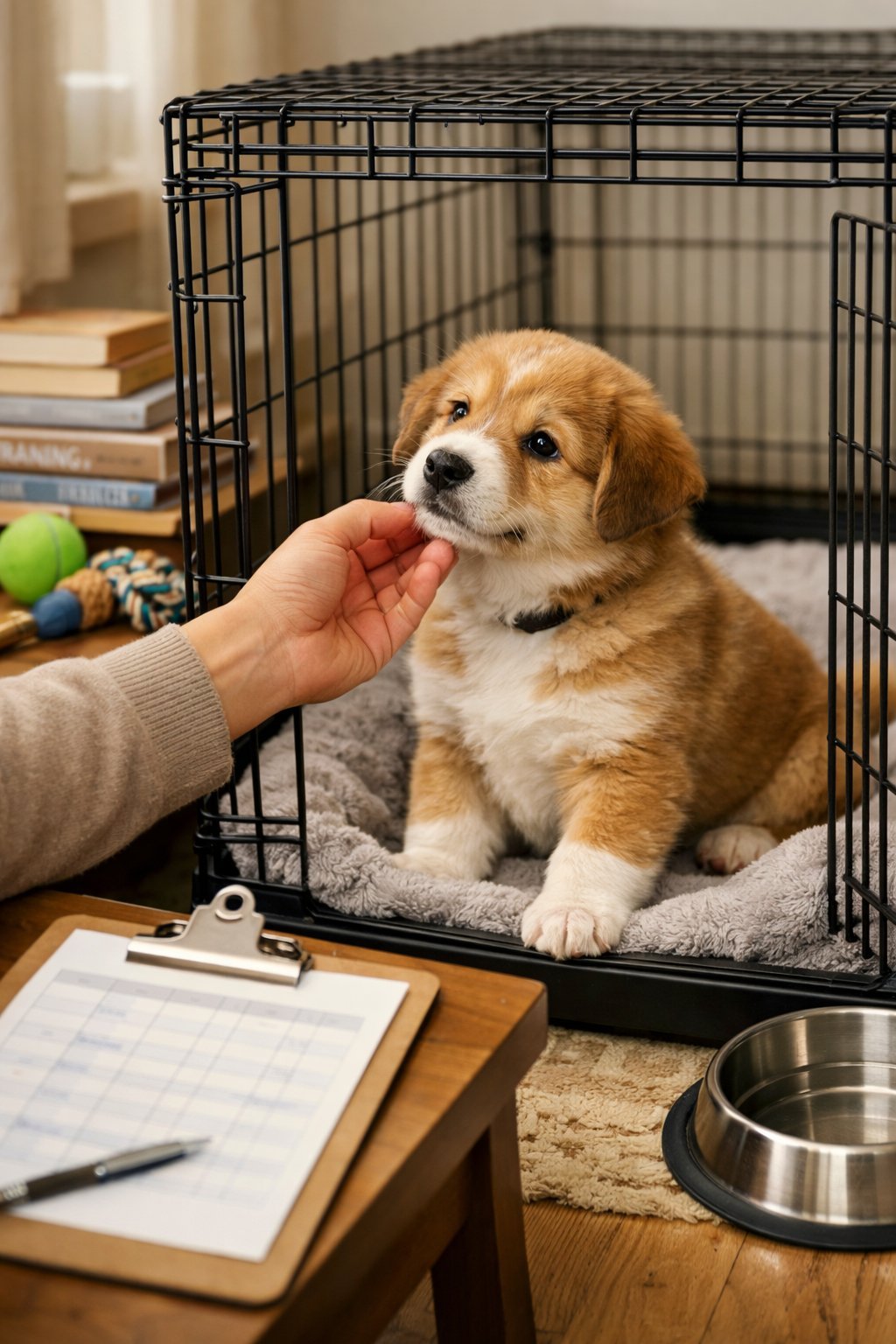
Once your puppy masters the basics of crate training, the next step is knowing when to give more freedom and how to keep the crate a positive space. I’ll walk you through the transition process, share tips for older dogs, and explain why this training pays off long after puppyhood ends.
Transitioning from Crate to Freedom
Start the transition to freedom only after your puppy consistently shows good behavior in the crate for at least two months. This means no accidents, no destructive chewing, and staying calm when you leave.
Begin by leaving the crate door open during supervised time at home. Watch how your puppy behaves when given access to one room.
If they handle this well for a week, gradually increase their space. Signs your puppy is ready for more freedom include no potty accidents for 4-6 weeks, not chewing furniture or belongings, staying calm when left alone for short periods, and choosing to rest in the crate voluntarily.
Keep the crate available even after your dog earns full house freedom. Many dogs continue using their crate as a safe sleeping spot throughout their lives.
The long-term success of crate training depends on maintaining it as a positive space rather than removing it completely.
Crate Training for Adult Dogs
Adult dogs can learn crate training just like puppies, though the process may take longer if they’ve never experienced one before. Patience and positive associations are even more critical with older dogs.
The step-by-step crate training approach for dogs of all ages starts slower than puppy training. Never force an adult dog into a crate.
Instead, place high-value treats just inside the door and let them investigate at their own pace. Spend 1-2 weeks just feeding meals near or inside the crate.
Keep initial crate sessions to 5-10 minutes maximum. Practice during calm times of day, not when the dog is anxious.
Avoid closing the door until the dog willingly enters and relaxes. Adult dogs with previous negative crate experiences need extra time building trust.
If your dog shows extreme stress or panic around crates, working with a trainer can really help.
Long-Term Benefits of Crate Training
Crate training provides benefits that extend far beyond the puppy stage. A properly trained dog often sees their crate as a personal bedroom where they can relax away from household activity.
Lifelong advantages include:
- Safe travel in cars and on planes
- Stress-free vet visits and overnight stays
- Quick recovery space after surgery or injury
- Easy management during home repairs or guest visits
- Peace of mind during emergencies or evacuations
I keep my dog’s crate set up permanently even though he hasn’t needed confinement in years. He still chooses to nap there daily because it represents his safe zone.
The skills your dog learns during crate training also improve their overall behavior. Dogs who learn to settle calmly in a crate typically handle other confined spaces better, from grooming tables to waiting rooms.
Frequently Asked Questions
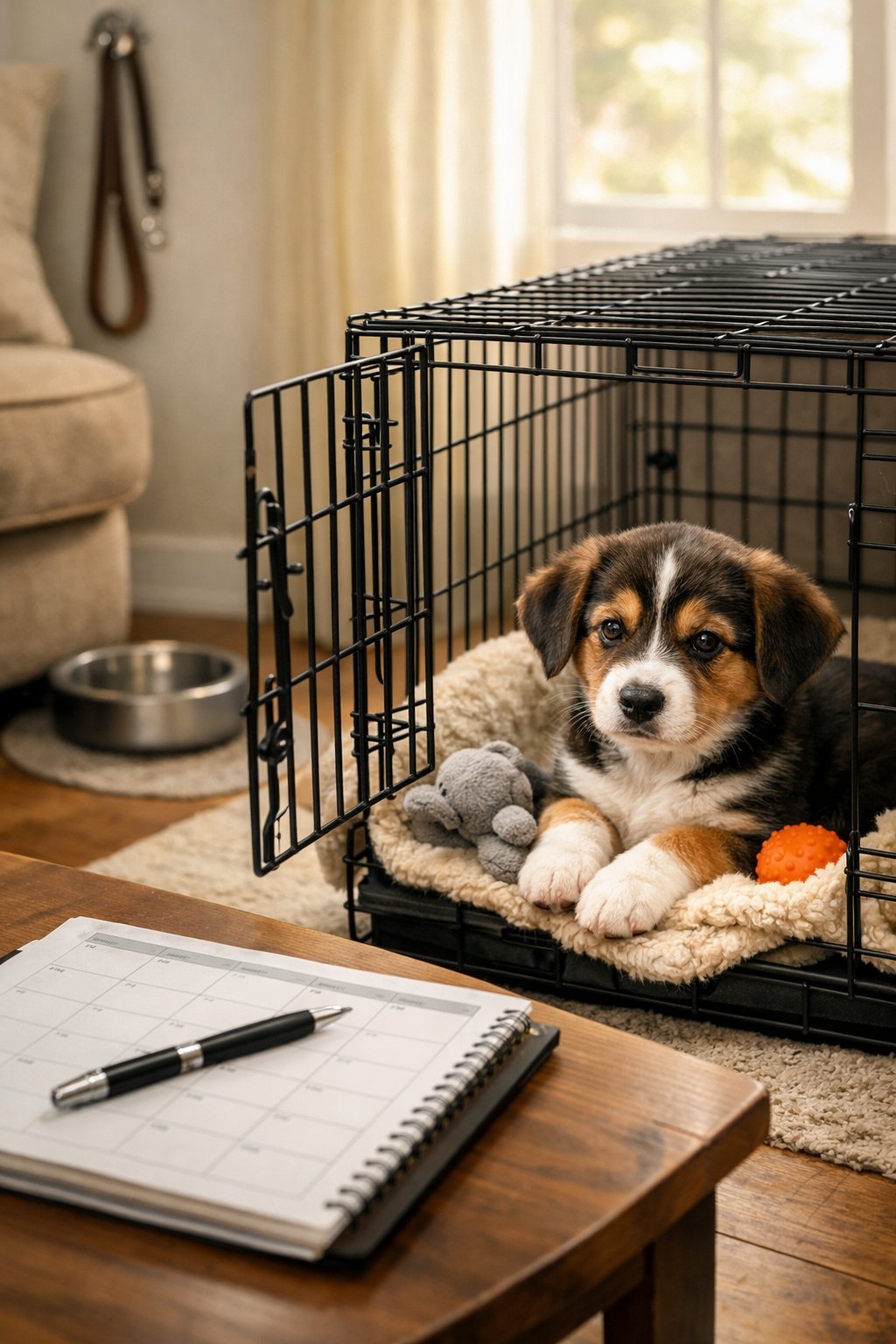
New puppy owners often wonder about specific schedules and timelines for different age groups. Working parents need practical solutions that fit their daily routines while still giving their puppy proper crate training.
What is an effective daily crate training routine for a new puppy?
Start with short crate sessions of 10 to 15 minutes while you’re home. Stay nearby so your puppy doesn’t feel abandoned.
Young puppies need frequent potty breaks every 1 to 2 hours during the day. Take your puppy outside immediately after leaving the crate.
A step-by-step crate training guide helps owners build positive routines. Feed meals inside the crate to create positive associations.
Keep a consistent schedule for meals, potty breaks, playtime, and crate rest. Puppies thrive on routine and predictability.
How does the crate training process differ for puppies of various ages?
Younger puppies under 12 weeks need more frequent breaks and shorter crate times. Their bladders are small and they can’t hold it long.
An 8-week-old puppy can typically stay crated for about 2 hours maximum. Use the rule of one hour per month of age, plus one.
Older puppies around 4 to 6 months can handle longer periods. They have better bladder control and more patience.
Crate training schedules vary by age to match your puppy’s developmental stage. Adjust your approach as your puppy grows.
What are some crate training strategies for a puppy with working owners?
Hiring a dog walker or pet sitter for midday breaks is a great idea. Puppies shouldn’t stay crated for a full 8-hour workday.
Doggy daycare is another option for socialization and exercise. Your puppy gets interaction while you’re at work.
Set up a puppy-proofed room or playpen if you can’t get home. Use puppy pads in one corner away from the sleeping area.
Morning and evening crate training sessions work well for busy schedules. Practice before work and spend quality time after returning home.
Can you provide a step-by-step crate training timeline for a 4-month-old puppy?
Week 1 is all about making the crate appealing with treats and toys. Leave the door open and let your puppy explore freely.
Start closing the door for 5 to 10 minutes while sitting nearby during week 2. Gradually increase the time to 30 minutes.
Week 3 involves leaving the room for short periods. Step out for a few minutes and return before your puppy gets anxious.
By week 4, most puppies can handle 2 to 3 hours during the day. A realistic timeline from day one shows what to expect at each stage.
Night training usually goes faster since puppies naturally sleep longer. Place the crate in your bedroom for the first few weeks.
How can I adapt my crate training methods as my puppy grows into an adult dog?
Gradually increase crate time as your puppy matures. Adult dogs can typically handle 4 to 6 hours comfortably.
The crate remains a safe space throughout your dog’s life. Never use it as punishment at any age.
Some adult dogs need the crate less often once they’re fully house-trained. Leave the door open so your dog can choose to rest inside.
Training schedules for puppies and adults differ in duration and frequency. Adult dogs may only need crating during specific times like travel or guests visiting.
What are the key elements to include in a crate training schedule for a 3-month-old puppy?
I schedule potty breaks every 2 to 3 hours during the day. A 3-month-old puppy has limited bladder control.
Meal times should happen outside the crate at consistent hours. I wait 15 to 20 minutes after eating before crating to help prevent accidents.
Playtime and exercise help tire out your puppy before crate time. I include at least 15 minutes of active play several times a day.
I plan short training sessions between crate periods. This helps balance crate time with socialization and learning.
Nighttime sleep happens in the crate from the start. I expect one or two potty breaks during the night at this age.