
Build a Dog House Out of Pallets | Free Plans for a Weekend Project

Build a Dog House Out of Pallets — Free Plans for a Weekend Project
Dog House Out Of Pallets Building a dog house for your furry friend doesn’t have to drain your wallet or require advanced carpentry skills. Wooden pallets are a great option since they’re often free or super cheap, and easy for beginners to use.
I’ve seen lots of dog owners turn these simple shipping platforms into cozy homes for their pets. Plus, it’s a fun weekend project you can tackle with just a few basic tools.
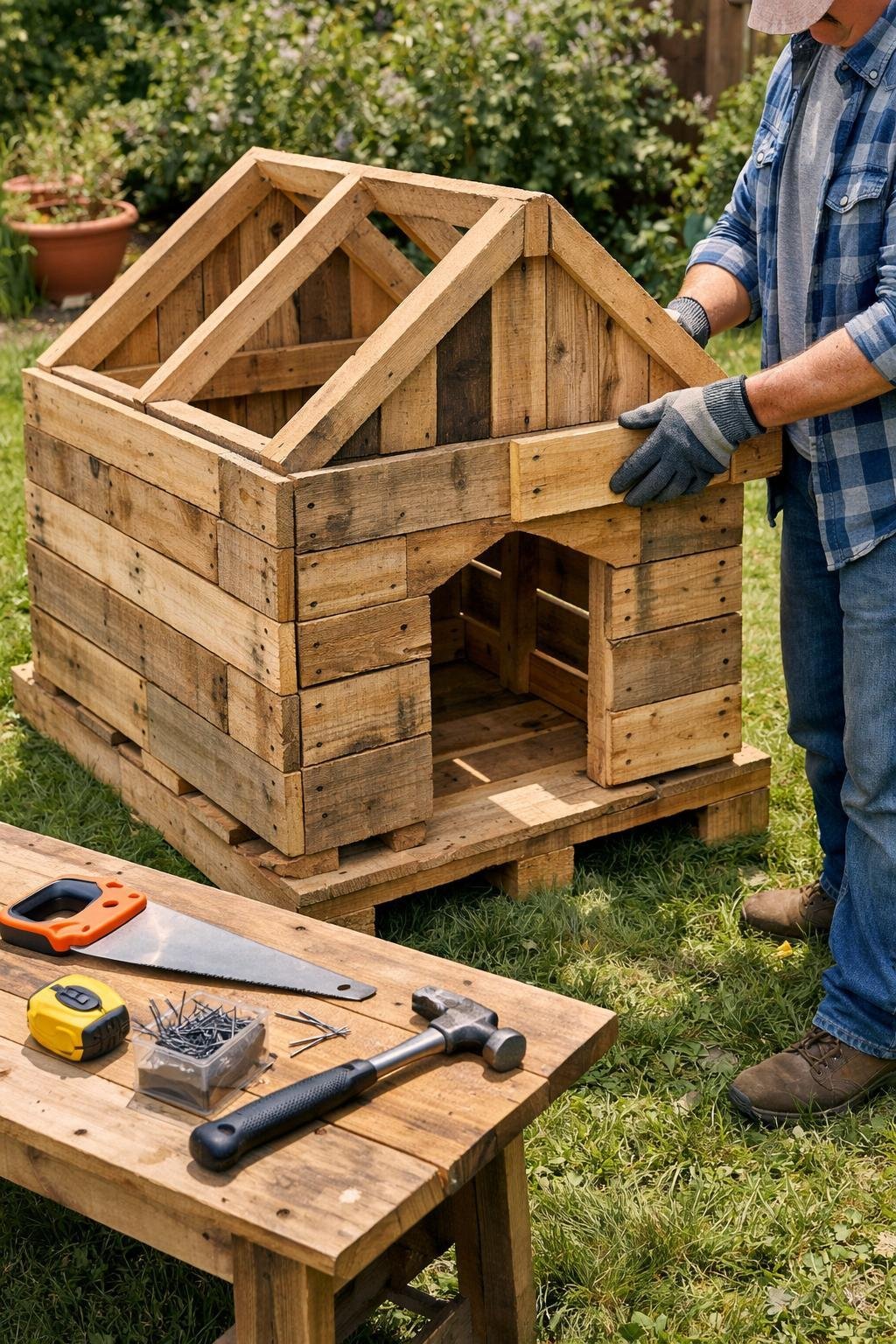
You can build a sturdy pallet dog house in just one weekend using tools like a hammer, saw, and nail gun, along with free or low-cost pallets from local businesses or construction sites. The process is simple enough for first-time builders, and you can customize the shelter to fit your dog’s size and style.
I’ll walk you through everything from finding quality pallets to putting on the final coat of weatherproof paint. Whether you have a small terrier or a medium-sized breed, this project will give your dog a comfortable outdoor space and save you money over buying a pre-made dog house.
Key Takeaways
- You can build a complete pallet dog house in a weekend using free or inexpensive materials and basic tools.
- Pallets provide a sturdy, budget-friendly building material that’s perfect for DIY dog houses of various sizes and styles.
- Proper weatherproofing and insulation will keep your dog comfortable in different weather conditions.
Why Build a Dog House Out of Pallets?
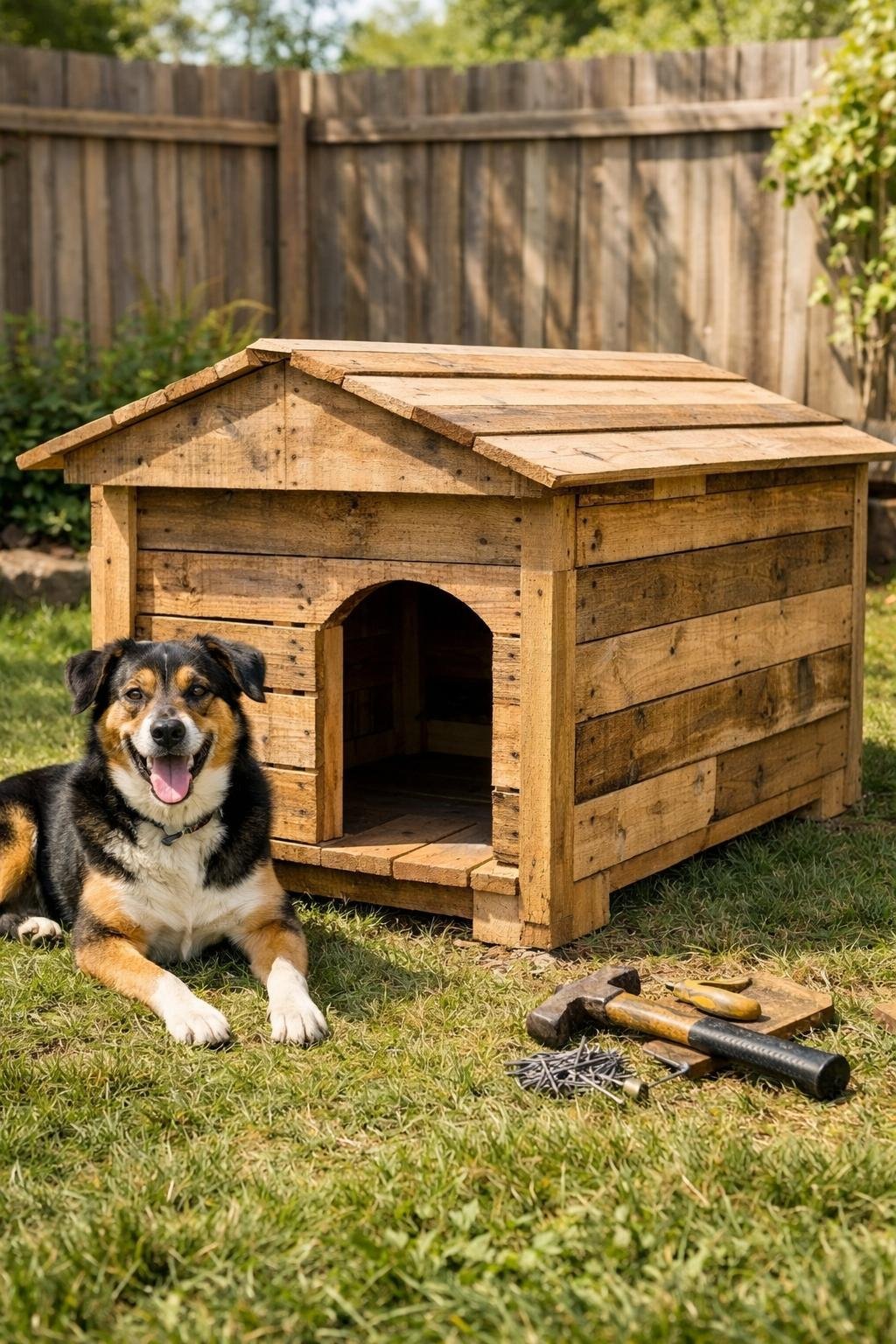
Building a dog house from pallets is an affordable way to create outdoor shelter while reducing waste. Pallet wood costs little to nothing and works well for dogs of all sizes.
Benefits of Using Pallet Wood
Pallets are durable and weather-resistant, which makes them great for outdoor structures. The wood can handle rain, snow, and sun for years.
When I build a dog house from pallets, I get sturdy framing without splurging on expensive lumber. The slats are already cut to standard sizes, which saves time.
Most pallets measure around 40 by 48 inches, so there’s plenty of material for walls and roofing. Pallet wood is thick enough to provide good insulation, and the gaps between boards allow for airflow in summer while blocking wind in winter.
Disassembling pallets is easy with basic tools like a hammer and crowbar.
Eco-Friendly and Cost-Effective Approach
A recycled wood pallet dog house keeps usable materials out of landfills. Many businesses are happy to give pallets away for free since they’d otherwise have to dispose of them.
Store-bought dog houses can cost hundreds of dollars. My pallet dog house usually only needs a few pallets plus basic fasteners and some roofing material.
This upcycled approach can cut costs by 70-80% compared to retail versions. I mostly spend on screws, nails, and weatherproofing supplies.
The environmental benefit is a big plus since I’m reusing materials instead of buying new lumber.
Suitability for Different Dog Breeds
You can easily customize a pallet dog house to fit any breed. Small dogs need houses about twice their body length, while bigger breeds need more space.
Pallets are modular, so it’s easy to adjust the size. I stack and arrange them to create the right height and floor space.
For a Labrador, I might use two full pallets for the base. A Chihuahua only needs about half that.
Medium breeds like Beagles fit comfortably in houses built from one standard pallet. I make sure my dog can stand, turn around, and lie down without being cramped.
Adding or removing pallet sections is way easier than resizing a traditional dog house.
Gathering Materials and Tools
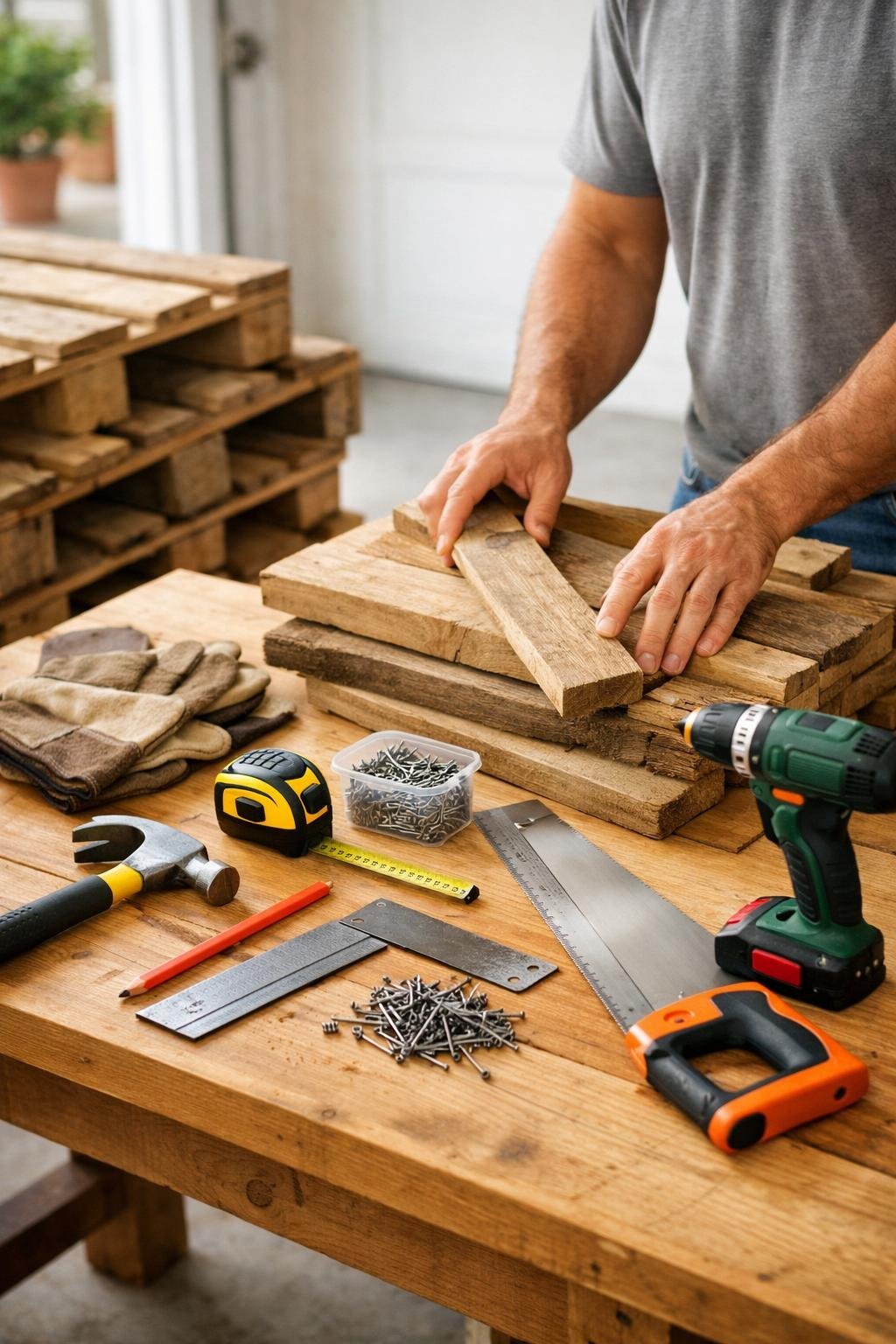
Before starting, I gather the right materials and tools. Picking safe pallets and having everything ready makes the project go smoothly.
Selecting Safe and Quality Pallets
Safety comes first when choosing pallets. I always look for pallets stamped with “HT” (heat-treated and pet-safe) and avoid any marked “MB” (chemically treated).
I check each pallet for cracks, splinters, or broken boards that could hurt my dog or weaken the structure. The wood should be solid and not warped.
Standard pallets measure 48″ x 40″, which gives me plenty to work with. I usually need 3-4 pallets for a medium-sized dog house.
Free pallets are often available at hardware stores, garden centers, and warehouses. I make sure there are no chemical stains or strong odors.
Essential Tools & Supplies
For this project, I use basic tools most people have at home. I need a saw to cut boards, a hammer or drill for assembly, and a crowbar to take pallets apart.
Basic Tool List:
- Circular saw or hand saw
- Hammer and crowbar
- a drill with 2-3 inch screws
- Measuring tape
- Level
- safety glasses and work gloves
For finishing, I grab sandpaper to smooth rough edges and exterior wood screws to hold things together. For weatherproofing, I get roofing material like plywood, corrugated metal, or shingles.
Optional extras include pet-safe paint or stain, insulation for cold weather, and caulk to seal gaps.
Preparing and Cleaning Pallet Wood
Once I have my pallets, I prep them before building. I carefully remove all nails and staples using a crowbar and hammer.
I clean each board with a stiff brush to get rid of dirt and debris. If they’re really dirty, I hose them off and let them dry for a couple of days.
After cleaning, I sand down any rough spots or splinters, especially on edges and corners where my dog might rub.
Choosing the Right Dog House Plan
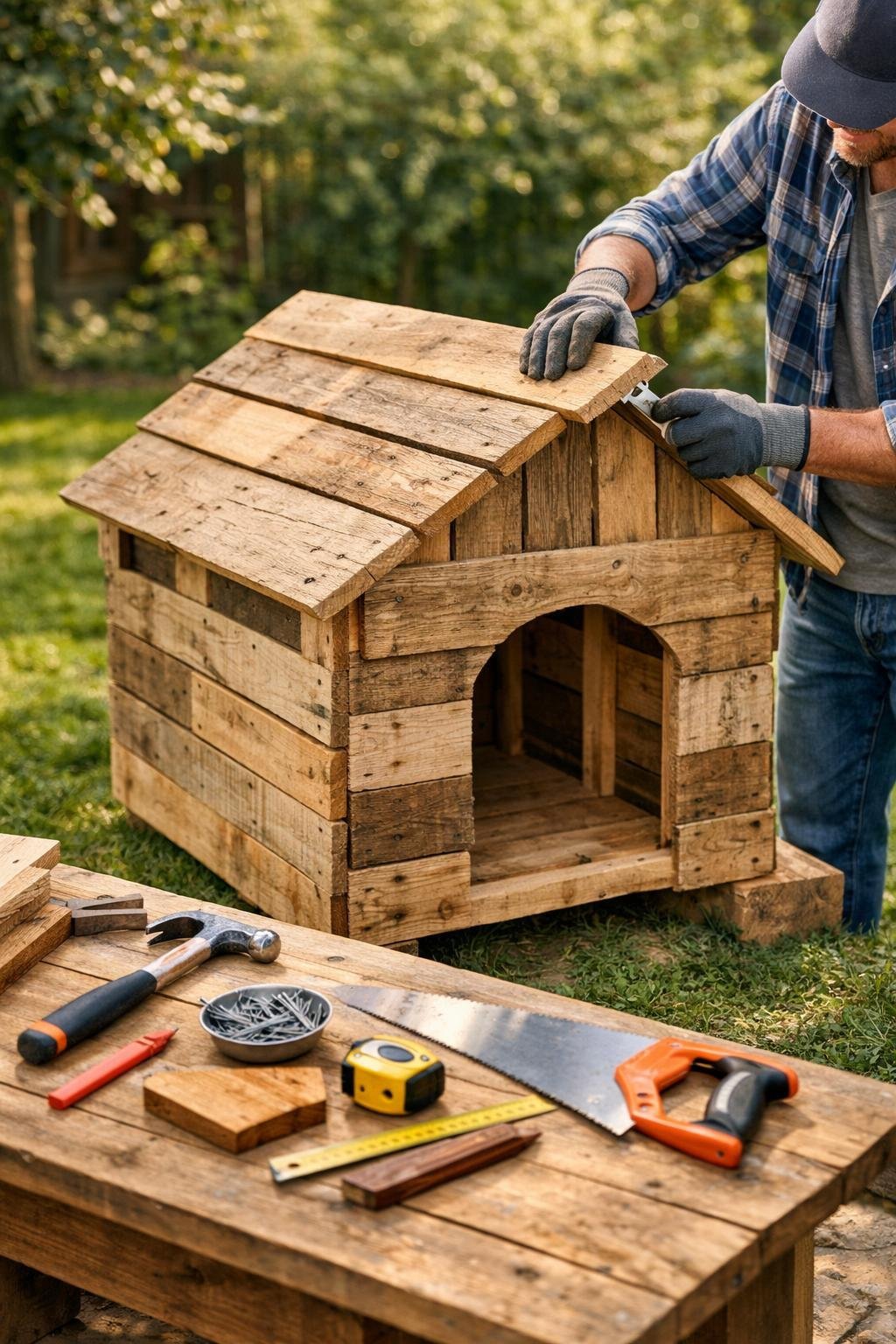
Picking the right plan makes building a pallet dog house much easier. Think about your dog’s size, your building skills, and your favorite design style.
Free Printable Pallet Dog House Plans
Free pallet dog house plans are a great way to save money and get clear building guides. Lots of websites offer downloadable plans with measurements, cut lists, and step-by-step photos.
The best plans include a full materials list and tool requirements up front. I look for plans with photos of each step and helpful tips for working with recycled wood.
Some plans are simple one-pagers, while others are more detailed. If you’re new to building, go for the detailed ones.
Selecting the Perfect Size and Style
I measure my dog from nose to tail and add 6-12 inches to get the right house length. The height should allow my dog to stand and turn around comfortably.
Small dogs need houses around 24 inches long. Medium dogs fit in 30-36 inch houses, and large dogs need 42 inches or more.
The doorway should be just a bit smaller than your dog’s shoulder height.
Key Size Considerations:
- Enough floor space for your dog to lie down comfortably
- Ceiling high enough for standing
- Door wide enough for easy entry
- Space for a bed or blanket
Style depends on your yard and climate. Pitched roofs shed rain better, and raised floors keep things dry.
Popular Pallet Dog House Designs
The classic A-frame is a favorite pallet dog house design. It uses whole pallets for the base and slats for the walls and roof.
I like designs with covered porches for extra shade. Multi-room plans are cool if you have more than one dog.
Some pallet dog house plans and ideas include storage space for food bowls and toys.
Popular Design Features:
- roofing material like corrugated metal for weather protection
- Hinged roofs for easy cleaning
- Insulated walls for colder climates
- Verandas or covered entries
Rustic designs keep the natural pallet wood look with just a coat of stain. Modern styles might add paint or metal siding for a fresh appearance.
Step-by-Step Guide: How to Build a Pallet Dog House
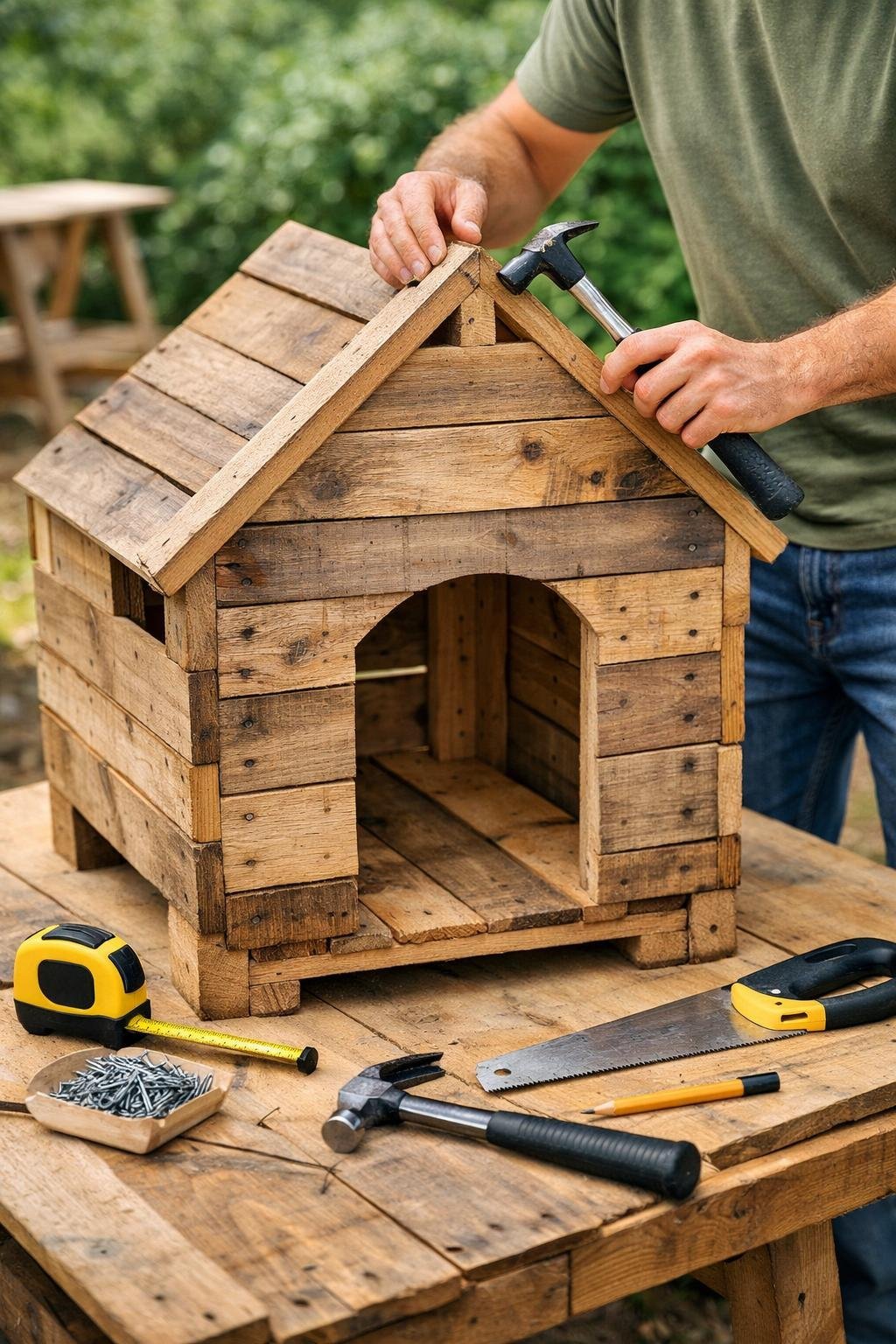
Building a pallet dog house starts with a stable base, then adding walls with a door opening, and finishing with a waterproof roof. Personal touches like paint or extra insulation can make your dog’s new home even better.
Building the Foundation and Floor
I start by picking out two sturdy pallets for the base. They should be clean, untreated, and in good condition.
First, I measure my dog to get the right size—tall enough for standing and wide enough for turning around.
For the floor, I cut waterproof chipboard or plywood to fit the base dimensions. This keeps moisture from seeping up and keeps my dog dry.
I secure the floor board to the pallet frame with galvanized screws or nails. Before moving on, I check that the floor is a level.
It’s best to place the base in its final outdoor spot now, since moving a finished dog house can be a pain.
Some folks add small legs or blocks under the corners to lift the floor off the ground. This helps with airflow and prevents rot.
Constructing the Walls and Roof
I use modified pallets to create the walls by cutting them to size and removing extra boards. The walls should be flush and squared up.
For the front wall, I draw out the door opening and cut it with a jigsaw. The door should be about three-quarters of your dog’s shoulder height.
I sand all the edges smooth to prevent splinters. Then I connect the walls using leftover pallet planks cut to length, which act as corner supports.
The top planks need to be cut at an angle to make a sloped roof. I use a jigsaw for these cuts so rainwater runs off easily.
For the roof, I attach waterproof chipboard that’s a bit larger than the top dimensions. The overhang helps protect the walls from rain.
Extra chipboard strips underneath add support to keep the roof from sagging.
Custom Features and Add-Ons
After building the basic structure, I apply two to three coats of outdoor varnish or pet-safe wood stain. This helps protect the wood from weather and keeps the house in good shape.
I always sand every surface thoroughly before painting, especially around the door entrance. Rough edges can hurt paws or catch on collars.
Optional additions I like to consider include:
- A removable roof for easy cleaning
- Foam insulation panels between wall boards for cold climates
- A small porch overhang for shade
- Raised door flaps to block wind
- Name plates or decorative trim
Sometimes I add a raised threshold at the door opening to keep bedding inside and stop drafts. A piece of outdoor carpet or a rubber mat inside gives my dog a comfy spot to lie on.
Finishing Touches: Insulation, Painting, and Weatherproofing
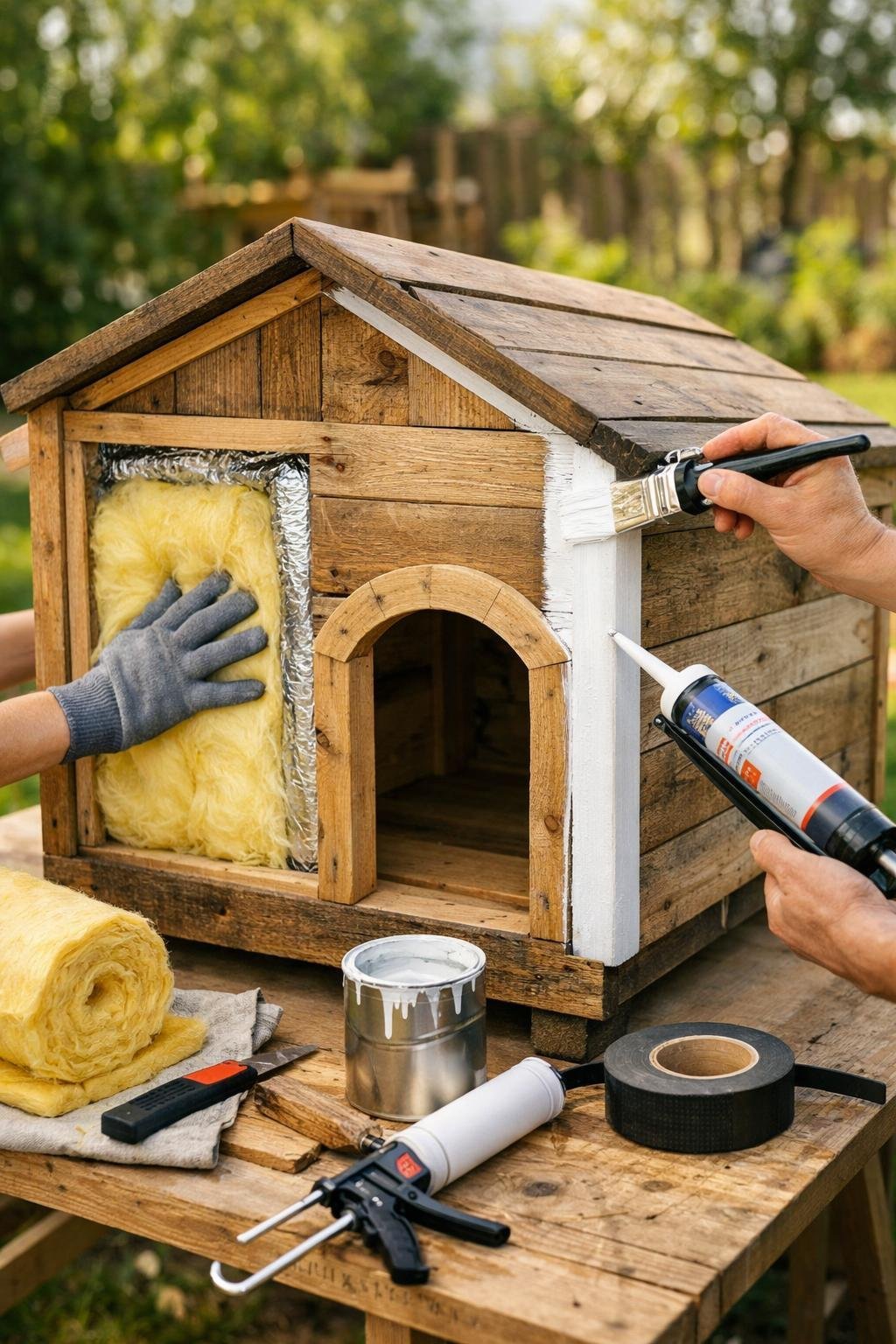
Your pallet dog house needs protection from heat, cold, and moisture. These final steps will turn your basic structure into a sturdy outdoor shelter.
Insulating for All Seasons
I recommend adding insulation between the pallet slats for a comfy insulated pallet dog house. Foam board insulation is my go-to since it’s easy to cut and fit between the wooden gaps.
For a pallet dog house for winter, I cut rigid foam panels to fit snugly in the walls and ceiling. I secure them with construction adhesive or small nails.
The floor needs insulation too, so I put a foam layer under the pallet base before adding the flooring. Reflective insulation is another option I like for summer heat because it bounces radiant heat away from the interior.
I attach reflective insulation to the roof underside using a staple gun. Sealing gaps around the door with weather stripping helps keep drafts out during cold months.
I also fill any leftover cracks between pallets with expanding foam or caulk.
Applying Paint or Stain
I always use exterior-grade paint or stain on my pallet projects. These products protect the wood from moisture and sun damage.
Before painting, I sand rough spots and get rid of any loose splinters. A good primer coat helps the paint stick better.
I apply two coats of weatherproof paints made for outdoor use. Stain is my favorite because it lets the wood grain show through.
I usually pick a darker color since it hides dirt better. Semi-transparent or solid stains both work well for dog houses.
I make sure to paint or stain all surfaces, including the roof, walls, and floor. I pay extra attention to the bottom edges where water can collect.
Let everything dry completely between coats.
Weatherproofing Your Pallet Dog House
Making your outdoor pallet dog house waterproof takes a few steps. I start by applying a waterproof sealant to all painted or stained surfaces.
The roof needs the most protection from rain. I cover it with roofing felt for waterproofing purposes, then add shingles or metal roofing.
Shingles are more affordable, but metal lasts longer. I install the roofing with a slight overhang to direct water away from the walls.
This helps protect the door opening from rain. Raising the house off the ground prevents water damage to the floor.
I set the structure on concrete blocks or pressure-treated wood runners. This creates airflow underneath and keeps moisture from seeping up through the pallets.
Creative Ideas and Upgrades for Your Pallet Dog House
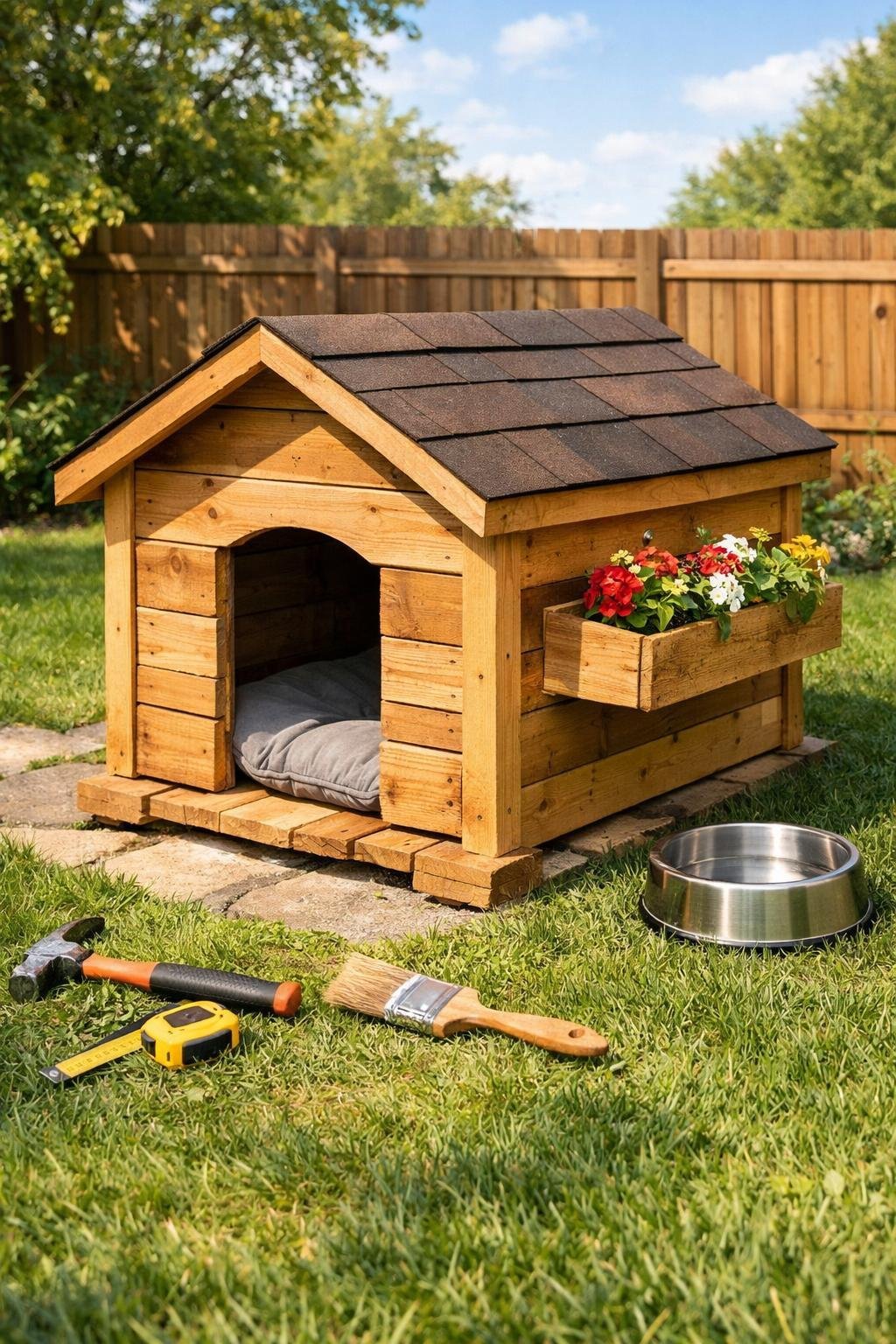
Once you’ve built the basic structure, you can add some fun upgrades to make your pallet kennel extra special. Things like outdoor living spaces, built-in storage, and personal design touches make your dog’s house both functional and stylish.
Porches, Decks, and Verandas
I recommend adding a covered porch to give your dog a shaded outdoor spot to relax. A pallet dog house with a mini porch keeps your pup protected from rain and sun while letting them enjoy the fresh air.
You can build a simple overhang by extending the roof frame forward and adding support posts. For bigger spaces, I like to create a sun deck or veranda using extra pallet boards.
This gives your dog a raised platform to lounge on during nice weather. The deck should be at least 2-3 feet wide for enough space.
Make sure to sand down any rough edges to protect your dog’s paws. A pallet dog house with a veranda is great if you have multiple dogs who want their own space.
Adding railings around the deck prevents smaller dogs from accidentally falling off and gives the structure a finished look.
Adding Storage or Drawers
Built-in storage is super handy for keeping dog supplies organized. I like adding a compartment beside the main sleeping area to hold food bowls, treats, and toys.
You can build a pallet dog house with food bowls right into a side shelf or drawer system. If the house is elevated, a simple drawer underneath works perfectly for storing leashes, grooming supplies, and extra blankets.
Use sliding drawer mechanisms or basic wooden runners for easy access. I’ve also seen hinged storage boxes on the sides of the house.
These boxes keep items safe from the weather and in one spot. Just make sure storage additions don’t block airflow into the sleeping area.
Personalizing with Stylish Designs
Paint and stain can really transform basic pallets into something eye-catching. I recommend using pet-safe, weatherproof exterior paint in colors that match your yard or home.
Bold colors like red, blue, or green make for a cute pallet dog house that stands out. For a luxury look, try staining the wood in rich tones like walnut or cherry.
Add some decorative trim around the door frame and roofline. I’ve seen people add shutters, window boxes with flowers, or even little house numbers.
Custom details make each house unique. Paint your dog’s name above the entrance or hang a small welcome sign.
For a stylish pallet dog house design, you can add things like shingles, a cupola, or decorative brackets under the roof overhang. These touches give your dog house a cozy, professional look that matches your style.
Frequently Asked Questions
Building a dog house from pallets brings up some common questions about materials, tools, and safety. Here are answers to help you out.
What materials do I need to build a pallet dog house besides the pallets themselves?
Besides the pallets, you’ll need a few basic materials. Wood glue and nails are essential for holding everything together.
Sandpaper is handy for smoothing rough edges and surfaces. For finishing touches, you can use paint or stain to protect the wood from weather.
Some people add a metal roof for extra durability. Wood screws are also good for extra strength in key joints.
Can you provide step-by-step instructions for constructing a dog house from pallets?
I start by making a solid base using one full, intact pallet. Then I take apart other pallets to get slats for the walls and frame.
I measure and cut these slats to fit my dog house dimensions. The four walls go together by nailing or screwing the slats on vertically.
Once the walls are up, I attach them to the base. Next, I build a pitched roof frame and cover it with more pallet slats or roofing material.
The last steps are sanding all surfaces smooth and applying your finish of choice. Video tutorials can be super helpful for visual guidance.
Are there any safety considerations to keep in mind when using pallets for building a dog house?
Always check pallets before using them. Look for stamps showing the pallet was heat-treated, not chemically treated.
Chemically treated pallets can have harmful substances. Check for sticking-out nails, splinters, and broken boards that could hurt your dog.
Sand down any rough spots and sharp edges thoroughly. Make sure the structure is stable and won’t tip over.
Avoid pallets with signs of chemical spills, strong odors, or staining. Good ventilation in the design helps prevent moisture buildup and mold.
How can I customize a pallet dog house for a large breed dog?
To fit a large breed, scale up the dimensions by using more or bigger pallets. The doorway should be wide and tall enough for your dog to enter comfortably.
Make the inside roomy enough for your dog to stand, turn around, and stretch out. Reinforce the structure with extra wood screws and dowel rods to handle the extra weight.
The roof needs stronger framing to prevent sagging. Adding a veranda or covered porch area gives your big dog more protected outdoor space.
What tools will I need to assemble a dog house made out of pallets?
You’ll need a pallet breaker and pry bar to take pallets apart safely. A hammer and nail gun help put things together quickly.
a circular saw and handsaw are useful for cutting wood to size. Use a measuring tape and combination square for accurate dimensions.
A drill is handy for making pilot holes and driving screws. An orbital sander makes smoothing the wood surfaces easy.
A jigsaw is great for cutting the doorway opening. Clamps help hold pieces steady while you work.
Where can I find free plans for a pallet dog house suitable for weekend DIY projects?
You can find lots of free pallet doghouse plans online with detailed materials lists and step-by-step instructions. Many of these are perfect for quick weekend projects.
Most plans come with photos showing each part of the building process. Some offer simple single-room designs, while others have multi-room layouts.
Look for plans that match your skill level and the time you have. If you’re a visual learner, plans with video tutorials can be especially helpful.
