How to Stop a Puppy From Jumping on People (Gently and for Good)

A puppy jumping up to say hello is adorable when they weigh ten pounds. It’s a lot less adorable when they’re full grown, muddy, and launching at your grandma. The good news is that jumping is one of the easier habits to change, because it’s built on one simple thing: your puppy wants attention. Teach them a better way to get it, and the jumping fades.
This post contains affiliate links. As an Amazon Associate I earn from qualifying purchases.
Products mentioned in this article:
treat pouch, small training treats, training clicker, lightweight house leash, baby gate.
Why puppies jump on people
Puppies greet their mom and other dogs face to face. Your face is up high, so they go up to reach it. On top of that, jumping usually works. Even pushing them away or saying “no!” gives them touch, eye contact, and your voice, which is all attention. To a puppy, that’s a win.
So the plan has two parts: make jumping stop paying off, and make a calm greeting pay off big.
Step 1: Teach “sit” as the way to say hello
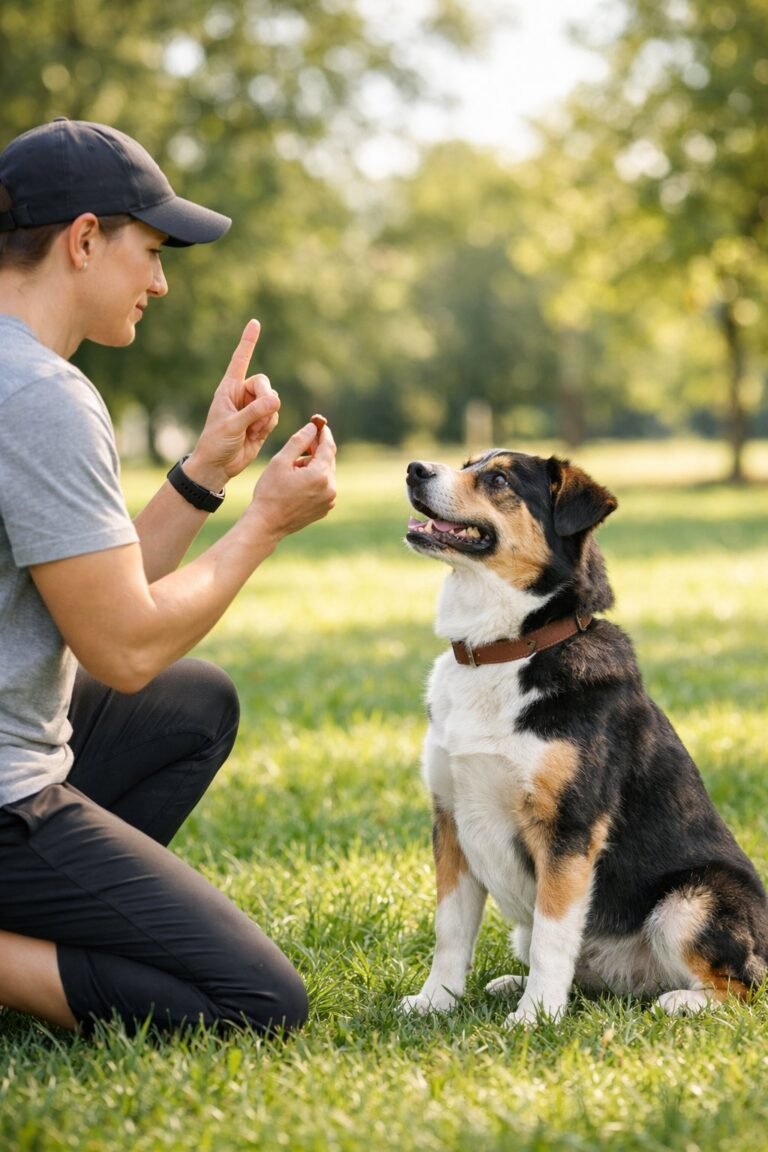
Pick one polite behavior your puppy can do instead of jumping. “Sit” is the easiest, since a puppy can’t sit and jump at the same time. If your puppy doesn’t know sit yet, start there with short, fun sessions using small, soft training treats. A treat pouch on your hip means you’re always ready to reward the good moments. Our puppy training basics guide covers sit step by step.
Step 2: Make jumping boring
When your puppy jumps on you:
- Stand up straight, fold your arms, and turn away. No talking, no eye contact, no pushing.
- The moment all four paws are on the floor, turn back and calmly praise or reward.
- If they jump again, turn away again. If they keep at it, step out of the room for a few seconds and come back in.
It feels slow at first, but your puppy is figuring out a puzzle: “When I jump, the fun disappears. When I keep my feet down, the fun comes back.”
Step 3: Reward four on the floor, a lot
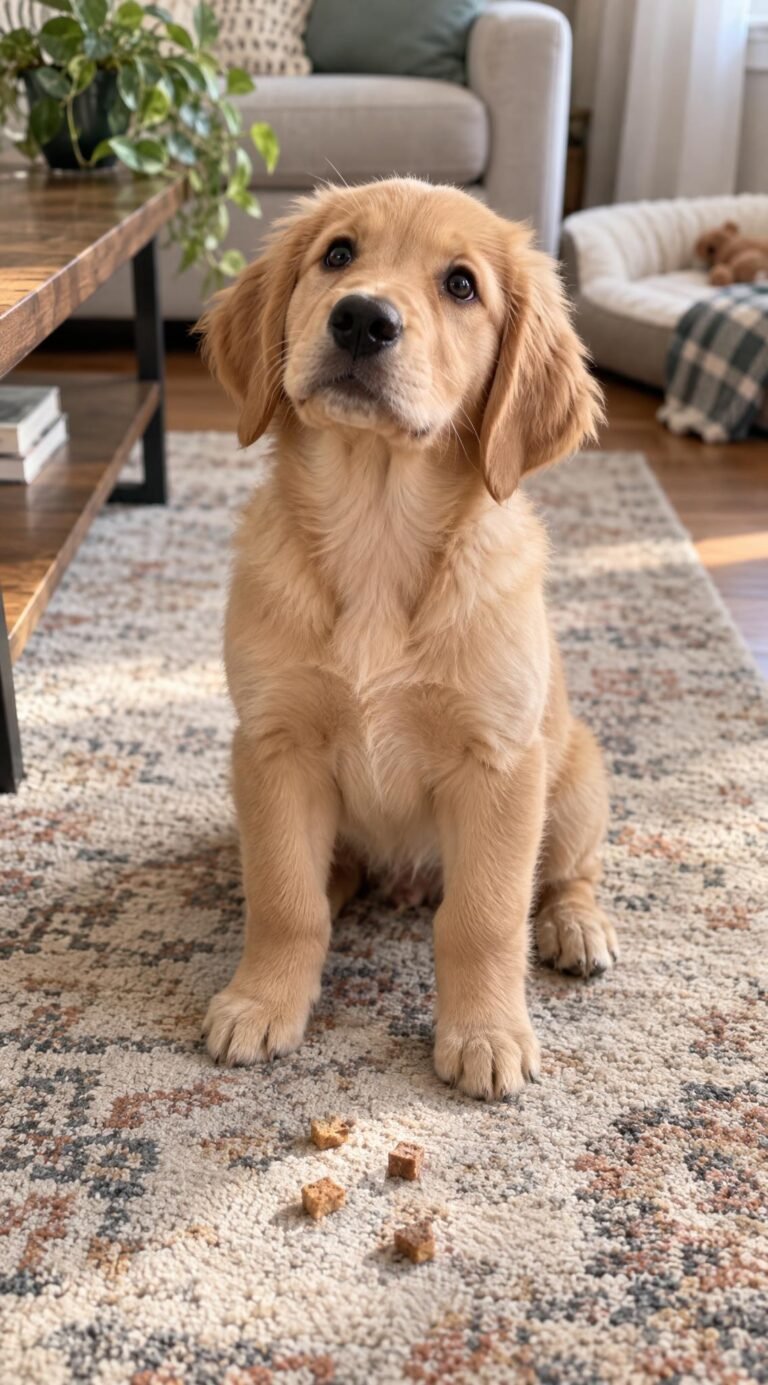
Don’t wait for jumping to happen. Catch your puppy standing or sitting calmly near you and reward it. Drop treats at their feet, not up by your face, so their attention stays low. A clicker can help you mark the exact second their paws hit the ground, but a quick “yes!” works too.
Step 4: Practice greetings on purpose
Real-life greetings are exciting, so practice them when the stakes are low.
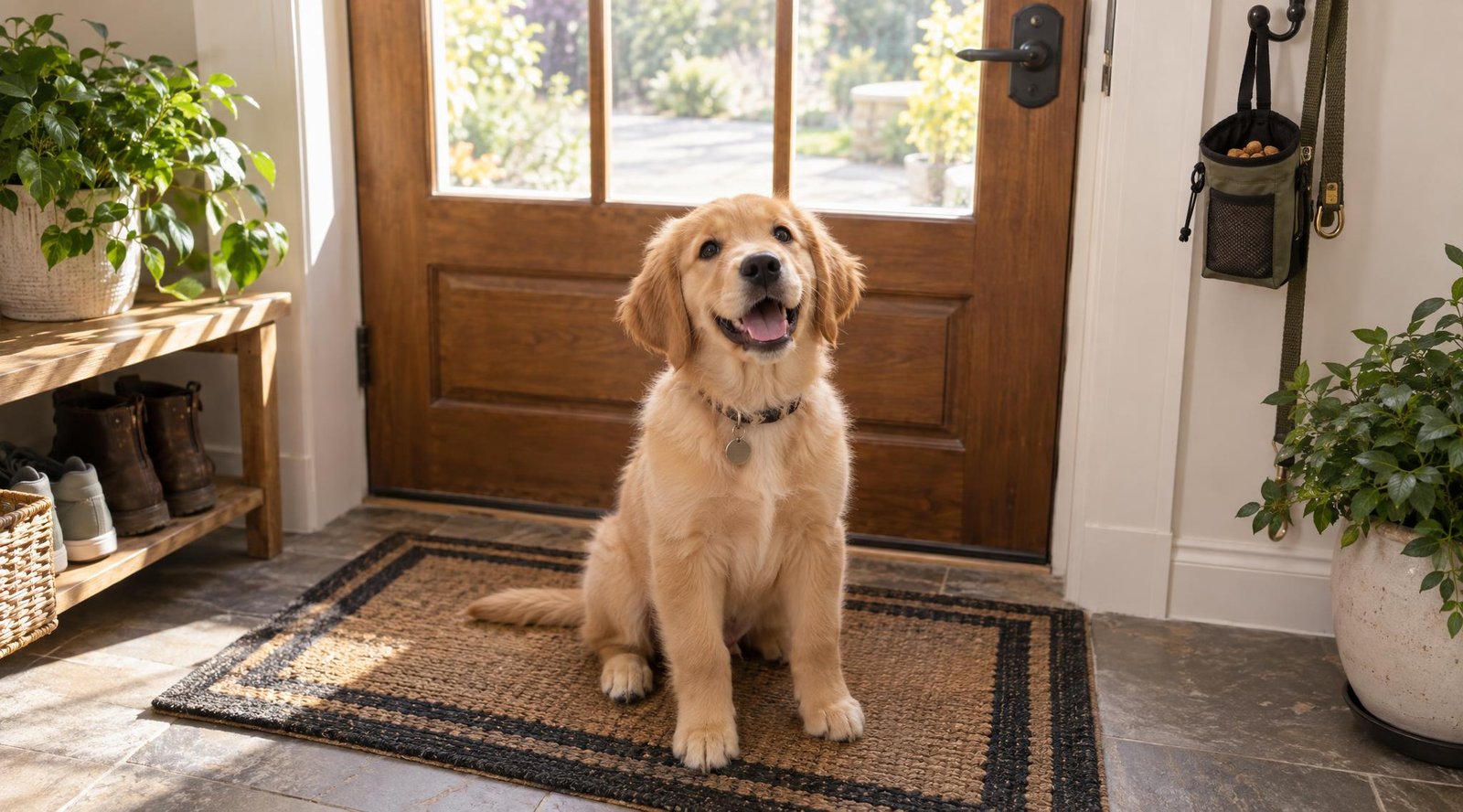
- Walk out the door and come back in, calm and quiet.
- Ask for a sit (or wait for paws on the floor) before you bend down to say hi.
- If they pop up, stand back up and wait. Try again.
- Repeat several times a day. Keep greetings low-key for the first few weeks.
Step 5: Set up guests for success
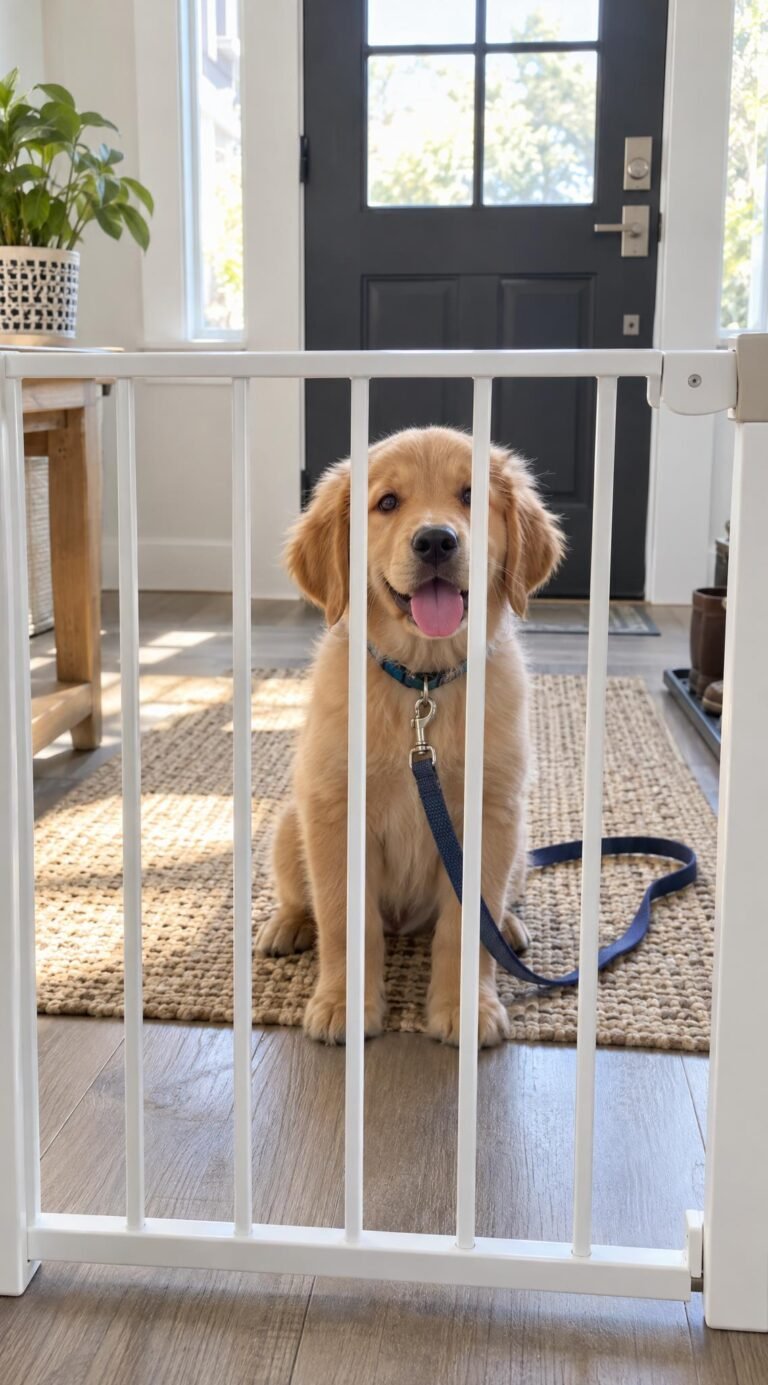
Visitors are the hardest test, and most guests accidentally reward jumping because they think it’s cute.
- Put your puppy on a lightweight house leash before guests arrive so you can gently keep them from launching.
- Or have them behind a baby gate until the excitement of the door settles.
- Tell guests the rule: “She only gets petted when she sits.” Hand them a treat to reward the sit.
- Keep the first greeting short. Calm, brief hellos are easier for a puppy to handle than a big fuss.
Good manners stick when they’re practiced in order
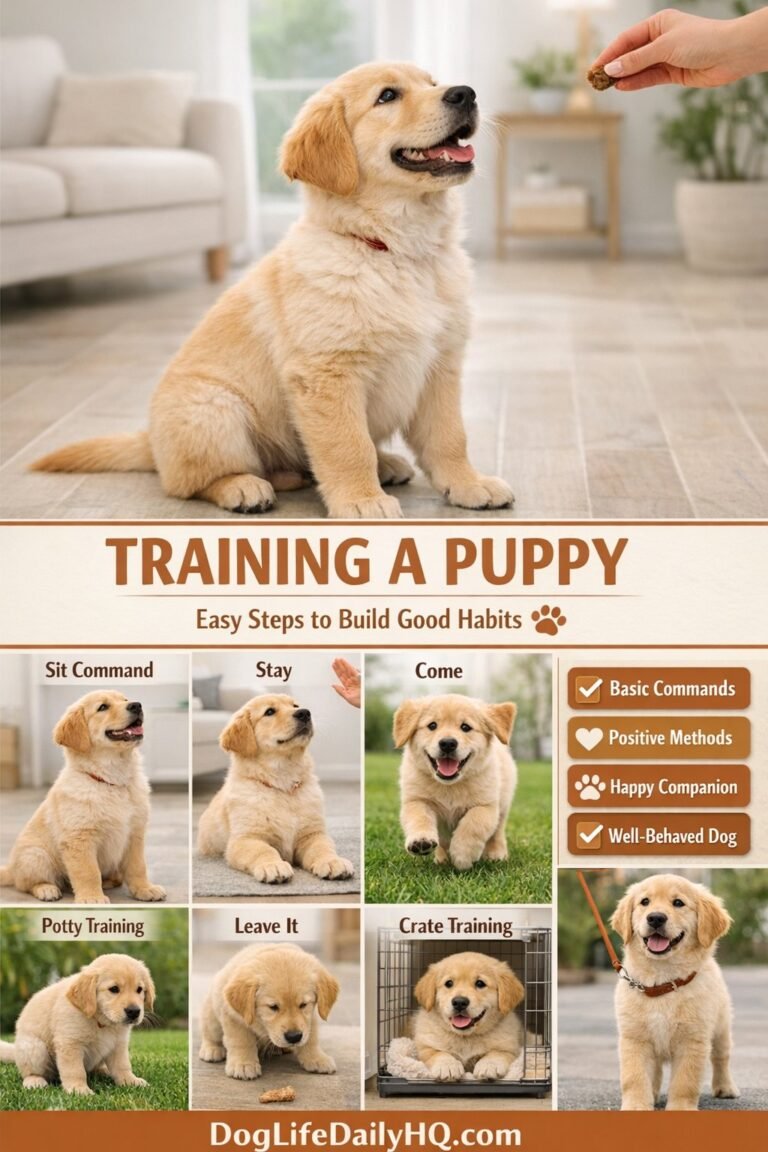
Polite greetings build on sit, name response, and impulse control, and those build on each other. Our 28-Day Puppy Training Plan walks through the first month’s skills in a day-by-day order, so your puppy has the foundation before you ask for the hard stuff. Start with Week 1 free.
What not to do
- Don’t knee them in the chest or step on their back paws. These old tips can hurt a growing puppy and make greetings scary.
- Don’t allow jumping “sometimes.” If it’s okay when you’re in jeans but not in your work clothes, your puppy can’t tell the difference. Everyone in the house needs the same rule.
- Don’t over-hype your homecomings. A big, squealy hello winds a puppy up. Come in calm, then greet once they’ve settled.
How long does it take?
Most puppies show improvement within a week or two of consistent practice, especially with family members. Guests and new people usually take longer, because they’re more exciting. Expect a few backslides when your puppy is overtired or overexcited. That’s normal.
Frequently Asked Questions
Why does my puppy jump on me but not my partner?
Usually because jumping has paid off more with you, through petting, talking, or pushing. Make sure everyone in the house responds the same way.
Is it bad to let my puppy jump on me?
It’s your choice, but it’s hard for a dog to understand “jump on me, but not on visitors, kids, or older adults.” Most people find it easier to teach no jumping at all, then invite a jump-up hug on cue later if they want.
My puppy jumps and bites when excited. What do I do?
That’s very common in young puppies. Turn away, end the interaction for a few seconds, and offer a toy to bite instead. Our puppy biting tips go deeper on mouthy puppies.
Should I say “no” or “off” when my puppy jumps?
You can use a calm “off” if you’ll also teach what it means, but turning away and rewarding four paws on the floor tends to work faster than repeating a word your puppy doesn’t understand yet.
Final thoughts
Jumping is just your puppy’s way of saying “notice me!” Take the attention away when they jump, give it back the moment their paws are on the floor, and practice calm greetings every day. In a few weeks, you’ll have a puppy who greets people with a wiggly sit instead of muddy paw prints.