Puppy Chewing Everything? Training Tips for the Teething Stage

One minute your puppy is napping sweetly. The next, they’re working on the corner of the coffee table like it owes them money. If your puppy is chewing everything in sight, take a breath. Chewing is one of the most normal things a puppy does, and you can’t stop it entirely. What you can do is teach your puppy what’s okay to chew and make the rest of your house boring or out of reach.
This post contains affiliate links. As an Amazon Associate I earn from qualifying purchases.
Products mentioned in this article:
puppy teething toys, freezable teething toy, stuffable rubber chew toy, bitter anti-chew spray, cord protectors, baby gates.
Why puppies chew everything
- Teething. Puppies lose their baby teeth and grow adult teeth roughly between 3 and 6 months of age. Sore gums make chewing feel good.
- Exploring. Puppies learn about the world with their mouths, the way babies grab everything.
- Boredom and extra energy. A puppy with nothing to do will invent a job, and it’s usually your baseboards.
- It works. Chewing a shoe often gets a big reaction and a fun game of chase. That’s rewarding from a puppy’s point of view.
Step 1: Puppy-proof like you have a toddler
Most chewing problems are really access problems. Before you train anything, take away the chances to practice.
- Shoes, socks, kids’ toys, remote controls, and charging cables go up high or behind closed doors.
- Cover or move electrical cords. Cord protectors are worth it, since chewing a live cord can seriously injure a puppy.
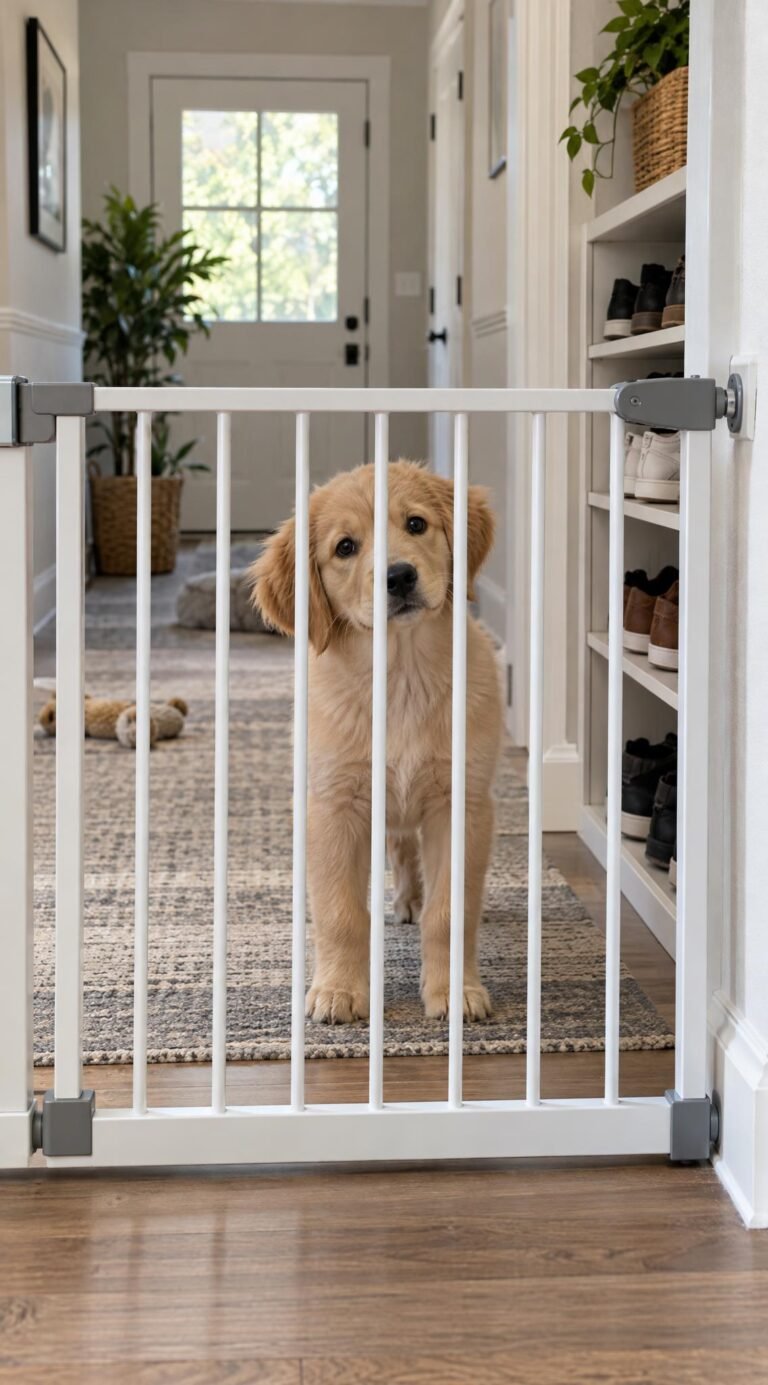
- Use baby gates to keep your puppy in one puppy-proofed room when you can’t watch closely.
- For things you can’t move, like table legs or door frames, a bitter anti-chew spray can make them taste unpleasant. Test a small hidden spot first so it doesn’t mark your furniture, and reapply often.
Step 2: Give them better things to chew
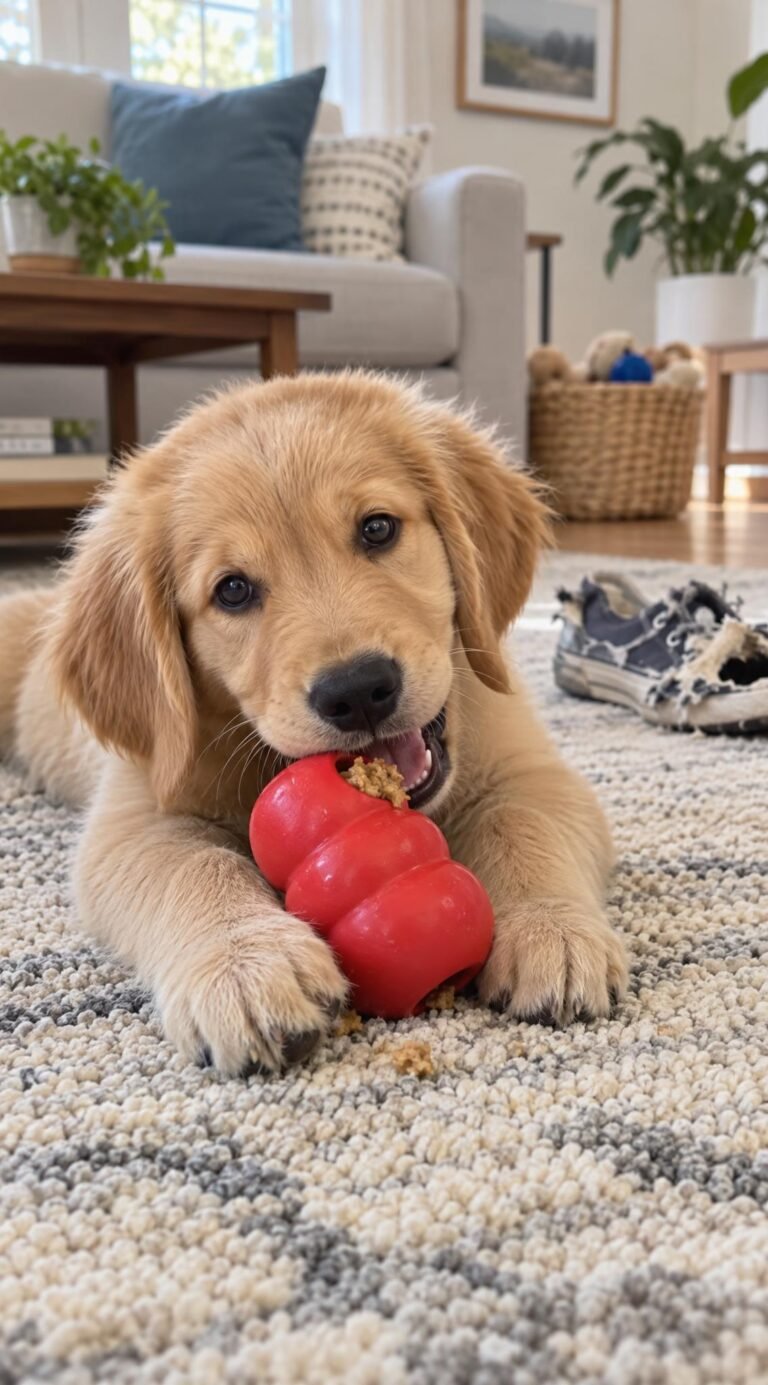
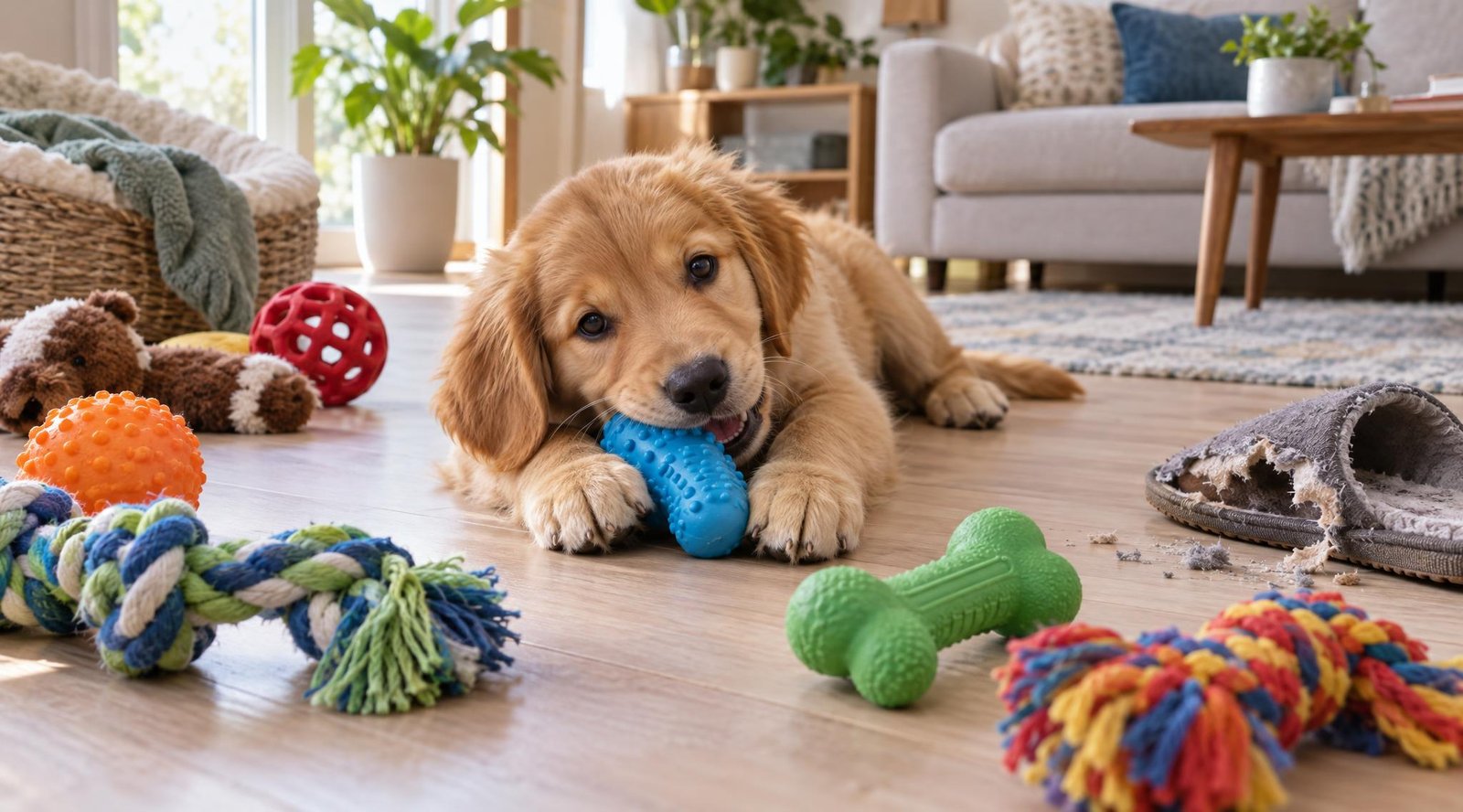
Your puppy needs to chew, so give them a variety and rotate it so nothing gets boring.
- Soft rubber teething toys made for puppies are easy on young teeth. Look for puppy-specific teething toys, which are usually softer than adult versions.
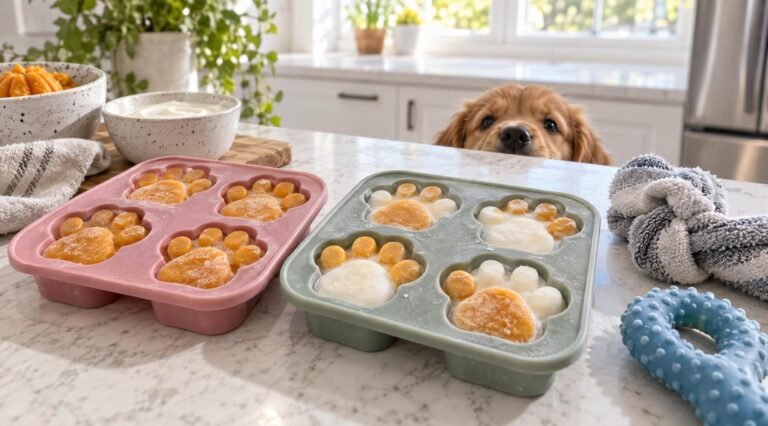
- Cold toys can soothe sore gums. A freezable teething toy or a wet, knotted washcloth frozen for an hour works well, under supervision.
- Food puzzles keep them busy longer. A stuffable rubber chew toy filled with some of their kibble softened in water, then frozen, can buy you 20 quiet minutes. If you like making your own, see our homemade dog chews guide.
- Skip very hard items for young puppies, such as antlers, hooves, or hard bones, which can break teeth. A good test: if you can’t press a fingernail into it, it may be too hard for a puppy. Always check with your vet if you’re unsure.
Step 3: Trade, don’t chase
When you catch your puppy chewing something they shouldn’t, skip the yelling and the chase. Calmly get their attention, offer one of their toys or a treat, and swap. Praise them when they take the toy. If they’re not interested, gently remove the item and move them to their chew area.
The goal is for your puppy to learn that the toy is the better deal. Chasing them turns your sock into the most exciting game in the house.
Step 4: Meet the energy need
A lot of destructive chewing is a puppy with nowhere to put their energy. Add short training sessions, sniff walks, and brain games through the day. Ten minutes of sniffing or a snuffle mat can tire a puppy more than a long walk. Our list of dog enrichment ideas has easy ones to try today.
Step 5: Use naps and the crate wisely
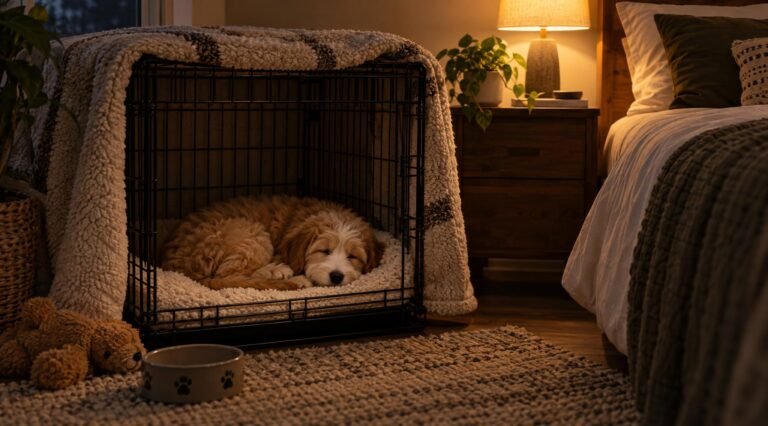
Overtired puppies chew more, just like cranky toddlers melt down. Young puppies often need 18 hours or more of sleep a day. If your puppy is getting wild and mouthy, it may be nap time. A crate or playpen with a safe chew toy gives them a calm place to settle. See our crate training guide for how to make that a happy spot.
Chewing, biting, and zoomies are all connected
Puppies who chew everything usually also bite hands, skip naps, and have accidents, because it all comes back to structure. Our 28-Day Puppy Training Plan builds that structure one day at a time, with chewing, biting, crate, and potty skills in the right order. Try Week 1 free.
What not to do
- Don’t give old shoes or socks as toys. Your puppy can’t tell an old shoe from a new one.
- Don’t punish after the fact. If you find a chewed item later, your puppy won’t connect your frustration to it.
- Don’t leave a puppy unsupervised with toys that can be torn apart. Swallowed pieces of fabric or plastic can cause dangerous blockages.
When to call your vet
Contact your vet right away if your puppy may have swallowed something they shouldn’t, such as a sock, a toy piece, a battery, or anything toxic, or if they’re vomiting, straining, or not eating. Also mention it to your vet if a baby tooth seems stuck while the adult tooth is coming in beside it.
Frequently Asked Questions
At what age do puppies stop chewing everything?
The heaviest chewing usually eases once adult teeth are in, around 6 to 7 months. Some dogs go through a second chewing phase as young adults, and many dogs enjoy chewing their whole lives, which is why teaching what’s okay to chew matters.
Is it normal for my puppy to chew furniture?
Yes, it’s very common. Block access, use a bitter spray on things you can’t move, and give plenty of better options.
What can I freeze for a teething puppy?
A wet, knotted washcloth, a freezable teething toy, or a rubber chew toy stuffed with soaked kibble all work well. Supervise so nothing gets chewed into pieces.
How many chew toys does a puppy need?
A handful of different textures is plenty. Rotate them every few days so they feel new again.
Final thoughts
You won’t stop a puppy from chewing, and you don’t need to. Puppy-proof the house, give them great chew options, trade instead of chase, and make sure they’re getting enough exercise and sleep. With a few weeks of consistency, most puppies learn exactly where their teeth are welcome.